Klay Thompson’s $11.5M Heat Deal After a $9.8M Buyout
Klay Thompson gave up $9.8 million to escape Dallas. The Mavericks got no player, no pick and no rescue—just proof their old plan was dead.
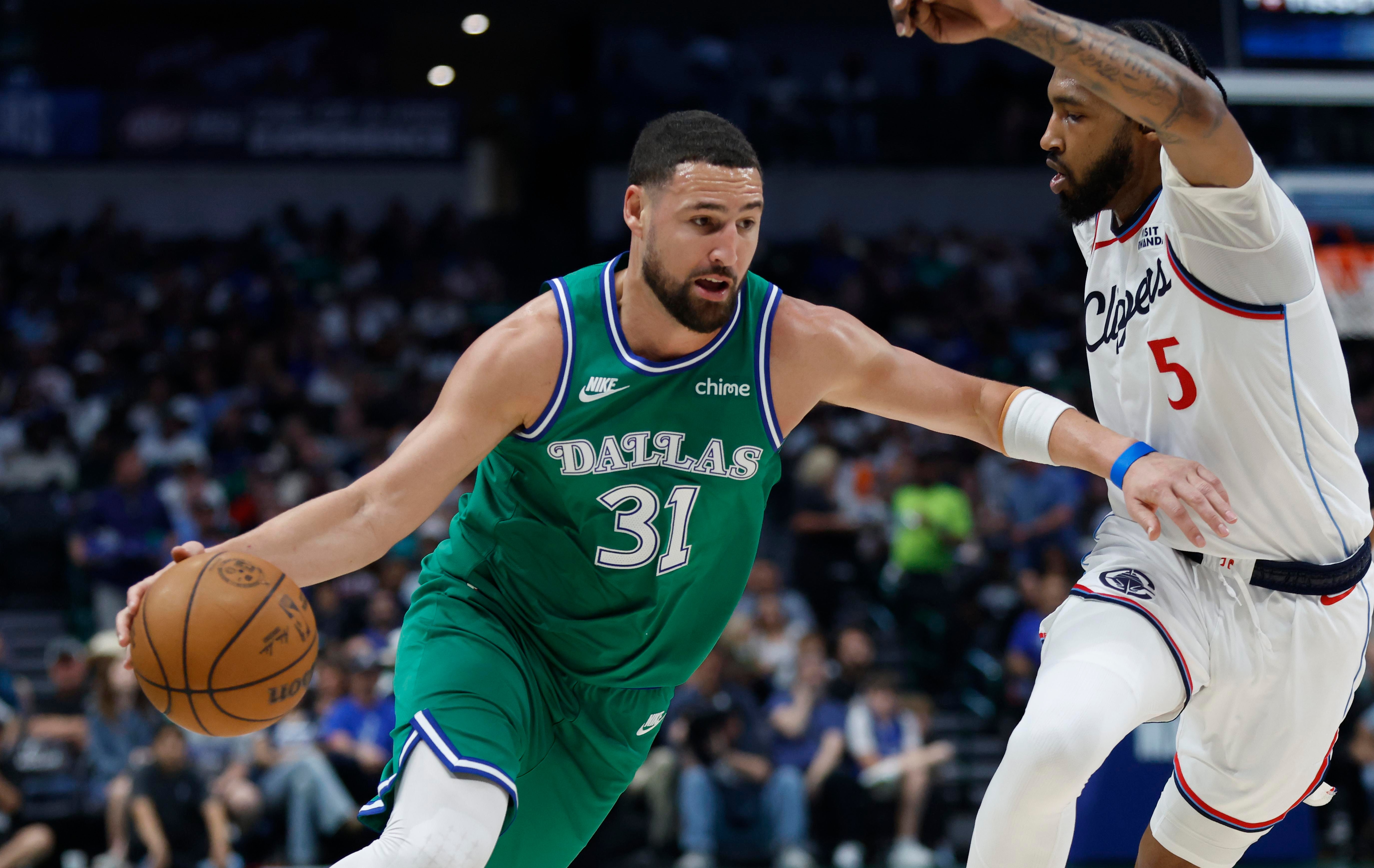
Klay Thompson gave up $9.8 million to escape Dallas. The Mavericks got no player, no pick and no rescue—just proof their old plan was dead.
That is the real business story behind Thompson signing a two-year, roughly $11.5 million deal with the Miami Heat after clearing waivers on August 23. Miami has bought shooting around Giannis Antetokounmpo and Bam Adebayo. Dallas has paid to close the book on an expensive idea that stopped making sense. ([nba.com](https://www.nba.com/news/klay-thompson-heat-2026-free-agency))
Dallas paid for the privilege of being wrong
Let’s call it what it is: a buyout is rarely a victory lap for the team doing the buying.
Thompson was due $17.5 million in the final season of the three-year, $50 million deal Dallas gave him in 2024. He surrendered $9.8 million in the buyout, leaving the Mavericks to carry about $7.7 million. Dallas gets a roster spot and moves to roughly $12 million below the luxury-tax line. But it did not turn a fading asset into a future pick, a useful rotation player or even a small trade exception that changes its options. ([mavsmoneyball.com](https://www.mavsmoneyball.com/mavericks-roster/61761/why-the-mavericks-couldnt-get-more-than-the-smallest-slice-of-salary-cap-relief-for-klay-thompson))
That matters because the original plan was not irrational.
Dallas acquired Thompson in the NBA’s first six-team trade to put one of basketball’s greatest perimeter shooters beside Luka Dončić and Kyrie Irving. Thompson had just left Stephen Curry and the Golden State Warriors after 13 seasons, four championships and a career built on making defences pay for helping one pass too far. The theory was obvious: Dončić creates chaos, Irving punishes switches, and Thompson gets clean looks. ([nba.com](https://www.nba.com/mavs/mavsofficiallysignthompson))
Then the theory got hit by a truck.
Dallas traded Dončić to the Los Angeles Lakers in 2025. Kyrie Irving tore his left ACL a month later. Anthony Davis, the headline return in the Dončić deal, was subsequently moved to the Washington Wizards before the 2026 trade deadline. By the time Thompson’s buyout arrived, the team that signed him had essentially been dismantled around him. ([nba.com](https://www.nba.com/news/klay-thompson-heat-2026-free-agency))
This is why athletes get blamed for front-office messes they did not create. Thompson did not suddenly forget how to shoot. His 2025-26 numbers—11.7 points and 2.1 rebounds across 69 games—were clearly down. He is 36, going into his 14th season after missing two full years with catastrophic injuries. But he was signed for a specific ecosystem. Dallas blew up that ecosystem, then discovered the specialist no longer fitted the workshop. ([nba.com](https://www.nba.com/news/klay-thompson-heat-2026-free-agency))
Miami just bought the one skill Giannis makes more valuable
Miami’s side is much cleaner.
The Heat have remade themselves around Antetokounmpo and Adebayo. They also added Tim Hardaway Jr. The common denominator is not subtle: Miami needs players who can make an opposition pay for crowding Giannis in the paint. Nobody needs another bloke who wants to dribble for 14 seconds while Antetokounmpo watches from the corner. ([nba.com](https://www.nba.com/news/klay-thompson-heat-2026-free-agency))
Thompson is still an elite answer to that particular question.
He is fourth on the NBA’s all-time made-three list, a career 41% three-point shooter and has exceeded 200 made threes in a season 11 times. Last season was not vintage Klay, but he still averaged 2.9 threes in only 21.7 minutes per game. Put a defender in the awful choice between leaving Thompson or sending an extra body at Giannis, and suddenly the Heat have a simple, nasty offensive decision tree. ([nba.com](https://www.nba.com/news/klay-thompson-heat-2026-free-agency))
Pat Riley’s pitch was presumably not complicated. You won’t be asked to be 2016 Klay Thompson. You will be asked to stand in the right place, sprint into actions, make open shots, compete defensively and help a serious team win in May.
For $11.5 million over two years—with Thompson holding a player option in year two—that is a sensible wager. Not because he is young. Not because he will become the second scorer. Because the Heat are paying for a skill that travels well, fits their two stars and becomes more useful when opponents are under playoff pressure. ([nba.com](https://www.nba.com/news/klay-thompson-heat-2026-free-agency))
There is a good operator lesson in that. Don’t buy a person because of their résumé. Buy the specific capability your current machine lacks. Miami does not need Thompson to recreate the Splash Brothers with Curry. It needs him to make opponents regret treating Giannis like a one-man emergency.
The $11.5 million headline hides the actual cost
Most people will read this as: “Miami got Klay cheap.” That is half true, which is often worse than entirely false.
Miami committed roughly $11.5 million. Dallas still owes roughly $7.7 million. Thompson gave up $9.8 million from the $17.5 million he was originally due. In other words, the league has not decided Thompson is worthless. It has simply split the cost of a declining veteran between the team that no longer had a use for him and the team that does. ([nba.com](https://www.nba.com/news/klay-thompson-heat-2026-free-agency))
That is how mature businesses should think about bad-fit hires, dud acquisitions and projects that have lost their reason for existing.
The worst operators cling to sunk costs because admitting a mistake bruises the ego. They keep the expensive executive, the dead product line or the prestige project alive because killing it makes the original decision look stupid.
Newsflash: it already looks stupid if the business has changed and you refuse to react.
Dallas has made the economically rational call at the end of a very ugly sequence. Keeping Thompson merely because he was on the books would not revive the original strategy. The Mavericks had 16 players with guaranteed contracts, so a roster decision was coming regardless. The buyout reduced their cash obligation, opened a spot and ended the limbo. ([mavsmoneyball.com](https://www.mavsmoneyball.com/mavericks-roster/61761/why-the-mavericks-couldnt-get-more-than-the-smallest-slice-of-salary-cap-relief-for-klay-thompson))
But rational cleanup is not the same thing as good asset management. The more uncomfortable verdict is that Dallas let the market shrink until a player once signed as a championship piece could not be converted into anything useful. When you wait too long to sell a depreciating asset, you stop negotiating price and start negotiating embarrassment.
The overlooked angle: Thompson chose optionality over one last payday
The most interesting decision here may be Thompson’s, not Dallas’s or Miami’s.
He walked away from $9.8 million guaranteed. That is proper money, even by NBA standards. He did it to join a contender on a two-year deal where the second year is his option. ([nba.com](https://www.nba.com/news/klay-thompson-heat-2026-free-agency))
That is not fake humility. It is a clear trade: less certain money from a bad situation in exchange for relevance, a better basketball fit and another chance to matter in meaningful games.
For a player with four rings, five All-Star selections and a legacy already secure, that is logical. He is not trying to prove he can carry a franchise. He is trying to prove he can still swing a playoff series.
And Miami is a far better place to demonstrate that than a rebuilding Dallas roster trying to make sense of its post-Dončić identity.
The contrarian point is this: veteran buyouts are usually framed as desperate. Sometimes they are disciplined portfolio moves. Thompson is exchanging a concentrated risk—one season attached to a broken situation—for two years of optionality in a system designed to feature his best remaining skill.
That only works if you have enough financial security to make the choice. But the principle scales down beautifully: when you have a bad asset, do not ask only, “How much money am I leaving on the table?” Ask, “What better opportunities does this release me to pursue?”
What this means for you
If you run a business, invest your own money or manage people, steal three things from this deal.
First: separate the asset from the original thesis. Dallas signed Thompson to play beside Dončić and Irving. Once that thesis was gone, Thompson’s original price tag became irrelevant. Review your investments and hires the same way. If the conditions that justified the decision have changed, reassess from today—not from the day you signed the cheque.
Second: preserve optionality before you need it. Dallas had little trade leverage because the calendar, cap restrictions and Thompson’s age narrowed the buyer pool. Do not wait until everyone knows you need out. Whether it is a business unit, a lease, a supplier relationship or a public investment, optionality is worth more before the market smells desperation.
Third: pay for fit, not nostalgia. Miami is not buying the old Golden State version of Klay Thompson. It is buying spacing for Giannis Antetokounmpo, experience around Bam Adebayo and a player who knows what pressure feels like. That is a much smarter purchase.
The best deals do not always involve buying the best thing. They involve buying the thing that makes your best thing work better.
Miami may have just done that for $11.5 million. Dallas, meanwhile, has spent $7.7 million to learn that a plan without the people it was built around is not a plan. It is a bill.