Kylian Mbappé Leaves Nike After 20 Years—On Is Buying a Football Beachhead
Nike didn’t lose Kylian Mbappé because it ran out of money. It lost him because a smaller brand offered something cash alone can’t buy: ownership of the upside.
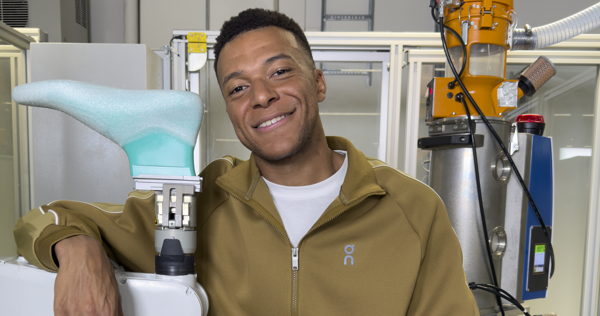
Nike just watched a 27-year-old football superstar walk out after 20 years. That is not a celebrity endorsement shuffle. It is a warning shot.
Kylian Mbappé has ended his Nike relationship, which began in 2006 when he was nine, to join Swiss sportswear company On. The deal includes cash and equity; neither side has disclosed the price or term. On plans to launch its first football boots in 2027, and it has hired Thierry Henry as director of football. Mbappé is not merely there to smile beside a billboard. He is meant to help build and test the product. ([investing.com](https://www.investing.com/news/stock-market-news/mbappe-leaves-nike-signs-with-on-as-swiss-sportswear-maker-forays-into-soccer-4907702?utm_source=openai))
That is the story. Not the shoes. Not the Instagram announcement. The money.
On is trying to break into the biggest equipment market in world sport by giving the most commercially potent footballer on earth a stake in the result. Nike, a $46.4 billion-revenue machine, is on the other side of the table. And that should make every founder, investor and operator sit up a bit straighter.
On did not buy an ambassador. It bought a co-owner’s urgency.
The lazy reading is that On has signed a famous bloke to sell boots. That is what big brands have done for decades: pay an athlete a cheque, use their face, shift product, repeat.
But the reported cash-and-equity structure changes the incentives completely. Mbappé now has a reason to care about more than the next campaign fee. If On creates a credible football category, earns distribution, builds desirable boots and takes even a sliver of the market from Nike, Adidas and Puma, his equity can become worth far more than a conventional endorsement payment.
That matters because football is not tennis or running. It is tribal, global, price-sensitive at the bottom end and wildly status-driven at the top. Kids do not buy boots after studying a feature comparison chart. They buy the boots worn by the player they want to become.
Mbappé gives On immediate permission to enter that conversation. He plays for Real Madrid, captains France and is one of the few active athletes who can move product in Paris, Madrid, London, the Gulf, Asia and North America without needing a lengthy introduction.
But permission is not market share. This is where plenty of people will get carried away.
On has bought attention. It still needs to earn trust. A football boot cannot be a running shoe with studs bolted on and a glossy launch video. It has to perform under elite pressure, fit different foot shapes, survive wet pitches, satisfy retail buyers and give ordinary players a reason to part with their money. Nike, Adidas and Puma have spent decades building those muscles.
That is why putting Mbappé into product development is commercially smarter than plastering him across advertising. The athlete can shorten the credibility gap — if the company actually listens and builds something players want.
Nike’s problem is not one defection. It is the negotiating power behind it.
Let’s not get silly. Nike is not in trouble because one athlete has left. Its fiscal 2026 revenue was $46.4 billion, and Nike Brand revenue was $45.2 billion. It remains a monster. ([sec.gov](https://www.sec.gov/Archives/edgar/data/320187/000032018726000088/nke-20260531.htm?utm_source=openai))
But giant companies hate this kind of deal for a reason: it reveals that the talent no longer needs them as much as it once did.
Nike’s scale used to be the whole proposition. It could offer distribution, creative firepower, elite product, cultural relevance and a global platform no challenger could match. In exchange, athletes accepted a conventional sponsorship model: fixed money, royalties where they had leverage, and very limited influence over the enterprise value being created.
That bargain is weakening for true global stars.
The best athletes now understand cap tables. Their managers understand options. Their audiences are direct. Their social reach is immediate. And challenger brands are willing to trade a slice of future upside for credibility they cannot manufacture internally.
Roger Federer helped establish the blueprint when he joined On as an investor and partner after leaving Nike. Mbappé is applying the same logic to football, where the upside — and the execution risk — are much larger. ([live.euronext.com](https://live.euronext.com/en/financial-news/mbappe-boosts-ons-brand-visibility-hurdles-soccer-success-remain?utm_source=openai))
Nike’s own numbers show why challengers smell an opening. Nike Direct revenue fell 6% in fiscal 2026, while digital sales fell 12%, even as wholesale revenue increased. That does not mean Nike is finished; it means the turnaround is still a job, not a press release. ([sec.gov](https://www.sec.gov/Archives/edgar/data/320187/000130817926000376/nke015577-ars.pdf?utm_source=openai))
When an incumbent is sorting out channel mix, digital traffic and product momentum, a hungry challenger does not need to beat it everywhere. It needs one category, one athlete and one cultural moment where it looks faster.
Football in the run-up to the 2027 boot launch gives On precisely that opening.
The overlooked angle: Mbappé has accepted more risk too
Everyone is framing this as On poaching Nike. Fair enough. It is a cracking headline.
But Mbappé has also taken a proper commercial bet.
At Nike, he had certainty: established product, huge distribution, a mature football business and a relationship stretching back to childhood. At On, he is joining a football project before its first boot has even launched. Equity gives him more upside, but it also means part of his compensation depends on execution he cannot fully control.
That is exactly why this is more credible than a standard endorsement.
The best commercial partnerships involve both sides taking risk. The company risks capital, design resources and reputation. The athlete risks time, attention and some portion of guaranteed compensation for potential upside. When only one party carries risk, you have hired a spokesperson. When both parties carry it, you may have built alignment.
There is a lesson here for founders who throw equity around like confetti at a wedding.
Do not give equity to somebody because they are famous. Give it when that person can alter the outcome and has agreed to do work that matters. Mbappé can influence product, demand, retail conversations and global relevance. Most celebrity advisers cannot. The distinction is expensive.
The next fight is not for endorsements. It is for distribution.
On’s football plan will be judged by something painfully boring: availability.
Can it get the product into the right stores in the right countries? Can it produce enough inventory without blowing out working capital? Can it offer a serious range — elite boots, accessible boots, apparel, kids’ product — without confusing consumers? Can it support retailers after launch rather than treating them as props for a Mbappé campaign?
This is where sport-business headlines often go soft. A star signing is the opening bell, not the cash register.
Nike has a global wholesale network and generated $27.5 billion of Nike Brand wholesale revenue in fiscal 2026. On is deliberately picking a fight with a company that already knows how to manufacture, distribute and replenish at enormous scale. ([sec.gov](https://www.sec.gov/Archives/edgar/data/320187/000130817926000376/nke015577-ars.pdf?utm_source=openai))
So the contrarian view is simple: Mbappé may be the perfect entry ticket, but he is not the business model. If On turns football into a clean product business with disciplined distribution, he will look like a genius partner. If it chases every market, over-orders stock and mistakes attention for demand, it will become another expensive vanity launch.
Why this matters beyond football
The old endorsement model was built for a world where brands owned the megaphone and athletes rented it.
That world is fading.
The modern play is closer to a joint venture: athlete provides cultural authority, product feedback and audience; brand provides engineering, capital, operations and distribution; both share in the upside. It is harder to structure, slower to manage and far more powerful when it works.
For investors, that means athlete equity should not automatically be dismissed as marketing fluff. It can be a useful signal when the athlete has real relevance to the category and the company has a believable operating plan. But do not confuse a famous name with a moat. Celebrity can reduce customer-acquisition cost at launch. It cannot fix a bad product, poor margins or weak distribution.
For big incumbents, the message is harsher: paying the biggest cheque is no longer enough. Your best partners may want meaningful creative control, product input and ownership. Refuse that across the board and challengers will happily offer it.
What this means for you
If you run a business, use the Mbappé-On deal as a blunt checklist before you sign a partner, ambassador or adviser.
First: ask what they can actually change. Can they improve product, unlock distribution, bring customers, recruit talent or open a market? If the answer is only “they have followers,” pay cash, not equity.
Second: tie upside to work, not fame. Equity should vest against defined contribution and time. The person should have skin in the game, and so should you.
Third: build the boring machinery before the loud launch. Product quality, supply chain, customer support and distribution are what turn attention into revenue. The announcement is dessert, mate — not dinner.
Finally: do not be hypnotised by size. Nike is one of the world’s great consumer brands. Yet On found a way to make Mbappé care more about building its future than extending his past. That is what a sharp challenger does: it finds an incentive the giant cannot, or will not, offer.
On has made a bold bet. Mbappé has made a smarter one. Now they have to do the hard bit: sell the bloody boots.