LIV Golf’s $30M Prize Cut Is a Warning for Jon Rahm and Bryson DeChambeau
A league that once made headlines by throwing money at golf is now cutting nearly $30 million from its finale. That is not a rebrand. It is a cash-flow alarm.
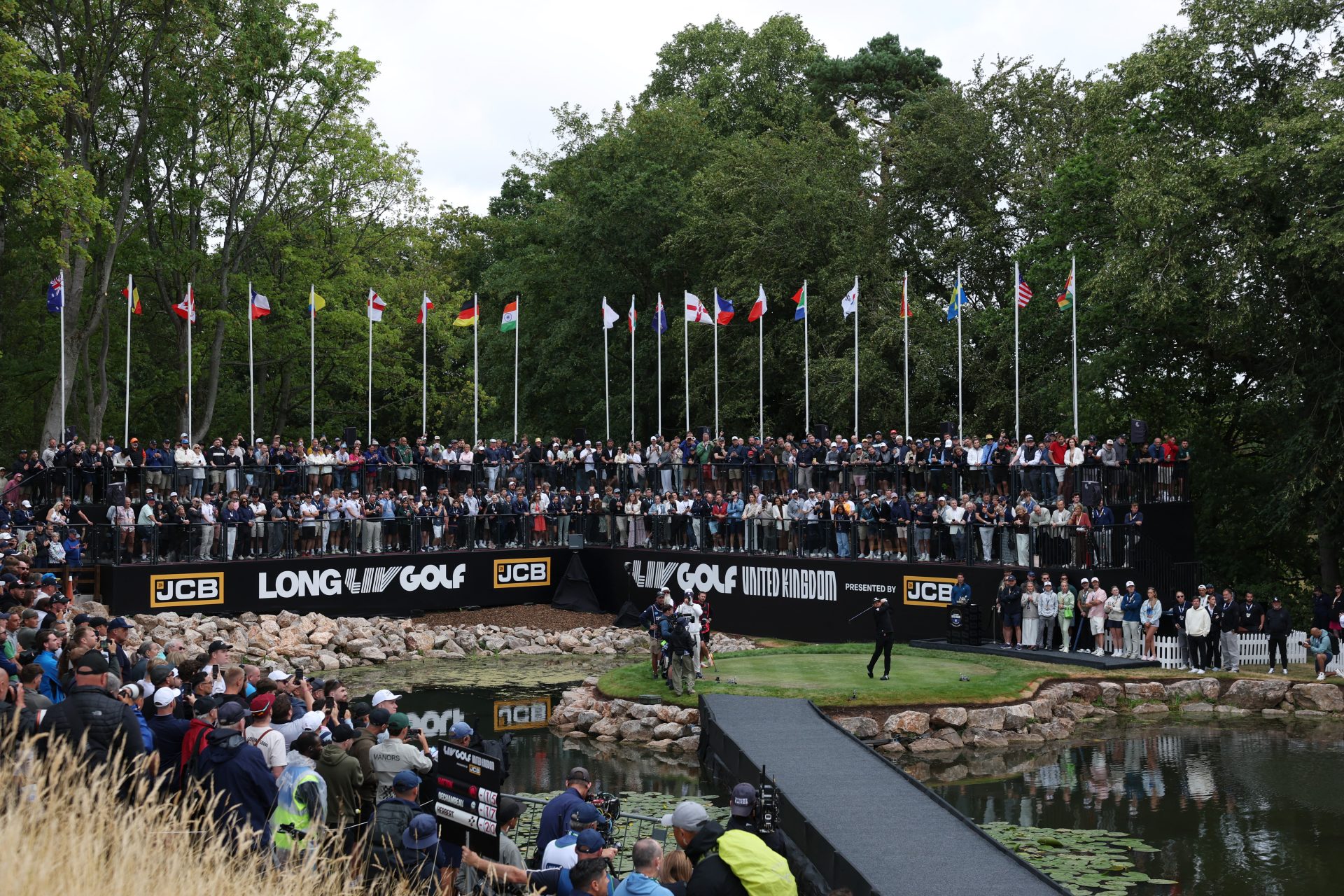
LIV Golf has cut nearly $30 million from the money it planned to put on the line at the end of its 2026 season. If you think that is merely a scheduling tweak, you have never had to make payroll.
The league’s Indianapolis event, finishing today, August 23, is now doing the work of two events after LIV cancelled next week’s $40 million Team Championship in Michigan. Jon Rahm has already locked up the individual crown for the third straight year. Bryson DeChambeau and his Crushers GC are still fighting at the pointy end of the team story. But the far more important contest is not on the leaderboard: it is whether LIV can turn an expensive sports disruption into an actual business before its stars decide the risk is no longer worth the cheque.
The $30 million cut is the headline. The missing event is the real problem.
Here is the clean version.
LIV had planned a normal Indianapolis individual event with a $20 million purse, plus a $10 million team component. Then it had a separate Team Championship scheduled for August 27–30 at The Cardinal at Saint John’s in Plymouth, Michigan, with another $40 million available.
That was $70 million of prize money across two weeks.
Instead, Indianapolis has become the season finale. The individual purse was cut to $10.1 million, with the winner receiving $2.02 million rather than LIV’s usual $4 million first prize. The 13 LIV franchises will now contest a $30 million team championship at Indianapolis. Total money across the reshuffled finish: $40.1 million.
That is the nearly $30 million reduction.
The league can call it a more team-focused finish if it likes. I call it what every founder and investor should call it: a business changing the plan after the money had already been promised to the market.
There is a massive difference between deciding before the season that you will spend less and finding yourself forced to spend less in the final fortnight. The first is strategy. The second is a signal.
The Michigan event was not some Tuesday-night exhibition nobody would notice. It was supposed to be LIV’s team finale, a high-profile, high-purse finish designed to prove that the franchise model had legs. Cancelling it means players, sponsors, broadcasters, local vendors and fans all receive the same message at once: the original plan did not survive contact with reality.
Jon Rahm has won. But the league’s best asset is now negotiating from strength.
Rahm is the obvious centre of gravity here because he has done his job. He clinched LIV’s individual championship at the New York event earlier this month, making it three titles in his first three LIV seasons. That sort of consistency is precisely what a breakaway league pays a premium for: a legitimate world-class player who can win, sell tickets, generate attention and give the product some sporting credibility.
DeChambeau matters for a different reason. He is one of LIV’s most marketable players, captain of Crushers GC, and one of the few golfers who genuinely understands modern audience-building. He can play elite golf, create YouTube-scale attention and talk to a camera without sounding like he has been sedated by a sponsor.
LIV needs both men. More accurately, it needs the next version of both men: committed, visible, commercially useful stars who believe the league will exist long enough for their team equity and long-term deals to mean something.
That is a much harder sell after a cancelled championship and reduced prize pools.
The easy response is to say, “These blokes are already rich.” That is lazy thinking. Wealthy people do not stop caring about incentives; they become more selective about them. Elite athletes in their prime have alternatives: majors, national tours, endorsements, team ventures, content businesses and, depending on the player and the rules, potential routes back into more traditional golf structures.
A star will tolerate uncertainty if the upside is extraordinary and the organisation looks competent. Remove either condition and the negotiating power swings fast.
LIV’s original advantage was simple: it had more money than patience.
LIV changed professional golf because it did not arrive pretending it could out-history the PGA Tour. It came with capital, shorter events, team brands and enormous guaranteed contracts. The offer was blunt: play less, make more, and help build something new.
That pitch worked because the cash was not theoretical. The Public Investment Fund of Saudi Arabia supplied the financial muscle, and LIV spent aggressively to sign names including Rahm, DeChambeau, Brooks Koepka, Cameron Smith and others. Whether you liked the project or hated it, nobody could accuse it of being undercapitalised in its early years.
But sports businesses are not saved by launch money. They are saved by recurring economics.
You need media revenue that grows. You need sponsors who renew without being begged. You need ticket demand that covers more than the temporary build. You need teams that can become assets rather than marketing props. And you need an operating model that does not depend on one benefactor deciding the experiment remains amusing.
LIV CEO Scott O’Neil has said the league has a new lead investor lined up and has framed the next phase around players receiving equity rather than simply more cash. That could be sensible. Equity aligns people with the long-term value they create.
But equity is only valuable when there is a believable path to value.
If I hand you equity in a business that is growing revenue, controlling costs, retaining customers and building a defensible moat, you should pay attention. If I hand you equity immediately after cutting the final prize pool, cancelling an event and facing complaints from vendors about unpaid bills, you should ask for the books before you celebrate the cap table.
The vendor issue is more serious than golf fans want to admit.
Fresh Tape Media has sued LIV seeking $1.23 million in alleged missed payments and interest related to work on LIV’s preseason media days. Front Office Sports also reported that other vendors and contractors said they were unpaid. O’Neil said LIV was trying to do right by them and hoped it could.
I am not going to pretend a lawsuit proves every allegation, nor am I going to play armchair auditor from Australia. Companies can have genuine disputes over scope, deliverables and timing.
But this is where business gets brutally simple: a brand can survive bad press; it struggles to survive a reputation for being difficult to get paid by.
The first people to feel a stressed business are rarely the headline stars. They are production crews, temporary staff, venues, logistics firms, caterers, agencies and contractors. These are usually smaller businesses carrying real wage bills. They cannot pay their people with a future vision deck.
That is why this matters more than a few million shaved from a prize purse. Paying vendors on time is not a feel-good footnote. It is operational credit. Once that trust is damaged, every future supplier prices in the risk, demands deposits, tightens terms or walks away. Your costs rise precisely when you can least afford them to.
The contrarian view: LIV may be getting more honest — and that could save it.
Here is the overlooked angle. Cutting costs is not automatically the beginning of the end. Sometimes it is the first adult decision a business has made in years.
LIV does not need to prove it can burn money. It has already proven that beyond doubt. What it needs to prove is that golf fans, commercial partners and elite players will support a version of LIV that has financial discipline.
A smaller, sharper calendar could be better than a bloated one. Fewer events with genuine local demand could beat expensive global stops that exist mostly because the schedule says they should. Team ownership could become meaningful if the teams have durable sponsorship, content and merchandise economics behind them.
But discipline is only credible when it is applied consistently. You cannot cut prize pools and leave bloated overhead untouched. You cannot pitch player equity while suppliers wonder where their invoices are. You cannot sell a “sustainable next chapter” without publishing a plan that looks sustainable to someone other than the person making the presentation.
LIV’s opportunity is to stop trying to win the old argument — whether it disrupted golf — and start winning the only argument that matters now: whether it can run a proper sports business.
What this means for you
Whether you run a startup, own a small business or invest your own money, take three lessons from LIV’s August mess.
First: never confuse funding with a business model. A big cheque can buy time, talent and headlines. It cannot buy permanent demand. Ask where the next dollar of revenue comes from, what it costs to earn it, and what happens if the biggest backer loses interest.
Second: protect the people below the headline. Pay suppliers early. Be transparent if there is a dispute. Your superstar employees may have options; your operating partners have memories. The cheapest capital in business is trust, and it disappears quickly when invoices become a guessing game.
Third: cut costs before the market forces you to do it publicly. If a project is not earning its place, kill it decisively and explain why. Do not wait until the final week, when everyone can smell panic. Controlled austerity looks like leadership. Emergency austerity looks like weakness.
Jon Rahm has the trophy. Bryson DeChambeau has a major commercial platform. The players will be fine.
The question for LIV Golf is much nastier: after spending years proving it could change the sport with money, can it now prove it deserves to survive without quite so much of it?