LIV Golf’s $5 Billion Reckoning: Jon Rahm Is Now a Creditor
LIV Golf spent roughly $5 billion proving that unlimited funding is not a business model. Now Jon Rahm is listed as an unsecured creditor for $7.47 million.
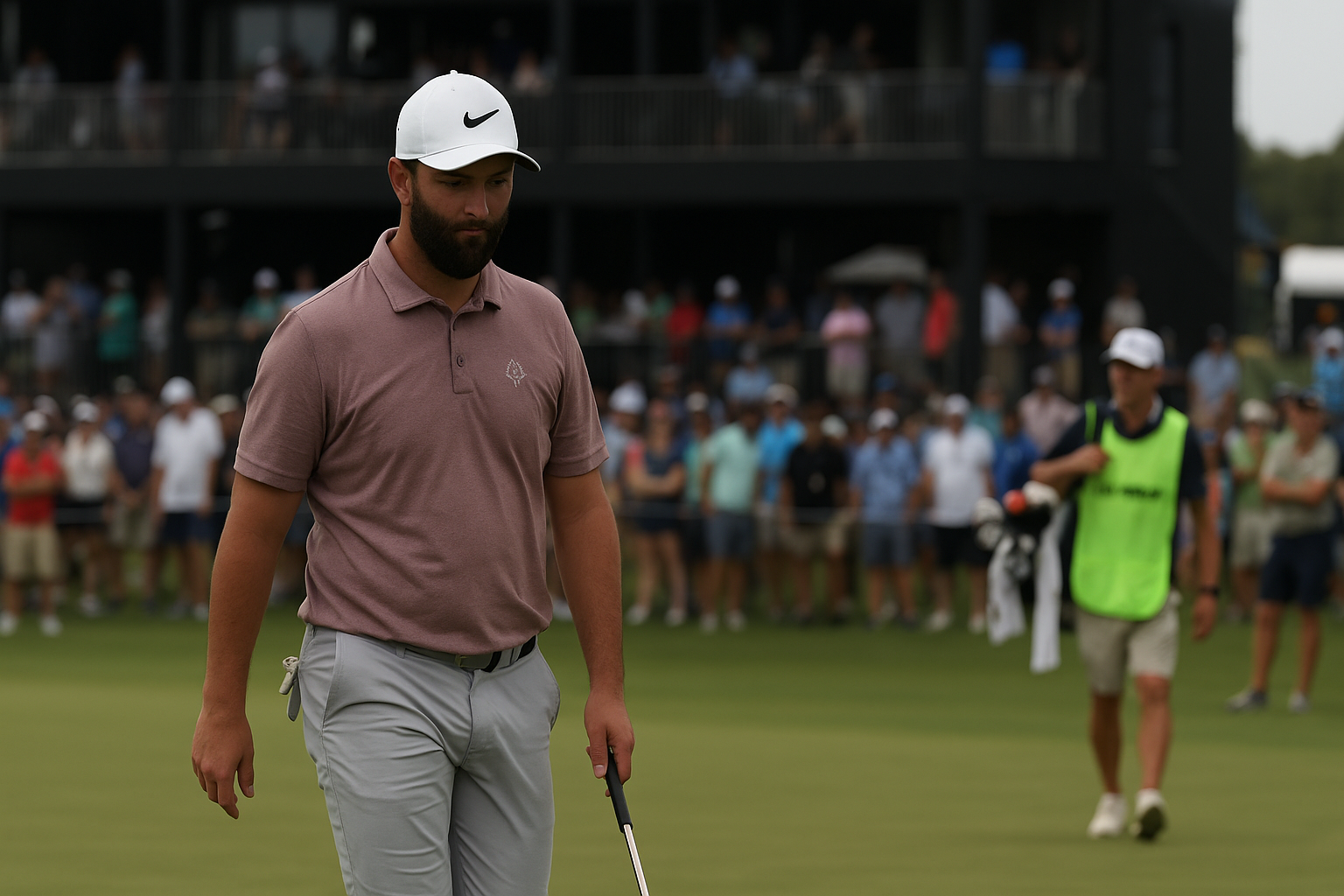
LIV Golf spent roughly $5 billion proving that unlimited funding is not a business model. Now Jon Rahm is listed as an unsecured creditor for $7.47 million.
That is not a clever headline. It is the cold, ugly maths sitting in a New Jersey bankruptcy filing after LIV Golf entered Chapter 11 on September 8, 2026. The breakaway league that paid nine-figure sign-on deals to drag golf’s biggest names away from the PGA Tour has reached the point where its stars are no longer merely employees. They are creditors. ([casedocs.omniagentsolutions.com](https://casedocs.omniagentsolutions.com/cmsvol2/pub_47610/b1f3133f-39e9-4e6e-8e07-ba9eaf31a2fb_190-1.pdf))
The bill has finally arrived
Let’s call this what it is: a spectacular commercial reckoning dressed up as a restructure.
LIV Golf says it will emerge as a leaner, player-majority-owned operation called “LIV 2.0.” Maybe it will. Chapter 11 exists precisely so businesses can keep operating while they sort out a mess. But bankruptcy is not a fresh coat of paint. It is the legal process you use when the old economics no longer work.
The filing estimates LIV’s assets at $100 million to $500 million, against liabilities of $500 million to $1 billion. It had only about $15 million in cash when it filed. Saudi Arabia’s Public Investment Fund, LIV’s backer, had invested approximately $5 billion in equity capital since the business began in 2021. Then the PIF stopped regular funding this year. That is the whole story in four numbers: massive capital, weak self-sufficiency, shrinking runway, bankruptcy. ([apnews.com](https://apnews.com/article/893e8af7c2ab9626f9d600435316c83e))
Jon Rahm’s listed unsecured claim is $7,472,527.47. Bryson DeChambeau is listed at $5,769,230.77. Dustin Johnson: $5,489,010.99. Cameron Smith: $4,835,164.84. Adrian Meronk, Tyrrell Hatton, Abraham Ancer, Ben An, Brooks Koepka and other players also appear among the 30 largest unsecured creditors. These are claims listed in the bankruptcy documents, not necessarily the total lifetime value of every player deal. But the signal could not be louder: the promises that made LIV famous are now part of the restructuring problem. ([casedocs.omniagentsolutions.com](https://casedocs.omniagentsolutions.com/cmsvol2/pub_47610/b1f3133f-39e9-4e6e-8e07-ba9eaf31a2fb_190-1.pdf))
LIV has asked the bankruptcy court for permission to reject player contracts involving Rahm, DeChambeau, Phil Mickelson, Joaquin Niemann, Sergio Garcia, Johnson, Hatton and Smith. Its lawyers argue the old agreements do not provide material benefit and do not fit the compensation model planned for LIV 2.0. If those agreements are rejected, players become unsecured creditors for relevant claims and may recover only a fraction through the bankruptcy process. ([axios.com](https://www.axios.com/2026/09/09/liv-golf-contracts-bryson-dechambeau-jon-rahm))
That is a fairly sharp reversal from “we changed golf forever.”
LIV did change golf — just not into a viable standalone business
Give LIV its due. It forced the PGA Tour to confront a few things it had been happily avoiding: players wanted more money, more control, fewer tournaments and better treatment. Competition made the incumbent move. That part was real.
But changing an industry and building a durable business are not the same thing. Plenty of founders confuse the two. They disrupt a market, get newspaper coverage, terrify an incumbent and mistake the noise for product-market fit.
LIV’s original model was brutally expensive by design. It needed star power immediately, so it bought it. It needed relevance immediately, so it paid for it. It needed events, broadcast distribution, hospitality, sponsorship, production, teams and fans immediately, so it funded the lot.
There is nothing immoral about spending heavily to gain market share. I’ve built businesses; sometimes you have to put the foot down. But there must be a credible moment when the customer revenue, commercial partners and media rights start taking some weight off the balance sheet.
LIV appears never to have got there before its financier decided the experiment had run long enough. The league’s final 2026 event was in Indiana in August, after cancellations including planned stops in Louisiana and Michigan. Four vendors had already filed lawsuits over non-payment by the time the Chapter 11 case began. ([apnews.com](https://apnews.com/article/893e8af7c2ab9626f9d600435316c83e))
That is the danger of relying on a single rich backer. People call it patient capital right up until the patient leaves the room.
The player-ownership pitch is clever — and still risky
LIV’s proposed reset has a sensible kernel. The league says players would become majority owners, the field would expand from 57 to 75 players, a 54-hole cut would be introduced, and Monday qualifiers would create a pathway in. BC Partners is set to lead the recapitalisation, while PIF has agreed to provide up to $49.6 million in debtor-in-possession financing, subject to court approval. LIV has said it aims to return in early 2027. ([apnews.com](https://apnews.com/article/893e8af7c2ab9626f9d600435316c83e))
In principle, aligning player incentives with the league’s long-term value is better than paying everyone as if the money tap can never be turned off. Owners think differently from contractors. They care about margins, sponsors, audiences and whether the bloody thing survives.
But here is the overlooked problem: player ownership does not create demand. It does not sell a single ticket, win a single broadcaster, or convince a sponsor that golf fans care enough to buy its product.
Ownership is powerful when it sits on top of a business that already has genuine economic momentum. It is less powerful when it is handed out as part of a rescue package to preserve a business after the capital structure has blown up.
And the players have choices. The PGA Tour has already created a path back for LIV players, albeit with penalties. Brooks Koepka returned under a deal that included a $5 million charitable payment, no equity grants for five years and no access to bonus money in his return year. Rahm, DeChambeau and Smith did not accept the same offer before the stated deadline. Their next move matters more than any glossy LIV 2.0 presentation. ([apnews.com](https://apnews.com/article/893e8af7c2ab9626f9d600435316c83e))
If the biggest names walk, LIV 2.0 has a branding problem. If they stay, they must accept that the old paydays and the new ownership narrative are pulling in opposite directions. You cannot credibly say you are building a sustainable league while carrying contracts designed for an unlimited-spending arms race.
The real loser is the idea that capital can replace customers
This is the contrarian bit: LIV’s Chapter 11 is not mainly a golf story. It is a warning for every founder and investor who has confused access to capital with commercial validation.
A gigantic cheque can buy talent. It can buy launch speed. It can buy marketing, distribution, prestigious venues and even temporary credibility. What it cannot buy indefinitely is a customer habit strong enough to support the enterprise when the subsidy disappears.
I’ve seen this mistake in business more times than I can count. A company raises too much money too early, starts treating expenses as strategy, and builds a cost base that assumes the next funding round is an entitlement. Nobody wants to be the awkward bastard in the board meeting asking, “What happens if the money stops?” Then the money stops, and suddenly that awkward bastard is the only adult in the room.
LIV’s own court documents show it canvassed more than 300 potential investors, with about 100 signing non-disclosure agreements and roughly 30 undertaking detailed diligence before BC Partners emerged as lead investor. That is not a casual fundraising process. That is a business searching hard for a buyer or a saviour after the original funding model cracked. ([casedocs.omniagentsolutions.com](https://casedocs.omniagentsolutions.com/cmsvol2/pub_47610/b6a92e0d-c15d-4a11-98df-4599493cc89a_22.pdf))
The lesson is not “never spend.” The lesson is to know what your spending is buying.
If every additional dollar of spend merely keeps the spectacle alive, you have a dependency.
If every additional dollar of spend creates a repeat customer, a better product, lower acquisition costs, stronger pricing or a defensible distribution advantage, you may have an investment.
Those are not remotely the same thing.
What this means for you
Whether you run a startup, own shares, manage a sports business or are simply trying to get richer without stepping on financial landmines, use LIV Golf as a brutal due-diligence checklist.
First: find the real customer. Do not ask who is enjoying the product. Ask who reliably pays for it, how often, and whether that revenue rises without ever-larger incentives. Fans are lovely. Paying customers are better.
Second: identify the subsidy. Every business has one, even good ones. It may be venture capital, cheap debt, one huge client, a founder’s wealth or a government deal. Write down what happens if it vanishes tomorrow. If the answer is “we’re stuffed,” you do not have resilience yet.
Third: separate a headline from an asset. Signing Jon Rahm, Bryson DeChambeau, Dustin Johnson and Cameron Smith made LIV impossible to ignore. But attention is not recurring revenue. In your own business, be wary of expensive vanity wins that look brilliant on LinkedIn but do nothing for retention, margin or cash flow.
Fourth: treat cash as oxygen, not a scoreboard. LIV had approximately $15 million in cash at filing despite years of extraordinary backing. Revenue and valuation stories matter, but cash tells you whether you live long enough to make the next decision.
And finally: when someone tells you they have “patient capital,” smile, nod, and ask for the exact terms. Capital is patient only until it isn’t. That is not cynicism. That is business.
Sources
- AP: LIV Golf files for bankruptcy protection as it tries to survive in a smaller version
- Axios: LIV Golf files to sever player contracts, including deals with Bryson DeChambeau and Jon Rahm
- LIV Golf Incorporated Chapter 11 Petition and Largest Unsecured Creditors
- LIV Golf Debtor-in-Possession Financing Motion