LIV Golf’s $5B Reality Check: Why a Lead Investor Isn’t a Rescue
LIV Golf spent more than $5 billion proving money can buy golfers. It still hasn’t proved it can buy a durable business.
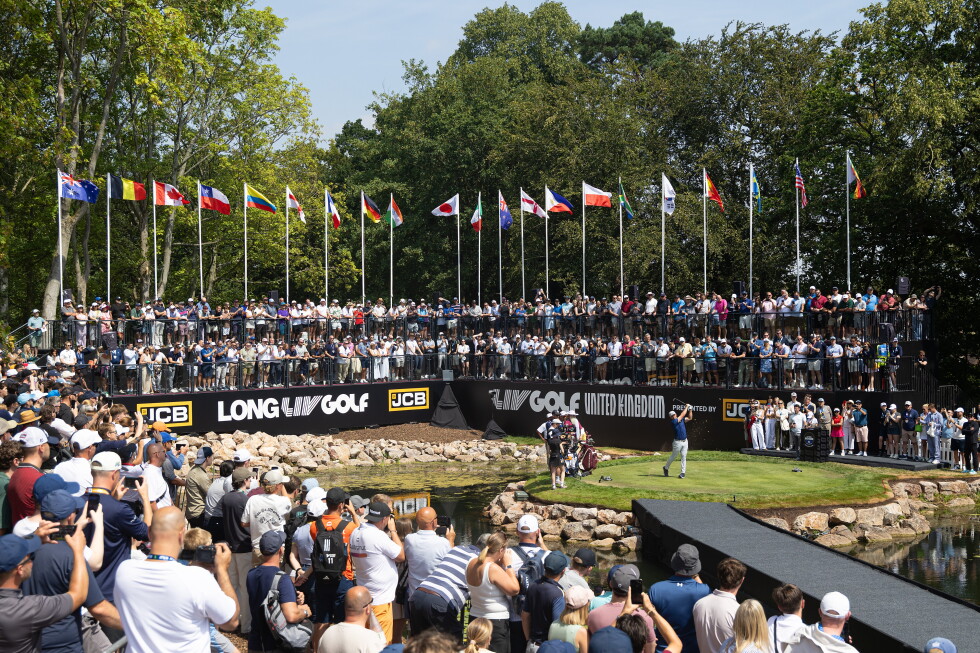
LIV Golf has spent more than $5 billion since 2022, and it is now celebrating a signed term sheet from an investor it will not name.
That is not a victory lap. That is what a company does when the bloke who used to cover every bill has told it the bar is shutting.
The announcement sounds better than the balance sheet
LIV Golf CEO Scott O’Neil said this week that the league has reached agreement with a lead investor, with the transaction expected to be finalised in September. The investor has signed a board-approved term sheet, according to O’Neil. The investor’s identity, the size of the cheque, the valuation, the debt terms and the control rights have not been disclosed.
Those missing details are the whole bloody story.
A term sheet is progress. It is not cash in the bank. It is not a closed deal. And it certainly is not proof that LIV Golf has found a viable commercial model after Saudi Arabia’s Public Investment Fund withdraws its funding following the 2026 season.
The PIF built LIV the fast way: huge signing bonuses, enormous purses, premium venues, music, hospitality and enough money to make the PGA Tour look slow and undercapitalised. It lured Brooks Koepka, Dustin Johnson, Bryson DeChambeau, Jon Rahm, Phil Mickelson and Patrick Reed with nine-figure deals and outsized prize pools.
That achieved its immediate aim. LIV became impossible to ignore.
But there is a big difference between buying attention and building an asset. The first is easy if you have sovereign-wealth-fund money. The second requires customers, repeatable revenue, disciplined costs and somebody willing to own the downside once the novelty wears off.
LIV is now being forced to find out whether it has the second thing.
From a 14-event league to a 10-event survival plan
Reuters reported in May that LIV and its adviser, Ducera Partners, were seeking $250 million to $350 million in fresh investment. The proposed reset included shrinking the calendar from 14 events to 10 team events, while making players equity holders.
That last bit has been sold as a feature. It may be one. But don’t confuse it with free money.
Giving players equity makes sense only if the equity has a credible path to value. Otherwise, it is a polite way of saying, “The cash we used to pay you is no longer available, so here is a slice of a much riskier future.”
O’Neil put it plainly: many players joined because it was an opportunity to make money, and the next opportunity is equity rather than cash. Fair enough. At least nobody is pretending the model has not changed.
But equity does not solve a cash-flow problem. It changes who carries the risk.
The first version of LIV put the risk on the PIF. The next version appears designed to put more of it on new investors, management and the players themselves. That is a much more normal business arrangement. It is also a much harder sell when the company has expensive contracts, uncertain media economics, legal disputes and a product that still relies heavily on its star names.
Jon Rahm of Legion XIII, Bryson DeChambeau of Crushers GC, Phil Mickelson of HyFlyers GC, Dustin Johnson and Patrick Reed of 4Aces GC, Cameron Smith of Ripper GC and Tyrrell Hatton are not merely golfers in this equation. They are the inventory.
If the stars stay, LIV has a chance to keep a premium position in golf. If they leave, or demand guarantees that a new capital structure cannot support, the league becomes a collection of team logos looking for a reason to exist.
The Michigan problem is bigger than Michigan
The practical strain is already visible.
LIV Golf Louisiana, scheduled for late June in New Orleans, was cancelled. Front Office Sports reported that Louisiana is seeking repayment of $1.2 million it paid as part of a planned $5 million hosting fee.
Then there is the scheduled season-ending team championship at The Cardinal at Saint John’s Resort in Michigan from August 27 to 30. Reports have raised doubts about whether it will happen. The event is supposed to offer $40 million in prize money, with $11.2 million for the winning team, down from $50 million and $14 million respectively in 2025.
A reduced prize pool is not a scandal. It is called acting like adults.
But cancelling events, deferring payments or failing to build event infrastructure on time tells investors something more serious: the operation may not have enough room between its obligations and its available cash.
This is the bit people miss when they obsess over the headline capital raise. Raising $250 million or even $350 million does not automatically fund a healthy league. It buys time to restructure one.
That distinction matters.
A business with clean unit economics raises growth capital to do more of what already works. A business with unclear economics raises rescue capital to survive long enough to change what does not.
LIV is firmly in the second category.
The contrarian view: Saudi Arabia leaving could save LIV
Here is the overlooked angle: PIF withdrawing may be the best thing that happens to LIV Golf.
Seriously.
The old model was too distorted to judge properly. When the backer has near-limitless capital and strategic motives beyond profit, every commercial decision becomes fuzzy. You can run giant purses because you want global headlines. You can pay players eye-watering guarantees because the disruption itself is part of the objective. You can keep investing because walking away would look like defeat.
That is not how most businesses get built. It is how projects get subsidised.
A smaller 10-event circuit, tighter player economics, genuine outside ownership and a schedule that lets players compete elsewhere could create a cleaner product. Less calendar clutter. More scarcity. Better chance of concentrating audiences, sponsors and hospitality demand around fewer dates.
That is the optimistic case.
The pessimistic case is simpler: LIV loses the subsidy, cuts the spend, loses talent and discovers that its audience was never deep enough to support the cost base.
Both can be true as possibilities. Anyone declaring the lead-investor news a turnaround before knowing the valuation, capital structure and player commitments is doing public relations, not analysis.
The important question is not, “Did LIV find an investor?”
It is, “Can LIV make money—or at least become investable—without a sovereign fund swallowing the losses?”
Until that answer is visible in contracts, revenue and a completed 2027 schedule, I would keep the champagne corked.
What this means for you
Whether you run a startup, buy businesses or manage your own money, LIV Golf offers a brutally useful lesson: do not mistake a funding source for a business model.
Use this tomorrow.
First, ask where the cash comes from when your biggest backer, customer or channel partner disappears. Not when things are rosy—now. If the honest answer is “we’ll raise again,” you have financing risk disguised as strategy.
Second, separate vanity metrics from commercial proof. Big names, press coverage, sold-out hospitality and flashy events can all be valuable. But they do not replace recurring revenue, margins and customer retention. A packed event can still be a financial dud if you paid too much to stage it.
Third, treat equity carefully. Equity is powerful when the company can compound value. It is rubbish as a substitute for salary or payment when the future is uncertain. If you are offered equity, ask the unfashionable questions: What is the cap table? What are the liquidation preferences? Who controls the board? What debt sits ahead of me? What happens if the next raise is down-round city?
Finally, build before you are forced to rebuild. LIV’s new model may yet work precisely because necessity is stripping out the excess. Most founders wait too long to make that call. Cut the product line that does not earn. Renegotiate the contract that can kill you. Focus the calendar. Make the offering clearer.
Money can buy a spectacular launch. It cannot permanently outsource discipline.
LIV Golf is about to learn that lesson in public. Every operator should learn it before the bank account makes the decision for them.