Los Angeles Lakers’ $12.5B Sale Is a Warning to Every Sports Owner
The Lakers just gained $2.5 billion in value in 14 months without winning a title. If you think sport is priced on performance, you’re watching the wrong game.
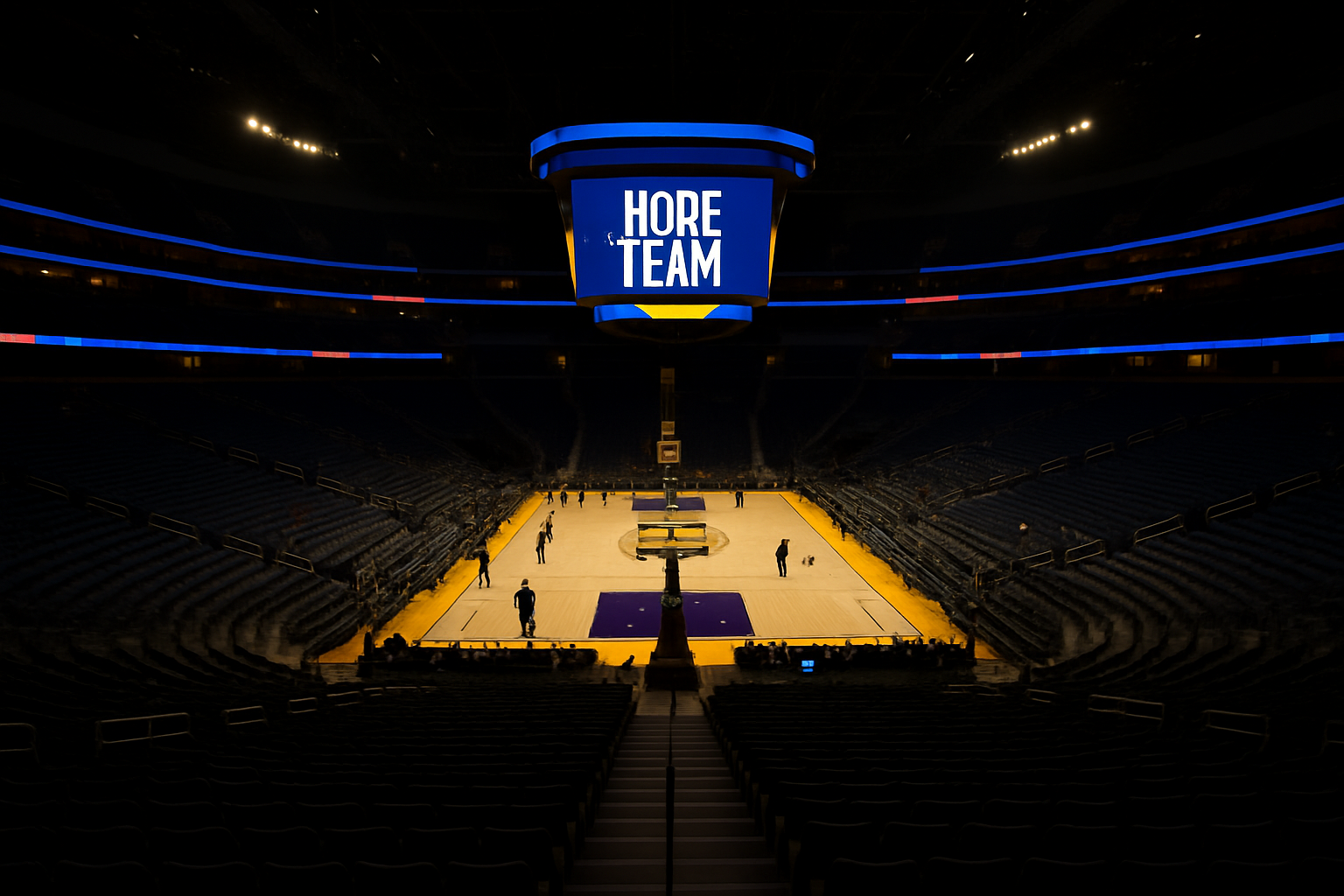
The Los Angeles Lakers just gained $2.5 billion in value in 14 months without winning a title. If you still think sport is priced mainly on performance, you’re watching the blokes on the court while the real game is being played upstairs.
Josh Kushner and Bob Iger have agreed to buy the Lakers at a $12.5 billion valuation, subject to NBA approval. Mark Walter struck his deal for control at a $10 billion valuation only last year. That is a 25% leap in a bit over a year for the same basketball team, the same building arrangement and, broadly speaking, the same underlying machine.
Luka Doncic is the headline player now. LeBron James has moved on to the Philadelphia 76ers. But this price is not a bet that Doncic will hit more step-back threes than anyone else. It is a bet that the Lakers are one of the very few sporting assets on earth that can keep turning attention into money for decades, regardless of who is taking the last shot.
That is the part founders, investors and operators need to understand: the market does not pay peak prices for a good product. It pays absurd prices for a scarce, trusted distribution machine with emotional ownership built in.
The $12.5 billion number is bigger than basketball
The reported deal makes the Lakers the most expensive professional sports franchise ever sold. It also doubles the roughly $6.1 billion paid for the Washington Commanders only three years ago.
Sit with that for a second. In 2023, $6.1 billion looked like a bonkers price for a sports team. By August 2026, it is effectively the old record. That is how quickly premium sport has become a different asset class.
The Lakers are not merely an NBA team. They are a global entertainment brand with 17 championships, decades of star power and a fan base that behaves less like customers and more like members of a religion. Magic Johnson, Kareem Abdul-Jabbar, Kobe Bryant, Shaquille O’Neal, LeBron James and now Luka Doncic are not just athletes in this equation. They are chapters in an intellectual-property library that never stops being monetised.
A Lakers game has multiple revenue engines firing at once: tickets, premium hospitality, sponsorships, merchandise, local commercial deals, global brand licensing and the NBA’s media ecosystem. Most businesses would kill for one durable revenue engine. The Lakers have a stack of them, all reinforced by a brand people voluntarily tattoo on themselves.
And here is the kicker: the buyer is not purchasing next season’s earnings. Nobody sensible pays $12.5 billion for one season’s earnings. Kushner and Iger are purchasing the right to own a permanent place in the cultural bloodstream of Los Angeles and the NBA.
That is why a bad season hurts the mood but does not break the asset.
Mark Walter’s 14-month flip is the uncomfortable bit
The strange part is not that the Lakers sold for $12.5 billion. The strange part is that Mark Walter agreed to sell so soon after taking control.
Walter’s group had been making changes. The Lakers had added front-office and business personnel, looked for new commercial revenue and pursued additional sponsorship inventory, including jersey-patch opportunities. That is not how you act if you plan to toss the keys back after a quick lap around the block.
Yet the deal emerged rapidly, and it still needs the approval of the NBA Board of Governors at its September meeting in New York.
There will be plenty of gossip around why Walter sold. Frankly, most of it is useless unless it is proven. The commercial lesson is much cleaner: a buyer willing to write an enormous cheque can compress years of expected value into one transaction.
Walter agreed to buy control at a $10 billion valuation. Kushner and Iger then offered a price that reportedly put another $2.5 billion on the table. On paper, that is an extraordinary uplift in a very short period.
But don’t confuse a valuation jump with money falling from the sky. Sport is now attracting capital from people who see elite franchises as scarce long-duration assets. The price rises because there are very few available assets of that quality, because global wealth keeps expanding, and because the number of buyers able to play at this level is still larger than the number of iconic teams for sale.
That is not a normal market. It is a trophy market with cash flow attached.
Bob Iger and Josh Kushner did not buy a team. They bought a shortcut.
Iger and Kushner had been working on a potential Las Vegas NBA expansion bid. Buying the Lakers means they no longer need to wait for expansion, which could begin no earlier than the 2028-29 season.
That matters more than people realise.
Expansion is a gamble on a future product: future arena plans, future sponsors, future fans, future roster, future relevance. You might secure a shiny new team, but you still have to build the habit. You have to make people care every Tuesday night in February when the novelty has worn off.
The Lakers come with the habit pre-installed.
Iger knows media, storytelling and consumer franchises better than almost anyone alive after leading Disney through two long stints. Kushner is a venture capitalist with prior minority stakes in NBA teams, including the Miami Heat. Together, they are buying into a business where content, celebrity, commerce and sport have already fused.
This is why I would not frame the price as merely “basketball inflation.” It is a strategic acquisition of an audience platform.
A founder should understand the distinction. A product gets bought because it works. A platform gets bought because it controls access to an audience, creates repeat behaviour and makes adjacent businesses more valuable.
The Lakers are a platform wearing a basketball singlet.
The overlooked angle: the NBA just repriced every premium asset
Every owner of a major sports franchise looked at this deal and immediately did some mental arithmetic. That is inevitable.
If the Lakers are worth $12.5 billion, what does that imply for the New York Knicks? The Boston Celtics? The Golden State Warriors? The Dallas Cowboys? Manchester United? Real Madrid? The New York Yankees?
Not every team is suddenly worth $12.5 billion. Don’t be silly. The Lakers are rare even within rarefied sport. But comparable sales are powerful because they reset expectations, boardroom conversations and future asking prices.
The price also changes the NBA’s expansion calculus. A Las Vegas or Seattle team cannot credibly be valued as though it is entering the league in 2015. The league has just been handed a fresh, eye-watering data point for scarcity and demand.
That creates a second-order effect: owners become wealthier on paper, which gives them more borrowing capacity and more appetite to invest in players, venues, technology and adjacent businesses. Not all of them will spend it well. Plenty of sports owners can turn a fortune into a PowerPoint deck and a disappointing free-agent signing. But the financial gravity of the whole ecosystem shifts upward.
There is a danger in this too. When asset values run ahead of ordinary operating economics, owners can become obsessed with financial engineering and forget the thing that built the value in the first place: supporters.
Fans are not a line item. They are the moat.
Push ticket prices too far, bury games behind fragmented subscriptions, turn every timeout into an advert and treat tradition as a nuisance, and eventually you damage the very emotional asset you paid billions to own.
Winning matters — just not in the simplistic way people think
Here is the contrarian point: championships are not the main reason a club like the Lakers is worth $12.5 billion. But winning still matters enormously.
It matters because winning refreshes the brand. It recruits the next generation of fans. It makes sponsors pay attention. It turns a jersey from clothing into a flag. It gives the business fresh footage, fresh stories and fresh reasons for people to care.
The mistake is thinking a title creates the value from scratch. It doesn’t. The Lakers’ brand was worth a fortune before Luka Doncic arrived and before any future title run. But a great team compounds the brand while a stale, incompetent one gradually taxes it.
That is why the best owners separate the two jobs. One job is preserving and expanding the commercial machine. The other is building a sporting operation that gives fans a reason to believe. If you are hopeless at either one, the other eventually suffers.
The Buss family built a legendary franchise. Walter modernised parts of the operation in a short period. Kushner and Iger now inherit a global brand built around Doncic, with all the pressure that comes with that.
At $12.5 billion, “pretty good” is no longer good enough.
What this means for you
You probably cannot buy the Lakers. Neither can I, unless someone has left a few billion dollars down the back of the couch.
But you can apply the lesson tomorrow.
First: build assets people return to without being chased. Repeat behaviour is worth more than a clever launch. The Lakers do not need to explain what they are every season. Your business should aim for the same clarity.
Second: own a category in the customer’s mind. The most valuable brands are shortcuts. When someone thinks of Los Angeles basketball, they think Lakers. When they think of your category, do they think of you — or do they have to Google the alternatives?
Third: do not optimise only for this quarter’s profit. The market pays huge premiums for trusted brands, loyal audiences and durable distribution. Those take years to build and minutes to damage. Treat reputation like an asset on the balance sheet, because it is.
Finally: know the difference between revenue and strategic value. A customer list, a community, a trusted brand or privileged distribution can be worth far more than the current P&L suggests. Most operators undersell these assets because they only measure what the accountant can see.
The Lakers deal is not really a story about a basketball team changing hands. It is a reminder that the biggest fortunes are made when you own something people do not merely use.
They identify with it.
And once that happens, mate, the price can get properly ridiculous.