lululemon’s $2.4B Quarter Hands Heidi O’Neill a Turnaround Nobody Can Spin
lululemon hired Heidi O’Neill to fix the brand three days after sales fell 4% to $2.4 billion. A $134.5 million tariff refund made the quarter look healthier than the business underneath it.
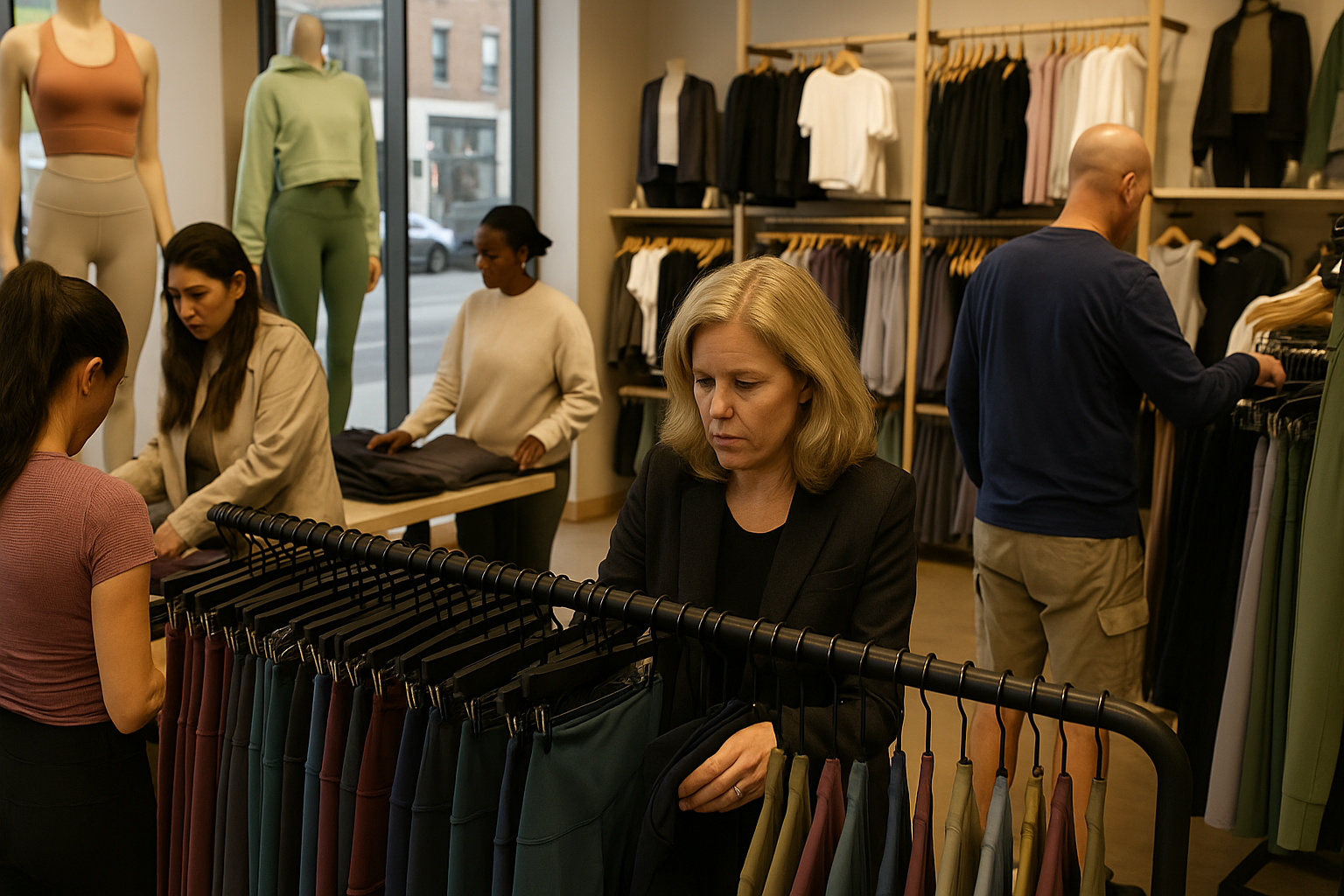
lululemon has handed Heidi O’Neill the keys on September 8, three days after reporting that quarterly revenue fell 4% to $2.4 billion. Worse, a $134.5 million tariff refund made the quarter look healthier than the business underneath it.
That is not a honeymoon. That is a burning shed with a nice new sign on the door.
Heidi O’Neill Is Walking Into Numbers, Not a Narrative
Lululemon’s second-quarter results, released September 3 for the quarter ended August 2, were grim where a premium consumer brand cannot afford to be grim. Comparable sales fell 9%. Americas revenue fell 8%. Americas comparable sales fell 12%.
For a business built on pricing power, community loyalty and the belief that its product was meaningfully better than the rack next door, that is the only number that really matters: minus 12% in its home market. ([sec.gov](https://www.sec.gov/Archives/edgar/data/1397187/000139718726000126/lulu-20260802xex991.htm))
International revenue grew 4%, which is better than a poke in the eye, but it does not cancel the main problem. International is supposed to be the accelerator. North America is still the engine. When the engine coughs, nobody should clap because the passenger-side window works.
Operating income fell 13% to $453.7 million. Yet reported gross margin rose to 60.5%, and diluted earnings per share came in at $2.92. Sounds reasonably tidy until you read the footnotes instead of the press-release headline.
The company received $134.5 million in International Emergency Economic Powers Act tariff refunds, plus $4.1 million of associated interest. That lifted gross margin and operating margin by 560 basis points, and added $0.86 to diluted earnings per share. Strip out that one-off benefit and the simple arithmetic takes reported EPS from $2.92 to roughly $2.06. That is not a formal company-adjusted number; it is simply a reminder that cash falling from the sky is not a turnaround strategy. ([sec.gov](https://www.sec.gov/Archives/edgar/data/1397187/000139718726000126/lulu-20260802xex991.htm))
Management also cut its full-year revenue outlook to $10.35 billion to $10.50 billion, which would mean a 5% to 7% decline for fiscal 2026. It expects third-quarter revenue to fall another 10% to 11%.
So O’Neill is not arriving to “unlock upside”. She is arriving to stop a premium brand from teaching its customers to wait for discounts.
The Board Bought Experience. It Did Not Buy Time.
O’Neill was named CEO in April and starts September 8. She will also join the board. The company is betting that more than 25 years at Nike — across product, brand, digital commerce, global marketplace operations and direct-to-consumer — is the right apprenticeship for this mess. ([corporate.lululemon.com](https://corporate.lululemon.com/newsroom/press-releases/2026/04-22-2026-210620063))
That bet is not crazy.
At Nike, O’Neill held major roles leading consumer, product and brand work. She also ran consumer and marketplace operations across more than 170 countries, with P&L responsibility, and previously led Nike’s direct-to-consumer and digital operations. Lululemon says she helped Nike grow from a business of more than $9 billion to one exceeding $45 billion. ([corporate.lululemon.com](https://corporate.lululemon.com/newsroom/press-releases/2026/04-22-2026-210620063))
That background matters because Lululemon’s problem is not merely that expenses are too high or the PowerPoint is stale. The company needs to reconnect product, brand and selling. Those three things get managed as separate kingdoms in too many big companies. Then everyone wonders why the customer sees a confused assortment, inconsistent marketing and a website that feels like it was built by a committee trapped in an airport lounge.
O’Neill knows the machinery. She has seen what it takes to manage a global sportswear behemoth with wholesale partners, owned stores, e-commerce, memberships, data and product calendars that need to land on time.
But here is the uncomfortable bit: Lululemon did not hire her to run a healthy business better. It hired her after former CEO Calvin McDonald stepped down effective January 31, leaving Meghan Frank and André Maestrini as interim co-CEOs for more than seven months. Frank will return to the CFO job. Maestrini will return to president and chief commercial officer. ([corporate.lululemon.com](https://corporate.lululemon.com/about-us/leadership-team))
That is a long time to run a turnaround with an interim label on the door.
Interim leaders can keep the place steady. They are rarely incentivised to make the kind of sharp, irreversible calls required when a brand loses momentum: kill weak categories, simplify the range, change the calendar, move people, upset legacy suppliers, or stop chasing revenue that cheapens the brand.
O’Neill now has to make those calls quickly — while everyone watches her through the rear-view mirror.
The Real Crisis Is Premium-Brand Discipline
Plenty of executives will blame tariffs, consumer caution, competition or foreign exchange. Some of that will be true. None of it is sufficient.
A genuinely loved premium brand has room to absorb external nonsense because consumers deliberately choose it. When comparable sales fall 12% in the Americas, the issue is not simply that the weather changed or shoppers became price sensitive. It is that the customer’s urge to buy has weakened.
That is the heart of O’Neill’s job: restore urgency.
Lululemon has useful assets. It ended the quarter with 825 stores, $1.4 billion in cash and cash equivalents, and inventory down 1% in dollars and 7% in units. It also repurchased 2.7 million shares for $330 million during the quarter. This is not a liquidity crisis. It is a relevance and execution crisis. ([sec.gov](https://www.sec.gov/Archives/edgar/data/1397187/000139718726000126/lulu-20260802xex991.htm))
That distinction matters. A broke company has fewer choices. A cash-generative company in brand trouble has plenty of choices — which is dangerous, because it can spend years funding mediocre ideas.
The lazy answer would be to throw more money at marketing. Lululemon has already said it plans to increase marketing investment. Fine. But marketing is an amplifier, not a defibrillator. If the product is not novel enough, distinct enough or desirable enough, more marketing merely informs more people that they do not want it.
O’Neill needs to start with a brutally practical product audit. Which categories command full price? Which have repeat purchase? Which are only moving after promotion? Which products make existing guests bring a mate into the store? Which ones need to be put out of their misery?
That is not glamorous work. It is how a premium brand stays premium.
The Overlooked Win: Lululemon’s Boardroom Has Stopped Throwing Punches
The other thing O’Neill has going for her is less obvious: the boardroom drama has at least been contained.
Founder Chip Wilson, who owns about 8.7% of Lululemon’s shares, entered a cooperation agreement with the company in May. Under that deal, Laura Gentile, former ESPN chief marketing officer, and Marc Maurer, former co-CEO of On, are set to join the board following the 2026 annual meeting. Lululemon also agreed to appoint another director with apparel product and brand expertise by October 1. ([corporate.lululemon.com](https://corporate.lululemon.com/newsroom/press-releases/2026/05-27-2026-123017044))
That is not housekeeping. It is material.
Maurer has lived the job of building a premium performance brand internationally. Gentile understands cultural relevance and audience-building. Neither appointment guarantees better leggings. But both are more useful to a CEO trying to rebuild demand than another generic board member who can speak fluently about “stakeholder alignment” while the customer walks away.
The contrarian view is that O’Neill should be grateful for the activist pressure, not resent it. A demanding owner and a refreshed board create cover for change. If she needs to simplify the product line, rework the North American playbook or make difficult talent decisions, the board is now better positioned to understand why.
A CEO cannot fix a drifting company if every hard decision gets second-guessed by directors who do not understand the product, the customer or the category.
What This Means for You
If you run a business, do not wait for a quarterly report to tell you your brand is losing heat. By then, the customer noticed months earlier.
Here is what I would do on Monday:
1. Separate reported performance from operating reality. Identify every one-off benefit, accounting tailwind and temporary cost saving. Ask: if this disappeared tomorrow, would I still be proud of the result?
2. Make one person accountable for the customer journey. Product, marketing, sales and digital do not need to be merged into one giant department. But they must answer to one commercial truth: are customers buying at full price, returning, and telling others?
3. Measure home-market health separately from expansion. International growth can flatter a business while its most important market quietly breaks. Treat your core market like the canary in the mine, not an inconvenient line item.
4. Give interim leaders a clock. Stability has value. Indecision has a cost. If an interim arrangement runs long, define exactly which strategic decisions that team can make and which must wait for the permanent CEO.
5. Cut weak offers before they damage the whole brand. Most founders and executives keep mediocre products because killing them feels like admitting failure. Nonsense. The customer has already voted. Remove the clutter and put the money behind what earns genuine demand.
O’Neill has the credentials. Lululemon has the cash. The board now has more relevant operating experience.
None of that matters if the company mistakes financial engineering for customer demand. The new CEO’s real task is simple to describe and bloody difficult to execute: make people want Lululemon at full price again.