Mattel’s 8-Year CEO Exit Puts Roger Lynch in Charge Before the Holidays
Mattel shares gained roughly 5% during Ynon Kreiz’s tenure while the S&P 500 rose nearly 200%. Now Roger Lynch takes over before the holidays.
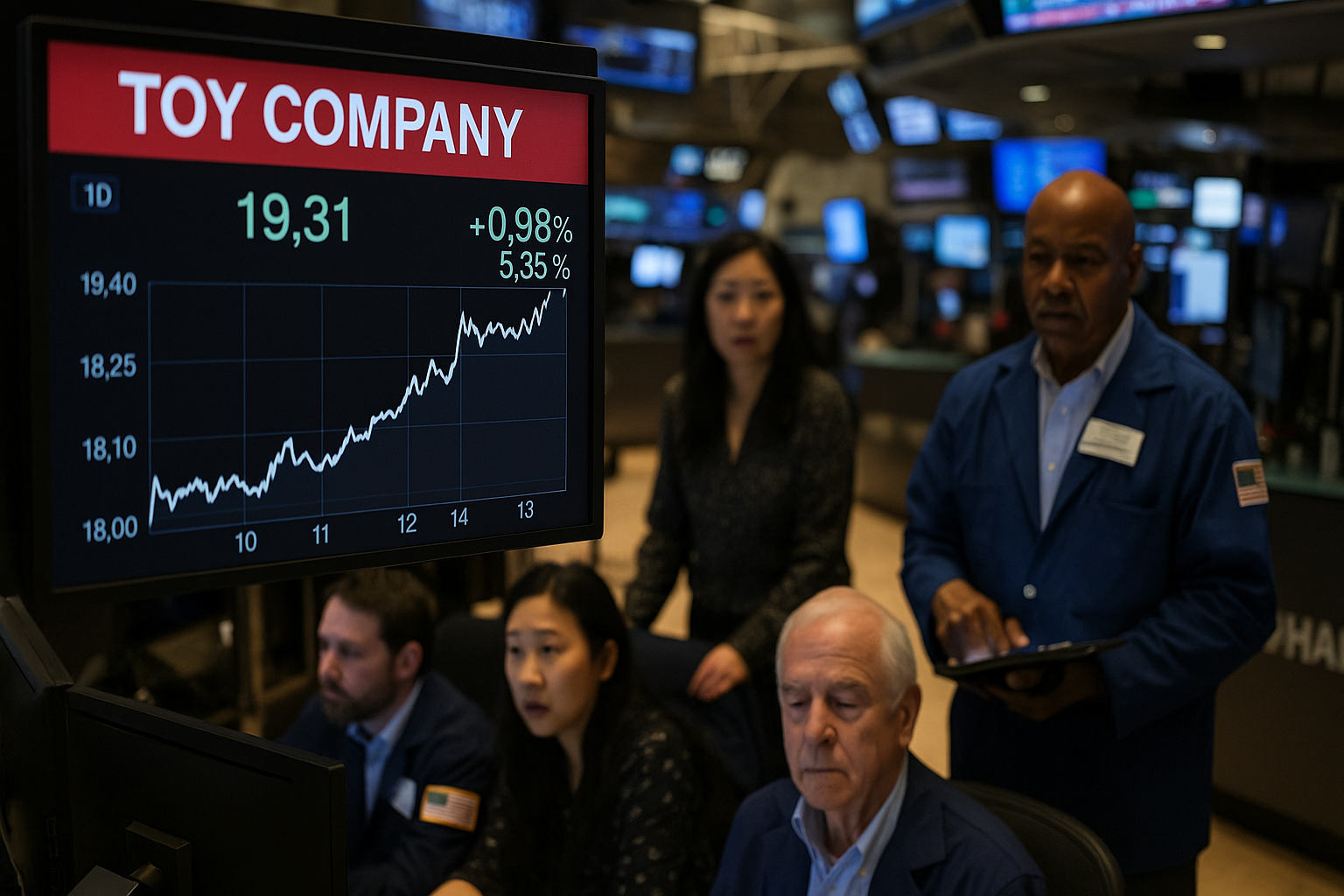
Mattel shares gained roughly 5% during Ynon Kreiz’s tenure while the S&P 500 rose nearly 200%. Now it has replaced an eight-year CEO days before its most important selling season.
If your succession plan requires everyone to act surprised, mate, you do not have a succession plan.
On October 2, 2026, Ynon Kreiz steps down as Mattel’s chairman and chief executive. Roger Lynch, Mattel’s independent lead director and the chief executive of Condé Nast, becomes chairman immediately and must take the CEO job by November 2. Diana Ferguson becomes independent lead director.
That is not a minor corporate reshuffle. It is a live test of whether a board can hand over the keys while the business is still moving at full speed.
Mattel has changed drivers while the car is doing 100 kilometres an hour
Kreiz took over Mattel in 2018 when the company was trying to escape the ugly label of a fading toy maker with famous brands and too little growth. His strategy was simple enough to say and bloody hard to execute: stop treating Barbie, Hot Wheels, Fisher-Price and the rest as products on a shelf; treat them as intellectual property that can earn across film, television, games, licensing and consumer products.
The 2023 Barbie film was the obvious proof point. It turned an old toy brand into a global cultural event and drove demand for related merchandise. But one giant hit does not automatically make a company durable. It can just as easily reveal that everyone was relying on one giant hit.
Mattel’s recent numbers show both the progress and the problem. In the second quarter of 2026, net sales rose 10% to $1.125 billion. Vehicles, led by Hot Wheels, grew 14%. The action figures, building sets, games and other category rose 35%, helped by digital games and theatrical releases.
But the important numbers were not all pretty. Reported gross margin fell to 48.2% from 50.9% a year earlier. Operating income dropped to $11 million from $79 million. Mattel reported a loss of $0.06 a share, compared with earnings of $0.16 a year earlier. Tariffs, inflation, higher royalties, foreign exchange and heavier spending all took bites out of the business.
That is why this CEO move matters. Lynch is not inheriting a turnaround wreck. He is inheriting a company with strong brands, an operating strategy that makes sense, growing pressure on margins and no room for executive theatre.
Roger Lynch is an insider appointment — and that is the whole point
Boards love saying they ran a “comprehensive succession process.” Usually that phrase tells you nothing. In this case, the structure tells us more than the press release.
Lynch has been on Mattel’s board since 2018. He was already its independent lead director. He knows the brands, the strategy, the board dynamics and the financial pressure points. Since 2019, he has run Condé Nast, after earlier CEO roles at Pandora and Sling TV. His background sits exactly where Mattel now wants to live: consumer brands, media, distribution, technology and changing audience behaviour.
In other words, Mattel has not hired a toy executive to defend the old toy business. It has picked a media-and-consumer operator to extend the intellectual-property play.
That is sensible. It is also not risk-free.
A board insider can start quickly because they already know where the bodies are buried. But an insider can also be too attached to the strategy the board approved in the first place. The danger is not that Lynch will fail to understand Mattel. The danger is that everyone assumes understanding is the same thing as independent judgment.
The best version of this appointment is a clean continuation: preserve the IP-led strategy, improve operational discipline, make digital games and entertainment earn their keep, and protect margins. The worst version is more PowerPoint about “ecosystems” while the core toy business absorbs costs and the share price goes nowhere.
Lynch needs to make clear which version investors and employees are getting, quickly.
The uncomfortable number is not Barbie’s box office. It is 5%
Reuters noted that Mattel shares gained roughly 5% during Kreiz’s tenure, while the S&P 500 rose nearly 200% over the same period. That comparison is brutally simple, and it explains why activist investor Southeastern Asset Management pushed Mattel earlier this year to consider strategic alternatives, including a sale or a combination with Hasbro.
You can argue about the exact benchmark. Every CEO can. But shareholders do not buy a company to admire the strategy deck. They buy it to own a growing stream of cash flows and to see management allocate capital better than they could themselves.
Mattel is still backing its strategy with money. It reiterated a target of $400 million in share repurchases for 2026 after buying back $300 million in the first half. It says its Optimizing for Profitable Growth program remains on track to produce $225 million in savings by year-end. Full-year guidance calls for constant-currency sales growth of 3% to 6%, adjusted operating income of $580 million to $630 million and adjusted earnings per share of $1.27 to $1.39.
Those are useful targets. They are not absolution.
A buyback is only clever if the company can invest in its best growth opportunities, sustain its balance sheet and still buy shares at a price below real value. It is not a substitute for fixing a margin problem. And cost savings are not a strategy if they merely fund the next round of costs.
Lynch’s actual job is to convert Mattel’s brand story into returns that survive a world without a once-in-a-generation Barbie moment.
Kreiz’s new job makes this more than a Mattel story
Kreiz is not heading for a quiet retirement or a ceremonial advisory role. Paramount Skydance has named him co-CEO of the soon-to-be combined Paramount-Warner Bros. Discovery business alongside David Ellison, with Kreiz due to start on October 5.
That move tells you what the market now values in a senior operator: the ability to manage brands across formats, audiences and revenue streams while integrating complicated businesses. Kreiz will be tasked with day-to-day operations as Ellison focuses on strategy. That is a division of labour plenty of founders should study.
Most founders make the opposite mistake. They insist strategy and operations are inseparable because both sit in their own head. Then the company gets bigger, decisions slow down and every senior hire becomes a glorified messenger.
There is nothing weak about separating the visionary role from the operating role. It becomes weak only when neither person has clear decision rights.
Paramount’s combined business will be a far messier beast than Mattel: legacy assets, creative talent, distribution shifts, huge integration demands and a leadership bench still being assembled. Kreiz’s Mattel experience is relevant because he has spent years turning familiar brands into broader entertainment assets. But operating a toy-and-IP company and integrating two giant entertainment businesses are not the same sport.
Still, the logic is clear. Big companies are hunting for executives who can translate brands into systems, not merely run departments.
The overlooked angle: a planned handover can still expose weak governance
The polite reading is that Mattel’s board planned this well. Kreiz leaves, the lead independent director steps in, and a new lead director is appointed. There is continuity, speed and no obvious vacuum.
The harder reading is that Mattel is concentrating more power in the hands of a person who already helped oversee the strategy now under investor scrutiny. Lynch will be both chairman and CEO. Ferguson’s job as independent lead director therefore matters more than the title suggests.
A good independent lead director is not decorative corporate furniture. They should set the agenda for independent directors, create room for dissent, assess the CEO honestly and make sure the board is not grading its own homework.
For Lynch, the first 100 days should be embarrassingly practical. He needs a short list of operational priorities, named owners, measurable deadlines and a plain answer on capital allocation. Which brands deserve more investment? Which entertainment projects must prove commercial value? What tariff mitigation is actually working? What does success look like for the Mattel163 mobile-games acquisition?
If he cannot explain those answers in clear English, he is not ready to run the company. He is ready to chair a panel.
What this means for you
Whether you run a startup, manage a division or own shares, take three lessons from Mattel.
First, build succession before you need it. Your best replacement should not be a mystery to the board, customers or senior team. Give potential successors real operating exposure, let them make decisions, and see how they behave when results are ugly.
Second, separate strategy from slogans. “We are an IP company” is not a strategy unless every investment has a financial logic: what it costs, who owns it, how it scales and when it earns a return. The same applies to every fashionable phrase in business, from AI to community to platform.
Third, do not confuse a strong story with a strong scorecard. Mattel’s brands are globally known. Its strategic pivot has credibility. But the share-price comparison and margin pressure show why operators must watch the scoreboard, not just the applause.
The blunt truth is this: great brands buy you time. Great management turns that time into money. Roger Lynch now has the chair, the CEO role and a holiday season to prove he knows the difference.