Mavis Pep Boys $700M Deal: Icahn’s Hard Lesson
Carl Icahn bought Pep Boys for roughly $1B. Ten years later, Mavis paid $700M for the operating business while Icahn kept the real estate. That is the lesson.
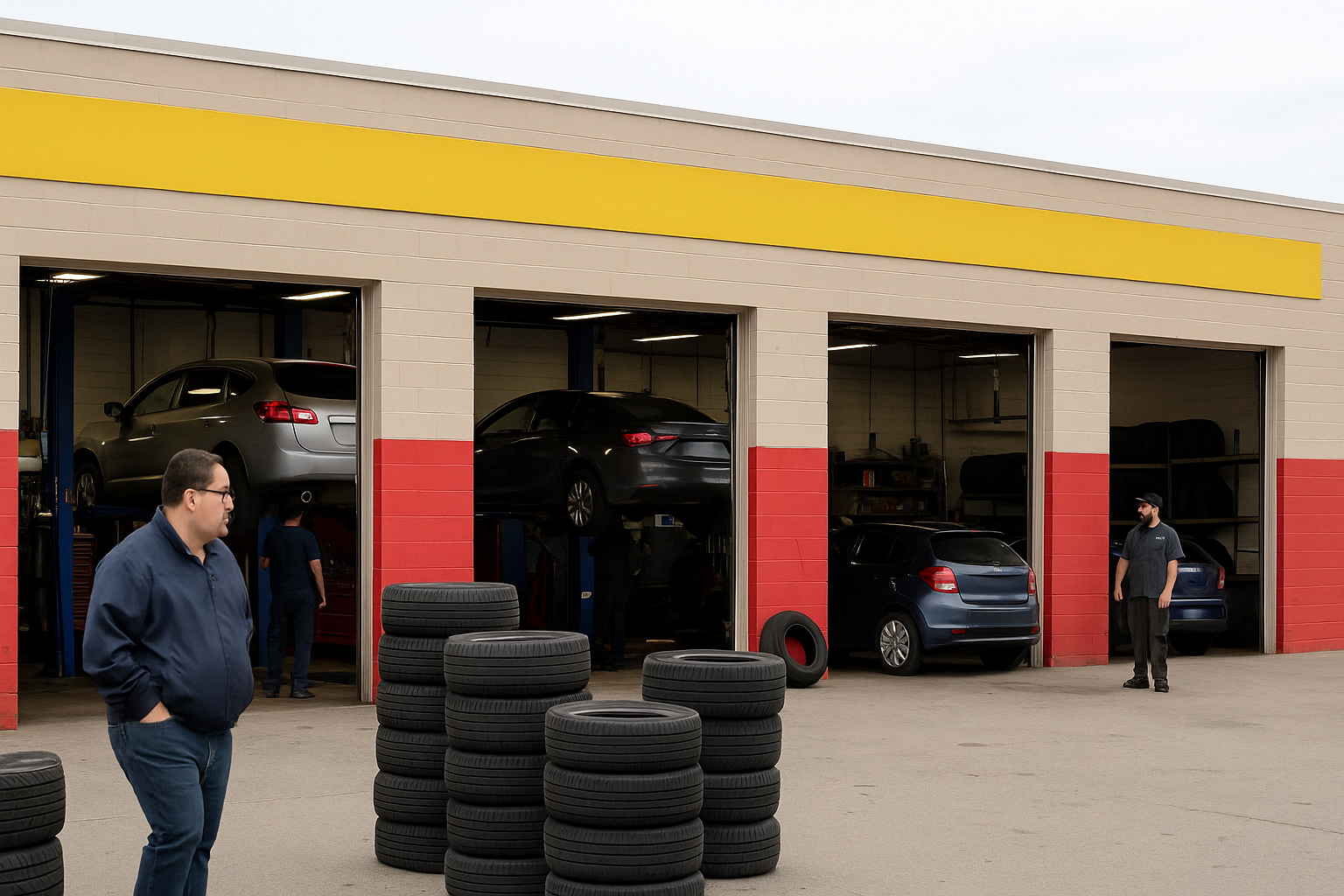
Carl Icahn bought Pep Boys for roughly $1 billion in 2016. Ten years later, Mavis paid $700 million in cash for the operating business — while Icahn kept the real estate.
That is not a clean investment-return calculation, because the asset bundles were different. It is still a brutal reminder that a famous brand is not the same thing as a great operating asset.
The interesting bit is not that a tyre chain got bigger. It is what happens when the spreadsheet meets the real world: a famous brand is not the same thing as a great operating asset.
Mavis bought scale. Icahn kept the land.
On August 20, Mavis Tire Express Services completed its acquisition of Pep Boys from Icahn Enterprises. The deal adds nearly 800 Pep Boys locations to Mavis, taking its network beyond 4,400 service centres across the US and Canada.
That is a serious footprint. Mavis now has a collection of brands that includes Mavis Discount Tire, Midas, Express Oil Change & Tire Engineers, Brakes Plus, Tire Kingdom, NTB, Town Fair Tire, Tuffy and Pep Boys. Pep Boys will retain its name, which is sensible. It has been around since 1921, and plenty of customers still know Manny, Moe and Jack even if they could not name the private-equity firms behind the counter.
But do not get too romantic about it.
Mavis did not buy every valuable thing associated with Pep Boys. Icahn Enterprises retained the company-owned real estate, plus AAMCO Transmissions and Precision Tune Auto Care. Mavis bought the operating company: stores, distribution centres, repair and maintenance operations, and the machine required to keep motorists moving.
That distinction matters enormously. When someone says, “Icahn sold Pep Boys for $700 million after buying it for $1 billion,” they are comparing two transactions with different asset bundles. It is a useful signal, not a clean investment return calculation.
Still, the signal is loud enough: this was not the glorious automotive-services empire Icahn appeared to be building a decade ago.
The $1 billion lesson Carl Icahn learned the hard way
Icahn acquired Pep Boys in 2016 after a bidding battle with Bridgestone. At the time, the logic was not ridiculous. America has an ageing vehicle fleet. Cars need tyres, brakes, servicing and repairs whether consumers are optimistic or miserable. It is recurring, necessary spending. The sort of business investors love to call “defensive” before discovering that execution can still kick them in the teeth.
Icahn also built out an automotive platform around Pep Boys, including Auto Plus. That did not go brilliantly. Auto Plus filed for bankruptcy in 2023 after weakened demand, supply-chain problems, inflation and the lingering effects of COVID-19 battered the business.
Pep Boys itself had already shifted away from retail auto parts and toward repairs and tyres under Icahn’s ownership. That was rational: repair bays and service relationships can be stickier than trying to compete with every parts website and big-box retailer on price.
But rational strategy is not the same as operational excellence.
Icahn Enterprises reported that its automotive segment’s 2025 revenue fell 3% to $1.4 billion, citing strategic closures of underperforming locations. It also pointed to weaker consumer spending on repair and maintenance. In plain English: customers were more cautious, some stores were not pulling their weight, and the network was being shrunk before it could be sold.
There is nothing shameful about selling a business that is not working as intended. I have far more respect for an owner who recognises reality than one who keeps pouring money into a bad thesis because his ego has shares in it.
The mistake is pretending a giant footprint solves a weak operating model. It does not. It merely gives you more locations from which to disappoint people.
Why Mavis thinks it can make the numbers work
Mavis is not buying Pep Boys because it fancies a century-old logo. It is buying density, customer access, technicians, supply-chain reach and a much bigger position in the western US.
That last point matters. The company said the deal materially expands its western footprint. For a service network, geography is not a cosmetic slide in a board deck. Density improves buying power, makes distribution more efficient, helps recruit and move technicians, increases brand recognition, and gives a business more ways to route customers and inventory across nearby locations.
The maths is not hard. At the headline figure, $700 million across nearly 800 locations works out to less than $900,000 per location. That is not a valuation conclusion — stores are not interchangeable, and the deal includes far more than shopfronts — but it tells you what Mavis is really buying: a ready-made operating network rather than 800 clean, comparable assets.
Building that network organically would take years, management focus and a pile of capital. Reuters reported Mavis had around 3,600 stores before the deal and had planned to add 120 stores in 2026, followed by more than 160 annually from 2027 to 2030. Buying Pep Boys allows Mavis to leap forward in one transaction.
That is the proper use of acquisitions. Do not buy revenue because the press release sounds impressive. Buy time, capability or distribution that would be painfully slow to build yourself.
Mavis also had real contractual skin in the game. Its purchase agreement included a $21 million reverse termination fee if it failed to close in specified circumstances. That is only 3% of the base purchase price, but it is enough to show this was not a casual tyre-kicking exercise.
Bigger is not automatically better — but boring can be brilliant
Here is the overlooked angle: the deal may look like old-school consolidation, but its success will come down to the least glamorous work in business.
Can Mavis standardise parts procurement without destroying local service quality? Can it retain the technicians customers trust? Can it improve booking, pricing, inventory and bay utilisation? Can it close or fix weak stores quickly? Can it preserve enough of the Pep Boys identity to keep existing customers while introducing Mavis’s operating discipline?
None of that gets people excited at a dinner party. All of it determines whether $700 million becomes a bargain or an expensive headache.
Founders get seduced by novelty. Investors get seduced by narratives. But wealth is often created in businesses that solve irritating, non-optional problems at scale. Tyres wear out. Brakes need replacing. Engines do not care whether the market has decided AI is exciting this quarter.
The contrarian view is that Mavis is not making a bet on cars. Everyone already knows cars require service. It is making a bet that management systems travel: that a better purchasing engine, operating cadence, local-market playbook and service model can produce stronger returns from assets that disappointed their previous owner.
That is a much tougher bet than “the sector will grow.” And it is the only bet that matters.
There is another lesson here for operators who obsess over valuation. Icahn kept the real estate. Mavis bought the operating business. One party wanted the cash flow and strategic scale; the other retained a separate asset base. Smart deals are often won by separating things that look bundled from the outside but have different owners, risks and natural buyers.
If you own a business, ask yourself: what do I actually have? A brand? Property? Customer relationships? Distribution? Software? A good team? A pile of revenue that needs heroic effort every month to repeat?
Do not value them as one fuzzy blob called “my company.” The market will not.
The real risk is integration, not tyres
Mavis gets a bigger network and more national relevance. It also inherits the work.
Pep Boys brings nearly 800 locations and an established brand, but the business was being sold after years of operational pressure, closures and softer revenue. That means Mavis needs to avoid the oldest acquisition mistake in the book: declaring victory at closing.
Closing is when the bill arrives.
Customers do not care that lawyers earned fees and bankers sent celebratory emails. They care whether the local store has the right tyre, whether the technician is competent, whether the quote is fair and whether the car is ready when promised. If integration makes any of those worse, the size of the network becomes a liability.
The good news for Mavis is that it is not entering an alien category. This is not a software company buying a vodka brand because someone got excited on a conference call. Mavis already runs large automotive-service brands. It knows the basic operating rhythm. That reduces risk — it does not remove it.
The bad news is that consolidation creates complexity before it creates savings. Different systems, procurement contracts, staffing models, regional reputations and store economics do not merge because a press release says “synergies.” They merge because someone does the ugly work, week after week.
What this means for you
You do not need $700 million to use the best lesson in this deal tomorrow.
First: buy capability, not vanity. If you acquire a business, hire a senior operator or launch a new product line, be precise about what you are buying that you cannot build fast enough yourself. Customers, distribution, technical expertise, supply-chain leverage and time are legitimate answers. “It makes us look bigger” is rubbish.
Second: separate the asset from the story. Pep Boys is a famous brand. Its real estate is valuable enough that Icahn kept it. Its operating network was valuable enough that Mavis paid cash for it. Those are different things. Do the same exercise on your own business. Identify the pieces that produce cash, protect downside, create leverage or merely make you feel important.
Third: treat integration as the deal. Before you sign anything, write the first 100 days in painful detail: systems, people, customers, pricing, suppliers, decision rights and the handful of metrics that determine whether the acquisition is working. If you cannot explain that plan simply, you are not buying a business. You are buying a problem with a logo.
Finally: respect boring businesses. The next flashy thing will always have a better story. But the company that quietly gets more customers through more service bays, buys inventory better and gives people a reliable outcome can compound for a very long time.
Mavis has bought the chance to do exactly that. Now comes the only part that counts: making 800 additional stores work better on Monday than they did on Friday.