May Mobility’s $1.4B SPAC Is a $93M Bet Against Robotaxi Landlords
A business doing $10 million in revenue and burning $93 million just got valued at $1.4 billion. That sounds mad—until you see what May Mobility is refusing to own.
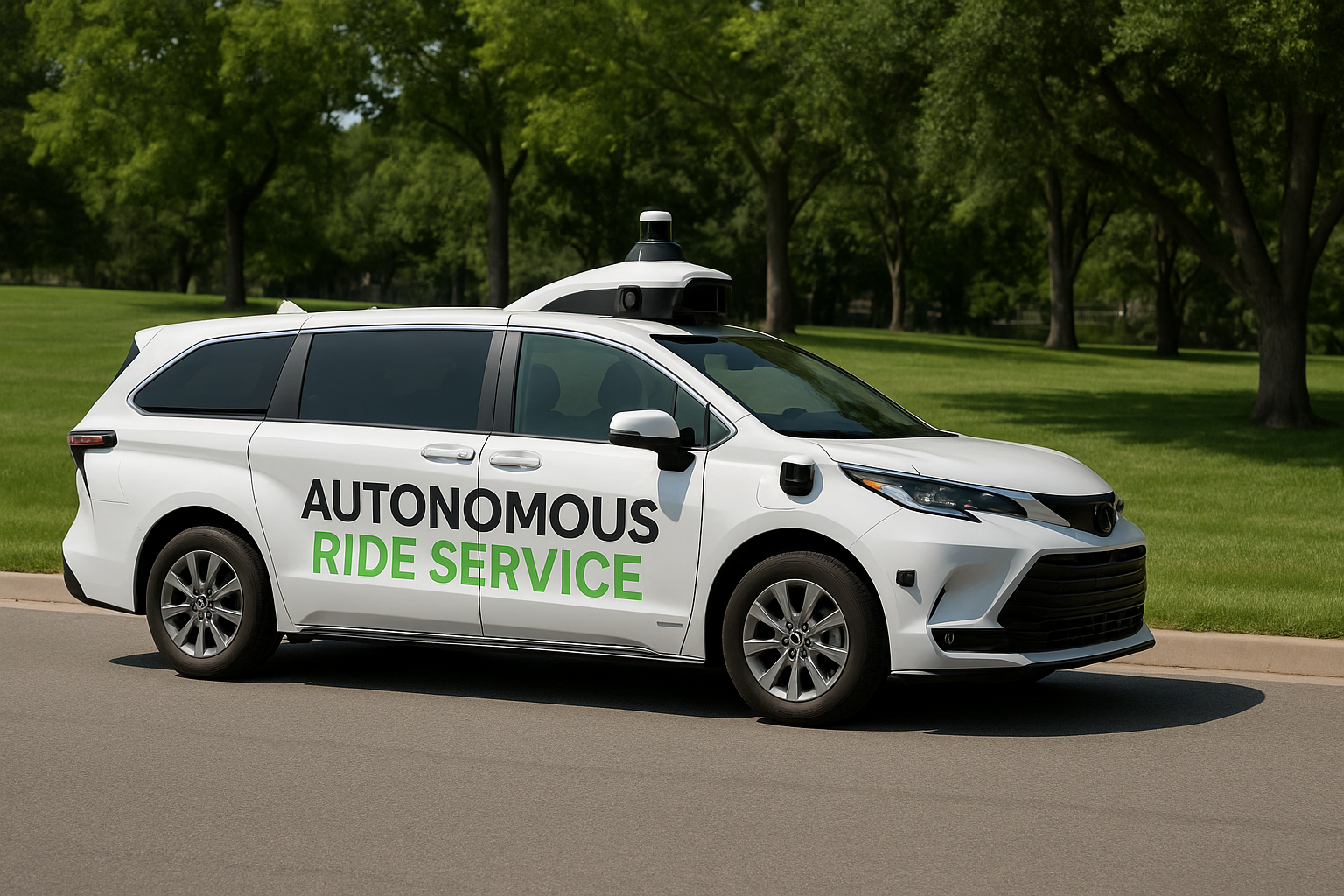
May Mobility did roughly $10 million in 2025 revenue, burned about $93 million in cash, and has agreed to go public at a $1.4 billion enterprise value.
Most people will look at that and say robotaxis have gone fully feral again. Fair reaction. But I think they’re looking at the wrong bit of the deal.
May isn’t asking public investors to fund a bigger taxi fleet. It is making a much more interesting bet: that the company which owns the autonomous-driving brain can make better money than the mug that owns the cars.
That is the real story in May Mobility’s planned merger with ACP Holdings Acquisition Corp. And it’s a proper test of whether the public market has learned anything from the last decade of capital-heavy mobility fantasies.
The $1.4 billion headline is not the business model
May Mobility announced its SPAC deal on September 16, 2026. The transaction puts an implied pro forma enterprise value of roughly $1.4 billion on the business and could provide as much as $337 million in gross proceeds.
That number needs an asterisk the size of Texas. The capital includes a fully committed $120 million PIPE—the private investment arranged alongside the deal—and up to $217 million from ACP’s trust account. SPAC shareholders can redeem, so “up to” is doing some heavy lifting. It always does.
Still, the deal has enough committed money to matter. May has built and operated autonomous ride services, completed more than 550,000 commercial rides across roughly 1.1 million miles, and launched driver-out services in the United States. It has partnerships spanning Uber, Lyft, Grab and CaoCao, plus relationships with Toyota and NTT.
That is more commercial proof than most autonomous-vehicle companies ever manage. But it does not magically make the valuation cheap.
At $1.4 billion, May is being priced at roughly 140 times its 2025 revenue. Its 27% gross margin is respectable for a young physical-world technology business, but the cash burn is the number that should make investors sit upright. A company can burn $93 million while building something important. It cannot burn $93 million forever because its PowerPoint has the word “AI” in it.
I’ve seen enough businesses raise money on a beautiful future to know this: the spreadsheet never goes bust. The cash account does.
May is trying to avoid the worst job in mobility
Running cars is a brutal business.
Cars depreciate. They crash. They need cleaning, parking, charging, insurance, servicing and people to handle every unpleasant exception that appears at 2:13 on a Saturday morning. Every vehicle you own makes you more exposed to all of it.
This is why a fleet-heavy robotaxi model can become a capital furnace. Even if the technology works, someone still has to finance, operate and maintain thousands of machines that spend a meaningful chunk of their lives sitting around doing nothing useful.
May’s pitch is different. It describes itself as an asset-light, partnership-first autonomy business. Fleet partners can own and operate vehicles. Ride-hailing platforms bring demand. Automotive partners provide the underlying vehicles and supply-chain muscle. May supplies the autonomous-driving system, remote supervision and software updates, then earns fixed fees or per-trip licensing fees.
That is the only version of the robotaxi dream I find commercially sensible.
It’s not glamorous. Founders love saying they are vertically integrated because it makes them sound like Henry Ford with better trainers. But vertical integration is often just a fancy way of saying, “We have decided to personally own every expensive problem in the value chain.”
May is trying to own the scarce bit—the autonomy stack—and rent everyone else’s distribution, vehicles and operational capacity. If it works, that is a vastly better business than owning depreciating metal and hoping your utilisation rates behave.
The important word, of course, is if.
The background nobody should skip
The autonomous-vehicle sector has been a graveyard for lazy forecasts.
For years, the sales pitch was simple: remove the driver, keep the fare, print money. Reality was less cooperative. Driving in the real world is not one problem. It is ten million edge cases wearing hi-vis vests, standing behind delivery vans, waving you through roadworks or stepping into traffic while looking at their phone.
May says its technology uses a multi-policy reasoning approach designed to handle unfamiliar and complex environments without relying on the enormous amount of city-specific training data conventional systems require. That matters because the economics of autonomy improve dramatically if a company can deploy in a new city without years of bespoke mapping, testing and cash incineration.
But it also explains the risk. The $1.4 billion valuation is not a vote on what May has already earned. It is a vote on whether its technology can travel.
May currently has actual operations rather than just a demo reel. It operates autonomous Toyota Siennas in three US locations, works with Lyft in Atlanta, and has commercial activity in Minnesota. It has also begun a trial deployment in Japan and plans an Arlington, Texas launch with Uber.
That gives it something valuable: operational scars.
Every real deployment teaches a company where the technology breaks, where customer behaviour becomes weird, how local regulations differ, what remote support actually costs, and whether the economics survive outside a carefully controlled pilot. Those lessons are expensive. But they are more useful than another hundred pages of market-size slides.
The overlooked angle: this is also a distribution deal
The obvious comparison is with Waymo, Tesla or other big autonomy names. I think that misses the more useful lesson.
May’s competitive advantage, if it has one, may not be that its software is categorically better than everyone else’s. It may be that it has chosen not to fight every battle alone.
Uber and Lyft bring riders. Grab and CaoCao offer potential routes into overseas markets. Toyota provides a vehicle relationship. NTT has invested in the company. Those partnerships do not guarantee revenue, and investors would be foolish to treat logos as cash flow. But they shorten the path between a functioning autonomous vehicle and a paying customer.
That is a serious advantage in any industry where distribution is expensive.
Founders get obsessed with product because product is tangible. You can point to it. You can demo it. Distribution is messier and less flattering: contracts, integrations, sales cycles, commercial incentives, regulatory negotiations and someone else’s brand sitting between you and the customer.
Yet the business that gets distribution right often wins even when it did not build the sexiest technology.
May’s model says: let the platforms own customer demand, let fleet operators handle the dirty work, and become the tollbooth for autonomous miles. That is the attractive version of the story.
The ugly version is that May becomes a supplier with limited pricing power, dependent on much larger partners that can squeeze margins once the novelty disappears. Uber, Lyft, Toyota and Grab are not charitable organisations. They will want their cut, control and optionality.
That is why the next twelve to eighteen months matter more than the listing itself. May needs to show that its partnerships convert into repeatable deployments, meaningful per-vehicle economics and lower cash burn—not merely more announcements.
Don’t confuse a public listing with a finished business
SPACs are back because they are useful when a company wants a negotiated valuation, a capital package and a public-market route without standing naked in the middle of a traditional IPO process.
That does not make them bad. It does make them a structure requiring extra suspicion.
The deal is subject to approvals and other closing conditions, with May and ACP’s agreement allowing for closing as late as May 26, 2027. The final proceeds will depend partly on shareholder redemptions. Anyone looking at the $337 million headline should separate committed PIPE money from trust-account money that may walk out the door.
Here’s the blunt verdict: a SPAC valuation is not validation. It is a negotiated opinion about the future.
May’s future may be excellent. But public investors should demand the boring evidence: deployment cadence, paid autonomous miles, revenue per vehicle, gross-margin improvement, insurance and support costs, customer concentration, and cash burn per new city launched.
If management cannot make those numbers clearer every quarter, the market will eventually make its own judgement. It is rarely gentle.
What this means for you
Whether you’re a founder, investor or operator, there are three practical lessons here.
First, own the bottleneck—not every asset. May’s entire strategy is an argument that the autonomy software is more valuable than owning the car. In your business, find the part customers cannot easily replace: the workflow, data, distribution channel, trust or technical capability. Then think very carefully before loading your balance sheet with everything else.
Second, partnerships are only valuable when they shorten the path to revenue. A famous logo on a slide is worthless if it does not lower customer-acquisition cost, speed up deployment or create contracted demand. Ask one question: what specifically becomes easier, cheaper or faster because this partner exists?
Third, treat burn as a design problem, not a personality trait. Plenty of founders wear burn rate like a badge of ambition. Rubbish. Burn is acceptable only when each dollar buys a measurable reduction in risk or a credible increase in future earning power. If it is paying for vague “scale”, you are just renting a nicer way to fail.
May Mobility’s $1.4 billion deal is not proof that robotaxis have cracked the code. It is a wager that software can capture the upside while somebody else carries the cars, tyres and headaches.
That wager is worth watching. But the winners will not be decided by a shiny Nasdaq ticker. They will be decided by who can turn autonomous miles into boring, repeatable, high-margin revenue before the cash runs out.