Mets’ Novig Deal Puts a $500M Prediction Market Inside MLB
The New York Mets didn’t just sell another sponsorship. They put a $500 million gambling-adjacent startup inside baseball’s trust machine — before anyone knows the price.
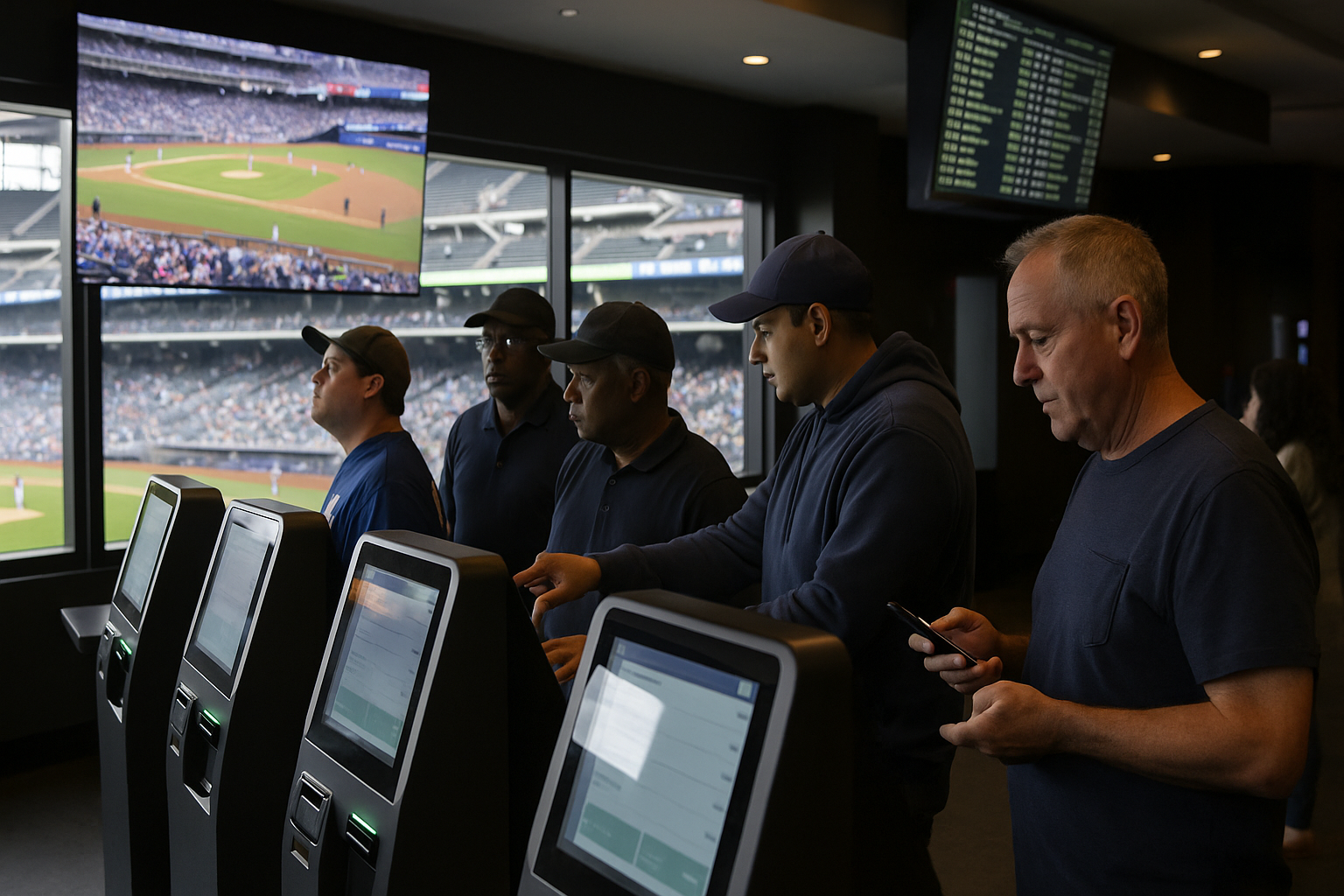
The New York Mets have just done what every sensible operator claims they would never do: they’ve sold credibility before the market has proved it deserves any.
Their multiyear deal with Novig makes the Mets the first Major League Baseball club to name a prediction-market partner. The price is undisclosed. That is the interesting bit. Novig raised $75 million at a $500 million valuation in February, then bought itself something far more valuable than an ad package at Citi Field: a shortcut into the mainstream.
The Mets are selling trust, not just signage
Novig is now the Mets’ Exclusive Official Prediction Market Partner. Starting this season, its brand will appear across Citi Field, broadcasts, digital channels, social media and in-game activations.
On paper, it looks like every other sports sponsorship deal. Slap the logo on a screen, run a promotion, talk about “fan engagement”, collect a cheque.
Don’t kid yourself. This is different.
The Mets are lending a club with more than six decades of history to a young company trying to make sports-event trading feel as normal as buying a jersey. That matters because sport does not merely deliver audiences. Sport transfers trust. Put a brand beside the Mets logo, beside a game broadcast, beside the emotional machinery of a big night at Citi Field, and a punter stops seeing a startup. They see something officially sanctioned.
That is the asset Novig is really buying.
And the Mets are not doing it in a vacuum. MLB announced in March that Polymarket would become the league’s Official Prediction Market Exchange, while Commissioner Rob Manfred signed a memorandum of understanding with the Commodity Futures Trading Commission aimed at creating integrity protections in the fast-growing category. The league has already decided prediction markets are not some weird corner of the internet it can ignore.
The Mets have simply gone one step further: league-level acceptance is now becoming team-level commercial inventory.
For the Mets, who have Juan Soto and Francisco Lindor as marquee assets and operate in the most valuable media market in American baseball, this is a pretty logical move. They have a premium customer base, a massive local spotlight and an ownership group that has never confused caution with ambition.
Novig’s $75M funding round explains the real play
Novig’s February funding round matters more than the exact value of this Mets sponsorship, because the sponsorship figure has not been disclosed.
Sports Business Journal reported that Novig had raised $75 million in a Series B at a $500 million valuation. It had raised more than $105 million in total since being founded in 2021. That is a serious pile of cash for a company that still needs to educate users, win regulatory battles, build liquidity and persuade sports fans that its product is not just a sportsbook in a blazer.
The company’s pitch is straightforward: instead of a traditional bookmaker setting odds and taking customer wagers, users trade contracts with one another based on whether an event occurs. In theory, that creates a more transparent, exchange-style market.
In practice, the average sports fan does not wake up desperate to distinguish a contract from a wager. They want to know whether the product is simple, legal, liquid and capable of paying them when they are right.
That is why Novig needs the Mets.
Customer acquisition in gambling, betting and financial trading is brutally expensive. The first company to earn a customer’s attention is not necessarily the winner. The winner is the company that earns repeat behaviour without spending itself into a hole on bonuses, celebrity ads and affiliate commissions.
A Mets partnership gives Novig recurring exposure in a market full of high-value sports consumers. More importantly, it wraps the brand in familiarity. The fan sees the logo in the ballpark, sees it on a broadcast, sees the club endorse it in a social post. That sequence is far more powerful than another internet ad screaming about a sign-up bonus.
That is how categories move from fringe to normal. Not through a white paper. Through distribution.
Baseball has an integrity problem hiding in plain sight
Here is the uncomfortable truth: MLB is trying to grow a product that lives uncomfortably close to the thing it spends enormous energy policing.
Baseball has spent more than a century protecting the idea that its games are real, unscripted contests. Every betting scandal — from the Black Sox to modern player discipline cases — hits that same nerve. Fans can forgive a bad bullpen. They do not forgive the suspicion that the result was for sale.
Prediction markets do not remove that risk merely because they use different language.
A contract tied to a Mets game still creates a financial incentive around a Mets game. A platform might be regulated differently from a sportsbook. It might use an exchange model rather than a house model. It might market itself as trading rather than betting. Fine. The commercial reality remains: money is being put behind sporting outcomes.
MLB’s agreement with the CFTC is therefore not window dressing. The league said the framework is intended to support fast responses to integrity incidents and to anticipate emerging risks. That is sensible. It is also an admission that the risk is real enough to require a formal framework.
The Mets deal raises the stakes because club partnerships make the product more visible and more personal. It is one thing for MLB to license logos to a platform at league level. It is another for a fan to watch a local broadcast and be repeatedly invited into an outcome-based financial product attached to their own team.
That does not make the deal automatically bad. But pretending there is no trade-off is corporate nonsense.
The overlooked angle: the Mets may be making a media bet
Most people will call this a gambling deal. I think it is better understood as a media-distribution deal.
The sports-betting gold rush trained teams to monetise every spare inch of attention: odds on broadcasts, odds in stadiums, odds in social feeds, odds in the pockets of people who came to watch a game. Prediction markets are the next version of that same fight for screen time.
The valuable question is not whether Novig can put a logo at Citi Field. Anyone with enough money can buy a logo.
The valuable question is whether it can become part of the daily sports conversation. Can a Mets fan see a market during a broadcast, open an app, understand the trade in seconds and return tomorrow? Can Novig create useful liquidity rather than a pretty interface sitting over thin markets? Can it turn attention into a habit?
If the answer is yes, the Mets have partnered early with a company that could be worth materially more than it is today. If the answer is no, the club has sold a standard sponsorship package to a well-funded startup and moves on when the deal ends.
That asymmetry is why I don’t hate the Mets’ position. They are not betting the franchise. They are monetising attention while the category is still fighting to define itself.
But Novig is making the far bigger bet. Its $500 million valuation is now partly a valuation on whether sports fans accept this new wrapper around an old impulse.
What this means for you
Whether you run a startup, invest your own money or lead a business, there are three useful lessons here.
First, borrow trust carefully and early. Novig did not need another generic digital campaign. It needed a credible institution to tell millions of people, indirectly, “this is real.” Find the distribution partner that gives your product legitimacy with the customer you actually want. But do not confuse borrowed trust with earned retention. The logo opens the door; the product keeps it open.
Second, watch where regulation and distribution meet. Big markets are often created not by a better product alone, but by a shift in what is allowed, normalised and easily distributed. MLB’s Polymarket agreement, its CFTC integrity framework and the Mets’ Novig deal are all signals that prediction markets are moving closer to the centre of sports commerce. That does not mean you should throw money at every company in the category. It means you should notice when an industry’s gatekeepers stop treating a category as radioactive.
Third, never let fancy language hide the underlying economics. “Prediction market” may be technically precise. It does not remove customer-acquisition costs, regulatory risk, integrity exposure or the basic need for liquidity. When someone pitches you a new category, ask the boring questions: Who pays? How much does it cost to acquire them? Why do they come back? What breaks when regulators change their minds?
The Mets have sold access to their audience. Novig has bought a fast lane to legitimacy. That is a smart transaction if both sides understand what is actually being traded.
And what is being traded is not baseball. It is trust.