Michael Wilson’s $75M Cardinals Deal Is a $47M Bet on One Good Year
The Arizona Cardinals just guaranteed Michael Wilson $47 million after one 1,000-yard season. That is either sharp conviction or a very expensive refusal to wait.
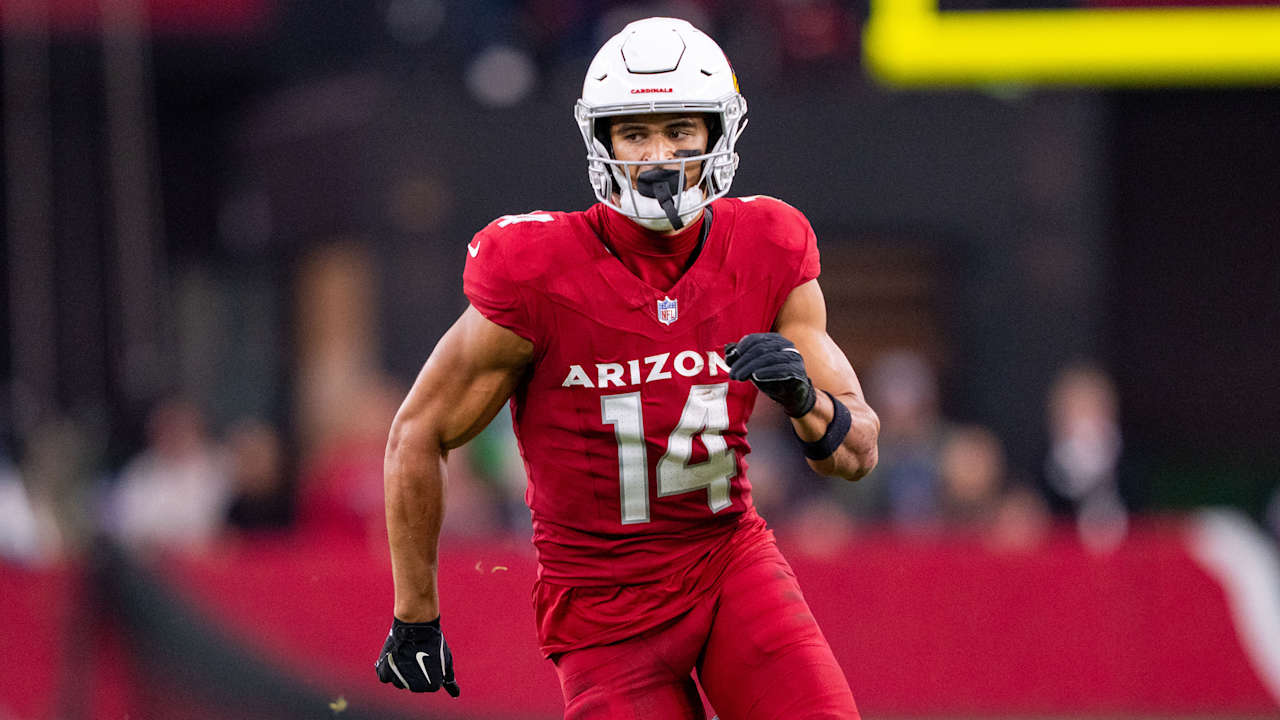
The Arizona Cardinals just guaranteed Michael Wilson $47 million after one 1,000-yard season.
That is either sharp conviction or a very expensive refusal to wait.
On September 3, Arizona agreed to a three-year extension for Wilson worth $75 million, with a maximum value of $78 million, keeping the 26-year-old receiver tied to the club through the 2029 season. The headline number works out to $25 million a year. The number that matters is the guarantee.
NFL teams do not hand out $47 million in real protection because they like a bloke, enjoy his training habits or need something cheerful to announce before Week 1. They do it because they believe the price will look cheap later — or because they are scared of what the price becomes if they wait.
That second bit is where the business gets interesting.
Arizona Has Paid for the Player It Thinks Wilson Will Become
Wilson earned the extension. In 2025, he posted career highs of 78 catches, 1,006 receiving yards and seven touchdowns across 17 games. He had previously been a third-round selection in the 2023 draft — pick No. 94 overall — and has produced 163 receptions, 2,119 yards and 14 touchdowns across his first 46 NFL games.
That is good work. It is not yet the sort of body of work that traditionally has clubs flinging top-tier money across the table before a player enters his fourth season.
Arizona has paid for the forecast, not the spreadsheet.
The Cardinals see a 6-foot-2 target who finally stayed healthy for a full season, cracked 1,000 yards, and fits alongside Marvin Harrison Jr. and tight end Trey McBride. They also see the nastier version of the alternative: Wilson plays another good season, gets closer to free agency, and suddenly the conversation starts at a far uglier number.
That is the whole bet. Pay $25 million a year now for a player who may be worth materially more in 12 months.
It sounds obvious. It is also where plenty of smart organisations light money on fire.
Every player contract is an argument about uncertainty. The player wants to be paid as though the breakout is permanent. The club wants to be protected in case it was a nice run of form. Arizona has sided heavily with Wilson after one season that crossed the thousand-yard line.
Not two. One.
And because the deal includes $47 million guaranteed, this is not merely an option on future upside. It is a meaningful commitment to a player whose most valuable trait may be that he has shown he can complement the Cardinals’ bigger names rather than demand the entire offence be built around him.
That matters. But it needs to keep mattering.
The $25 Million Number Is Not the Whole Story — but It Is the Signal
People get lazy with NFL contract coverage. They see $75 million, divide it by three, shout “overpay” or “bargain,” then wander off for a pie.
Average annual value is useful because it tells you how the market views the player. Guarantees tell you who has the leverage. Contract structure tells you how much room the club has to escape if the prediction goes sideways.
We do not yet have every granular cap mechanism that will decide how flexible this deal is in practice. But $47 million guaranteed gives us enough to call it what it is: Arizona has moved Wilson from promising supporting piece to core offensive investment.
The Cardinals are not paying him to be a pleasant No. 2 receiver. They are paying him because they believe a passing game featuring Wilson, Harrison and McBride can become a durable competitive advantage.
That is a sensible ambition. Good offences make expensive receivers look sensible very quickly.
The risk is that Wilson’s big 2025 came while Harrison dealt with injury issues, creating opportunity that may not appear in the same shape again. If Harrison becomes the dominant target Arizona drafted him to be, and McBride continues to command premium volume, Wilson will need to remain brutally efficient with fewer chances. A $25 million receiver cannot disappear for long stretches because the depth chart got crowded.
That is not a criticism of Wilson. It is the economic reality of paying three skill players like foundational assets. There is only one ball, and there is only so much cap room once the quarterback, offensive line and defence want their turn at the till.
The Cardinals Are Buying Certainty Before They Have Earned It
Here is the overlooked angle: this deal is less about Wilson’s 2025 stat line than it is about Arizona’s appetite for certainty.
A team coming off a poor season can get trapped in a ridiculous cycle. It says it wants to build patiently. It says it will reward only proven performers. Then one young player finally breaks through, and the front office panics at the thought of losing one of the few things that worked.
So it pays early.
Again, that is not always wrong. Early extensions can be one of the best weapons in football. The club gets ahead of inflation, the player gets life-changing security before injury or regression can derail the story, and everyone avoids the circus of a contract-year standoff.
But early extensions work only when the club has genuine informational edge.
Arizona sees Wilson every day. It knows whether the route detail is real, whether the preparation is obsessive, whether the health improvement is sustainable, whether his production travelled against serious coverage and whether his teammates trust him when the season gets ugly. Fans see catches. Clubs see the whole operating system.
If the Cardinals have those answers and believe Wilson is still climbing, then this is exactly the kind of move that separates a disciplined organisation from one permanently shopping in free agency for answers it should have developed itself.
If they are simply reacting to one good year and a rising receiver market, they have made a very familiar mistake: confusing a productive season with a proven business asset.
The difference will be obvious by 2027, not this Sunday.
Marvin Harrison Jr. Is Part of This Deal Whether Anyone Says It or Not
Wilson’s extension also creates a louder question around Harrison.
Harrison entered the league with enormous expectations after Arizona selected him fourth overall in 2024. Wilson’s money does not mean the Cardinals have given up on Harrison — that would be a silly conclusion — but it does mean the club has insulated itself from a world in which the supposed hierarchy never quite settles the way outsiders expected.
Football departments say they do not care who is the No. 1 receiver. That is mostly true until they start allocating $25 million a year here, premium draft capital there, and target share becomes a financial argument rather than a coaching cliché.
The best-case scenario is straightforward: Harrison becomes the dominant outside threat, Wilson becomes the reliable high-volume weapon who punishes teams for overcommitting, and McBride keeps owning the middle of the field. That is an offence a quarterback can win with.
The harder scenario is that all three are good, none is singularly dominant, and Arizona finds itself paying premium money for an offence that is merely competent. That is how cap pressure sneaks up on teams. Not through one outrageous contract, but through several defensible ones that do not produce enough combined edge.
For Wilson, there is no need to apologise for taking the money. That would be idiotic. A third-round pick has just converted one breakout year into $47 million of protection. That is a masterclass in capturing value when it is available.
For the Cardinals, though, the celebration lasts about a day. From here, every decision is judged by the output of the offence they have chosen to fund.
The Contrarian View: This Could Be Cheaper Than Waiting
The popular take will be that Arizona paid too much too early. Sometimes the popular take is right. Often it is just hindsight wearing a tracksuit.
If Wilson has another 1,000-yard season in 2026, stays healthy and becomes a more central part of a productive Cardinals offence, $25 million annually may look restrained rather than reckless. The NFL has a habit of making yesterday’s bold receiver deal look ordinary once the next round of contracts lands.
The guaranteed money is the price of locking in that possibility now.
More importantly, Arizona avoided allowing a key player’s future to become the central storyline of the season. Contract drama is not always fatal, but it is a tax on focus. Every bad game becomes leverage. Every good game becomes a headline. Every press conference becomes a negotiation by proxy.
A team that believes it has found the right player should prefer clarity over theatre.
The crucial phrase is believes it has found the right player. Conviction is valuable. Unexamined conviction is just expensive optimism.
What This Means for You
The useful lesson has nothing to do with catching footballs.
When someone in your business has one breakout year, do not ask only: “What did they deliver?” Ask three better questions.
First: was the performance repeatable? One great quarter, sales year or product launch can be skill, timing, a favourable market or sheer luck. Find the underlying behaviours that produced it. If you cannot explain the machinery, you cannot sensibly pay for the output.
Second: what does waiting cost? The Cardinals may have decided Wilson’s price would rise faster than their risk. In business, your best people often become more expensive the moment the market notices what you already knew. Waiting is not automatically prudent. It is a decision with a price tag.
Third: can the rest of the system support the commitment? Wilson’s deal does not exist in isolation. It sits beside Harrison, McBride, the quarterback position and the roster Arizona must still build. Your next big hire, retention package or acquisition should face the same test. A good asset can still be a bad decision if it crowds out three better ones.
Reward proven upside. Move early when you have real inside knowledge. But do not confuse confidence with evidence.
Arizona has put $47 million behind the belief that Michael Wilson is not a one-year spike.
Now the easy part is over. The market has been paid. The performance has to arrive.
Sources
- Sources: Cardinals, WR Michael Wilson reach $75M extension — ESPN
- Cardinals agree to terms with WR Michael Wilson on three-year extension — NFL.com
- Cardinals, Michael Wilson agree to three-year extension — NBC Sports
- Why the Cardinals made Michael Wilson one of the NFL’s highest-paid No. 2 receivers — CBS Sports