Microsoft’s 17-Year Comms Chief Exit Leaves Satya Nadella With a Trust Problem
Microsoft can replace Frank Shaw’s title. Replacing 29 years of institutional nerve—while it rewires itself around AI—is the part that bites.
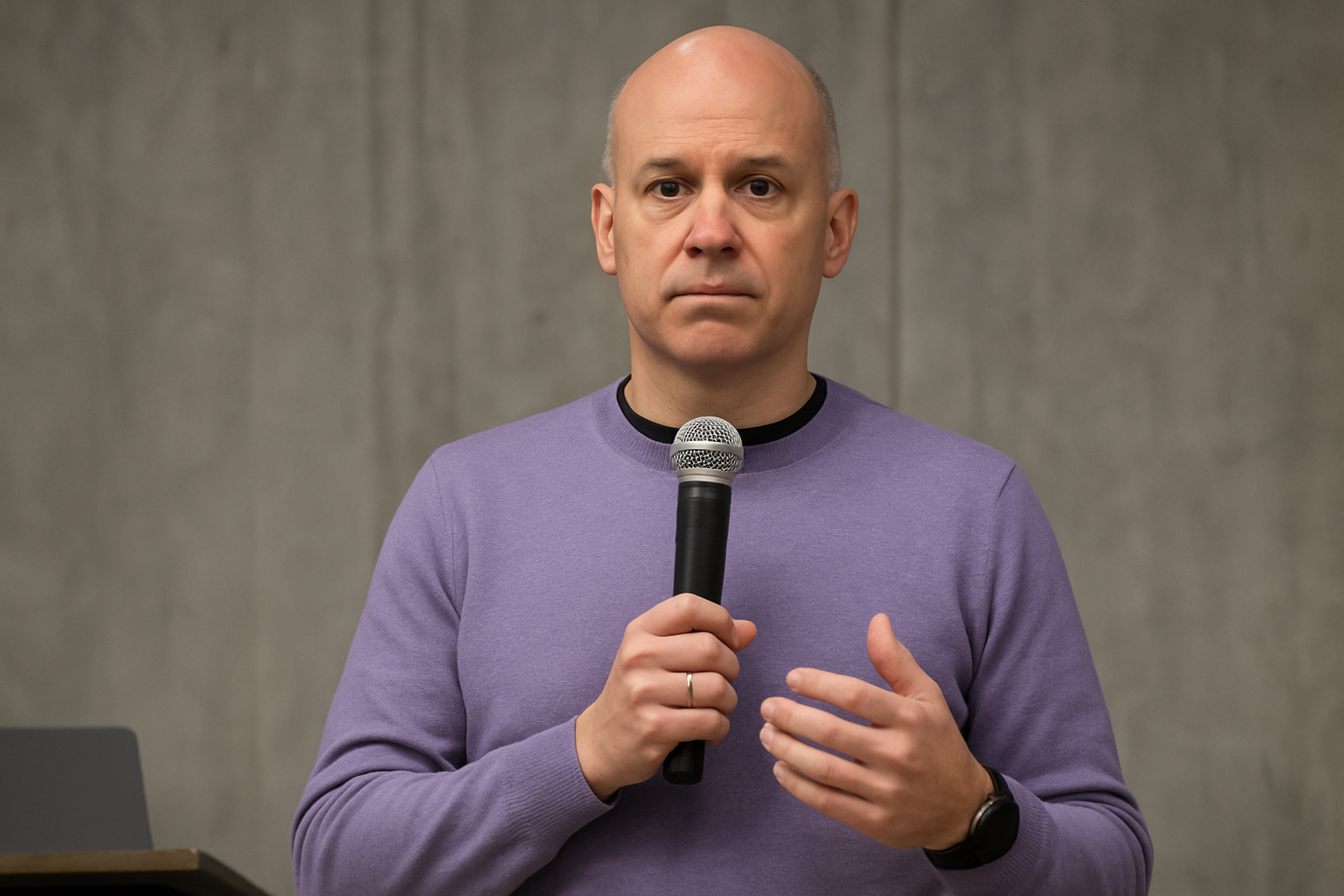
Microsoft can replace Frank Shaw’s title. Replacing 29 years of institutional nerve—while it rewires itself around AI—is the part that bites.
Frank X. Shaw, Microsoft’s chief communications officer for 17 years, will leave at the end of December 2026. On paper, that is a senior executive departure. In reality, it is Satya Nadella losing one of the few people who knew how to defend Microsoft when the facts were ugly, the stakes were enormous and the phones would not stop ringing.
That matters far more than most founders and investors realise. A good communications chief does not write pretty press releases. They are part historian, part political operator, part truth detector and part human shock absorber for the CEO. When that person walks out during a major strategic reset, you do not merely have a hiring problem. You have a trust-transfer problem.
Frank Shaw Was There Before Microsoft Needed a New Story
Shaw has worked around Microsoft since 1997, first on the agency side at Waggener Edstrom—now WE Communications—and then inside the company. He became Microsoft’s communications chief in 2009. He has worked with Bill Gates, Steve Ballmer and Nadella.
That is not an impressive-length-of-service trophy. It is an operating advantage.
He saw Microsoft through the antitrust years, Windows Vista’s public drubbing, the messy hunt for Ballmer’s replacement, the cloud pivot, LinkedIn’s $26.2 billion acquisition in 2016, Activision Blizzard’s $69 billion acquisition in 2023 and the OpenAI chaos after its board briefly fired Sam Altman.
Most executives have experience. Shaw had pattern recognition.
He knew which bad stories were genuinely dangerous and which ones would blow over by Tuesday. He knew when Microsoft needed to explain itself, when it needed to apologise, and when the smartest thing was to stop feeding the circus. That sort of judgement is not found in a brand book or handed over in a tidy SharePoint folder.
Microsoft has not named his successor. Shaw said he and Takeshi Numoto, Microsoft’s executive vice president and chief marketing officer, had discussed the move for some time. That tells you this was not a Friday-afternoon ambush. But a planned departure can still expose a nasty reality: companies often confuse having a transition timetable with having a transition plan.
They are not the same thing.
The Departure Lands in the Middle of Nadella’s AI Rebuild
If Microsoft were cruising along, this would be a respectable long-service exit and everyone would send nice messages on LinkedIn. Microsoft is not cruising.
Nadella has been reshaping the company around Copilot and AI infrastructure. In March, he formed a unified Copilot team led by Jacob Andreou, then 33, bringing a fast-rising executive closer to one of Microsoft’s most important growth bets. Rajesh Jha, the executive vice president overseeing experiences and devices, announced his retirement in March. Phil Spencer, Microsoft’s gaming chief and a 38-year company veteran, also retired this year, with Asha Sharma replacing him.
Meanwhile, Microsoft has cut more than 15,000 jobs across sales, Xbox and other areas during 2025. In April, it launched its first employee buyout offer, aimed at long-tenured staff.
That is a lot of organisational movement for any company. At a giant like Microsoft, it is controlled demolition while customers, staff, regulators, partners and investors watch from different windows.
And the business story gets bigger by the month. Azure has crossed $100 billion in annual revenue, with AI demand helping drive that growth. Microsoft is simultaneously managing its deep commercial relationship with OpenAI, expanding ties with Anthropic, building its own models and trying to persuade enterprises that Copilot is more than a very expensive autocomplete button.
The technical challenge is enormous. The communications challenge may be worse.
Every serious company is now making AI promises it will struggle to explain clearly. Microsoft must tell one coherent story across cloud infrastructure, workplace software, security, gaming, Windows, model development, regulation and a partnership ecosystem that can look cooperative one day and competitive the next.
Shaw’s replacement will inherit that mess with the volume turned up.
The Overlooked Risk Is Not External PR. It Is Internal Clarity.
People hear “communications” and think journalists, launches and awkward questions after a layoff. That is only the visible bit.
The better communications leaders make a company intelligible to itself.
When a business is changing quickly, people need answers to basic questions: What are we actually trying to win? Which products matter? Who owns the decision? What has changed? What has not changed? Why should I care if I am not sitting in the executive suite?
Without clear answers, staff invent their own. They get them from Slack, leaked org charts, half-understood executive comments and whichever loud bloke happens to have a podcast.
That is how strategy becomes rumour.
Microsoft is big enough to survive a muddled narrative. That is not the same as saying it should accept one. A muddled internal narrative slows product decisions, makes good people less patient and gives rivals a free kick.
This is particularly relevant after workforce cuts and senior departures. When people see experienced leaders leave while the company talks about reinvention, they do not only ask whether their job is safe. They ask whether the leadership team knows where it is going.
The next communications chief must help Nadella answer that question before employees start answering it for him.
Microsoft Should Not Chase a “Frank Shaw Replacement”
Here is the contrarian bit: hiring a polished external communications star to mimic Shaw would be the lazy move.
Shaw’s value was not merely his media contacts, his directness or his ability to front difficult news. It was the accumulated context. Nearly three decades of it. Nobody can download that into a new executive before Christmas.
Microsoft should split the problem in two.
First, it needs a public-facing leader who can handle the speed, scrutiny and occasional nonsense of the AI race. This person must be credible with serious journalists, firm with internal power centres and capable of saying “no” to executives who want to announce something before it is ready.
Second, it needs to preserve Shaw’s institutional memory deliberately. That means recording decision history, mapping the relationships that matter, documenting sensitive issues and making sure key people in marketing, legal, policy, product and HR know who owns the hard calls after he leaves.
Boring? Absolutely.
Also, this is the work that separates a mature company from one that discovers its entire operating system lived in a few clever people’s heads.
I have watched businesses make this mistake. They celebrate a new hire, issue a photo, send a company-wide email and assume the job is done. Six months later, everyone is wondering why decisions take longer, messages feel softer and the CEO is suddenly doing three jobs badly.
The job was never the title. The job was the invisible machinery around it.
This Is a Test of Nadella’s Bench, Not Shaw’s Legacy
Shaw is leaving on his own timetable, not being pushed out in a scandal or replaced mid-crisis. Good on him. Seventeen years in one job at that level is a serious stint, and taking a break before deciding what comes next is the sensible move.
But Microsoft now has to prove it has built enough leadership depth to absorb another heavyweight exit without becoming less decisive.
Nadella has earned plenty of credit for making Microsoft relevant again. He pushed the company into cloud, turned a once-defensive giant into an AI contender and built a leadership culture that has generally looked more adult than the old Ballmer-era theatre.
Still, successful CEOs get judged hardest when they lose trusted lieutenants. Anyone can lead with a full bench. The real scorecard starts when the people who know where the bodies are buried decide they have had enough.
Microsoft’s next move should be simple: name a succession structure early, explain the reporting lines clearly, and give staff and external stakeholders confidence that the company’s AI story has one owner rather than six competing storytellers.
Do not wait until December 31. Uncertainty compounds interest.
What This Means for You
If you run a company, do this next week: identify the three people whose judgement keeps your business from making costly, stupid decisions.
They may not be the executives with the flashiest titles. One could be your operations lead. One could be the person who handles unhappy customers. One could be the quiet adviser who tells you your brilliant idea is actually nonsense.
Then ask four blunt questions:
1. What knowledge lives only in their head? 2. Which relationships break or weaken if they leave? 3. Who can make the same decisions tomorrow without calling them? 4. Have you tested that claim, or are you flattering yourself?
Document the answers. Build a real handover plan before anyone resigns. Rotate responsibility. Give potential successors uncomfortable exposure to real decisions, not pretend leadership projects with laminated worksheets.
And if you are the founder, stop treating communications as decoration. Clear communication is a management system. It tells people what matters, what has changed and what they are expected to do next.
Frank Shaw’s exit is a reminder that reputations are not protected by a clever slogan. They are protected by people with judgement, credibility and enough backbone to tell the boss when the message does not match reality.
Those people are expensive. Losing them is dearer.