Mitsubishi Electric’s $1.4B PCI Deal Buys the Software Behind U.S. Power
If your software touches 60% of U.S. power generation, you are not “just SaaS.” Mitsubishi Electric’s $1.4 billion PCI deal is a blunt lesson in owning the control point, not the commodity.
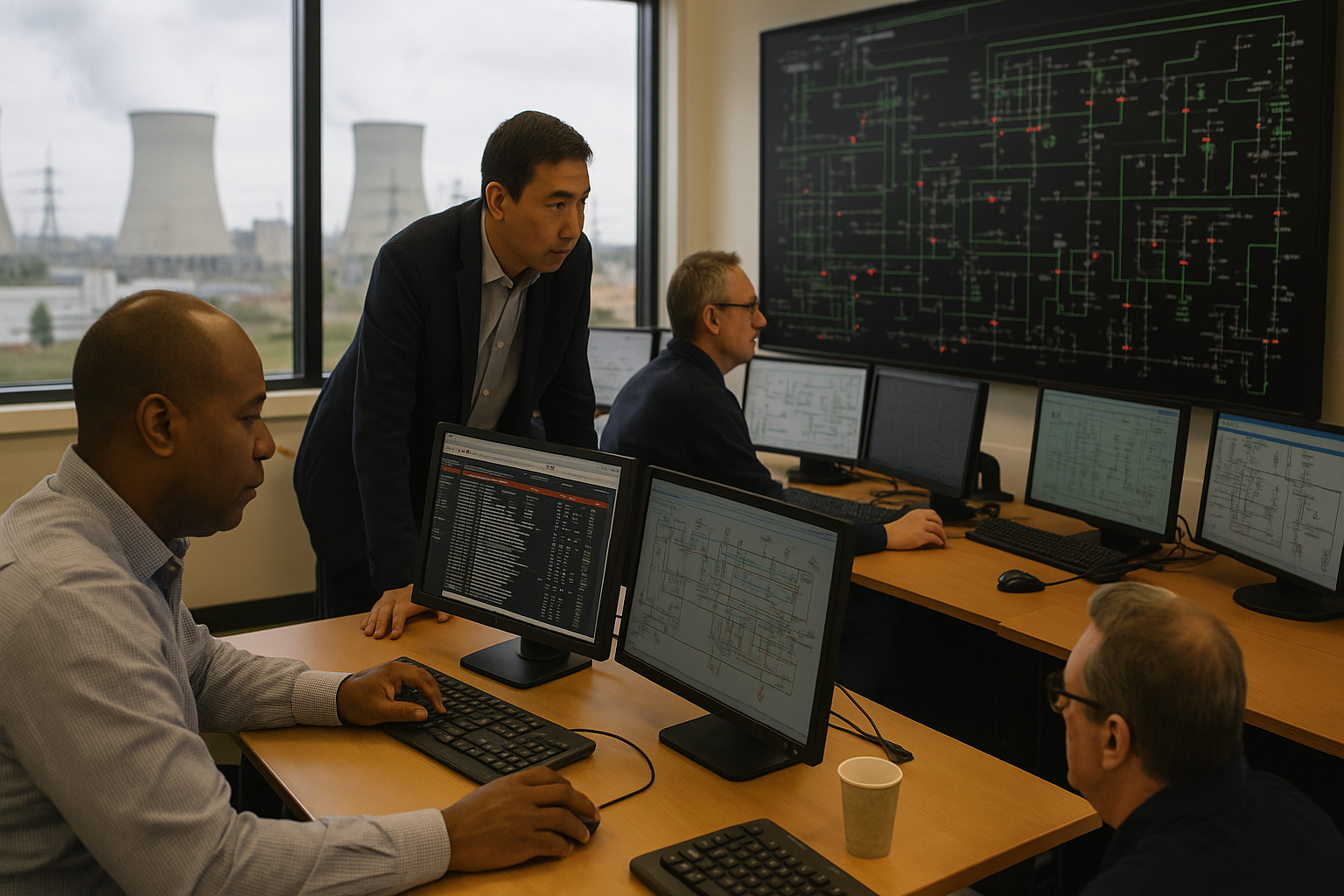
If your software touches 60% of U.S. power generation, you are not “just SaaS.” Mitsubishi Electric’s $1.4 billion purchase of PCI Energy Solutions is a blunt reminder that the best businesses do not merely sell into essential industries — they become part of the machinery that makes those industries work.
Mitsubishi Electric just paid $1.4 billion for a control point
On August 20, Mitsubishi Electric agreed to acquire 100% of PCI Energy Solutions, the Oklahoma-based energy-management software business, for a base value of $1.4 billion. The final price will be adjusted at closing for the usual cash, debt and working-capital items. Subject to regulatory approvals and standard conditions, the companies expect to close the deal during 2026.
This is not Mitsubishi buying a trendy AI wrapper, slapping a Japanese logo on it and calling it innovation. PCI sits in the ugly, valuable middle of the power industry: forecasting demand, scheduling generation, managing trading, handling risk, settlement, transmission and distribution workflows, and optimising energy assets.
In plain English: it helps the people who keep the lights on decide what power to make, buy, move and sell — and when.
Mitsubishi says PCI’s platform is used across roughly 60% of U.S. power generation. That is the number that matters. Not because every unit of that generation is captive revenue, obviously, but because it tells you PCI has achieved what most founders spend their lives chasing and never get near: embedded relevance in a critical workflow.
PCI is not a giant by headcount. It has about 350 employees, with its main base in Norman, Oklahoma, and offices in Mexico City and Lima. That means Mitsubishi is paying roughly $4 million per employee if you want the lazy back-of-the-envelope number.
But that would miss the point completely.
Mitsubishi is not buying 350 people. It is buying decades of industry knowledge, hard-won customer trust, integration depth, specialised software and a place in workflows where failure is expensive. It is buying a platform that utilities and energy companies cannot casually rip out on a Tuesday afternoon because some procurement bloke found a cheaper vendor.
That is what strategic value looks like.
Why the power market has become software’s best hunting ground
The old electricity world was comparatively straightforward. Big generators made power. Networks moved it. Consumers used it. Planning was complicated, sure, but the system was built around predictable supply and relatively predictable demand.
That world is gone.
Renewables have made supply more variable. Distributed generation has added more moving parts. Batteries, electrified transport, data centres and industrial demand are changing the shape of consumption. Power markets must coordinate physical equipment, volatile prices, weather forecasts, contractual commitments and regulatory obligations at the same time.
The more complex the system gets, the more valuable the decision layer becomes.
That is PCI’s lane. It does not need to own a turbine, a transmission line or a battery to matter enormously. It sits between the assets and the economic decisions made around them.
Mitsubishi already sells the physical side of the energy world: equipment, controls, public-utility systems, factory automation and infrastructure technology. Its stated strategy has been to push harder into smart energy, combining energy management, monitoring and control with digital and AI capabilities.
PCI gives it a far more credible software brain for that ambition.
And Mitsubishi is not hiding the commercial objective. It has said it wants to combine PCI’s optimisation capabilities with its own control technologies, components, energy-management offering and digital platform. The deal is about expanding the solution, not merely adding another product catalogue item.
That distinction matters.
A manufacturer selling equipment gets paid when something is built or replaced. A software-led operator that becomes part of a customer’s daily planning, market participation and optimisation gets a much tighter relationship — and potentially a far more durable one.
The clever bit is not the software. It is the customer dependency.
Founders love saying their product is mission-critical. Usually it means a customer would be mildly annoyed if the subscription stopped working for a day.
PCI’s customers operate in a world where poor decisions can mean missed trading opportunities, unnecessary generation costs, compliance problems, operational disruption or reliability headaches. That is a different category of customer pain.
Mission-critical software earns the right to charge properly because it is measured against the cost of getting it wrong, not against the cost of another software licence.
That is why this deal is more interesting than the headline price tag.
A $1.4 billion acquisition of a small specialist software company can look punchy until you ask the right question: what would it cost Mitsubishi to build the same position from scratch?
Not the code. The position.
Could Mitsubishi hire engineers? Of course. Could it acquire data, build dashboards and integrate AI models? Probably. Could it reproduce more than 30 years of industry credibility, operating know-how, customer implementations and embedded workflows across a meaningful chunk of the U.S. power market? Not quickly. Maybe not at all.
That is the difference between building software and building a business that people trust with consequential decisions.
The best acquisitions are often not about buying revenue cheaply. They are about buying time that cannot be recreated.
The overlooked risk: big companies can suffocate the thing they paid for
Now for the bit nobody at the deal announcement wants to dwell on.
Mitsubishi Electric is a massive industrial group, with more than 200 group companies, about 150,000 employees worldwide and fiscal 2026 revenue of ¥5.8947 trillion. PCI is a 350-person specialist business that has won by being close to customers in a niche market.
Those are very different organisms.
The obvious risk is that Mitsubishi buys a nimble, customer-obsessed software business and then buries it under procurement layers, reporting lines, approval committees and a corporate sales process built for equipment cycles.
That would be a very expensive own goal.
To its credit, Mitsubishi has said it intends to retain PCI’s core management team, while PCI has said day-to-day operations, customer support, active projects and existing service commitments will continue unchanged before closing. That is sensible. The people who understand the industry and the product are not a post-deal inconvenience. They are the asset.
But intention is not execution.
Every buyer says it will preserve culture. Then someone in head office decides the new subsidiary needs the same expense policy, sales approvals and product governance as a division selling industrial hardware. Before long, the entrepreneurial edge has been sanded off and the customers begin getting phone calls from competitors.
The contrarian view is this: Mitsubishi should not rush to “integrate” PCI in the way corporate advisers love to describe it. It should integrate capabilities and incentives, yes. It should protect the operating speed that made PCI worth buying in the first place.
If you acquire a specialist because it knows something you do not, do not immediately teach it to behave like you.
This deal is really a warning to hardware businesses
The uncomfortable truth for industrial companies is that hardware increasingly risks becoming the visible but lower-margin part of the customer relationship.
The machine, battery, inverter, sensor or control system still matters. But the software layer that decides how assets are used, maintained, traded and optimised can capture an outsized share of the value.
That is where the recurring revenue sits. That is where usage data accumulates. That is where the customer’s operational habits become embedded. And that is where switching gets painful.
Mitsubishi has clearly understood this. It is not abandoning hardware. It is making a play to own more of the decision-making around hardware.
Smart operators should notice the pattern.
In any industry getting more complex, ask: who owns the workflow after the product is sold? Who sees the data? Who helps the customer make money, avoid loss or reduce risk every day? Who would create a proper operational mess if they disappeared?
That company is often more valuable than the one making the physical thing.
The same principle applies well beyond energy. Logistics, insurance, healthcare, construction, agriculture, manufacturing and finance are all full of businesses selling products into systems that are becoming too complicated to run without software.
Do not just look for the supplier. Look for the control point.
What this means for you
If you are a founder, stop obsessing over whether your product has a flashy interface or an AI feature you can put in a pitch deck. Build yourself into a workflow where the customer loses money, time or control without you.
That means doing the boring work:
- Learn how your customer actually makes decisions, not how they describe the process in a sales call. - Build around a painful recurring workflow, not a one-off nice-to-have. - Become useful across multiple steps: planning, execution, reporting, compliance, settlement or optimisation. - Treat integrations as strategic assets. They are often stickier than features. - Keep a record of the measurable economic value you create. “Customers love us” is not a valuation argument.
If you are an operator, look at your own business and find the decision layer. You may be sitting on data and customer relationships that could become a much better business than the product line everyone currently worships.
And if you are an investor, do not dismiss a specialist software company because it has a modest headcount or operates in an unfashionable corner of industry. PCI is proof that a business can look niche from the outside while being structurally important on the inside.
Mitsubishi Electric did not spend $1.4 billion to own another app.
It spent $1.4 billion to own a seat at the table where electricity gets planned, priced and moved. That is where the real money is: not in the thing everyone can see, but in the system nobody can afford to break.