Modelo’s 18% College Football Marketing Spend Is a Lesson in Selling Belonging
Most brands would piss away an 18% media increase chasing attention. Modelo is spending 18% more to become part of Saturday — and that is the smarter, harder game.
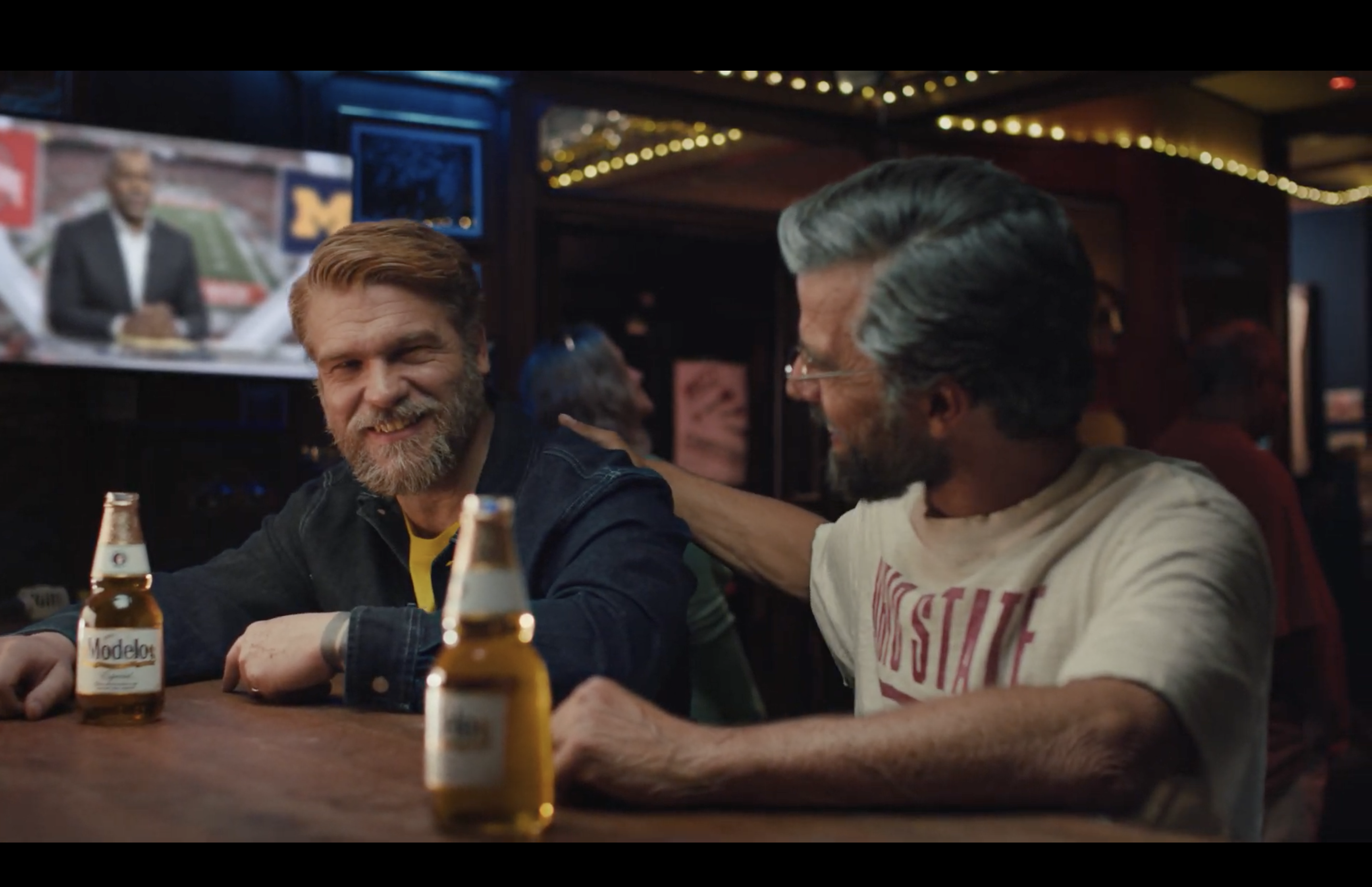
Most brands would piss away an 18% media increase chasing attention. Modelo is spending 18% more to become part of Saturday — and that is the smarter, harder game.
That distinction is where fortunes are made or pissed away in marketing. Attention is rented. Ritual is owned.
Modelo Is Not Buying Ads. It Is Buying a Place in the Routine.
Modelo has launched a new college-football platform, “It’s Not Just Game Day. It’s Tradition,” backed by an 18% year-on-year increase in media investment for the 2026–27 season. The brand says it is its largest college-football commitment to date.
On the surface, this is standard big-brand stuff: three new ads, media partnerships with ESPN, Fox and Barstool Sports, retail activations, delivery, rideshare, sportsbook placements and a co-branded merchandise partnership with Homefield.
But the smart bit is not the channel list. Every major consumer brand has a channel list. The smart bit is the product of the story.
Modelo is not trying to own the touchdown, the mascot or some bloke screaming into a camera after a three-point win. Its ads are built around the moments that happen before, during and after the game: two mates from opposite sides of the Michigan–Ohio State rivalry meeting every year; a father and daughter texting through an Oregon game; the person running the grill at a tailgate.
That is a far better commercial proposition than “beer plus sport.” It is “beer plus a recurring social occasion.”
And recurring occasions are gold. They give a brand a reason to be bought before the consumer is standing in front of a shelf comparing a dozen nearly identical products. If you become the default choice for a ritual, you have shortened the decision before it begins.
Modelo is already the official beer sponsor of the College Football Playoff. The new work takes the logical next step: stop treating the sponsorship as a logo-placement exercise and start treating it as permission to tell a more useful story about belonging.
Why College Football Is a Better Branding Asset Than Most Marketers Realise
The big mistake in sports marketing is assuming the game is the asset. It is not. The game is the appointment.
What brands really want is the behaviour surrounding the appointment: the weekly planning, the group chats, the apparel, the travel, the food, the family arguments, the local identity and the replay value on social media. College football has all of that in spades because loyalty is usually inherited, geographically anchored and absurdly durable.
You do not need to convince an alumnus, a parent or a lifelong local supporter that Saturday matters. They have already done the hard work for you. Your job is to show up in a way that feels natural rather than like a bloke in a branded polo trying to force his way into the barbecue.
That explains Modelo’s emphasis on traditions rather than sporting excellence. Excellence belongs to the teams. Tradition belongs to the people around them.
It also explains the broad distribution strategy. Fox and ESPN supply mass reach. Barstool offers a more conversational, personality-led environment. Retail gets the brand into the buying moment. Homefield merchandise gives people something tangible and locally specific. Delivery and rideshare placements capture the practical decisions that surround drinking occasions.
That is not a campaign. It is a system.
Too many marketers still buy a 30-second spot, call it a platform, then wonder why the brand lift disappears when the media budget does. Modelo is building multiple entry points into the same behaviour. That is what a proper platform looks like.
The Context: Sports Sponsorship Has Become More Valuable — and More Dangerous
Football ad inventory remains brutally expensive. eMarketer notes that football is commanding more media budgets as premium inventory gets pricier, even as college sport creates new sponsorship opportunities beyond conventional television ads.
At the same time, college sports are becoming more commercial. Division I programs can now display commercial sponsors on uniforms and equipment during the regular season, adding another layer of inventory to a market already full of naming rights, NIL deals, broadcast integrations and creator partnerships.
This creates an obvious temptation for companies: slap a logo everywhere, find an athlete with followers, buy some highlights and call it relevance.
That approach will burn a lot of money.
More inventory does not create more meaning. In fact, it usually does the opposite. When every shirt, stadium concourse, podcast desk and pre-roll video has a sponsor attached, generic visibility becomes wallpaper. The winner is not the brand with the most placements. It is the brand that gives consumers a memorable reason to connect those placements together.
Modelo has a chance because its message does not depend on the next game being exciting. A bad match, an upset, a weather delay or a losing season do not destroy a tradition. Sometimes they strengthen it. That makes this sort of positioning more resilient than campaigns built around victory, hype or celebrity performance.
There is another commercial reality here. Modelo Especial has been working to defend its position as the leading beer brand in US dollar sales while facing serious competition in the broader beer market, including sports-focused Michelob Ultra. This is not brand theatre for its own sake. It is a fight for frequency, relevance and shelf selection in a mature category.
The Overlooked Angle: The Best Brand Asset Here Is Not the Beer
Here is the contrarian view: Modelo’s biggest asset in this campaign is neither its beer nor its College Football Playoff rights. It is the discipline to make the fan the hero.
Most sponsorship advertising is a vanity project. The brand acts like it has been invited onto the field. Consumers can smell that nonsense a mile away.
Modelo’s creative puts the customer’s rituals in front of the brand. That is not fake humility. It is self-interest done properly. People do not form deep emotional ties with a product because the company says it is important. They do it when the product becomes useful in a story they already tell about themselves.
If you run a business, steal that principle immediately.
Do not ask, “How do we make our product the star?” Ask, “What recurring moment in our customer’s life can we make easier, better, more social or more memorable?” Then build everything around that moment.
While building Agave Finder, I see the same thing in spirits. People do not wake up desperate to download another app or memorise another brand story. They want to find a bottle worth buying for a dinner, a gift, a trip, a bar order or a conversation with mates. The technology only matters when it improves the occasion. Same rule, different category.
The companies that understand this turn marketing into a useful shortcut. The companies that do not turn it into expensive noise.
What This Means for You
If you are a founder, operator or investor, Modelo’s 18% increase matters less as a beer story than as a reminder of where durable demand comes from.
First, identify a repeatable customer ritual. Not a demographic. Not a vague “lifestyle.” A real recurring behaviour with a time, place, trigger and social context. Friday takeaway. Monday team planning. Payday investing. Sunday family lunch. The more specific, the better.
Second, map the full occasion instead of buying one ad slot. What happens before the purchase? Where is the decision made? Who influences it? What gets shared afterwards? Modelo has broadcast, creator media, merchandise, retail and local activations working together. Your version may be email, product onboarding, a partnership, a referral mechanic and a physical touchpoint. The budget is not the lesson. The connected thinking is.
Third, make the customer look good. Nobody cares that your company has a new brand platform. They care whether your product helps them host better, choose faster, save time, make money or avoid looking like an idiot. Build creative that proves that plainly.
Fourth, measure repeat behaviour, not applause. Reach and views are useful inputs. They are not the business. Track repurchase, referral, branded search, direct traffic, share of wallet and the speed at which people choose you without needing another discount shoved in their face.
Finally, do not confuse association with ownership. You can sponsor a sport, an influencer, a festival or a podcast and still own absolutely nothing in the customer’s mind. Ownership comes when people start treating you as part of the ritual without being reminded.
Modelo is spending 18% more because it is chasing that outcome. The expensive part is the media. The difficult part is earning the right to matter every Saturday.
Most brands will copy the placements. The clever ones will copy the principle.