Mount Gay Exceptionally Aged 25YO: 2,376 Bottles at $199
U.S. rum volume hit a two-decade low in 2025. Mount Gay’s answer is 2,376 bottles of 25-year-old rum at $199 — smarter than chasing drinkers who have already left.
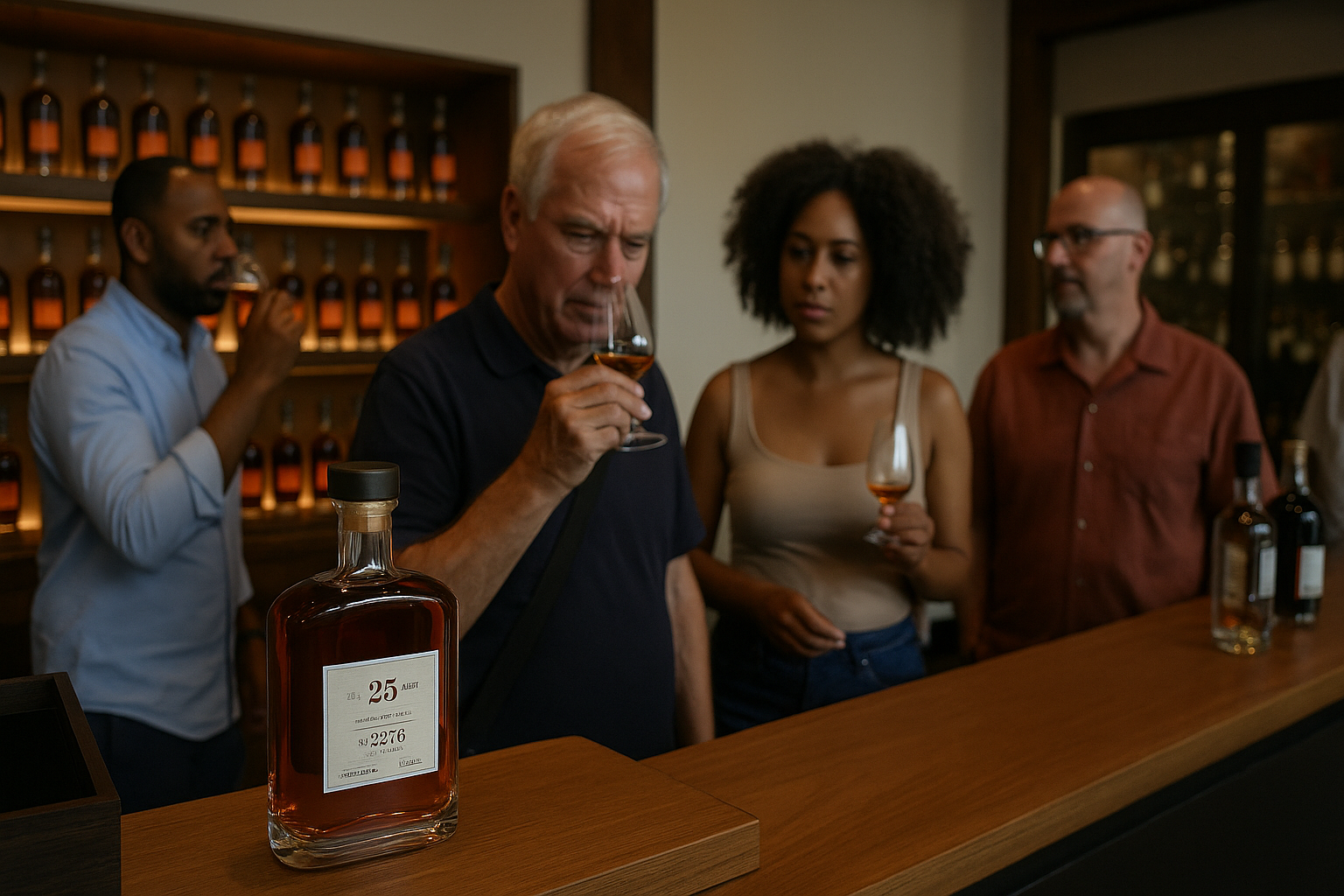
Rum has spent years being treated like tequila’s cheaper cousin with a lime problem. So Mount Gay has done the opposite of discounting its way back into relevance: it has put 2,376 bottles of a 25-year-old rum into the market at $199 a pop.
That is not a product launch. It is a verdict on where the serious money in spirits is going.
Mount Gay is selling patience, not just rum
Mount Gay’s Exceptionally Aged 25YO was distilled in 1999, matured through 2024 and prepared for bottling in January 2026. It is bottled at 47% ABV, aged exclusively in ex-bourbon casks, and limited to 2,376 bottles worldwide.
The significant bit is not that a historic Barbados distillery made a good old rum. It ought to be capable of that. The significant bit is that Mount Gay, whose records date to 1703, is making the number impossible to miss. Twenty-five years. Not “reserve.” Not “prestige.” Not some made-up French-sounding word that could mean anything from 18 months to a bloke waving a barrel stave around.
Age statements are a commercial promise. They give customers a simple, hard-edged fact in a category that has too often relied on ornate packaging and elastic language. Mount Gay’s new Exceptionally Aged collection includes both 15- and 25-year-old expressions. For a distillery that had spent more than three centuries without putting an age statement on its bottles, that is a meaningful shift.
The $199 price is also more disciplined than it first looks. In luxury spirits, the temptation is to see a finite old-stock release and slap on a ridiculous number because some collectors will buy anything in a wooden box. But $199 puts this bottle in the realm of an expensive, deliberate purchase rather than pure trophy-object nonsense. It is not cheap. It is not meant to be. But it is still close enough to premium whisky territory that a serious drinker can justify opening it.
That matters. A luxury spirits brand dies the moment it optimises purely for resale value and stops caring whether the liquid gets poured.
Rum has a volume problem — and that is precisely the opportunity
According to reporting by Forbes, U.S. rum volume fell to a two-decade low in 2025. That is a rotten headline if your business plan depends on shifting oceans of basic white rum into sugary mixed drinks.
But the same reporting points to a more useful fact: super-premium rum sales were increasing even while overall rum volume declined.
There is the whole story in one uncomfortable sentence: fewer people may be drinking rum, but the people who remain are trading into better bottles.
Most founders and brand owners read category softness as a cue to chase more customers, more discounts, more stockists and more frantic social content. Usually, that is how you turn a premium product into a commodity with a nicer label.
Mount Gay is taking the other route. It is giving the remaining high-intent buyer a reason to take rum seriously beside old Scotch, Cognac, Japanese whisky and prestige tequila. It is saying: this spirit has provenance, long-term inventory, technical credibility and a price that asks the customer to pay attention.
That is the play.
And frankly, it is about time. Rum has a ridiculous depth of raw material, fermentation and maturation stories. Barbados alone can deliver a style with genuine identity. Yet too much of the category still gets marketed like a beach holiday that accidentally came in a bottle.
Tequila taught the wider drinks market a brutal lesson: if you build cultural heat, scarcity, credible production stories and a ladder of price points, people will pay up. Then tequila also taught everyone the follow-up lesson: when every second brand claims to be rare, additive-free, handcrafted and “disruptive,” buyers eventually get tired of being sold the same sermon.
Rum does not need to copy tequila’s excesses. It needs to make its own case with more precision.
The overlooked asset is inventory built decades ago
You cannot manufacture a 25-year-old rum campaign with a clever agency brief. You needed to put the liquid into wood in 1999, pay to store it, manage evaporation, resist selling it earlier, and keep enough of it alive to bottle a coherent release more than two decades later.
That is working capital with a pulse.
Mount Gay says the 25YO reflects the stewardship of three master blenders: Jerry Edwards, Allen Smith and Trudiann Branker. Whether you are a rum obsessive or not, that sequence matters commercially. It tells a customer this is not a one-quarter marketing invention. The product survived management changes, market cycles and years of capital being tied up in a warehouse.
This is also why age statements are more than label decoration. In the United States, spirits-label rules govern age representations. For rum and agave spirits aged at least four years, producers can use general maturity language without necessarily carrying a formal age statement. That flexibility is exactly why a clean, prominent number has value when a producer chooses to use one.
In plain English: the number is not legally forced on every old rum. Mount Gay is choosing to make it central.
That choice reduces the customer’s mental load. A buyer does not need a masterclass to understand “25 years.” They can debate whether $199 is worth it, but they know what they are being asked to value.
I see the same behaviour while building Agave Finder. The better drinker is not asking for a longer backstory. They are asking for clean signals: where was it made, who made it, what is actually in the bottle, what does it cost, and why should I care? Brands that make those answers hard are not being mysterious. They are making the purchase harder.
The contrarian view: luxury is not the same as expensive
Here is where plenty of spirits operators will get this wrong. They will see Mount Gay sell a 25-year-old bottle for $199 and decide that the lesson is to launch something expensive.
No. That is the copycat version, and copycats are where margins go to die.
The lesson is that price only works when it is carrying real evidence. In this case: a 1999 distillation date, 25 years of maturation, a specific cask policy, 47% ABV, a named production place, a limited bottle count and a brand with a documented history going back to 1703.
Take away the evidence and “premiumisation” becomes a fancy word for hoping consumers are gullible.
The most encouraging part of this launch is that Mount Gay has not tried to sell complexity through gimmicks. The 25YO is not dressed up in some absurd multi-cask obstacle course. It uses ex-bourbon casks and lets extended maturation be the headline. That is confident product design.
It also makes the release a useful bridge. Whisky drinkers understand age, barrel maturation, proof and scarcity. Tequila collectors understand limited allocations and provenance. Mount Gay is using a familiar language to invite both groups into rum without pretending rum needs their permission.
That is how you grow a category: make entry intelligible, then make the experience distinctive.
What this means for you
If you are a founder, operator or investor, do not take the lazy lesson from Mount Gay’s $199 bottle. Do not put a bigger price tag on an ordinary product and call it strategy.
Instead, do these four things this week:
1. Audit your proof. Write down the five factual details that justify your price. If they are all adjectives — premium, authentic, crafted, elevated, exclusive — you have no proof.
2. Find the number customers can understand. It may be age, production run, repeat-purchase rate, delivery time, yield, shelf life or cost saved. One credible number beats 20 lines of brand poetry.
3. Protect the product that takes time. The best margin is often hidden in inventory, relationships or operating systems competitors cannot recreate next quarter. Stop treating every long-term investment as a finance problem. Some are your moat.
4. Choose your buyer. Falling category volume does not automatically mean a bad business. It may mean the mass buyer has left and the profitable buyer is becoming clearer. Build for the person who cares enough to understand your value — then make it bloody easy for them to see it.
Mount Gay is not betting that everybody will suddenly become a rum drinker. It is betting that enough discerning people will pay for a bottle with genuine time inside it.
That is a far better bet than begging the whole market to come back.