Mubadala’s $1B Luckin Coffee Deal: 36,000+ Stores
US$1 billion did not buy Mubadala control of Luckin Coffee. It bought minority exposure to 36,000-plus stores, nearly 500 million customers and a brutal scale test.
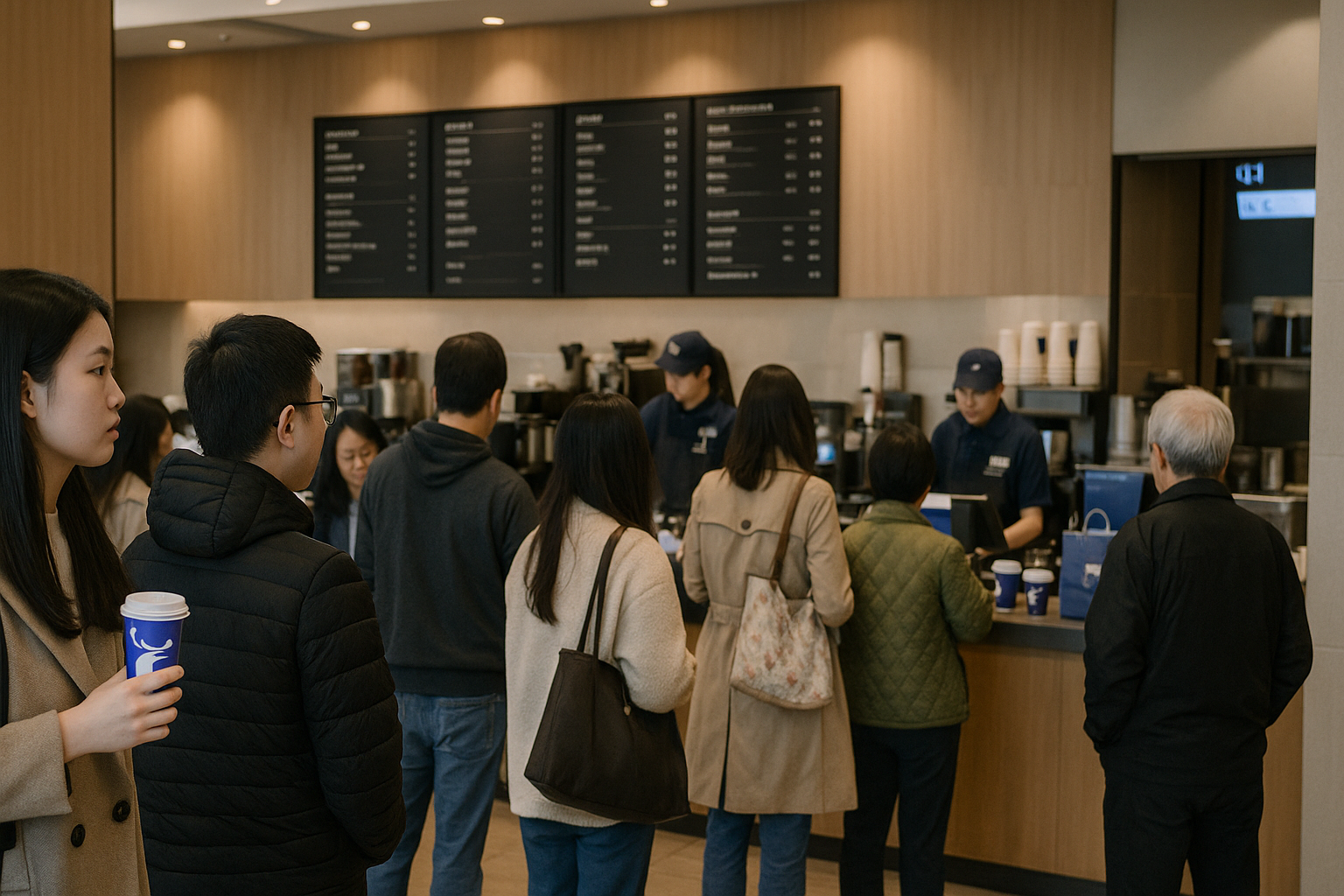
US$1 billion did not buy Mubadala control of Luckin Coffee. It bought minority exposure to more than 36,000 stores, cumulative transacting customers approaching 500 million, and the brutal job of proving that scale still pays.
Luckin Coffee is not worth backing because its coffee is brilliant. It is worth backing because it has turned a cheap daily habit into a machine that learns, distributes and compounds faster than most consumer businesses ever will.
That is the real read on Mubadala Investment Company’s roughly US$1 billion minority investment in Luckin alongside controlling shareholder Centurium Capital. This is not Abu Dhabi waking up one morning and deciding it fancies a flat white. It is a large sovereign investor buying exposure to a Chinese consumer platform with more than 36,000 stores and cumulative transacting customers approaching 500 million as of June 30, 2026. ([mubadala.com](https://www.mubadala.com/en/news/mubadala-announces-significant-minority-investment-in-luckin-coffee?utm_source=openai))
The deal is bigger than the disclosed cheque
Mubadala announced the transaction on September 10, calling it a significant minority investment alongside Centurium. The aggregate transaction value is about US$1 billion. But here is the detail investors should not skate past: neither the stake size nor Luckin’s implied valuation was disclosed publicly.
That matters. A headline saying US$1 billion sounds like fresh fuel pouring directly into store openings, technology and international expansion. It may be partly that. It may also provide liquidity around Centurium’s holding. The public information does not give us permission to pretend we know the split. Anyone confidently telling you the exact valuation is doing the usual finance-industry trick: turning a blank space into a spreadsheet.
What we do know is more useful. Mubadala is bringing a US$385 billion portfolio and a long investment horizon. Centurium keeps control. Luckin’s 2025 annual filing said Centurium and affiliates held all of the company’s Class B ordinary shares and senior preferred shares, giving it 47.8% of voting power as of February 28, 2026. In plain English: Mubadala is buying meaningful economic exposure without buying the steering wheel. ([thenationalnews.com](https://www.thenationalnews.com/business/2026/09/10/mubadala-to-take-stake-in-chinas-luckin-coffee-in-1bn-deal/?utm_source=openai))
That is sensible for both sides. Centurium gets another serious, globally connected capital partner without surrendering the control it fought to establish after Luckin’s spectacular accounting-fraud collapse in 2020. Mubadala gets a seat near one of China’s most formidable consumer operating systems without taking on the job of running it.
No one should romanticise that history. Luckin was delisted after the fraud scandal and became a case study in how quickly growth-stock excitement can become radioactive waste. But the investing world has a short memory when a business rebuilds its economics. The point is not that the past does not matter. The point is that a business which survives a near-death experience, changes ownership and management, then builds genuine operating muscle can become more dangerous than a clean-looking rival that has never been tested.
Luckin’s product is convenience at industrial scale
The lazy comparison is Starbucks versus Luckin: premium Western coffee brand versus discounted Chinese challenger. That comparison is true, but it misses the commercial point.
Luckin is built around digital ordering, dense outlets, delivery, rapid menu development and an integrated supply chain. Coffee is merely the most familiar item passing through the system. Its real product is frictionless repeat behaviour: open app, choose drink, pay, collect or have it delivered, come back tomorrow.
The Q2 numbers show why Mubadala would care. Luckin reported RMB15.89 billion in net revenue for the quarter, or US$2.34 billion, up 28.5% year on year. Gross merchandise value rose 29.8% to RMB18.4 billion. It generated RMB12.22 billion in product-sales revenue, while partnership-store revenue reached RMB3.67 billion, accounting for 23.1% of total revenue. ([luckincoffee.gcs-web.com](https://luckincoffee.gcs-web.com/news-releases/news-release-details/luckin-coffee-announces-second-quarter-2026-financial-results?utm_source=openai))
That partnership-store number deserves more attention than it gets. A company that can make money not only from drinks sold in its own shops but also from supplying materials, delivery services, equipment, royalties and profit-sharing through partners is not simply a retailer. It is building an ecosystem with multiple toll booths.
That does not make it invincible. It does make it more interesting than a chain whose economics rely entirely on each barista, each lease and each cup sold from four walls it directly operates.
I see a version of this while building Agave Finder. In beverage, the consumer-facing transaction is the sexy bit everyone sees. The valuable bit is often behind it: the structured data, the discovery loop, the inventory intelligence, the supplier relationships and the repeat behaviour. Get that right and you are not just another brand fighting for attention. You own part of the decision-making infrastructure.
Luckin has built that infrastructure at absurd scale.
Growth is real. So is the cost of buying it.
Now, before we all get carried away and declare it the perfect consumer company, there is a warning light flashing on the dashboard.
Luckin’s Q2 revenue grew strongly, but it was not all glorious organic momentum. Store expansion did a lot of the work. Self-operated store-level operating margin was 21.3%, slightly below 21.5% a year earlier. Meanwhile, sales and marketing expense climbed 56.1% to RMB925.1 million, driven by more advertising, promotions and commissions paid to delivery and live-streaming platforms. ([luckincoffee.gcs-web.com](https://luckincoffee.gcs-web.com/news-releases/news-release-details/luckin-coffee-announces-second-quarter-2026-financial-results?utm_source=openai))
That is the bill for competing in an aggressive beverage market. Low-priced drinks, delivery subsidies and endless promotional warfare can make revenue charts look magnificent right up until unit economics start quietly coughing blood.
The contrarian view is that the US$1 billion deal is not Mubadala chasing a winner at the top. It is Mubadala buying into a business precisely when scale has become both Luckin’s great advantage and its biggest management challenge.
At 36,000-plus stores, the next question is no longer whether Luckin can open outlets. Clearly, it can. The question is whether new stores continue to add attractive returns after cannibalisation, promotions, labour, commodity inputs and delivery commissions have had their bite.
That is where a lot of fast-growing chains get exposed. They confuse rollout with progress. Every new pin on a map feels like victory. Then the company realises half its new stores are simply relocating sales from the shop down the road while adding another lease, another team and another headache.
Mubadala is betting Luckin has enough data to avoid that trap. It may be right. But that is the bet.
The overlooked angle: this is a control-and-liquidity deal
Most commentary will call this a vote of confidence in China’s coffee market. Fair enough. Mubadala itself framed the investment around long-term opportunity in Chinese consumer demand and Luckin’s technology-enabled model.
But the more useful lens is capital structure.
Centurium has control. Mubadala receives minority exposure. Luckin gets a globally significant investor validating the business without subjecting management to the theatre and distraction of a conventional public-market fundraising process. The company trades over the counter in the United States, not on Nasdaq after its delisting. That is a very different shareholder environment.
For founders and operators, this is worth studying. You do not have to sell the whole business to create liquidity, bring in expertise or increase the company’s strategic options. You do, however, need a business strong enough that investors will accept minority economics and leave the operating control where it belongs.
That is the catch. Founders often hear the first part and ignore the second. They want to preserve control before they have earned it. Control is not a birthright. It is a negotiating outcome produced by performance, governance and alternatives.
Centurium’s position was not handed to it. It was built through a messy turnaround, a governance reset and the hard work of turning a disgraced company into an operator that can produce billions in quarterly revenue.
What this means for you
If you are a founder, stop asking whether your business can raise money. Ask what an investor is actually buying.
If the answer is projected growth, you are replaceable. Plenty of businesses can make a hockey-stick slide deck. If the answer is a repeatable system that captures customer data, lowers friction, improves with every transaction and expands through multiple revenue streams, you have something far more valuable.
Three practical moves:
1. Separate growth from rollout. Track same-store or same-customer performance, contribution margin and payback periods. Opening more locations, hiring more salespeople or buying more traffic is not proof of a stronger business.
2. Build an asset around the transaction. A sale is nice. A sale that improves your demand forecasting, pricing, retention, supply chain or product development is a compounding asset. Measure what you learn from every customer interaction.
3. Earn your control before defending it. If you want favourable terms, create investor competition through real operating quality: clean numbers, durable margins, a capable team and credible options. Investors respect control when the business has earned it.
Mubadala did not write roughly US$1 billion because coffee suddenly became glamorous. It backed a company that has made an ordinary purchase behaviour programmable at enormous scale.
That is the lesson. Do not build a business people visit. Build one that gets better every time they do.