NAR July: $434,100 Price, 4.06M Sales and a Jammed Market
$434,100 median price. 6.69% mortgage. 4.06 million annualised sales. That is not resilience; it is a housing market jammed by expensive homes, expensive debt and weak turnover.
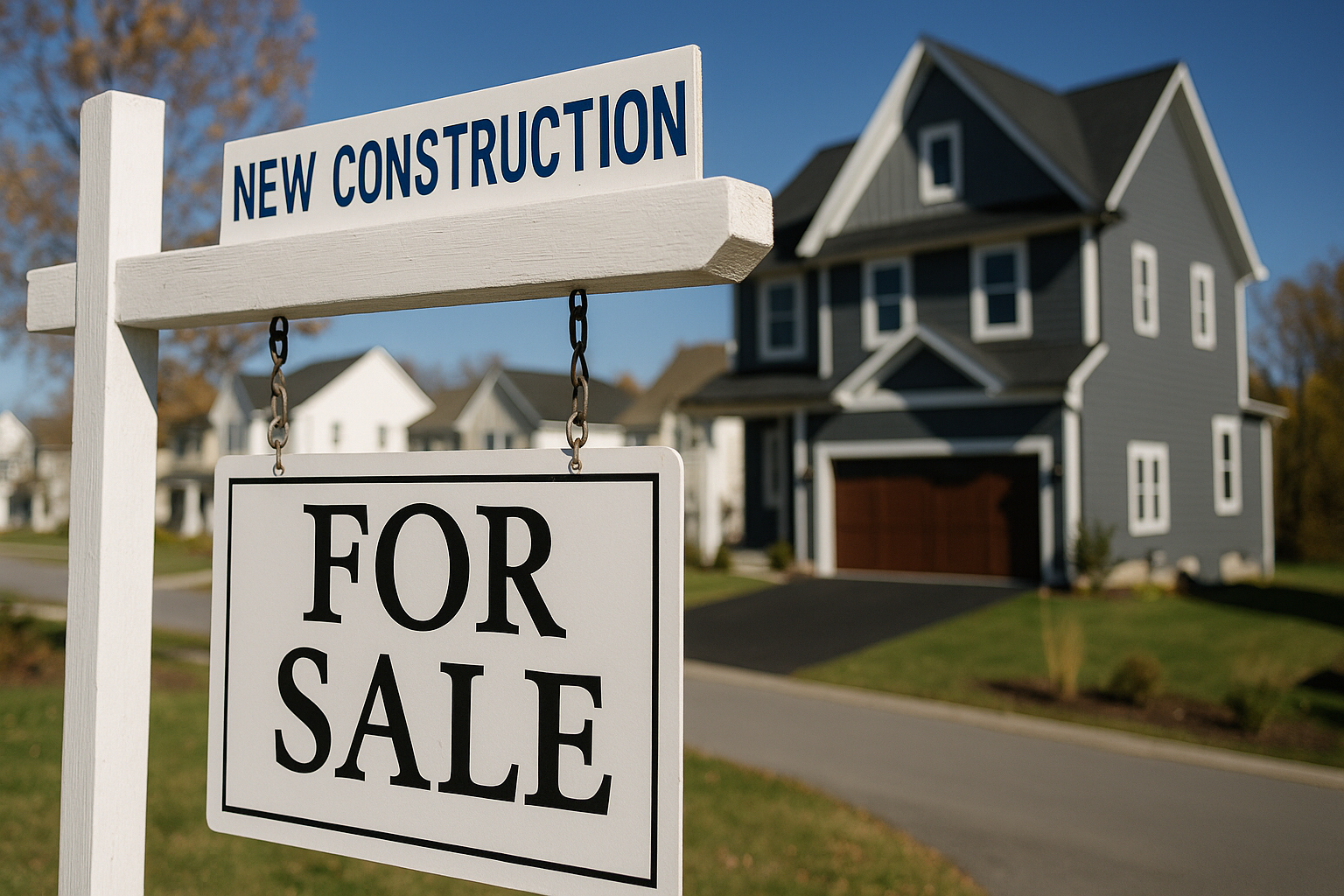
A $434,100 median home, a 6.69% mortgage and just 4.06 million annualised existing-home sales: that is the U.S. housing market in July.
The U.S. housing market is not frozen because people love their homes. It is frozen because the maths has become stupid.
In July, the median existing-home price hit $434,100 — a record for the month — while sales fell 1.7% to an annualised rate of 4.06 million. The average 30-year fixed mortgage was 6.69% the week before that report. That is not a healthy property market. It is a queue of people staring at each other, waiting for someone else to blink. ([apnews.com](https://apnews.com/article/4b07d3833eda82d5fbfbf32100de0e13))
The core story: prices are winning, transactions are losing
Property people love to point at prices as proof of strength. Prices are up, therefore the market is fine. That is lazy thinking.
A functioning market needs turnover. People need to be able to sell a starter home, buy the next one, relocate for work, downsize, divorce, inherit, build and invest without getting smashed by friction at every turn. America is doing very little of that.
Existing-home sales have hovered around a 4 million annual pace for roughly three years, versus a historical norm closer to 5.2 million. July’s 4.06 million pace was only marginally above economists’ expectations, but that is not the point. The point is that activity remains miserable even after years of everyone promising that the next drop in rates will unlock the market. ([apnews.com](https://apnews.com/article/4b07d3833eda82d5fbfbf32100de0e13))
The median July price rose 2% year on year to $434,100. That followed June’s all-time monthly record of $442,800. Prices have now posted annual gains for 37 consecutive months. ([apnews.com](https://apnews.com/article/4b07d3833eda82d5fbfbf32100de0e13))
So we have the worst combination for ordinary buyers: the asset is expensive, the debt is expensive, and the number of transactions is weak. Calling that “resilience” is like calling a pub successful because nobody can afford to leave their seat.
Mortgage rates did ease slightly to 6.67% in the latest Freddie Mac reading, down from 6.69%. But they were still above 6.58% a year earlier. More importantly, they remained well above the roughly 5.98% level reported in late February. A two-basis-point improvement is not a rescue helicopter. It is a breeze through a burning building. ([apnews.com](https://apnews.com/article/74574b3d7b4350920e32878700c2b26a))
The lock-in effect is no longer a side issue
The key fact is painfully simple: millions of existing owners have fixed mortgages below 5%. Selling means replacing a cheap loan with a much dearer one.
That changes behaviour. A family that might have moved for one more bedroom stays put. A retiree who would have downsized keeps the bigger house. An owner who could sell and take a new job in another city decides not to. That is how a housing problem becomes an economic problem.
The result is a strange market where price discovery is poor. The properties that do sell are often the ones with a compelling reason behind them: a job move, a death, a divorce, financial stress, a developer incentive or a seller finally accepting that last year’s valuation was fantasy. Everyone else can sit tight.
Reuters reported that June existing-home inventory was 1.56 million units, still below the pre-pandemic range of roughly 1.8 million to 1.9 million. At that sales pace, there was 4.6 months of supply. So yes, there is an affordability crisis. But there is also a mobility crisis. The shortage is not merely houses; it is willing sellers. ([marketscreener.com](https://www.marketscreener.com/news/us-existing-home-sales-fall-as-house-prices-hit-record-high-ce7f5eded88ef521))
That distinction matters. You can build more homes over time. You cannot easily persuade a homeowner with a cheap fixed loan to volunteer for a higher payment just because economists would like the market to behave.
Builders are getting the message — and that creates the next problem
The new-home market is supposed to be the release valve. Builders can offer rate buydowns, cut prices, throw in upgrades and build smaller homes. Unlike a homeowner sitting on a 3% loan, a builder has stock to shift and shareholders to answer to.
There are signs this is happening. New single-family home sales rose 1.6% in June to a 628,000 annual rate, but were still 5.6% lower than a year earlier. The median new-home price was $398,300, down 2.7% year on year, and homes below $300,000 made up 23% of sales, up five percentage points. That is the market trying to find a price buyers can actually carry. ([investing.com](https://www.investing.com/news/economy-news/us-new-home-sales-pick-up-in-june-census-data-shows-4812093))
But don’t confuse a builder discount with a booming building cycle.
Single-family starts slipped 0.2% in June to an annualised 895,000 units, while permits — the better clue about what comes next — fell 2.4% to 871,000, according to Reuters. Unsold new-home inventory was described as near levels last seen in late 2007. ([marketscreener.com](https://www.marketscreener.com/news/us-single-family-housing-starts-building-permits-fall-in-june-ce7f51dad88bf122))
Here is the second-order problem: if builders pull back because demand is weak and inventory is heavy, the country may end up extending the very supply shortage that made housing unaffordable in the first place. Short-term restraint can make commercial sense for builders. It does not magically solve the long-term housing shortage.
The contrarian angle: a buyer’s market is not the same as an affordable market
This is where plenty of commentary gets it wrong.
A softer market can give buyers more negotiating power. That does not mean buying is easy, sensible or cheap. A buyer may be able to ask for repairs, a closing-cost credit or a rate buydown. Good. Take it. But none of that makes a $434,100 median home with a 6.67% mortgage broadly affordable.
The market is splitting into two groups.
First: people with equity, high incomes, cash, family help or a meaningful deposit. They have options. They can negotiate harder, shop longer and use a seller’s urgency.
Second: renters and first-time buyers whose incomes have not kept pace with both prices and borrowing costs. They are not being saved by an extra week of inventory or a 0.02 percentage-point move in mortgage rates. They need a materially better entry price, materially cheaper finance, materially higher income, or some combination of the three.
That is why the headline price can keep inching higher while the lived experience feels rotten. The marginal buyer is not setting the same price as the median household can afford. In a low-turnover market, the transactions that happen can still support a high median, even while a much larger pool of would-be buyers is locked out.
For investors, this means the national average is close to useless. You need to know whether your local market has jobs, household formation, constrained supply, insurance-cost pressure, property-tax pain, new construction and genuine rent growth. “Housing always goes up” is not an investment thesis. It is what people say when they have not done the spreadsheet.
What this means for you
If you are buying a home to live in for seven to 10 years, stop trying to call the exact bottom. Instead, make the deal survive ugly conditions.
First, buy the payment, not the headline price. Run the numbers at today’s rate, not the rate you hope a central bank delivers later. Include tax, insurance, maintenance and any owners’ association fees. If it only works after a refinance, it does not work.
Second, negotiate for permanent value. In this market, ask for price reductions, seller-paid closing costs, repair credits or a mortgage-rate buydown. A shiny appliance is not compensation for overpaying by $30,000.
Third, do not stretch because you expect appreciation to bail you out. That was the easy-money playbook. This is a different market. Your margin of safety is your deposit, your cash buffer and your ability to hold through a flat patch.
Fourth, if you are selling, price for the buyer who exists — not the buyer you met at a barbecue in 2022. The first credible offer is often worth more than six months of denial, mortgage payments, price cuts and agent pep talks.
And if you are an investor, be ruthless: underwrite rents conservatively, assume costs rise, stress-test debt, and demand a yield that compensates you for illiquidity. A property is not automatically a great asset because it has a front door.
The U.S. housing market does not need more motivational speeches. It needs prices, financing costs and incomes to start speaking the same language. Until then, the winner is not the person making the boldest prediction. It is the person who can do the maths and walk away when the deal is rubbish.
Sources
- US existing homes fall 1.7% in July as record prices, high mortgage rates stifle would-be buyers
- Mortgage rates dip slightly for the first time in six weeks, but remain steeper than last year
- US single-family housing starts, building permits fall in June
- US new home sales pick up in June, but affordability challenges remain