NBA and YouTube’s $1.2B Local-TV Bet Could Break the RSN Racket
The NBA wants $1.2 billion to fix the absurdity of fans paying for four services and still being blacked out of their own team’s games. YouTube may finally turn that mess into a product.
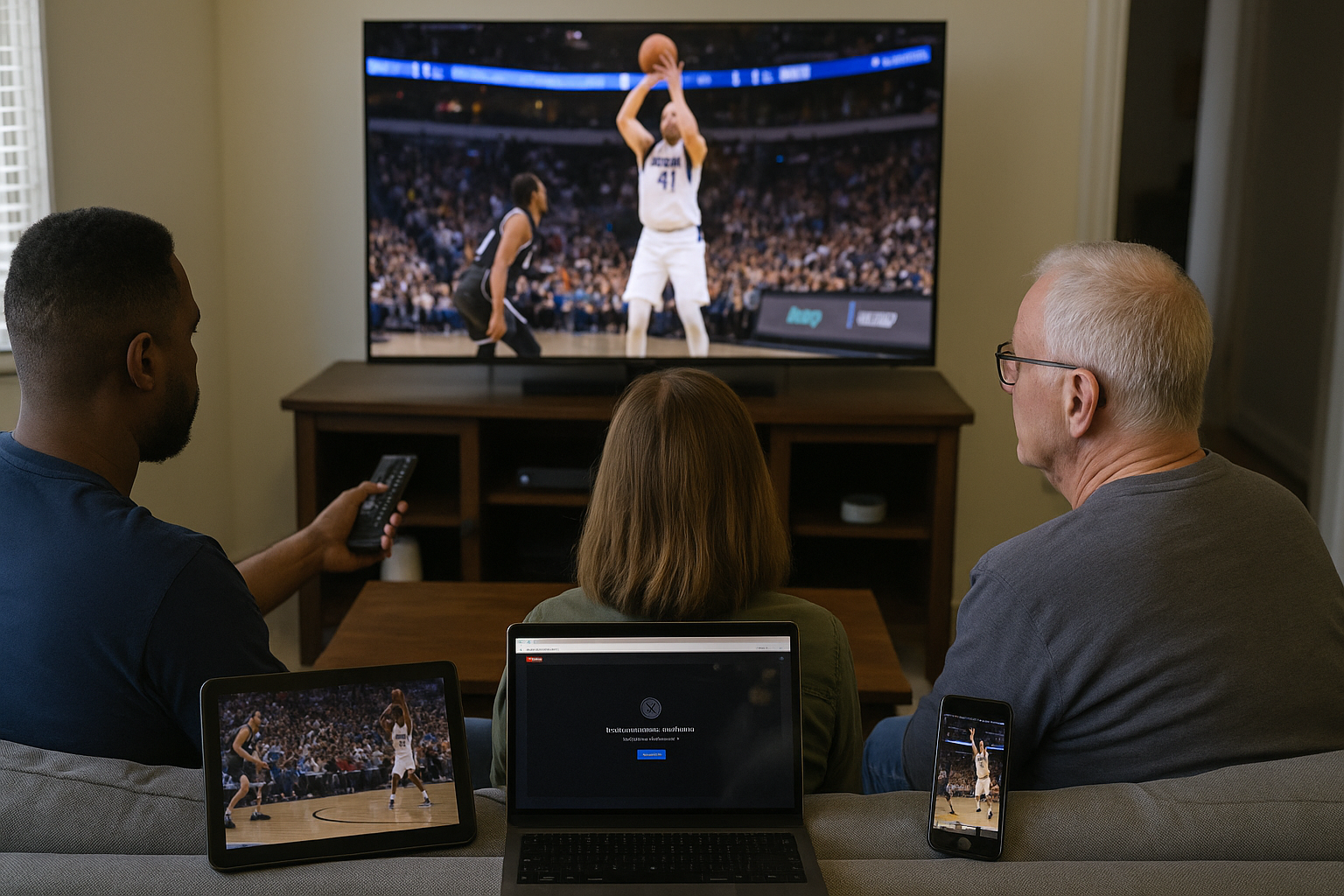
The NBA wants roughly $1.2 billion for a product that, until now, has mostly been a bloody headache: finding your own team’s game.
That is the real story behind YouTube’s advanced talks to become the NBA’s central home for local broadcasts from the 2027-28 season. Not highlights. Not another flashy streaming feature. Local games: the stuff fans of LeBron James’s Lakers, Stephen Curry’s Warriors, Jalen Brunson’s Knicks and Shai Gilgeous-Alexander’s Thunder actually want to watch on a Tuesday night.
For decades, regional sports networks made local basketball look like a licence to print money. Then cord-cutting showed up, the cable bundle started dying, and the machine began coughing up screws. Now Adam Silver and the NBA are trying to bundle the wreckage into one digital asset and sell it to YouTube.
Good. They should have done it years ago.
The $1.2 billion question is not whether fans want this
Sports Business Journal reported this week that the NBA and YouTube are in advanced discussions over an aggregated local-broadcast hub involving 20 to 25 teams in its first phase, with a longer-term ambition of bringing in 29 of the league’s 30 clubs. The reported asking price for a 29-team package is about $1.2 billion.
That number sounds enormous until you look at the alternative.
A fan can already be paying for a cable or virtual-TV bundle, NBA League Pass, one or more national streaming services, and still discover the game they want is blacked out locally. That is not a premium consumer experience. It is a distribution system designed by committees when dial-up internet was still a thing.
The NBA’s own current viewing setup proves the point. National games are split across ABC/ESPN, NBC/Peacock and Prime Video. League Pass handles out-of-market games but excludes local broadcasts. The league’s Tap to Watch product tries to point people towards the correct game and platform, which is useful, but it also quietly admits the underlying system is a mess.
The proposed hub would tackle the missing piece: in-market games. In plain English, a Miami Heat fan should be able to go to one place for Heat games. A Detroit Pistons fan should not need a treasure map. A Memphis Grizzlies fan should not have to care which regional distributor survived bankruptcy this month.
That simplicity is the asset. Not the video feed itself.
The old RSN model did not fail because fans stopped loving sport
Regional sports networks were built for a world in which cable reached nearly every household and sports was the glue keeping people subscribed. Teams collected large, predictable rights fees. Cable operators charged every household a sports fee, including households that could not name five NBA players.
That cross-subsidy was beautiful if you owned a team. It was less beautiful if you were a customer paying for 200 channels you never watched.
Then consumers began leaving the bundle. The economics cracked. Main Street Sports Group, which operated the FanDuel Sports Network portfolio, became the clearest warning sign. The collapse left a group of NBA teams scrambling for local homes, including the Atlanta Hawks, Charlotte Hornets, Cleveland Cavaliers, Detroit Pistons, Indiana Pacers, LA Clippers, Memphis Grizzlies, Miami Heat, Milwaukee Bucks, Minnesota Timberwolves, Oklahoma City Thunder, Orlando Magic and San Antonio Spurs.
For the 2026-27 season, those clubs are largely on short-term arrangements or escape clauses. That is not accidental. It gives them room to join a league-wide hub a year later.
This is what a market reset looks like. The old model paid teams for distribution scarcity. The new model will have to pay them for digital demand.
There is a difference, and plenty of owners will hate it.
Why YouTube is the logical buyer — and why it should be careful
YouTube has already shown it can manage a massive, complicated sports package through NFL Sunday Ticket. More importantly, it has the technology, consumer habit and television footprint the NBA needs. People do not just watch YouTube on phones anymore; they watch it on the biggest screen in the house.
The NBA also has a relationship advantage. YouTube’s head of sports and live partnerships, Jen Chun, previously spent nine years at the league office. That does not win a billion-dollar rights auction by itself, obviously. But in media, familiarity lowers friction, and friction kills deals.
The catch is that YouTube should not pay $1.2 billion merely to inherit a basket of uneven local rights.
The NBA needs enough teams to create a real national proposition. Twenty-five teams is interesting. Twenty-nine is powerful. A package missing the Lakers, Knicks, Warriors and other heavyweight markets becomes much harder to price like a transformative platform.
And the Lakers are the awkward bit in the room. Their local rights fees are reported at $199.78 million for 2026-27, $209.76 million for 2027-28 and $218.14 million for 2028-29. That is a very large cheque to ask new owners Josh Kushner and Bob Iger to replace with a shared pool, particularly while the franchise is reportedly being sold for $12.5 billion.
The Knicks have their own complication: an intra-company local rights fee with MSG of $110.84 million this season. You can see why the hub may begin with partial participation, simulcasts or staggered rights rather than a clean, all-in switch.
That is sensible. A deal does not become clever because it is tidy on a PowerPoint slide.
The overlooked angle: the NBA is selling certainty, not just games
Everyone is focused on whether YouTube, Amazon, ESPN or DAZN wins. That is the auction-room theatre. The better question is what teams are actually buying.
They are buying a floor.
DAZN previously indicated it could pay individual former Main Street teams somewhere between $8 million and $15 million annually, while offering a mix of subscription streaming and 10 to 15 free local over-the-air broadcasts. That is a long way from historic RSN money, but it is at least a visible number in a market where visibility has vanished.
A central NBA deal, by contrast, could create something closer to a standardised local-media floor. If 25 clubs joined a package and the average distribution worked out around $40 million per team, the gross payout would reach $1 billion before you even start arguing over the precise split.
Big markets will want more. They should. The Lakers and Knicks are not the Grizzlies or Pelicans commercially, and pretending otherwise is how revenue-sharing conversations become silly.
But smaller markets should want the hub too. It replaces a fragile local bargaining position with an interest in a larger, scalable product. Cade Cunningham’s Pistons and Trae Young’s Hawks do not need to win the Los Angeles rights-fee lottery. They need a dependable way for local fans to find the games, advertisers to buy inventory, and the club to plan beyond one season.
The centralisation also gives the league something more valuable than a rights cheque: data. A regional network knew who subscribed to a bundle. A serious digital platform can understand viewing frequency, churn, household behaviour, ad response and which fans are worth re-engaging. That information improves pricing, sponsorship sales, merchandising and ticket marketing.
The game is not just media anymore. It is customer ownership.
The contrarian view: more consolidation can make fans worse off
Here is the bit the NBA should not ignore while celebrating its cleverness: one app does not automatically mean a better deal for consumers.
If the hub simply becomes another mandatory monthly subscription, on top of Prime Video, Peacock, ESPN and League Pass, fans will quite reasonably decide the league has made access worse, not better. Piracy does not grow because people love dodgy websites. It grows when legitimate customers feel like mugs.
The winning product must be brutally simple. Clear local access. Transparent pricing. Reliable streams. Minimal blackout nonsense. Sensible options for households that want one team, several teams or the whole league.
And there should be room for free local broadcasts. DAZN’s willingness to simulcast some games over the air is not charity; it is intelligent audience building. A young fan who can watch Victor Wembanyama and the Spurs for free today may be a paid subscriber, ticket buyer and merchandise customer tomorrow.
Sport gets expensive when executives obsess over extracting the final dollar from existing fans instead of expanding the fan base.
What this means for you
If you run a business, do not miss the bigger lesson here.
First: the customer’s biggest annoyance is often the product opportunity. The NBA is not inventing demand. It is monetising confusion created by an outdated system. Find the recurring friction your customers complain about, then remove it so completely they will happily pay for the relief.
Second: aggregate fragmented supply before someone else does. Twenty-five separately negotiated local rights packages are weak. One coherent platform could be worth more than $1 billion. The same principle applies to suppliers, distribution, customer data and niche marketplaces.
Third: do not confuse legacy revenue with permanent revenue. The RSN model looked indestructible until consumer behaviour changed. If your business relies on customers accepting a bad deal because they have no alternative, you do not have a moat. You have a countdown clock.
Finally, pay attention to the bloke who owns the customer relationship. The NBA teams own the basketball. YouTube, ESPN, Amazon and DAZN want to own the front door. In any industry, the front door is where the money compounds.
The NBA’s $1.2 billion bet is not really about basketball broadcasts. It is about who gets to own that door next.