NBA Europe’s $6B Franchise Bet Could Break the EuroLeague
The NBA has found a way to make European basketball worth at least $6 billion before a single new team has played. The hard part is convincing Real Madrid, Barcelona and the EuroLeague to hand over the keys.
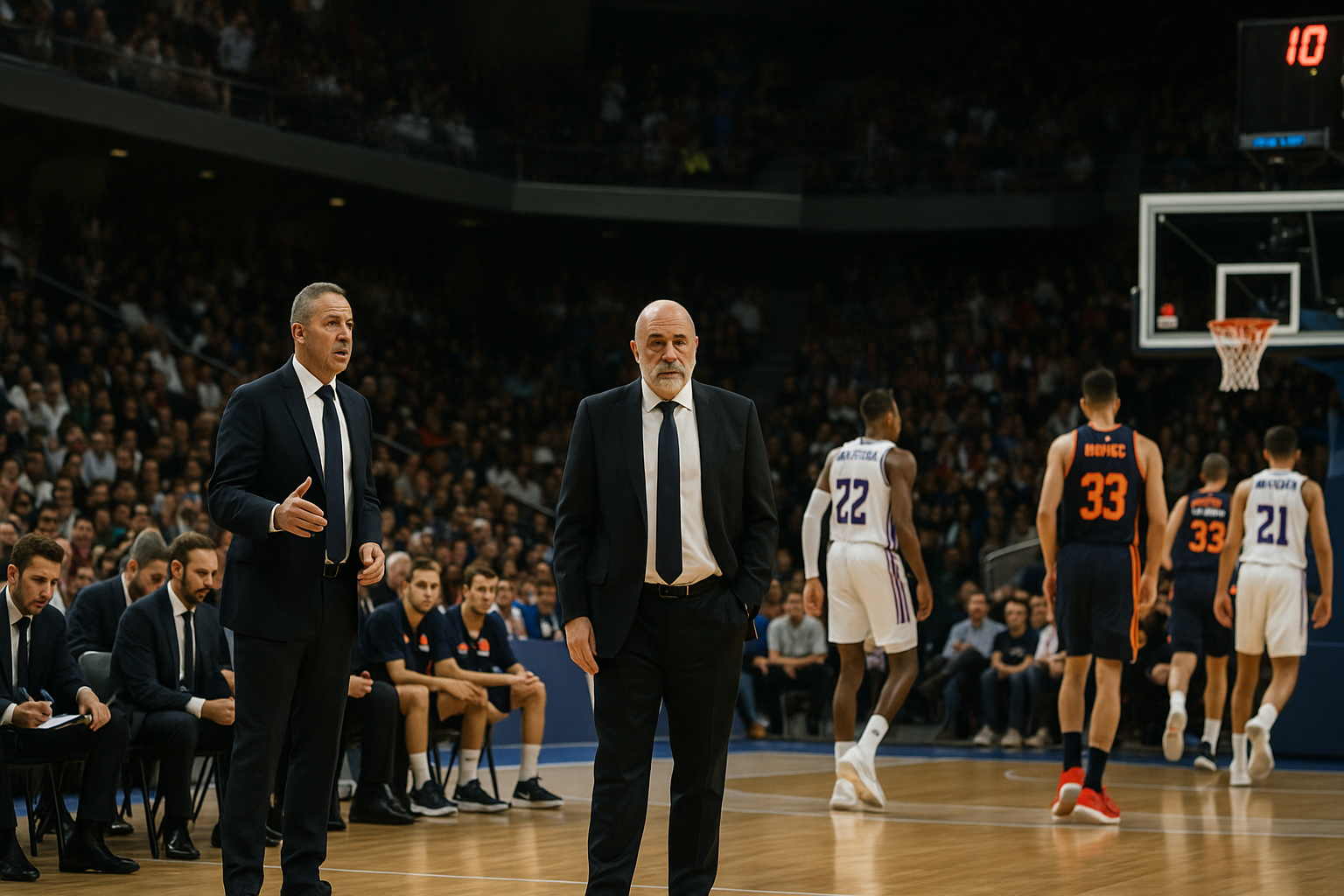
The NBA thinks European basketball is worth at least $6 billion in franchise fees before a ball has been tipped. That is either a spectacular bit of value creation or the most expensive hostage negotiation in sport.
Today, October 5, EuroLeague owners are meeting in Italy with the NBA’s European plan sitting squarely on the table. Adam Silver’s league wants to launch NBA Europe in October 2027, with 12 permanent franchises and four qualification places. The reported entry bids are not cute numbers: every target market has attracted bids of at least $500 million, with several reportedly above $1 billion. Do the kindergarten maths: 12 permanent licences at a $500 million floor is $6 billion before media rights, sponsorship, ticketing, hospitality or a single overpriced replica jersey. ([nba.com](https://www.nba.com/news/progress-continues-nba-europe-league?utm_source=openai))
That is the story. Not whether basketball needs another competition. Not whether European fans will sing louder than Americans. The real story is that the NBA has put a price tag on Europe’s biggest basketball cities — London, Paris, Madrid, Barcelona, Milan, Rome, Munich, Berlin, Istanbul, Athens, Manchester and Lyon — and wealthy people have started reaching for the cheque book. ([nba.com](https://www.nba.com/news/progress-continues-nba-europe-league?utm_source=openai))
The NBA is selling certainty, not basketball
Most people will look at a $500 million-to-$1 billion franchise price and ask whether a European basketball club can possibly be worth that much.
Wrong question.
The NBA is not really selling basketball. Europe already has excellent basketball. Real Madrid, FC Barcelona, Olympiacos, Fenerbahçe and Bayern Munich do not need a North American logo to prove they can fill arenas or produce great players.
What the NBA is selling is certainty.
A permanent franchise licence means predictable inventory for broadcasters, sponsors and investors. It means no annual panic over whether a club qualifies. It means a league can build a proper commercial calendar, package multinational sponsorships, standardise production, sell data, push merchandise and plan ten years ahead without discovering that its best team has vanished after a bad domestic season.
That predictability is catnip to capital. The NBA has spent decades proving that a closed or largely closed league can turn scarcity into obscene franchise values. Its European proposal applies the same playbook to a continent full of major cities, deep sporting culture and clubs that already own valuable fan bases.
The proposed structure is 16 teams: 12 permanent franchises plus four annual qualifiers. That qualifier component matters politically because it gives the project a sporting story rather than making it look like a private club with a basketball attached. But do not kid yourself about where the real value sits. The permanent licences are the asset. The qualifying spots are the marketing copy. ([espn.com](https://www.espn.com/nba/story/_/id/46883098/nba-europe-based-league-launch-october-2027?utm_source=openai))
Real Madrid and Barcelona are not small fish waiting to be caught
The uncomfortable bit for the NBA is that Europe’s biggest basketball brands are not distressed assets.
Real Madrid and Barcelona bring history, supporter bases, global recognition and the commercial machinery of two of the world’s biggest football institutions. Bayern Munich has the same advantage in Germany. Olympiacos and Fenerbahçe have something equally valuable: rabid, deeply local basketball audiences that do not need to be taught why the sport matters.
EuroLeague executives have made precisely this point. Chus Bueno has argued that clubs such as Real Madrid, Barcelona, Bayern and Olympiacos bring intellectual property, fans, tradition and their cities to any new competition. In other words: the NBA may have the logo, but the clubs own plenty of the cultural capital. ([sportsbusinessjournal.com](https://www.sportsbusinessjournal.com/Articles/2026/06/30/nba-europe-closes-bids-undisclosed-euroleague-teams-want-in/?issueId=2KF5X3M2INBVLAXABZEL4DNMBE&utm_source=openai))
This is why the October 5 meeting matters. The NBA would clearly prefer an aligned Europe — one competition, one commercial machine, no civil war. Silver has said the league would be strengthened by joining forces with the EuroLeague, though he has also made clear NBA Europe can proceed without it. ([nba.com](https://www.nba.com/news/adam-silver-board-of-governors-september-2026?utm_source=openai))
That gives the EuroLeague clubs a brutal choice.
Stay independent and risk being slowly outgunned by NBA money, NBA marketing and NBA media relationships. Or join the NBA project and risk becoming minority characters in a league that was designed in New York, not Madrid, Athens or Istanbul.
Neither option is comfortable. That is usually how you know the decision is real.
The $6 billion is only the opening ante
The franchise fees are eye-catching because they are easy to understand. But they are probably not the main prize.
A buyer paying $500 million or $1 billion is betting on future media rights, gambling and data partnerships where permitted, multinational sponsors, premium hospitality, global merchandise, digital subscriptions and the uplift that comes from attaching a league to the NBA’s commercial system.
The NBA’s own reporting says it has received bids in and above the $500 million-to-$1 billion range across its target cities. It is aiming for a fall 2027 launch, and NBA viewership on Amazon Prime Video in Europe reportedly rose 129% year over year in the 2025-26 season, helped by French star Victor Wembanyama’s rise with the San Antonio Spurs. ([nba.com](https://www.nba.com/news/progress-continues-nba-europe-league?utm_source=openai))
That Wembanyama detail is not a throwaway. Sport is sold through stars before it is sold through spreadsheets. The NBA knows Europe has players, audiences and cities. It wants a competition that makes the commercial relationship more direct and more year-round.
But there is a massive operator’s lesson here: a big market is not the same thing as a profitable market.
London is a huge city. Paris is a huge city. Manchester is a huge city. That does not automatically mean basketball fans will pay enough, watch enough and care enough to support billion-dollar franchise valuations. Basketball competes in Europe against football first, football second and football again after that. The NBA is not entering a blank canvas. It is entering an established sporting culture with packed calendars, entrenched loyalties and clubs that have spent generations training fans to care about domestic football.
A spreadsheet that assumes European basketball will behave like the NFL is how wealthy people become slightly less wealthy.
The overlooked angle: this is a deal about football owners
Here is the part I think many people are missing: NBA Europe is not merely a basketball expansion story. It is a football-owner story.
The target cities are home to clubs and ownership groups that understand global content, premium sponsorship and cross-border fan monetisation. Reports on the bidding process indicated interest from more than 20 existing basketball and football clubs. That matters because football operators have the infrastructure, databases, corporate relationships and, crucially, the tolerance for long investment horizons that a new league needs. ([sportsbusinessjournal.com](https://www.sportsbusinessjournal.com/Articles/2026/06/30/nba-europe-closes-bids-undisclosed-euroleague-teams-want-in/?issueId=2KF5X3M2INBVLAXABZEL4DNMBE&utm_source=openai))
For a football giant, a basketball team can be more than another sporting toy. It can create year-round venue use, more inventory for sponsors, another reason for fans to stay inside the club’s app and a way to sell hospitality on nights when football is not on.
That does not guarantee success. Conglomerates can be spectacularly good at buying assets and spectacularly average at making supporters care about them. But it changes the economics. A standalone basketball club needs to make basketball work. A multi-sport owner can make basketball useful to a much bigger commercial engine.
That is why the NBA is pushing so hard. It is not hunting for 12 basketball teams. It is trying to recruit 12 distribution machines.
Why EuroLeague should not sell cheaply — or posture forever
The contrarian view is that the EuroLeague has more leverage than people think.
The NBA brand is mighty, but it cannot manufacture 100 years of rivalry between European clubs. It cannot instantly replicate the emotion of Madrid versus Barcelona, Olympiacos versus Panathinaikos or the atmosphere in Istanbul. If the NBA tries to simply bulldoze the existing order, it may buy cities without buying souls.
But the EuroLeague also cannot mistake tradition for a business model.
Its clubs need to ask whether they can build a commercial platform that competes with the NBA’s distribution, capital access and global sponsorship sales force. If the answer is no, then refusing a partnership out of pride is not principled. It is poor capital allocation.
The sensible outcome is not surrender. It is negotiation.
EuroLeague clubs should demand meaningful governance, protection for local rivalries, a credible path for sporting qualification, revenue-sharing rules they can actually understand and safeguards against becoming tenants in their own competition. If the NBA wants European authenticity, it should pay for it — not just in franchise valuations, but in control.
What this means for you
You do not need to own a basketball club to use the lesson here.
First: sell certainty, not features. The NBA is not charging up to $1 billion because basketball is new. It is charging because permanent access to a premium commercial ecosystem is scarce and predictable. In your business, work out what customers are truly paying to remove: uncertainty, delay, risk, complexity or embarrassment.
Second: do not confuse a famous brand with all the value. The NBA has the logo. Real Madrid, Barcelona and the EuroLeague clubs have local trust, history and audience habit. In a negotiation, identify what only you bring. That is your leverage.
Third: price the second-order value. A basketball team may not justify its price on ticket sales alone. It may justify it through sponsorship, data, hospitality, media inventory and a wider membership ecosystem. The best operators do not assess an asset in isolation; they assess what it does to the rest of the machine.
Finally: when someone offers you a grand partnership, do not ask only, “What do I get paid?” Ask, “What do I control after I get paid?”
That is the question EuroLeague owners face today. And it is the question that separates a good deal from a very expensive regret.