NBA Las Vegas $12B Bid: Warning to Sports Owners
A Las Vegas NBA team has no players, no name and no confirmed arena — yet bidders may spend $12B-$13B. That isn’t basketball optimism. It’s scarcity at private-equity prices.
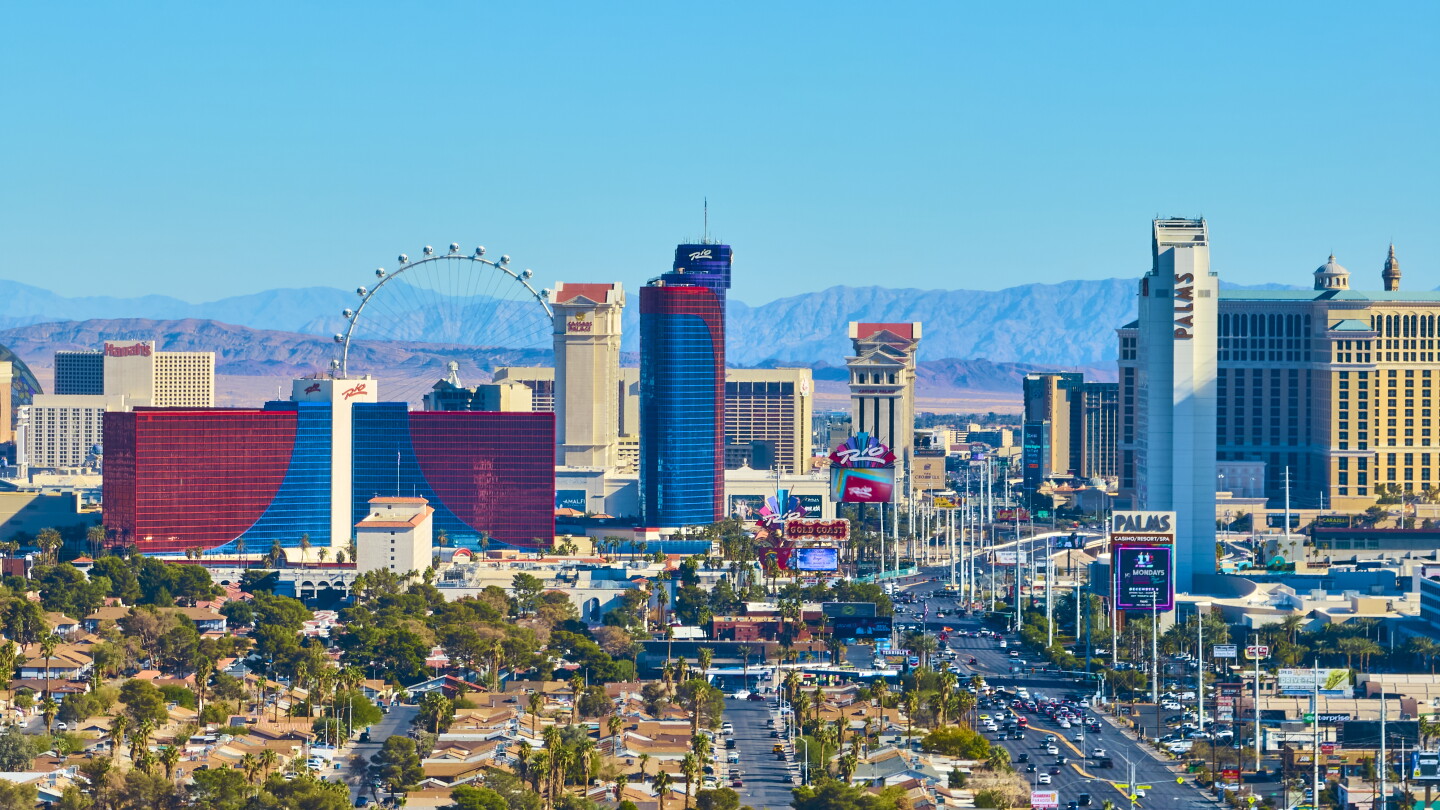
A Las Vegas NBA team has no players, no name and no confirmed arena — yet bidders may spend $12 billion to $13 billion. That isn’t basketball optimism. It’s scarcity being sold at private-equity prices.
The NBA is reportedly close to choosing from three ownership groups for a Las Vegas expansion franchise: Nancy Walton Laurie and Bill Laurie; Steve Apostolopoulos and Marc Lasry; and Bill Foley with Jerry Colangelo. The reported figure covers the franchise and a new arena. Read that bit twice, because plenty of people will lazily compare it straight to the $12.5 billion agreed valuation for the Los Angeles Lakers.
They are not the same deal. One is an established global sports brand with history, stars, a fan base and decades of commercial momentum. The other is a licence to enter the NBA’s club, plus a giant construction and execution job.
And still, the price is roughly the same.
That tells you where the real money in sport has gone: not into the game itself, but into owning a protected slice of a distribution machine. ([nbcsports.com](https://www.nbcsports.com/nba/news/report-nba-to-pick-new-owner-of-las-vegas-expansion-team-soon-with-12-13-billion-price-tag))
The NBA has turned expansion into an auction for access
Back in March, the NBA Board of Governors authorised the league to formally explore expansion in Las Vegas and Seattle. Commissioner Adam Silver called them markets with a long record of supporting NBA basketball. The league hired PJT Partners to assess prospective owners, arena situations and the financial issues surrounding expansion.
At that point, the talk was of entry fees in the $7 billion to $10 billion range. Even then, the number sounded ridiculous to anyone still thinking about sports teams as local entertainment businesses with a scoreboard attached.
Now the Las Vegas process appears to be producing a reported $12 billion to $13 billion price tag, including arena costs. That is a hell of an upward revision in six months — and a useful lesson in how auctions work when the asset is scarce, emotionally valuable and wrapped in prestige. ([nba.com](https://www.nba.com/news/nba-board-of-governors-exploration-seattle-las-vegas-expansion))
The three finalist groups are not mugs chasing a shiny object after too many martinis on the Strip.
Nancy Walton Laurie is part of the Walmart family fortune and has previously owned the NHL’s St. Louis Blues with her husband, Bill Laurie. Apostolopoulos is a Canadian billionaire, while Marc Lasry has already sat at the NBA ownership table as a former Milwaukee Bucks co-owner. Foley built the Vegas Golden Knights into a serious NHL business and, alongside former Phoenix Suns owner Jerry Colangelo, knows exactly what it means to operate in the league ecosystem.
These are sophisticated people competing to pay an enormous premium. That does not make the investment automatically sensible. It does tell you they see something most fans do not: the team is only the visible bit of the asset.
A $13 billion headline can fool you
Here is the overlooked angle: the reported number is not simply the value of a Las Vegas basketball club.
It includes a new arena. It includes the cost of entering a mature league. It includes the value of being one of only 32 NBA ownership seats if expansion proceeds. And it includes the option value attached to Las Vegas — a city that has rapidly gone from sports-world punchline to a home for the NFL’s Raiders, NHL’s Golden Knights, WNBA’s Aces and MLB’s incoming Athletics.
So don’t do the usual pub maths and declare that a brand-new NBA team is “worth $13 billion.” It may become worth that or more over time. But the number being discussed is a total cheque for a bundle of assets, obligations and future upside.
That distinction matters because the comparison everyone will make is to the Lakers. In August, Josh Kushner and Bob Iger agreed to buy the Lakers at a $12.5 billion valuation, a record price for a professional sports team sale. The Lakers are not merely an NBA club. They are one of the few sports brands on earth that travels globally without needing an explanation. They have Los Angeles, generations of fans, a championship archive, an enormous commercial footprint and Luka Dončić as a current on-court centrepiece.
Las Vegas gets none of that on day one. It gets a market, a league membership and a chance to build it. ([apnews.com](https://apnews.com/article/d5058bb845d87873e23e270a6bb9be9f))
Which makes the Vegas price both impressive and slightly uncomfortable. If an unbuilt franchise plus arena can sit in the same financial postcode as the Lakers, the market is no longer pricing basketball operations alone. It is pricing the belief that elite live sport will remain one of the few things people reliably watch in real time, travel for, gamble around, sponsor and talk about together.
That belief has been very profitable so far. It is not risk-free.
Why Las Vegas can command a premium
Las Vegas has a rare advantage: it is already a sporting-events machine.
The city does not have to be taught how to sell hotel rooms, premium hospitality, big-event weekends or corporate experiences. It is built for them. An NBA team would have 41 regular-season home dates before playoffs, preseason, concerts, sponsorship inventory and every other revenue lever an arena operator can dream up.
That is the bull case.
The stronger bull case is that Vegas is not relying only on locals to fill a building. It can package basketball with tourism. A bloke from Melbourne or Sydney might not schedule a holiday around a Tuesday-night game in a random American city. He might schedule one around Vegas, a fight, an F1 weekend, a restaurant booking and an NBA game. That changes the economics of premium tickets, suites and partnerships.
But the same point contains the risk.
Vegas is saturated with world-class entertainment. The NBA would not be competing only with other teams. It would be competing with the NHL, NFL, WNBA, future MLB, boxing, UFC, Formula 1, concerts, casinos, restaurants and the simple fact that tourists have limited time and limited money. A new franchise will not win because it exists. It will win only if the ownership group builds a product people choose over all that noise.
That means arena design, ticket packaging, hospitality, data capture, local partnerships and brand positioning matter just as much as the first star player. Probably more in year one.
The contrarian view: this is not a victory lap for sports valuations
Most coverage of giant franchise prices reads like a scoreboard: higher number, louder applause.
That is daft.
A high purchase price is not proof that the buyer got a bargain. It is proof that the buyer won an auction. Those are very different things.
The winners here will have to fund a team, build or secure an arena solution, hire an entire organisation, create a fan base, negotiate commercial deals and eventually convince players that Las Vegas is a place to win. The cheque does not end at the purchase price. It starts there.
The NBA also has to balance the interests of its existing owners. Expansion means new upfront money and new markets, but it also means two more clubs sharing the broader basketball ecosystem: player talent, league attention and portions of shared economics. That is why the league is being so deliberate. Silver has repeatedly said the owners want to make an expansion decision by the end of 2026, not because the cities are unknown, but because the price and structure must be right. ([nba.com](https://www.nba.com/news/nba-commissioner-adam-silver-on-leagues-plan-to-explore-expansion-in-seattle-and-las-vegas))
The real product being auctioned is controlled scarcity. There are only so many NBA seats. Every billionaire knows that. Once an owner is inside, the asset has built-in status, access and long-duration optionality that a normal business simply does not offer.
That is exactly why I’d be careful copying the headline. Scarcity is powerful only when it is genuine. You cannot slap a $13 billion valuation on an ordinary business just because you call it premium.
What this means for you
There are three useful lessons here, whether you run a startup, invest your own money or manage a business with ten staff.
First: separate the asset from the headline. The Vegas figure includes a franchise and arena plan; the Lakers figure is a valuation for an established team. If you cannot explain what is actually being bought, you have no business forming an opinion on whether it is expensive.
Second: build scarcity before you chase scale. The NBA does not need another team tomorrow. That is precisely why bidders are prepared to pay up. In your business, do not give away access, discounts or attention too cheaply. Create a clear reason people need to act now and a concrete reason they cannot get the same thing everywhere else.
Third: remember that distribution beats product more often than founders admit. Basketball is brilliant, but the NBA’s real economic power is its distribution: broadcast reach, sponsorship, global recognition, live-event demand and a tightly governed ownership structure. Ask yourself where your customers actually come from, who controls that channel and whether you own any of it.
The Las Vegas team will eventually need a name, players and a jumper. But the bidders are not paying $12 billion to $13 billion for a logo or a few home games.
They are paying for a scarce seat at the table.
And if you are building anything of value, that is the bit worth studying.