NBA’s $10B Vegas Bid Is Using Seattle as the Price Tag
The NBA is not bringing Seattle back because it feels guilty. It is holding Seattle’s return hostage until Las Vegas proves how much the next franchise is worth.
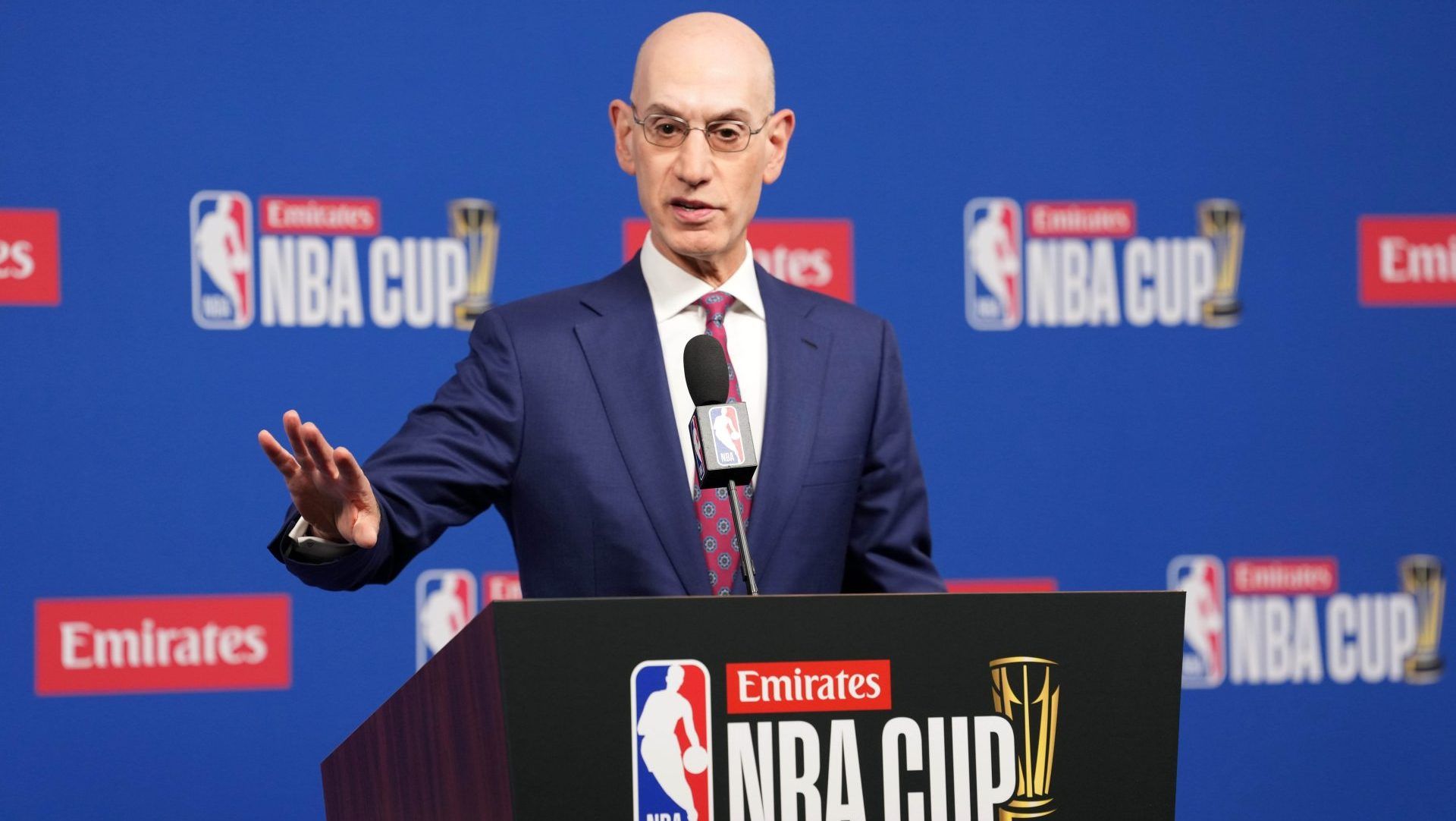
The NBA is not bringing Seattle back because it feels guilty. It is using Seattle’s 18-year heartbreak to make Las Vegas bidders cough up more money.
That is the blunt read on the league’s expansion process as of August 14, 2026. Adam Silver has spent years talking up Seattle and Las Vegas. Now the NBA is reportedly prioritising a Las Vegas sale first, because the league wants the Vegas price to set the floor for what Seattle must pay.
Forget the sentimental rubbish for a minute. This is a controlled auction of scarcity, and the 30 existing NBA owners are the people getting paid.
Las Vegas is not first because it deserves it more
The NBA’s Board of Governors voted on March 25 to explore expansion in Las Vegas and Seattle. That wording matters. Explore. It did not approve teams, choose owners or lock in a start date.
Silver has said the league could add two teams, one team, or none. The NBA hired investment bank PJT Partners to assess prospective owners, arena situations and the economics. The league has said it hopes to be in a position to move ahead by the end of 2026.
But the numbers being kicked around are not small. Estimates have put an expansion entry fee in the $7 billion to $10 billion range for each team.
At $10 billion for Las Vegas, the existing 30 owners would theoretically share roughly $333 million before costs and whatever final structure the league adopts. Sell two teams at that level and the gross pool becomes $20 billion.
That is why this is not a civic exercise. It is a dividend masquerading as expansion.
The league’s reported preference to establish Las Vegas first is perfectly rational if you are an existing owner. Vegas has a cluster of credible, wealthy interested parties. Front Office Sports reported that potential Vegas groups have included former Phoenix Suns executive Jerry Colangelo and Horizon Sports & Experiences chief David Levy’s Las Vegas Jacks, Vegas Golden Knights owner Bill Foley, former Disney chief Bob Iger and investor Josh Kushner, former Milwaukee Bucks owner Marc Lasry, and Magic Johnson.
More bidders means more tension. More tension means a cleaner price signal. And once one buyer has agreed to pay an eye-watering number for a new NBA club, Seattle is no longer negotiating in a vacuum.
It is negotiating beneath a giant neon sign that says: Vegas paid this. Your turn.
The $10 billion number is both real and not real
Here is the overlooked bit: a $10 billion expansion fee is not a valuation in the normal sense.
When I buy a business, I look at cash flow, growth, competition, capital needs and the chance I have to sell it later. Sports franchises distort that framework because they are scarce assets wrapped in civic identity, media rights, tax advantages and the egos of people with more money than patience.
An NBA expansion buyer would not be purchasing a mature business with an established local fan base, a roster of stars and decades of operating history. They would be paying an entrance fee for the right to own a slice of a closed club.
That distinction matters.
A Las Vegas buyer could pay $10 billion and still own a terrific long-term asset. But calling it a bargain because the Los Angeles Lakers sold for $12.5 billion would be lazy thinking. The Lakers are the Lakers: a global brand with decades of history, a championship legacy and commercial muscle that an expansion side cannot copy by choosing a decent logo and putting blackjack imagery on a cap.
The new Vegas club would begin with no basketball history, an expansion roster and a business plan that needs to prove it can turn visiting fans, corporate hospitality, tourism and local loyalty into durable revenue.
The NBA understands this. Which is exactly why it needs a bidding process rather than a spreadsheet. If you can create fear of missing out among billionaires, traditional valuation discipline gets kicked into the car park.
Seattle has the emotional asset — and that is precisely why it is leverage
Seattle is the cleaner basketball story. The SuperSonics played from 1967 to 2008, won the 1979 NBA title and produced stars including Gary Payton, Shawn Kemp, Ray Allen and a young Kevin Durant.
The franchise’s move to Oklahoma City in 2008 remains a raw deal for plenty of fans. Durant, now 37, said in March that Seattle getting basketball back was overdue. He should know. He began his NBA career there before the franchise became the Oklahoma City Thunder.
That history is commercially valuable. A revived Sonics brand does not need to explain itself. It has built-in recognition, nostalgia, merchandise potential and a fan base that has been waiting nearly two decades to spend money again.
Samantha Holloway’s Seattle group has been preparing for a bid for years, and Climate Pledge Arena already has space earmarked as NBA locker rooms. That is a far more advanced setup than many expansion markets ever get.
Yet Seattle has a problem: fewer visible bidders make for a weaker auction.
Front Office Sports reported in July that Holloway’s group was the only known public bidder in Seattle, while Las Vegas had multiple competing groups. That imbalance explains almost everything.
If the NBA sells Seattle first at a price that looks merely sensible, it risks anchoring Las Vegas lower. If it sells Vegas first in a knife fight between deep-pocketed suitors, it can reset everybody’s expectations upward.
Seattle is not being rejected. It is being saved for later because the league believes it is too valuable to sell without a benchmark.
That may sound cold. It is cold. That is also how good auctions work.
The real competitor is not Seattle — it is NBA Europe
There is another reason not to assume an announcement is imminent: the NBA has bigger ambitions than simply adding two American teams.
Silver and many owners reportedly see NBA Europe, a planned 16-team league targeted to launch in October 2027, as a major strategic priority. The commissioner has also publicly said that international growth is part of why he believes the NBA has enough talent to support 32 competitive teams.
This changes the analysis.
Domestic expansion is a one-off monetisation event. The league sells equity, shares the proceeds among current owners and dilutes each owner’s percentage interest from one-thirtieth to one-thirty-second if two teams join.
NBA Europe is a different beast. It is an attempt to create an ongoing growth platform in a massive market, with new media rights, sponsorship, licensing and potentially local ownership economics. It could be a tremendous business. It could also become an expensive political bunfight with European basketball’s existing power structure.
But from an owner’s perspective, Europe potentially creates recurring upside. Las Vegas and Seattle create immediate cash plus more domestic inventory.
That is why the owners can afford to be patient. They are not deciding which city deserves basketball. They are allocating management attention and negotiating leverage across two very large opportunities.
The contrarian view: the NBA should be careful what it charges
Everyone sees the headline price and assumes higher is automatically better. I would be careful.
A massive entry fee hands existing owners an enormous cheque, yes. But it also creates pressure on the new owner to recover an enormous outlay. That can encourage aggressive sponsorship deals, expensive premium seating, relentless price increases and unrealistic expectations before the team has even drafted its first player.
The NBA is selling a dream. It should not sell one so expensively that the owner’s first business plan is built around squeezing every punter before the club has earned affection.
There is also a competitive issue. Expansion teams will need players. Silver says the global talent pool can support 32 competitive clubs, and he may well be right. But two extra teams mean an expansion draft, more minutes for marginal players and another layer of roster complexity for every existing front office.
The league can manage that. What it cannot manufacture is patience from a new owner who paid a record fee and wants relevance immediately.
That is the risk in treating every sports asset like a trophy apartment: the purchase price becomes the story, then dictates bad decisions for years.
What this means for you
You do not need $10 billion or an NBA team to use the lesson here.
First: scarcity only has value when buyers believe they can lose. The NBA has not created value by saying Vegas is exciting. It has created value by limiting the process to two markets and letting multiple bidders compete for a finite seat at the table. In your business, stop offering unlimited access to the thing you claim is special.
Second: do not confuse price with quality. A high number can validate demand. It does not automatically prove the asset will produce a good return. If you are buying a business, a property or even hiring a senior operator at a huge salary, ask what must go right for the price to make sense. Then ask what happens if it does not.
Third: sequence matters. The NBA’s Vegas-before-Seattle logic is not about preference; it is about setting an anchor. In a negotiation, the first credible number often shapes everything that follows. Do not rush to show your hand when someone else can establish the market for you.
Finally: separate the story from the economics. Seattle deserves a team. Las Vegas is a serious sports market. Both things can be true. But the NBA’s owners are not making a sentimental choice. They are deciding how to turn two expansion slots into the largest possible payoff.
That is not romantic. It is just business.
And if you want to get richer, learn to spot the difference before the press release tells you a prettier story.