NBA’s $76B Deal Hits Year 2: NBC’s Oct. 20 Tripleheader Is the Real Test
$76 billion does not buy attention. The NBA sold a weekly habit — and NBC, Peacock and Amazon now have to prove fans will show up on schedule.
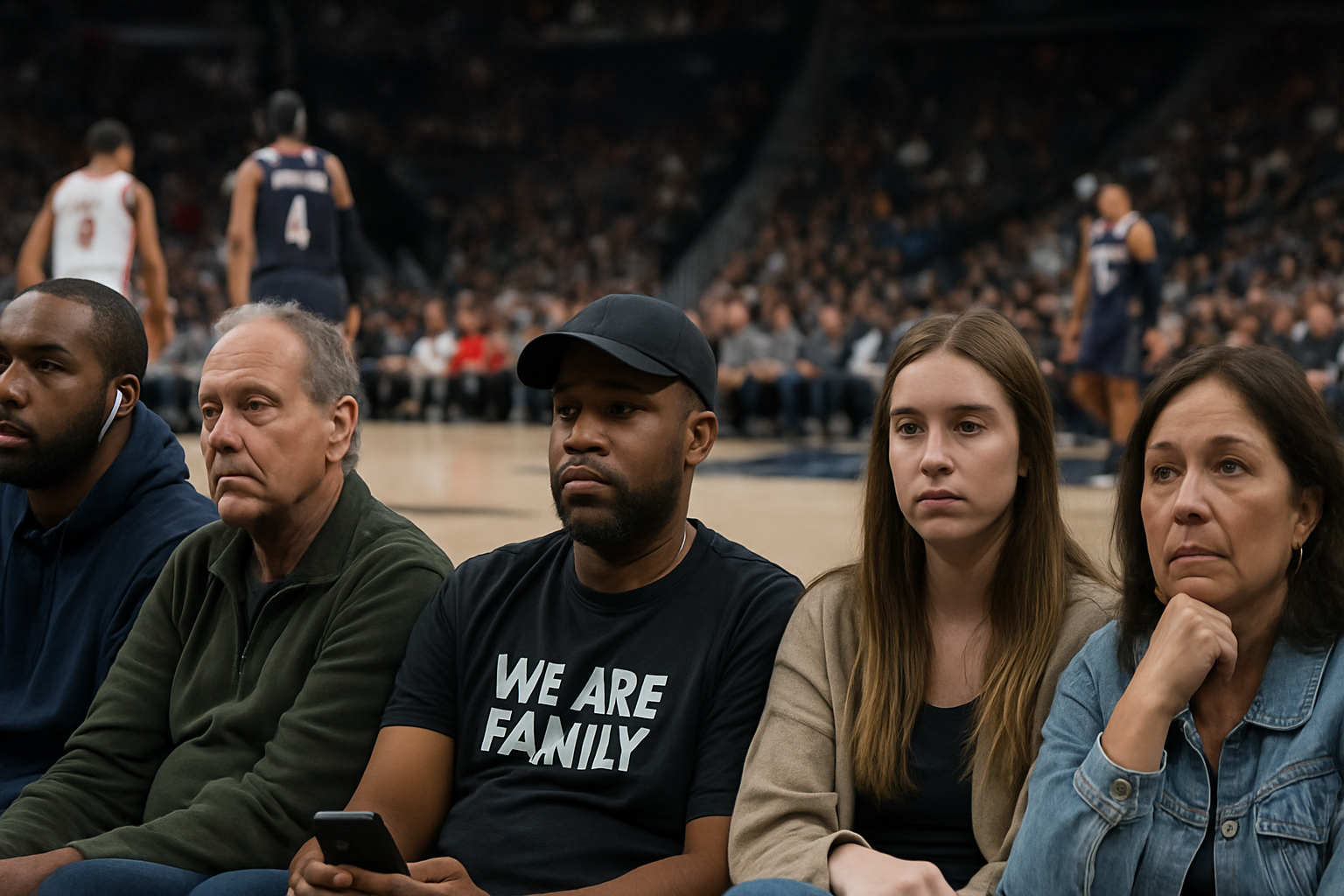
The NBA did not sell $76 billion of basketball. It sold a weekly habit — and the second year of its monster media deal is where we find out whether fans actually keep showing up.
It is Monday, October 19, 2026. Tomorrow, October 20, NBC and Peacock open the 2026–27 season with their first-ever NBA Tip-Off tripleheader: Boston Celtics at Detroit Pistons, Philadelphia 76ers at New York Knicks, and Oklahoma City Thunder at San Antonio Spurs. Jalen Brunson, Jayson Tatum, Cade Cunningham, Shai Gilgeous-Alexander and Victor Wembanyama are not merely the stars. They are the inventory.
That may sound a bit cold. It is also exactly how the economics work.
NBC’s Oct. 20 tripleheader is a $76 billion product launch
The NBA’s 11-year U.S. media agreements with Disney, NBCUniversal and Amazon run through the 2035–36 season. Reported value: more than $76 billion.
That is roughly $6.9 billion a year before you even start counting international rights, sponsorships, ticketing, gambling partnerships, merchandise, arena revenue and all the other commercial machinery bolted onto a major league.
But Year One of a deal can flatter anyone. There is novelty. There is nostalgia. NBC gets to dust off the old basketball branding, roll out familiar voices and make older fans feel 25 again. People show up because something is new.
Year Two is where the business gets honest.
NBC and Peacock have 100 regular-season NBA games this season. Peacock NBA Monday begins on October 26. NBC’s Coast 2 Coast Tuesday starts October 27. Sunday Night Basketball returns in January 2027, with seven doubleheaders scheduled. Telemundo will carry 10 Sunday Night Basketball games in Spanish, plus the 2027 NBA All-Star Game.
That is not just a programming grid. It is a deliberate attempt to turn a messy, fragmented viewing market into a set of repeatable consumer rituals.
Monday: Peacock.
Tuesday: NBC.
Sunday: appointment viewing.
The NBA knows the modern fan has choices. Too many, frankly. A bloke can watch highlights on TikTok, arguments on X, podcasts on YouTube, betting odds on his phone and never actually watch a full game. The league’s challenge is no longer awareness. Everybody knows Wembanyama is tall and Shai can play. The challenge is converting cultural relevance into regular viewing.
That is what the $76 billion is paying for.
The NBA is betting on stars, not teams
Look at Tuesday’s opening slate and the strategy is obvious.
The Celtics and Pistons put Tatum and Cunningham on the first window. The Knicks and 76ers deliver New York, Brunson, LeBron James and one of the league’s biggest media markets in prime time. Then NBC finishes with the cleanest young-superstar duel in basketball: Gilgeous-Alexander’s Thunder against Wembanyama’s Spurs.
The teams matter. The players matter more.
That is not a criticism. It is the product.
In most businesses, customers do not buy the factory. They buy the result. Fans increasingly do not buy all 82 games because they love the abstract concept of a franchise. They buy moments: Wembanyama doing something physically absurd, Brunson taking over Madison Square Garden, LeBron continuing to outrun time, or Shai making an MVP case in real time.
NBC clearly understands this. Its biggest scheduled teams and stars will make up to 11 appearances across the network’s package: Brunson’s Knicks, LeBron and the 76ers, Wembanyama’s Spurs, Stephen Curry’s Warriors, Luka Dončić’s Lakers, Gilgeous-Alexander’s Thunder, Kevin Durant’s Rockets, Nikola Jokić’s Nuggets and others.
That concentration is commercially rational. It is also a warning to every smaller-market team and middle-tier player: national television is not a meritocracy. It is a distribution business.
If you can pull viewers, sell shoes, move subscriptions, attract sponsors and create clips that travel, you get the windows. If you cannot, you might be playing excellent basketball in front of a regional audience while the national money flows elsewhere.
The overlooked angle: the NBA is testing the media companies, too
Everyone talks about whether basketball is worth $76 billion. The better question is whether the buyers can monetise it better than the last group did.
NBCUniversal has an obvious reason to lean in. Live sport is one of the few things people still make plans around. It is hard to pirate at scale, difficult to time-shift and extremely attractive to advertisers who are sick of paying for digital impressions that may have been seen by a human, a bot or nobody at all.
NBC has also built a broader sports machine around the NBA. It has NFL, Premier League, MLB, golf, racing and major events spread across NBC, Peacock and Telemundo. The NBA is not standing alone. It fills a calendar gap, creates cross-promotion opportunities and gives Peacock another reason not to be cancelled after someone finishes the show they signed up for.
Amazon is playing a different game. Prime Video has global reach, retail data, advertising infrastructure and a direct relationship with consumers that a traditional network would kill for. The NBA also made Prime Video a strategic partner and a major third-party home for NBA League Pass.
Disney has ESPN, the NBA Finals and an enormous sports-news ecosystem that keeps the conversation moving even when no game is on.
That is why pure-play sports streamers have a nasty problem. They are bidding against companies that can make money from the same NBA customer in five different ways.
NBC can sell ads, subscriptions and other programming.
Amazon can sell ads, Prime memberships and everything from nappies to televisions.
Disney can sell ads, subscriptions, affiliate fees and endless sports content.
A sports-only business has one main lever: charge fans more. Good luck with that.
More games do not automatically mean more value
Here is the contrarian bit: I do not think the NBA’s biggest risk is that fans hate streaming fragmentation. Fans are more adaptable than executives give them credit for.
The real risk is oversupply.
There are more national windows, more platforms, more podcasts, more social clips, more betting content and more demands on the same fan’s attention than ever. The NBA can win the rights auction and still lose the attention auction.
A tripleheader looks terrific in a press release. But three games in one day only work if each one has a reason to matter. That means genuine rivalries, meaningful stakes, recognisable stars and broadcasts that do more than shove gambling odds and sponsored graphics down people’s throats.
The league cannot assume a bigger cheque creates a bigger audience. That is corporate fairy dust.
What creates audience is scarcity, storytelling and a product people feel silly missing.
The NFL understands this better than anybody. It makes each game feel consequential because there are so few of them. The NBA has a harder job: 82 games per team means it has to manufacture urgency without insulting the viewer’s intelligence.
The smartest move in this new rights era is not simply putting more games on more screens. It is making a handful of fixed windows feel like the places where the league happens.
If Tuesday on NBC, Monday on Peacock and Sunday Night Basketball become habits, the NBA has something more valuable than ratings: predictable demand.
What this means for you
Whether you run a startup, own a business, invest your own money or simply follow the NBA, there is a very practical lesson here.
Do not confuse distribution with demand.
The NBA has distribution everywhere: NBC, Peacock, ESPN, Prime Video, League Pass, social media and highlights. But it still has to earn attention every single night. A bigger platform does not save a boring product. More marketing does not fix a weak customer habit.
For fans, the payoff is simple: fixed windows make it easier to know where the important games are and when they are on. But the league still has to make those windows worth your time.
Build recurring behaviour before you build complexity.
For an operator, that means choosing a clear moment when customers should use you. Not “whenever they need us.” That is lazy positioning. Give them a rhythm: every Monday, every payday, every renewal date, every time they need to make a decision.
For investors, watch whether a company has genuine repeat usage or merely a loud launch. First-year numbers are often dressed up by novelty. The second year tells you whether customers came back without being bribed.
And for founders: put your best product where the attention already is. NBC is not opening with anonymous role players and a 3 p.m. lecture on salary-cap mechanics. It is selling Brunson, Tatum, Shai and Wembanyama because those are the names that make people stop scrolling.
That is not selling out. That is understanding the job.
The NBA’s $76 billion deal will not be judged by the press release from 2024. It will be judged by what happens after the novelty wears off: whether fans keep turning up, whether advertisers keep paying, and whether the networks can make basketball feel necessary on a crowded screen.
That starts tomorrow night.