Nestlé’s $224M KitKat Heist: Why Most Marketing Teams Are Too Slow
Most marketing departments would have turned 12 tonnes of stolen KitKat into a legal memo. Nestlé turned it into an estimated $224 million in media buzz in 10 days.
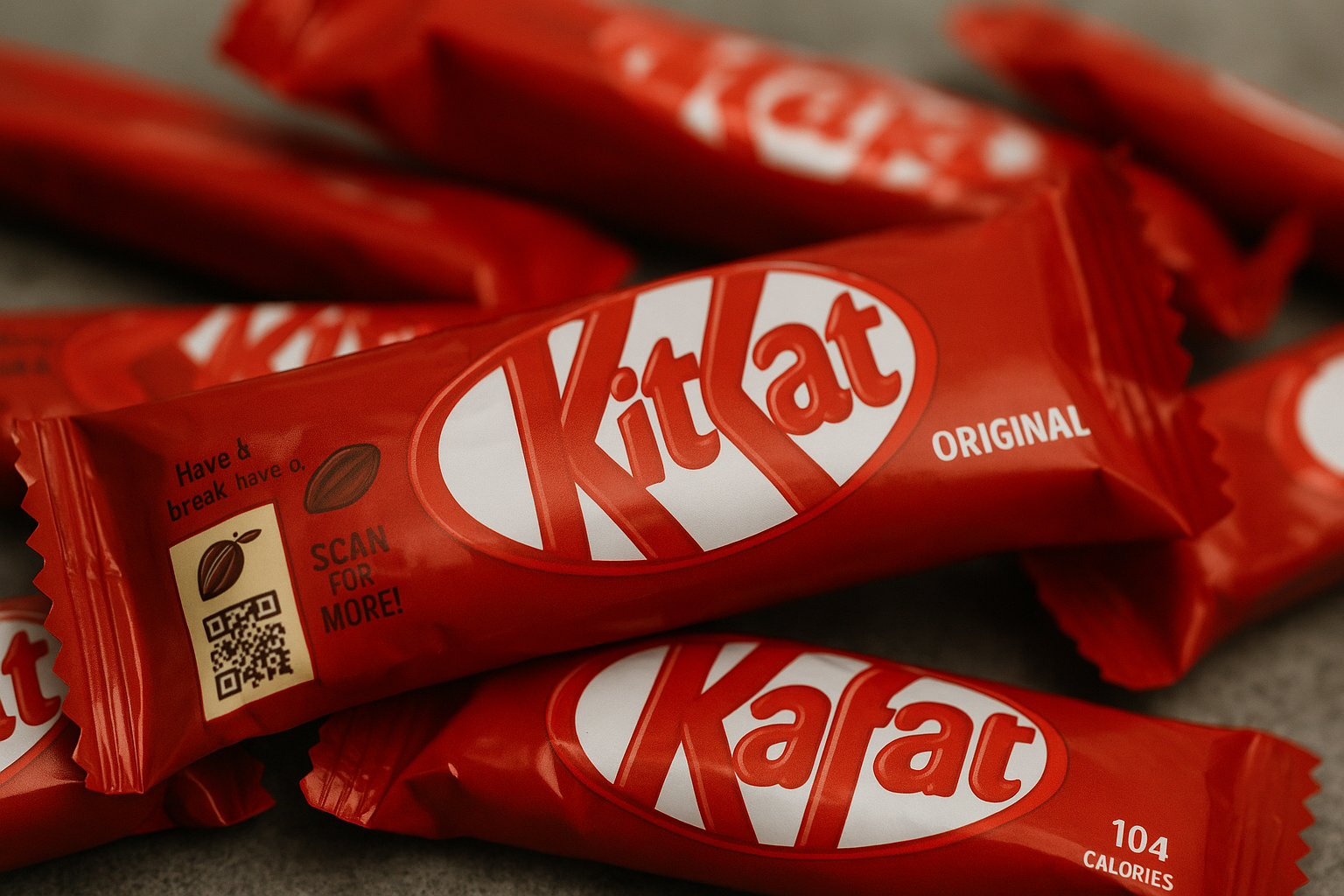
Most marketing departments would have turned 12 tonnes of stolen KitKat into a legal memo. Nestlé turned it into an estimated $224 million in media buzz in 10 days.
That is not a creative miracle. It is a management lesson, and most founders will hate it because the fix is embarrassingly basic: give capable people permission to act before the moment is dead.
In late March, thieves took a truck carrying more than 400,000 KitKat bars from central Italy en route to Poland. The missing shipment amounted to roughly 12 tonnes of chocolate, days before Easter. For a normal corporate machine, this is a crisis-comms exercise: investigate, say little, notify insurers, make sure nobody tweets something stupid.
Nestlé did the opposite. It made the absurdity part of the story.
Nestlé saw a joke where most companies see a risk register
Nestlé’s European marketing team went public with a line that played on KitKat’s famous break positioning. Then it built a tracker allowing customers to enter the eight-digit batch code on their wrapper to see whether their bar came from the stolen shipment.
That is a proper response, not a social-media intern firing off a cheeky post and calling it brand building.
The campaign generated 393,000 likes overnight on the KitKat account — its highest total ever. More than 2.2 million people clicked on or engaged with the tracker. Daily social-video views reportedly went from about 1 million to 29 million. Nestlé’s analysts estimated the earned media equivalent at $224 million over 10 days.
Before everyone gets carried away, that last number is not cash in the bank. “Media value” calculations can become marketing’s version of measuring a fish with a ruler: technically possible, occasionally useful, and very easy to overstate. It does not tell you how many extra KitKats were sold, what margin they produced, or whether people will still care next quarter.
But dismissing the number entirely would miss the point. The scale of attention was real. The bigger win was that Nestlé made one of the world’s oldest chocolate brands feel present in culture rather than preserved under glass.
That matters because big brands have a habit of becoming what I call well-funded wallpaper. Everybody recognises them. Nobody feels anything about them.
The real asset was not the campaign. It was the 24-hour decision.
Nestlé gave agency partner VML 24 hours to produce a concept. That is the detail founders and operators should circle in red.
The company did not win because somebody finally discovered humour. It won because the team was designed to move while the story still had oxygen.
Mélanie Brinbaum, Nestlé’s European head of marketing and consumer communications, described a system that replaces the lumbering creative brief with a quick pitch, then tests whether both the internal team and agency have genuine enthusiasm for it. The company also uses a go-or-no-go filter: if an idea lacks real potential, it gets killed early. The concepts that pass are handed to small teams with authority to execute outside the usual organisational maze.
Good. More companies should do this.
I have watched businesses spend six weeks arranging meetings about an ad that was already stale when somebody put the first calendar invite in. Everyone is trying to avoid blame, so nobody has the authority to make a call. Then the campaign launches late, looks like everything else, and the team congratulates itself for being “on brand.”
That is not prudence. It is expensive cowardice.
The uncomfortable truth is that marketing speed is usually a leadership problem disguised as a process problem. If your people need approval from legal, brand, regional management, the CEO, three agencies and somebody who owns a PowerPoint template before they can respond to a live opportunity, you do not have a marketing function. You have a committee with Adobe access.
The background: attention has become brutally interchangeable
Nestlé’s move lands at a time when ordinary advertising is being smothered by abundance. AI has made it cheaper and faster to manufacture polished creative. The result is not necessarily better advertising. It is often a tidal wave of clean, competent sameness.
That is why brands are pushing harder into cultural relevance, creators, live moments and communities. Axios recently pointed to Lemonade using deliberately rough-looking, graffiti-style billboards while running several campaigns at once and dropping the ones that did not work. It also highlighted the difference between brands that merely borrow a subculture’s look and those with a legitimate connection to the people they want to reach.
That distinction matters. You cannot copy-paste “authenticity” into a campaign deck.
Sprite has decades of real history in music culture. Duolingo had observed that many users came to learn Japanese because they loved anime, then built an animated series around its mascot. Those are extensions of a brand truth meeting a fan truth. They are not executives trying to wear somebody else’s clothes for a quarter.
KitKat worked because the joke came from the product’s own established language. “Have a break” is already embedded in customers’ heads. A stolen load of chocolate created a strange but obvious opening. Nestlé did not need to manufacture relevance. It needed the guts to recognise it.
The overlooked angle: this was operational marketing, not content marketing
The tracker is the clever bit most people will underestimate.
A conventional brand team could have published the gag, harvested a few laughs and moved on. Nestlé created an object people could use. The tracker gave consumers a reason to participate, not merely react. It also made the campaign connected to the actual incident rather than floating above it as a piece of opportunistic content.
That is a far better question for marketers: what can we build that gives the audience a role?
The answer might be a tool, a diagnostic, a calculator, a waitlist, a challenge, a product customiser, a map, a data drop or a community mechanism. It does not need to be a whiz-bang app. It needs to turn passive attention into an action that creates information, utility or a relationship.
This is where plenty of brands lose the plot. They chase views because views are easy to report. But a view has no loyalty, no email address, no repeat purchase and no permission to contact someone again. It is a glance. Nice to have; not a strategy.
AT&T offers a more sober version of the same principle. Its marketing team has been tying brand sentiment to business outcomes such as acquisition, retention and customer spending. The company says its “brand love” score rose 13 points over five years, and it has used customer research to shape products, pricing and service guarantees — including a Build a Plan offer starting at $15 a month and service credits for certain eligible fibre outages.
That is what brand work looks like when adults are in charge. Not “people liked our new colours.” A stronger promise, backed by an operational change, measured against commercial behaviour.
Don’t confuse fast with reckless
Here is the contrarian bit: most companies do not need to become funnier. They need to become more selective.
Nestlé’s own approach is a useful warning. It says it tries to kill mediocre ideas early. This is the opposite of filling a content calendar because someone believes every Tuesday needs a post.
The obsession with always being present has made brands noisy, needy and forgettable. If you have nothing worth saying, shut up and improve the product. Your customers will survive without another carousel explaining your values.
Fast marketing is not daily improvisation. It is having a clear brand, a small decision group, pre-agreed guardrails and enough trust to act decisively when a genuine opening appears.
Legal still matters. Reputation still matters. Facts matter most. Nestlé’s campaign worked partly because nobody was hurt, the underlying incident was real, and the humour did not trivialise a victim. If a situation involves injury, death, fraud, layoffs or customers being seriously harmed, do not get cute. Read the room, mate.
What this means for you
If you run a business, do these five things this week.
First, appoint a rapid-response trio: one commercial owner, one brand or marketing owner, and one legal or risk owner. Give them explicit authority to approve modest reactive work without a seven-layer approval chain.
Second, write down three things your brand can credibly talk about. Not what you wish people associated with you, but what is already true in the product, customer behaviour or company history. KitKat had “break.” Find your equivalent.
Third, create a 24-hour rule. When a relevant moment appears, your team gets one day to decide: go, no-go, or revisit later. “Maybe” is where opportunities go to die.
Fourth, require every reactive campaign to include a useful action. Do not settle for a joke. Ask what the customer can check, make, learn, share, save or buy because you showed up.
Finally, measure the thing that pays. Track direct traffic, search lift, email capture, conversion, repeat purchase, retention or price tolerance. Earned reach is a useful signal. It is not the finish line.
Nestlé did not turn a truck theft into a $224 million payday. It did something more instructive: it proved that even a giant company with more than 2,000 brands can behave like a sharp operator when it chooses speed, relevance and a bit of nerve over committee theatre.
Your company does not need Nestlé’s budget to copy that. It needs fewer people saying no by default.