Nike’s $60B Brand Shows Why Marketing Can’t Fix a Broken Product Machine
Nike is worth about $60 billion, yet more marketing cannot buy back cultural heat. Founders betting on ad spend to rescue a weaker business should be worried.
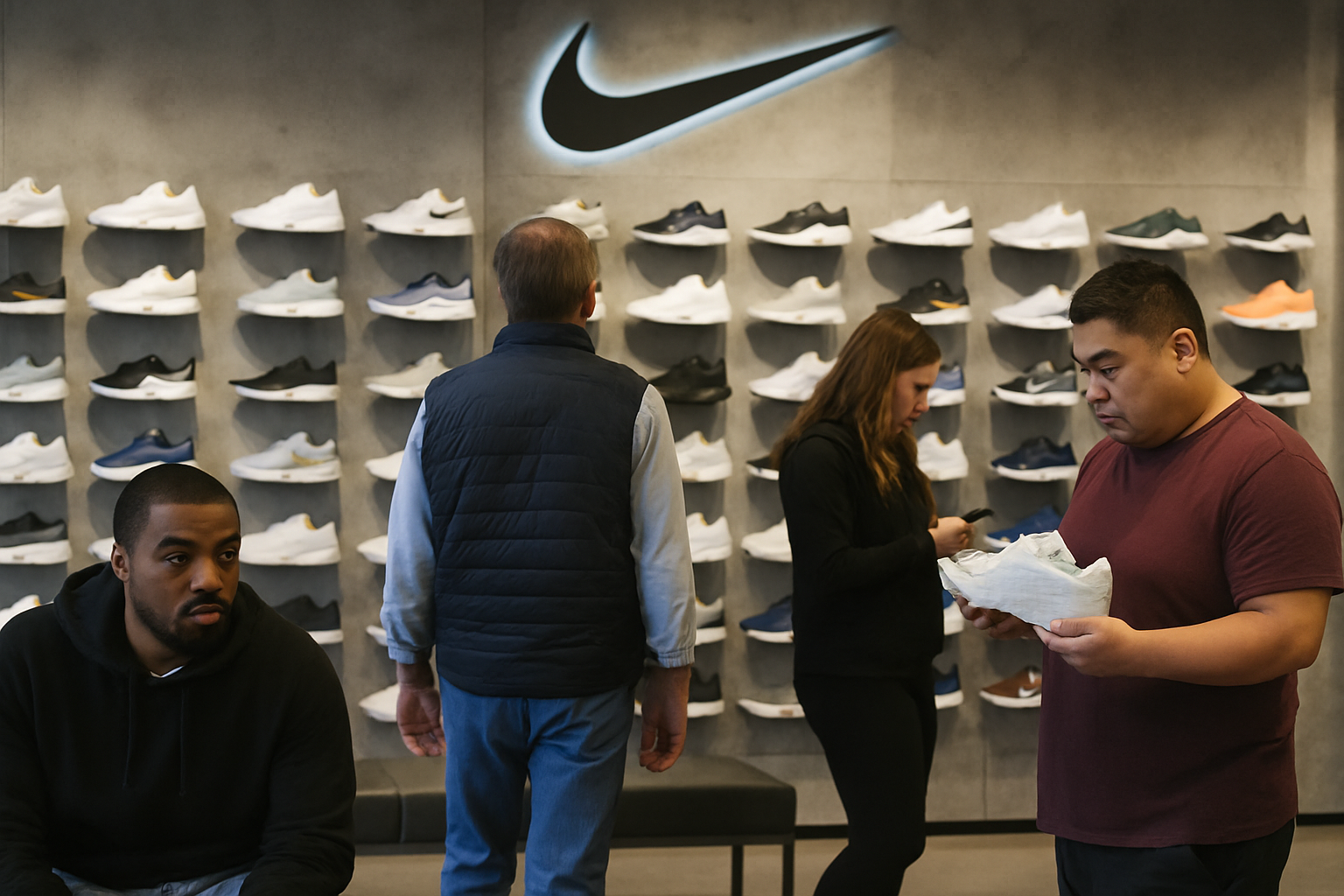
Nike is worth about $60 billion, and it still cannot buy its way back into cultural heat. Every founder who thinks a bigger ad budget can rescue a weaker business should find that terrifying.
On August 26, Fortune published a sharp look at Elliott Hill’s return from retirement to run Nike. The headline was polite. The underlying message was not: the world’s biggest sportswear brand brought back a 32-year company veteran in 2024, and the turnaround remains a long, hard slog.
Good. It should be.
Nike did not get itself into this mess because it forgot how to make commercials. It got there because product momentum softened, key retailer relationships deteriorated, inventory got in the way, and competitors made sport feel exciting again. Marketing can amplify a winning product machine. It cannot CPR a sluggish one.
That distinction is where most operators lose the plot.
Elliott Hill inherited more than a brand problem
Hill joined Nike in 1988, retired in 2020, and returned as CEO in October 2024 after John Donahoe’s exit. He was not brought back as some mystical Nike whisperer. He was brought back because he knew the commercial engine: sales, retail, Nike.com, consumer and marketplace operations, plus the marketing side of the Nike and Jordan brands.
That knowledge matters when the leak is not in the advertising department. It is in the whole bloody boat.
Nike’s fiscal 2026 results, released June 30, show the scale of the job. Full-year revenue was $46.4 billion, flat on a reported basis and down 2% currency-neutral. That is an enormous business, but enormous is not the same as healthy.
The numbers that matter are more revealing:
- Nike Direct revenue fell to $17.7 billion, down 6% reported and 8% currency-neutral. - Nike Brand Digital revenue fell to $8.6 billion from $9.6 billion, a 12% decline, driven mainly by lower traffic. - Wholesale revenue climbed to $27.5 billion, up 6% reported and 4% currency-neutral. - In the fourth quarter, Nike spent $1.2 billion on demand creation, down 4% year on year.
Read that without the corporate fog. Nike’s direct machine is still under pressure, while wholesale is recovering. The company is rebuilding distribution through retail partners after years of treating them as a bit of an inconvenience.
That is not a marketing footnote. That is brand strategy with a cash register attached.
For years, every consumer business was told to go direct-to-consumer, own the customer, own the data, own the margin, own the whole circus. Plenty of founders heard that and decided retailers were parasites. Then they discovered that retailers do something unfashionable but useful: they put product in front of customers who are already shopping.
Nike is now living through the expensive version of that lesson.
The real campaign is the operating model
Hill’s answer has been what Nike calls its “Sport Offense”: organise more tightly around sports and athletes, improve product, rebuild marketplace relationships, and reconnect the brand to the communities that made it culturally dominant in the first place.
That is sensible. More importantly, it is harder than launching a glossy campaign with a celebrity and a stirring soundtrack.
A proper brand turnaround works in an order that most management teams hate because it is slow and unsexy:
1. Fix what you sell. 2. Fix where and how customers can buy it. 3. Fix the experience around it. 4. Then spend hard telling the world.
Most businesses reverse that sequence. They get scared by slowing sales, hire an agency, demand a “big brand moment,” buy reach, and then act shocked when the numbers pop for a fortnight before sinking back into the furniture.
The ad was not necessarily bad. The business underneath it was not ready to keep the promise.
Nike’s fiscal 2026 fourth quarter makes the point. Wholesale revenue grew 4% reported, while Nike Direct revenue dropped 7%. That does not mean wholesale is magic or direct is dead. It means channel strategy is not religion. It is maths, customer behaviour and execution.
If customers want to discover shoes through trusted retailers, local running stores, sporting goods chains or a multi-brand website, a company that insists everyone must begin and end inside its own app is not being disciplined. It is being arrogant.
And arrogance is very expensive once the growth graph turns south.
Nike’s $1.2B demand-creation bill is not the story
People will look at Nike’s $1.2 billion quarterly demand-creation expense and ask whether it should spend more. That is the wrong question.
The right question is: What exactly is demand creation trying to create demand for?
If the product has a reason to exist, is easy to find, is priced credibly, and belongs to a community people care about, marketing becomes a multiplier. If those things are not true, marketing becomes a very polished way to subsidise disappointment.
I have made this mistake myself. You can throw money at acquisition because the dashboard gives you something to do. Clicks arrive. Leads arrive. Everyone feels busy. But the business remains stuck because the real blockage is retention, positioning, product quality, distribution, or the simple fact that customers do not want the thing often enough.
No creative director can solve a product-market-fit problem. No performance marketer can solve a trust problem. And no chief marketing officer can repair a channel strategy if the rest of the executive team treats distribution as a logistics detail.
Nike’s recovery in wholesale is therefore more interesting than any campaign. It suggests the company is accepting that brand reach and customer access are built through an ecosystem, not a single owned funnel.
That is a far more useful lesson for founders than “make better ads.”
The overlooked angle: a comeback can make the wrong metric look better
Here is the contrarian bit: a Nike recovery may look messier before it looks brilliant.
Restoring wholesale relationships can lift revenue while giving up some direct control and, in some cases, some margin. Clearing old inventory can make product economics look ugly. Investing in sport-specific innovation and local communities does not deliver a neat return by next Tuesday.
That is precisely why it may be the right move.
Too many leaders optimise for the metric that makes the next investor deck prettier. Direct revenue is clean. Gross margin is clean. A digital dashboard is clean. Real customer behaviour is not.
Nike’s 2026 results showed gross margin benefiting from an expected $986 million recovery tied to IEEPA tariffs. Fine. But that is not the turnaround. It is an accounting tailwind, not proof that consumers have fallen madly back in love with Nike.
Operators need to learn to separate a structural improvement from a lucky bump. A temporary margin benefit is not customer demand. A one-week campaign spike is not loyalty. An app download is not a purchase. A purchase is not a retained customer.
The businesses that survive long enough to become great are brutal about this distinction.
Nike has another problem big companies always have: expectation. When you are this large, every decision is viewed through a quarterly microscope. But brand relevance lost over several years does not return because a CEO has good instincts and a famous logo. It returns through hundreds of decisions that make athletes, retailers and consumers feel that the brand is useful, credible and ahead of the pack again.
That is tedious work. It is also the work.
What this means for you
If you run a brand, do this tomorrow before approving your next campaign.
First: audit the product before the promotion. Ask your last 20 customers why they bought, what nearly stopped them, and what they would buy instead. Do not accept vague answers. If the product’s edge is unclear, no media plan will save you.
Second: break revenue out by channel. Track direct, wholesale, marketplace, referral and repeat revenue separately. Then measure contribution margin, conversion, repeat rate and customer acquisition cost by channel. Do not worship direct-to-consumer if wholesale puts you in front of better customers at a sensible cost.
Third: measure marketing after the sale. Track 30-, 60- and 90-day behaviour. If a campaign creates attention but no repeat purchase, no referral and no improvement in branded search, it may be entertainment rather than marketing.
Fourth: put your product and distribution people in the brand meeting. Brand is not the logo team. It is every promise a customer sees, buys, receives and tells a mate about. If your marketing team is trying to compensate for product or channel decisions made elsewhere, you have built an internal blame machine.
Finally: stop demanding instant redemption. A real turnaround is usually boring at first. Inventory gets cleaned up. Partners get rebuilt. Product gets better. The numbers can look uneven. That does not make the strategy wrong.
Nike’s problem is not that it forgot how to market. Nike helped write the modern playbook. Its problem is more uncomfortable: even a $60 billion brand has to earn relevance again when the product, channel and culture stop moving together.
That is the truth for Nike. And it is the truth for every business smaller than Nike, which is all of us.