Noise’s $5.5M Bet on Performance-Priced Creators
Paying one influencer $20,000 for a post is starting to look less like marketing and more like lazy procurement. Noise just raised $5.5 million to turn ordinary users into a performance-priced content army.
Most influencer marketing is an expensive vanity project dressed up as growth. Noise’s $5.5 million seed round is a bet that brands are finally sick of paying celebrity rates for posts they cannot properly measure.
On September 16, Noise announced a $5.5 million seed round led by Capital Midwest, M25 and Grishin Robotics, taking its total funding to $7.2 million. The company’s pitch is brutally simple: forget paying a small handful of polished influencers fixed fees. Let everyday people create branded videos, pay them according to views, and run thousands of experiments at once.
That is not just another creator-economy funding announcement. It is an attack on one of marketing’s most comfortable little rackets: the belief that reach must be rented from people with large followings.
Noise is selling creators like media inventory
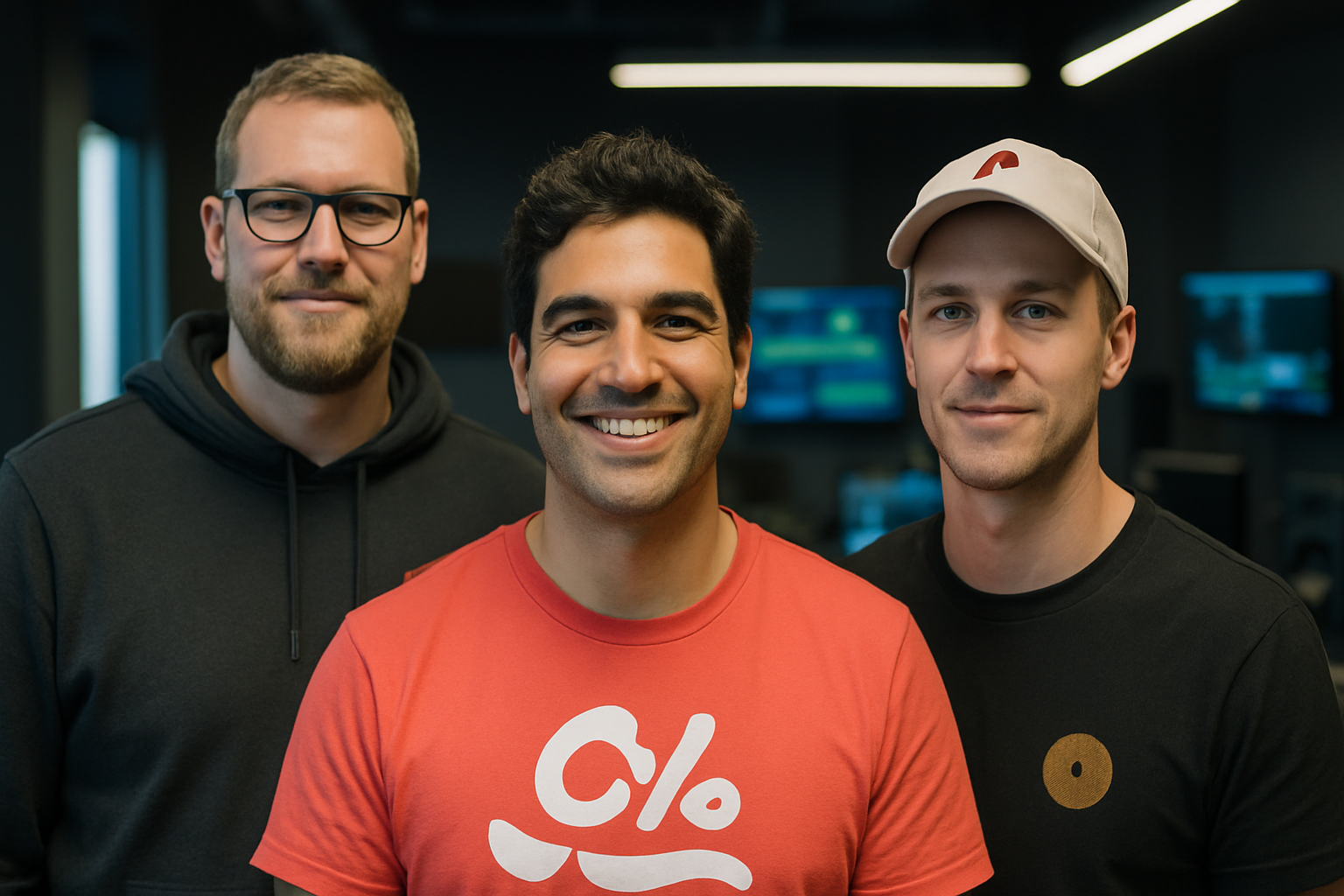
Noise, founded in 2025 by Diego Kafie, Stu Feldt and Nic Weber, lets people join campaigns regardless of follower count. Creators can make content for TikTok, Instagram, Facebook and YouTube. Brands submit a brief and a budget; Noise handles sourcing, coordination and payments.
The commercial change is in the payment model. Rather than negotiating a flat fee for a post, Noise pays creators per view. That shifts part of the performance risk away from the brand and onto the marketplace.
It also turns creator marketing into something much closer to paid media.
A brand no longer needs to make a heroic prediction about which creator will deliver. It can distribute a message across hundreds or thousands of people, discover which creative angle actually gets watched, then put more money behind the winners. Noise’s new Organic-to-Ads product takes that idea a step further: brands can use creators’ videos as paid ads on Meta and TikTok as well as relying on the original organic post.
That is the real story. The useful unit is no longer “an influencer partnership.” It is a repeatable creative test with distribution attached.
Noise says it has 1.5 million creators on its platform and that its top creators earn more than six figures annually. Those are company claims, not independently audited performance figures, so sensible operators should treat them as a signal, not a spreadsheet they can take to the bank. But the underlying proposition is sound: expensive creative production and expensive media buying are converging into one workflow.
The old influencer model was built for agencies, not operators
The traditional model is painfully familiar. Find a creator. Negotiate for weeks. Approve a brief that becomes beige through committee. Pay a chunky fixed fee. Hope their audience cares. Get a report full of reach, likes and soft-focus excuses.
That may still make sense when you need borrowed trust from a particular person. A credible specialist, an entertainer with a fiercely loyal audience, or a founder with genuine authority can move a market. I am not saying the big creator is dead. I am saying most businesses use them when they should be buying testing velocity instead.
For a mobile app or early-stage consumer company, spending heavily on one person’s audience is often a terrible way to learn. You get one personality, one format, one interpretation of your product and one shot at attention. If the post misses, you have not bought insight. You have bought a very expensive shrug.
Noise came from that exact frustration. Kafie and his co-founders previously built Playbite, a mobile gaming app. According to Kafie, they experimented with recruiting and teaching gamers to make social content promoting the app, growing from small groups to roughly 100 creators as installs rose. Their conclusion was that established creators were too expensive for a scrappy startup budget.
That is a lesson founders should tattoo somewhere visible: the marketing tactic that looks least glamorous is often the one that gives you the most repetitions.
What $5.5 million is really buying
The $5.5 million is not important because it is a huge round. It is important because experienced investors are funding the plumbing for a different buying behaviour.
Noise plans to use the capital for product development and hiring. Its business model is to take a fee from what brands pay creators after views are delivered. That makes the company economically aligned with volume, performance measurement and campaign operations rather than one-off celebrity deals.
For brands, the attraction is obvious. Instead of betting the quarter’s content budget on three familiar names, they can commission a broad set of raw, native-looking videos and let platform distribution reveal the winners.
For creators, the deal is more complicated. A pay-per-view model lowers the barrier to entry because follower count is not the only ticket into campaigns. Noise also trains newcomers and gates access to better-paid work as they progress. But variable pay is variable pay. The creator carries more upside if a video takes off and more downside if it does not.
That means the platform must avoid becoming a digital piecework factory with better lighting. If Noise wants durable supply, it will need transparent payment rules, serious fraud controls, clear disclosure processes and enough creator earnings to keep good people participating. Cheap content is only cheap until poor quality, brand-safety issues and creator churn start eating the savings.
The overlooked angle: this is a creative-data machine
Most people will read this as an influencer story. I think it is a creative intelligence story.
A normal brand campaign produces a handful of expensive assets. A marketplace model can produce hundreds of variations: different openings, faces, accents, settings, objections, demonstrations and jokes. That volume is valuable because modern short-form marketing lives or dies in the first second.
The winner is rarely the advert that tested best in a boardroom. It is the version that made a real person pause while half-watching videos in bed.
A platform such as Noise can theoretically show a brand which message works before it scales media spend. Is the customer responding to price? Status? Convenience? A founder story? A before-and-after demonstration? The best creator campaign is not merely an awareness play. It is a rapid market-research system that happens to sell product.
That should make agencies nervous, but not for the silly reason people think. Great agencies will remain valuable because somebody still needs to define the positioning, write a sharp brief and know what the business stands for. What gets squeezed is the agency model that mistakes coordination for strategy and charges handsomely for managing a spreadsheet of creators.
The hard bit is no longer accessing content supply. Noise says its brands can work with several thousand creators at once. The hard bit is having enough strategic discipline to give those people a brief worth interpreting.
Don’t confuse more content with a better brand
Here is the contrarian bit: this model can make weak brands weaker, faster.
When you hand a loose brief to a thousand creators, you do not magically create relevance. You create a thousand versions of whatever confused idea you started with. If the product is undifferentiated, the offer is rubbish or the customer is unclear, more creator output simply gives the market more opportunities to ignore you.
There is another trap. Views are useful, but they are not revenue. A creator can make a video that gets attention for being funny, odd or provocative while doing precisely nothing for purchase intent. If the creator is paid per view and the brand team is judged on reach, everyone has an incentive to optimise the wrong number.
The answer is not to dismiss performance-priced creator marketing. The answer is to connect it to the commercial outcome that matters. Track view-through rate, click-through rate, conversion rate, customer acquisition cost, repeat purchase and refund rate. Separate videos that generate attention from videos that generate customers.
If you cannot do that, you are not running performance marketing. You are sponsoring a lottery.
What this means for you
If you are a founder or operator, nick the underlying playbook before you buy anyone’s platform.
First, stop asking, “Which influencer should we hire?” Ask, “What are the 20 different ways a customer might explain why this product matters?” Build content around those answers.
Second, run a controlled creative sprint. Give 20 to 50 small creators the same non-negotiables: product truth, offer, audience and compliance requirements. Then leave room for their own delivery. Your job is not to make every video look identical. Your job is to find messages customers believe.
Third, define a kill rule before the campaign starts. Decide what view quality, click-through rate, conversion rate or acquisition cost earns more budget. Without a kill rule, teams fall in love with entertaining content and keep feeding it money.
Fourth, secure usage rights. If a creator makes a video that works, you want the contractual right to use it in paid media, on product pages and in email. Noise’s Organic-to-Ads approach matters because it recognises this: the real winner is content that can work organically and then scale through paid distribution.
Finally, pay attention to the median creator, not the hero case. A platform saying its top creators make six figures tells you almost nothing about what the average participant earns or whether the economics are sustainable. Ask ugly questions. How many creators are active? What proportion gets paid? What is the median result? What fraud protection exists? If a vendor cannot answer, walk.
Noise’s $5.5 million round does not mean every brand should sack its agency and recruit a thousand strangers by Friday. It does mean the era of blindly paying for follower count is getting harder to defend.
Good. Marketing should reward better ideas, faster learning and measurable commercial results. Not the size of somebody’s audience or the confidence with which they invoice you.