Novo Nordisk’s 10x Oral GLP-1 Test Needs More Than a NYSE Listing
A New York listing will not save Novo Nordisk. Mike Doustdar has a 10x oral-GLP-1 capacity promise to deliver — and investors will rightly judge the factory floor, not the ticker.
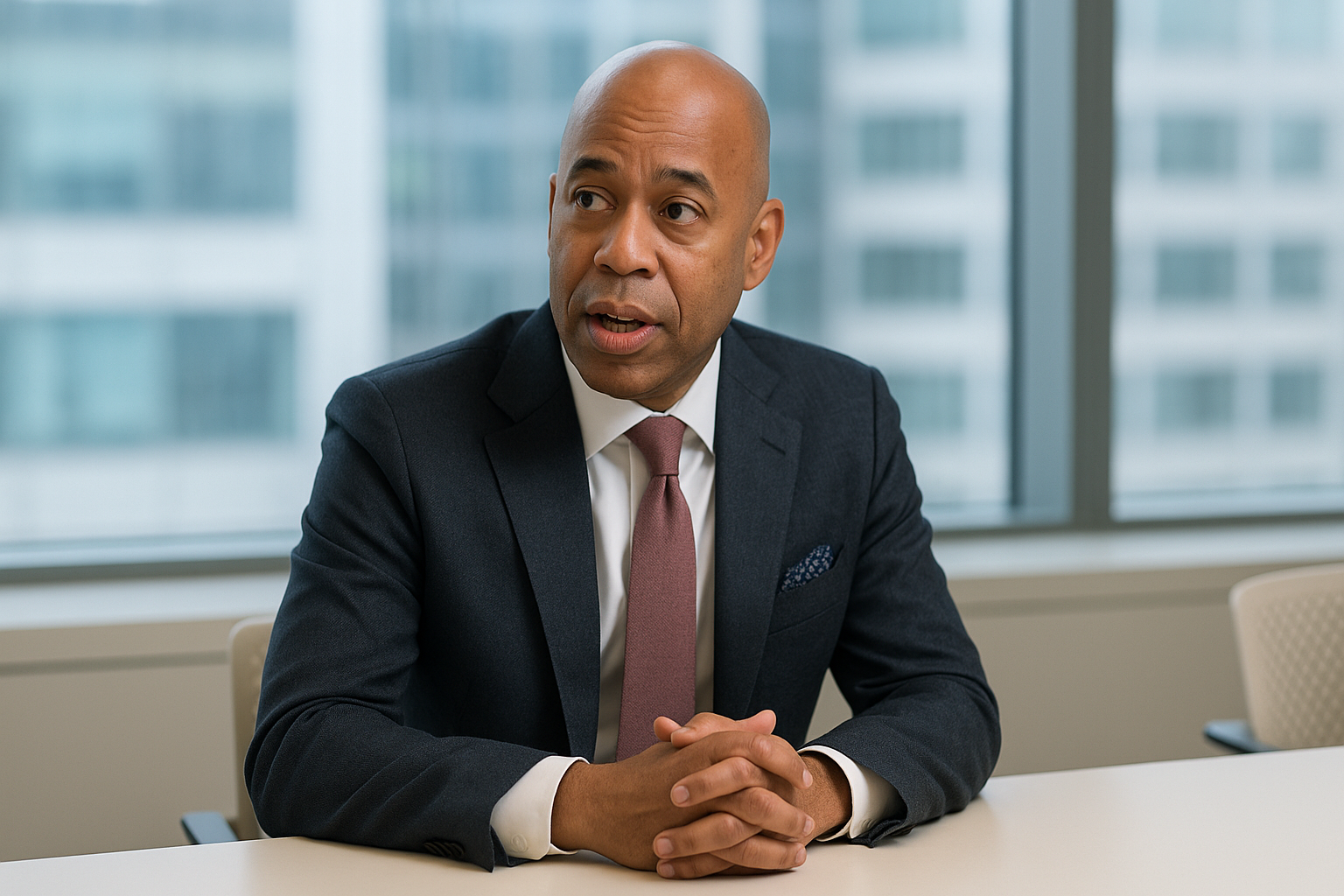
A New York listing will not save Novo Nordisk. Mike Doustdar has a 10x oral-GLP-1 capacity promise to deliver — and investors will rightly judge the factory floor, not the ticker.
That is the uncomfortable truth behind reports this week that Novo Nordisk is open to upgrading its New York presence from American depositary receipts to a direct New York Stock Exchange listing. It may be a sensible move. It may improve the company’s profile with American investors. But it is not a strategy, and anyone pretending otherwise is having a lend.
The real story is far harder: Doustdar is asking the market to believe Novo can turn a business facing lower realised prices and tougher competition into a broader, more durable growth machine. That job will not be won by changing the label on a security. It will be won by making pills, launching medicines, protecting margins and giving the organisation a reason to move faster than it did when life was easy.
The story: Mike Doustdar is selling execution, not a listing
Reuters reported on September 23 that Doustdar is open to the idea of a direct NYSE listing to lift Novo Nordisk’s profile in the United States. Importantly, he did not announce a transaction. Novo’s B shares remain listed in Copenhagen and its ADRs already trade on the NYSE under NVO.
That distinction matters. A direct listing is a capital-markets decision. It can broaden an investor base, simplify access for some institutions and put the company more squarely in front of the world’s deepest pool of healthcare capital. Fine. Those are legitimate reasons to consider it.
But Novo’s harder problem is operational and commercial. On September 21, at its Capital Markets Day in London, the company laid out ambitions to launch more than five “multi-blockbuster” medicines by 2030, generate more than DKK 150 billion in pipeline sales by 2035, serve more than 60 million patients globally by 2030, and build enough oral GLP-1 capacity to serve 10 times more people with obesity than it does today.
That is the actual bet.
A 10x capacity ambition is not a polished investor-slide number. It is a supply-chain challenge, a quality-control challenge, a hiring challenge, a regulatory challenge and a sales-execution challenge all wearing the same suit. In pharmaceuticals, you do not get to talk your way through manufacturing. Either the product arrives at the right standard, in the right market, at the right time — or your competitor takes the patient, the prescription and the profit.
Doustdar became Novo’s CEO on August 7, 2025, after leading International Operations for years. He is not a parachuted-in consultant with a 100-day deck. He knows the commercial engine. That is an advantage. It also removes the usual excuse. He cannot plausibly claim that the company’s strengths and weaknesses were hidden in the basement.
Novo’s numbers show why the job is not cosmetic
Novo Nordisk is still a serious business by any normal standard. In 2025 it reached 45.6 million people living with obesity and diabetes, had Wegovy available in 52 countries and employed 69,505 people. It reported 6.4% sales growth that year.
But the current operating picture is not the clean hyper-growth story the market became accustomed to.
In the first quarter of 2026, adjusted sales fell 4% at constant exchange rates and adjusted operating profit fell 6%, excluding a large, non-recurring reversal connected to the US 340B Drug Pricing Program. US adjusted sales declined 11% at constant exchange rates, driven by lower realised prices, even as volume grew. Novo’s full-year adjusted sales-growth guidance, raised in May, was still a range of negative 4% to negative 12% at constant exchange rates.
Read that again. Volume can grow while the economics get worse.
That is why I would not get too romantic about a direct NYSE listing. The company does not need investors to discover that obesity drugs are big. Every investor on Earth has received that memo. What Novo needs is to prove that it can convert enormous patient demand into profitable, repeatable growth while prices come under pressure and rivals chase the same market.
The Wegovy pill gives Doustdar a credible weapon. Novo said it launched the product in the US on January 5, 2026, and that weekly prescriptions exceeded 200,000 by mid-April. It also reported more than two million total prescriptions since launch at that point. That is meaningful commercial traction, not a PowerPoint fantasy.
But early demand is the easy bit. The difficult bit is building a system that can satisfy demand at scale without blowing out costs, fragmenting attention or starving the next pipeline of capital.
The context: a great company can still become a slower one
Founders and investors often make the same mistake: they confuse a large market with an easy future.
Novo has had a remarkable run because its medicines mattered, demand exploded and the company built real capability around a complex category. Those things do not vanish overnight. But success brings a nasty bill. The bigger the pool of profit, the more competitors, payers, governments and intermediaries want a piece of it.
Management’s answer is diversification. The 2030 plan includes at least five Phase 3 programmes in obesity and diabetes, at least five Phase 3 programmes in other therapeutic areas, and the ambition to keep revenue growth in line with a group of large pharmaceutical peers.
This is where Doustdar deserves some credit. He is not pretending Wegovy alone can carry the whole company forever. Novo is signalling that it must become broader: more pipeline, more oral treatments, more manufacturing depth and more patients across more markets.
Still, strategic ambition is not the same as strategic clarity.
“More than five multi-blockbusters by 2030” sounds impressive because it is supposed to. But operators should immediately ask the annoying questions: Who owns each launch? Where will manufacturing pinch first? What gets deprioritised if the oral expansion runs late? How much commercial investment is required in the US? Which incentives reward people for solving problems early rather than polishing good news for headquarters?
That is the boring machinery of leadership. It is also where value is created.
The overlooked angle: the NYSE question is really about accountability
The contrarian view is that a direct NYSE listing could be useful precisely because it would make Novo more exposed to American scrutiny.
The US is central to the obesity market, and it is where pricing, reimbursement, patient access and investor expectations collide at high speed. A larger, more direct US investor base may force management to explain its choices with less European politeness and more operating detail.
Good. More sunlight rarely hurts a business with a strong plan.
But the board and executive team should not mistake market access for operational credibility. Credibility comes from a cadence: clear targets, honest reporting, early warnings and visible ownership when things miss. The CEO should be able to tell investors not merely that capacity will be 10x larger, but what milestones make that believable in the next 12, 24 and 36 months.
Kasper Bødker Mejlvang, Novo’s executive vice president for Global Manufacturing & Supply, is therefore just as important to this story as Doustdar. Martin Holst Lange, the chief scientific officer and executive vice president for R&D, matters just as much. Karsten Munk Knudsen, the CFO, must show that the investment burden does not quietly chew through returns while management celebrates future volume.
That is leadership: not one bloke at the microphone, but an executive team whose responsibilities are painfully clear when the numbers arrive.
What this means for you
Whether you run a startup, a family business or a listed company, there is a useful lesson here: never confuse an access move with an execution move.
A new market, new sales channel, new investor base, new office or flashy rebrand can help. But none of them repairs a weak product cadence, a clogged supply chain or fuzzy accountability.
Use this tomorrow:
1. Write down your one operational promise. Novo’s is effectively capacity and patient reach. Yours may be delivery time, gross margin, customer retention or hiring quality. Pick one number that makes the strategy real.
2. Name an owner, not a department. “Operations” owns nothing. A person owns it. Make the person visible and give them the authority to act.
3. Separate activity from proof. A direct listing is activity. A product shipped on time, at the right margin, to a paying customer is proof. Do not applaud yourself for the former when you need the latter.
4. Make bad news travel fast. The most expensive problems in growth businesses are usually known early by somebody three layers down. Build a system where that person can get the truth to decision-makers before the quarter is wrecked.
5. Treat a big target as a stress test. If you say you will grow capacity 10x, ask what breaks at 3x. That is where your real plan starts.
Doustdar may well decide a direct NYSE listing is worthwhile. Fair enough. But the market will not reward Novo Nordisk for being easier to buy. It will reward the company for being harder to beat.