Nscale’s $3.36B Raise Is a Boardroom Warning, Not a Victory
A company that lost $1.02 billion on $140.6 million of revenue just lined up $3.36 billion. The clever bit is not the cash—it is the adults Josh Payne hired before asking public markets to trust him.
Nscale lost $1.02 billion in the first six months of 2026 on revenue of $140.6 million—then secured $3.36 billion in pre-IPO financing.
If you think that sounds like madness, fair enough. But you are looking at the wrong part of the story.
The money matters. The far more interesting move is what founder and CEO Josh Payne is doing around the money: quietly turning a two-year-old AI infrastructure rocket ship into something that might survive contact with public-market reality.
The raise is huge. The job is bigger.
On September 25, Nscale announced a $3.36 billion convertible-loan-note financing led by Third Point. The deal includes $2.36 billion upfront and another $1 billion commitment from Nvidia expected in mid-November. Apollo, Citadel, Hudson Bay Capital, Abu Dhabi Investment Council and others joined in.
That is not a normal startup round. It is a giant bridge to an IPO for a company trying to build the picks, shovels, power connections, data centres, GPU fleets and software layer for the AI boom.
Nscale says it has more than $103 billion in total contracted value. That headline has done exactly what headlines like that are designed to do: make investors sit up straight.
But contracted value is not cash in the bank. It is not recognised revenue. And it is definitely not profit.
The company’s IPO filing makes the risk plain. Roughly 85% of its contract value is tied to two enormous customers: Microsoft, with a $43.8 billion compute agreement through 2033, and Anthropic, with a $44.6 billion supply agreement. Anthropic’s deal is conditional on Nscale obtaining financing and meeting what the filing describes as stringent milestones.
That is a hell of an opportunity. It is also concentration risk wearing a fancy AI jacket.
If one customer changes strategy, misses its own funding targets, builds more internally, or simply gets a better deal elsewhere, the spreadsheet can go from heroic to horrifying in a hurry. Anyone who has run a business knows this: one big customer is lovely right up until they own your sleep.
Josh Payne is buying credibility before he needs it
This is why the leadership moves matter more than the press release.
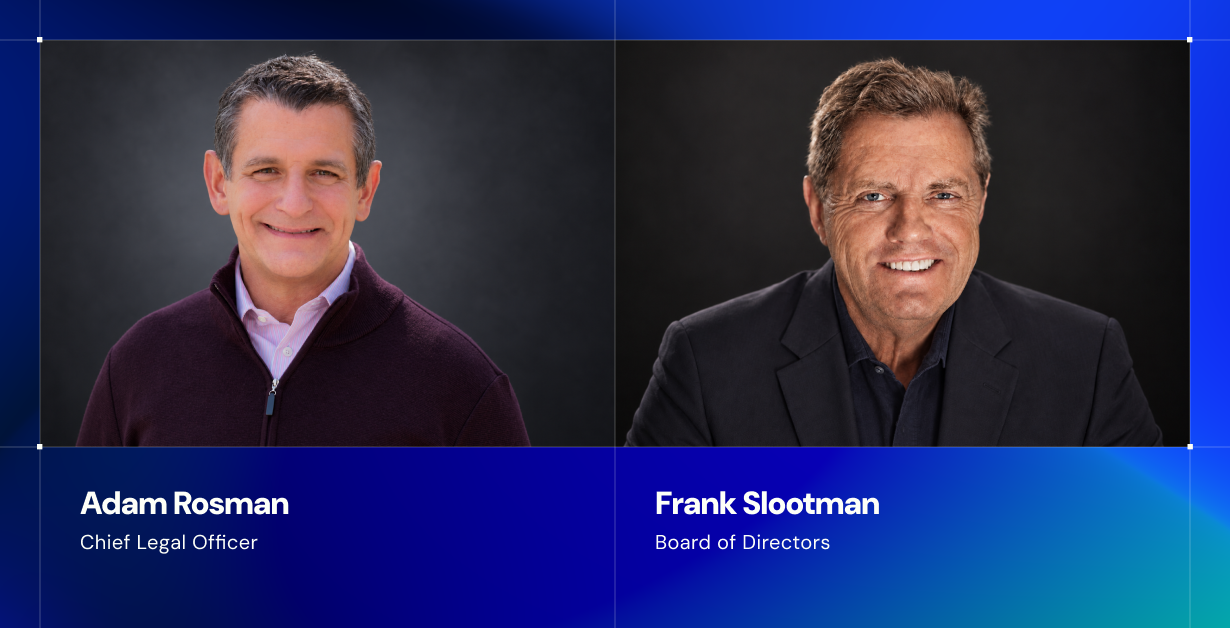
On September 22, Nscale added Frank Slootman to its board as an independent director and hired Adam Rosman, then Fiserv’s chief legal and administrative officer, as chief legal officer effective October 1.
Slootman is not there to admire the view. He led Snowflake through its blockbuster 2020 IPO, took ServiceNow public, and previously ran Data Domain through its public-market journey and eventual sale to EMC. He has done the ugly, repetitive, high-accountability work of turning fast-growing technology companies into institutions investors can underwrite.
Rosman is equally telling. A chief legal officer with deep compliance, financial-services, transaction and governance experience is not a glamorous hire. That is precisely the point. When you are selling sophisticated debt that converts at an IPO, building infrastructure across countries, taking commitments from Nvidia and hedge funds, and preparing to list in New York, you do not need another bloke who can say “AI transformation” on a panel.
You need people who can stop you doing stupid things at speed.
Nscale has also brought in former OpenAI executive Fidji Simo, while its board includes Sheryl Sandberg, Susan Decker, Nick Clegg, Aker CEO Øyvind Eriksen, and founder Payne himself.
Now, celebrity boards can be rubbish. Plenty of founders collect famous names like football cards, then ignore them until a photographer arrives. But the sequence here matters: IPO filing, major convertible financing, a proven public-company operator on the board, and a senior legal leader installed before the public listing.
That looks less like decoration and more like a founder accepting that his next problem is not vision. It is execution under scrutiny.
The background: Nscale is trying to own the whole machine
Nscale was spun out of Australian crypto-mining company Arkon Energy only two years ago. Since then, it has moved at a pace that would make most operators nauseous.
The business is pitching a vertically integrated AI cloud: power, data centres, GPUs, cloud infrastructure and software. In July, it agreed to acquire Anyscale, the commercial company built around the Ray distributed-computing framework, for a reported $1.65 billion. The acquisition brings roughly 200 people and a software layer that helps machine-learning teams run workloads efficiently.
That is strategically sensible. Commodity compute is a brutal business when everyone has the same chips and the same customers. If you own only the racks, you are always one pricing cycle away from being squeezed.
The attractive economics sit higher up the stack: workflow, orchestration, software control, enterprise relationships and the ability to make expensive compute more useful. Nscale is trying to own enough of that stack that it is not merely renting out metal.
But vertical integration is not a cheat code. It is a management test.
You are combining construction risk, energy risk, supply-chain risk, financing risk, cloud-operations risk and software-product risk. Each one can eat a company on its own. Doing all of them at once requires unusually sharp capital allocation and a leadership team willing to say no.
That last bit is where founders usually come unstuck. The market rewards a big story. Operations punish a big story that lacks brutal priorities.
The overlooked angle: governance is a growth weapon
Most founders treat governance as the boring rubbish that arrives after success: lawyers, directors, committees, controls, documents nobody reads.
Wrong.
Good governance is how you earn the right to keep making large bets.
Nscale’s financing is convertible debt, not a free cheque. The $1 billion Nvidia piece is still expected in November, not already sitting in the account. The notes convert automatically upon completion of the IPO, with Nvidia set to receive non-voting shares.
That structure tells you everybody involved is balancing upside against control, timing and risk. This is not dumb money chasing a shiny AI logo. These investors are positioning for an IPO while limiting what they can lose if the public-market window shuts or the execution slips.
The company is reportedly targeting an IPO valuation around $35 billion and could seek to raise another $3 billion in the offering. Against that ambition, the board appointments are a signal to future investors: there are experienced hands in the room now.
That does not make the risk disappear. It makes the risk legible.
And that is a useful lesson for any operator. Sophisticated capital does not demand perfection. It demands a credible explanation of where things can break, who owns the risk, and what happens next if they do.
Don’t confuse capital raised with a business proved
Here is the contrarian view: Nscale may be doing exactly the right things, and the valuation can still be completely bonkers.
Both can be true.
The market has an understandable obsession with AI infrastructure because demand is real, chips are scarce, and frontier-model companies are spending like the future depends on it. Maybe it does.
But huge customer contracts, huge capex commitments and huge financing rounds create a dangerous illusion of inevitability. They make everyone feel rich before anyone has generated durable free cash flow.
The public market is much less romantic than private capital. It will ask whether Nscale can build on time, connect enough power, secure enough chips, deliver acceptable uptime, retain customers, control costs and avoid being crushed by the very hyperscalers it serves.
That is why Slootman is useful. He represents the unsexy question every founder eventually faces: not “Can we grow?” but “Can we repeatedly deliver what we sold, at a return worth owning?”
What this means for you
If you are a founder, do not wait until the IPO, crisis, acquisition or giant customer contract to professionalise your leadership bench.
First, identify the capability your business will need two stages from now. Not the hire that feels exciting today—the person who handles the risk created by tomorrow’s success. If revenue is becoming concentrated, hire a commercial leader who can diversify it. If regulation is looming, bring in serious legal and compliance talent before the regulator introduces themselves. If capital intensity is rising, get a finance operator who has lived through ugly cycles.
Second, build a board for disagreement, not applause. A famous director who never challenges you is just an expensive profile photo. You want people who have handled the specific pressure you are about to face: public markets, complex financing, global operations, enterprise sales or brutal scaling.
Third, separate pipeline from cash. I have seen too many founders talk about signed contracts as if the money has already arrived. Ask three questions: what has been paid, what is conditional, and what must go right before the rest becomes real? That simple discipline saves businesses.
Finally, remember this: raising a massive round is not proof that you have won. It is proof that the consequences of getting it wrong just became far more expensive.
Nscale’s boardroom build-out suggests Josh Payne understands that. Smart founders do not hire grown-ups because they have lost control. They hire them because they intend to keep it.