Nscale’s $3.5B Figure Deal: Humanoid Robots Are Now an AI Utility Bet
A humanoid-robotics company has locked in $3.5 billion of compute before there is a mass-market humanoid market. That isn’t a robotics deal. It’s a very expensive wager that intelligence is now the product.
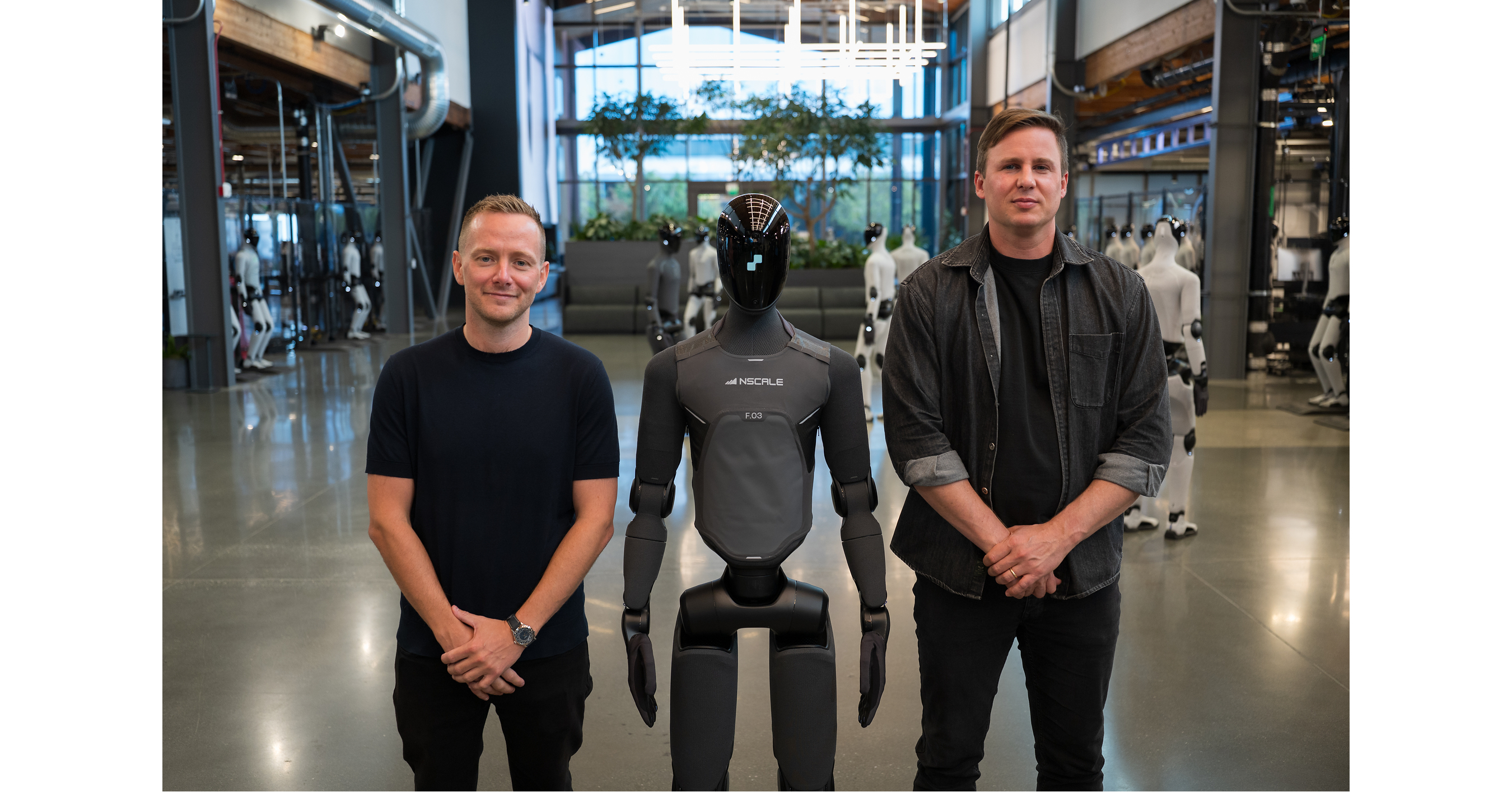
A humanoid-robotics company has locked in $3.5 billion of compute before there is a mass-market humanoid market. That isn’t a robotics deal. It’s a very expensive wager that intelligence is now the product.
On September 3, Nscale announced a multi-year partnership with Figure, the humanoid robotics company founded by Brett Adcock. The initial commitment is $3.5 billion of AI compute, with an intention to take it beyond $6 billion. The plan contemplates deploying up to 100,000 Nvidia Vera Rubin GPUs, beginning in the second half of 2027 in Barstow, Texas. Nscale will also become a Figure shareholder and Figure’s preferred compute provider. ([prnewswire.com](https://www.prnewswire.com/news-releases/nscale-and-figure-sign-strategic-partnership-to-power-the-next-generation-of-physical-ai-302868918.html))
That is a gigantic number for a business category still better known for flashy robot videos than boring, repeatable commercial outcomes.
And that is precisely why it matters.
The robot is not the product anymore
Most people see Figure and think the same thing: clever machine, impressive demo, probably years away from being useful.
Maybe. But look at where the money is going.
Figure is not spending billions first on factories, steel, hands, motors or warehouses. It is tying up access to the computational engine required to train and improve its Helix models — the software brains intended to let its robots operate in the real world.
That tells you the value chain is changing.
The expensive part of a humanoid robot will not necessarily be the physical shell. Bits of metal can be engineered, copied, sourced and eventually manufactured at scale. The real contest is whether a company can build a learning system that sees what is in front of it, understands an instruction, chooses an action, handles exceptions and gets better from new data.
That is not traditional robotics. It is AI with hands.
Nscale, for its part, gets something just as valuable as a customer: a flagship workload. Neoclouds — specialist AI infrastructure providers competing with the likes of CoreWeave and Nebius — need to prove they are more than GPU landlords with a lot of debt and a glossy investor deck. A multi-year relationship with Figure gives Nscale a narrative investors understand: it is selling the picks, shovels and electricity behind physical AI. Reuters reported that Nscale intends to be Figure’s preferred compute provider, as well as a shareholder. ([streetinsider.com](https://www.streetinsider.com/Reuters/AI%2Bcloud%2Bfirm%2BNscale%2Bcommits%2Bcompute%2Bworth%2B%243.5%2Bbillion%2Bfor%2BFigures%2Brobotics%2Bambitions/27023153.html))
That is smart positioning. If humanoids work, the winners will not just be the company that sells robots. They will include the companies that own the data-centre capacity, the chips, the software tools and the power contracts behind every training run.
$3.5 billion is not a cheque — but it is still a serious signal
Let’s keep our heads screwed on here.
The announcement describes an initial commitment of $3.5 billion of compute, not a $3.5 billion pile of cash thrown over a table this week. The GPUs are targeted for deployment from the second half of 2027. The commercial terms, actual usage schedule, pricing mechanics and Nscale’s investment size were not disclosed. ([prnewswire.com](https://www.prnewswire.com/news-releases/nscale-and-figure-sign-strategic-partnership-to-power-the-next-generation-of-physical-ai-302868918.html))
That distinction matters. A capacity agreement can be a reservation, a long-term purchasing commitment, a financing tool, or all three. It is not the same thing as Figure having paid $3.5 billion upfront.
But don’t make the opposite mistake and dismiss it as press-release confetti.
Big infrastructure is financed against credible future demand. A serious customer commitment helps a provider justify ordering equipment, securing power, building data centres and raising capital. It gives Figure a better chance of getting the compute it needs when everyone else wants it too. And it helps both companies tell capital markets that this is a real industrial plan, not a science-fair project.
Nvidia has been unusually blunt about this new model. In its August earnings call, the company described how it can provide minimum-revenue commitments for part of a neocloud facility’s capacity, helping lenders underwrite projects, while Nvidia participates in revenue above that floor. Nvidia also said it had helped companies including CoreWeave, Nebius and Nscale build AI infrastructure businesses. ([investor.nvidia.com](https://investor.nvidia.com/files/content_files/TRANSCRIPT_-NVIDIA-Corp-NVDA-US-Q2-2027-Earnings-Call-26-August-2026-5_00-PM-ET.pdf))
Read that again. The chip maker is no longer merely shipping hardware and waving goodbye. It is helping shape the financing plumbing around the machines.
That is why the AI boom keeps getting bigger. Capital is not just buying chips; it is building an entire asset class around future compute demand.
The overlooked angle: this is a bet on data, not just processing power
The lazy take is that Figure needs more GPUs because AI is hungry.
True, but incomplete.
A robot working in a warehouse, factory or home encounters reality in all its messy glory: bad lighting, clutter, fragile objects, weird instructions, changing surfaces, people doing unpredictable things. It needs enormous volumes of training data, simulation, feedback and retraining to become reliably useful.
Every successful task can generate data. Every failure can generate data. Every deployment can feed a better model — if the company has the technical discipline to capture, label, simulate and learn from it.
That is the flywheel Figure is trying to buy its way into.
Nscale, Figure and Nvidia describe a loop: train models on Nscale’s cloud using Nvidia infrastructure, validate them in Nvidia Isaac Sim, then deploy them into Figure robots. ([prnewswire.com](https://www.prnewswire.com/news-releases/nscale-and-figure-sign-strategic-partnership-to-power-the-next-generation-of-physical-ai-302868918.html)) The technical details will evolve, but the commercial logic is dead simple: more robot activity should create more data; more data should create better models; better models should make the robots useful in more environments; and more useful robots should create more robot activity.
That is a lovely flywheel on a PowerPoint slide.
In the real world, it is brutally difficult. Robots need quality data, not just mountains of it. A model that works in simulation can behave like an idiot when a box is crushed, a floor is wet or a human changes the rules halfway through a task. Compute helps, but it does not magically solve poor data, weak product design or a business model that customers cannot justify.
This is the bit founders should tattoo on their forehead: scaling an input does not guarantee scaling an outcome.
The contrarian view: the infrastructure companies may have the cleaner economics
Everyone wants to own the next robot company. I understand it. The upside story is intoxicating: machines doing physical work, labour shortages solved, productivity exploding, human-looking robots everywhere.
But the most obvious company is not always the best business.
Figure has to crack technical reliability, manufacturing, safety, distribution, service, customer trust and unit economics. It has to prove a robot is not only capable, but cheaper and less painful than the human labour, specialised machines or process redesign it replaces.
Nscale has a different headache: it must secure power, land, equipment, financing and customers. That is hardly easy. But if demand is genuine, its business is closer to an infrastructure toll road. It does not need to guess every winning robotics application. It needs its capacity to remain useful across many of them.
That is why this deal is more interesting as an infrastructure story than a robot story.
The risk, of course, is that AI compute becomes overbuilt, expensive to finance, or concentrated in a handful of customers with their own funding problems. A promised $6 billion is not the same as $6 billion of profitable, cash-generating demand. And 100,000 GPUs is a potential deployment, not a fait accompli. ([prnewswire.com](https://www.prnewswire.com/news-releases/nscale-and-figure-sign-strategic-partnership-to-power-the-next-generation-of-physical-ai-302868918.html))
Still, Nscale has done something clever: it has linked itself to a category that needs far more than chatbot inference. Physical AI can consume compute in training, simulation, vision, planning and continual model improvement. If this category catches fire, that is a very large electricity bill — and someone will own it.
What this means for you
If you are a founder, stop asking whether AI can write your emails. That is kindergarten stuff now.
Ask where intelligence changes the actual unit economics of your business. Where are people repeatedly looking, deciding, checking, routing, quoting, inspecting, forecasting or correcting errors? That is where AI becomes useful. If it does not improve revenue, speed, quality or cost, it is a demo. Do not confuse the two.
If you are building an AI product, secure your bottleneck early. For Figure, it is compute. For you, it may be proprietary data, distribution, customer permissions, regulatory clearance, operational workflow or a deeply annoying integration nobody else wants to build. Find the constraint before competitors do.
If you are an investor, separate the story from the plumbing. The company that gets the headlines is not automatically the one that makes the money. Follow the companies providing capacity, power, workflow software and financing — but check whether their contracts are firm, their customers can pay, and their economics survive once the excitement wears off.
And if you run an established business, do not wait for a humanoid to walk through reception before paying attention. The important lesson from Figure’s $3.5 billion deal is not that robots are arriving tomorrow. It is that serious companies are already buying the infrastructure for a world in which intelligence is embedded in physical work.
Your job is not to clap from the sidelines.
It is to work out which part of your operation becomes cheaper, faster or better when the machine can finally see, think and act — then get there before the bloke down the road does.