Nscale’s $3.5B IPO Push Just Made Fidji Simo Its Most Important Hire
A board seat is usually a polite golf-clap. At Nscale, Fidji Simo’s appointment is a $3.5 billion admission that infrastructure alone won’t save the business.
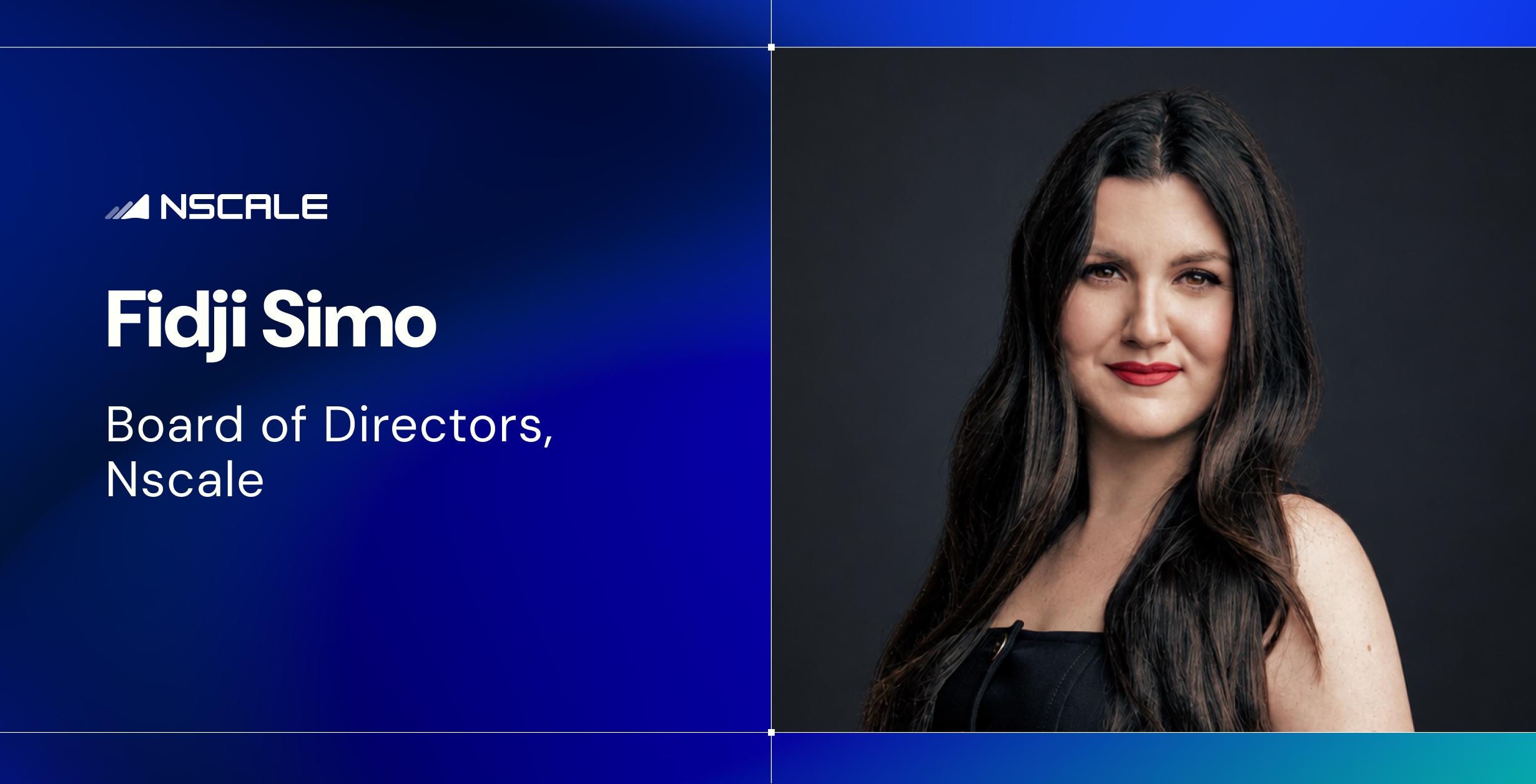
Nscale has raised billions, signed an eye-watering $45 billion deal with Anthropic, and is reportedly chasing another $3.5 billion before an IPO. Yet the smartest thing it did this week cost it one board seat.
Fidji Simo joining Nscale’s board is not a ceremonial appointment. It is Josh Payne admitting that a company can own data centres, GPUs and glossy investor decks, then still stuff up the part that determines whether it becomes a durable business: turning industrial complexity into something customers can actually use.
That is the hard bit. And it is where most AI infrastructure businesses will come unstuck.
Nscale is buying experience before the market demands it
On September 11, Nscale appointed Simo as an independent director, adding the former OpenAI executive to a board that already includes Sheryl Sandberg, Susan Decker and Nick Clegg.
That is a serious collection of grown-ups for a company founded in 2024.
Simo most recently served as OpenAI’s CEO of AGI Deployment, leading business and product teams responsible for getting the company’s research into users’ hands. Before that, she was chair and CEO of Instacart, where she led the company to profitability and through its 2023 public listing. Earlier, she spent a decade at Meta and ran the Facebook app, overseeing products including News Feed, Video, Groups, Marketplace and Ads.
In other words, she has spent her career on the awkward bridge between technology that impresses engineers and products that ordinary people and businesses will repeatedly use.
Nscale founder and CEO Josh Payne says the company is building a board with operating depth, financial rigour and independence appropriate for a company at this scale. Fair enough. But let’s call the real move what it is: pre-IPO credibility-building.
The company raised a $2 billion Series C in March at a $14.6 billion valuation. Reuters reported on September 4 that Nscale is in talks to raise about $3.5 billion more before going public: up to $1.5 billion in convertible notes and roughly $2 billion from Nvidia. Those discussions were ongoing, and neither the size nor the investors were locked in.
When you are asking public-market investors to believe your valuation story, you do not merely need more capital. You need people around the table who have lived through the ugly middle of scale: product failures, governance scrutiny, customer frustration, missed forecasts and all the other rubbish that gets hidden beneath the phrase “hypergrowth”.
Simo has seen that movie before.
The $45 billion number is impressive — and dangerous
Nscale’s headline numbers are moving at a speed that should make any operator both excited and suspicious.
Reuters reported last month that Anthropic signed a six-year, $45 billion agreement to rent AI computing capacity from Nscale’s West Virginia data-centre campus. That is a monster commercial signal. It also creates a monster execution obligation.
A signed infrastructure agreement is not the same thing as cash in the bank. It is not the same thing as a happy customer, healthy margins, dependable uptime or repeatable sales. And it certainly is not proof that a company has built a business that can survive after the AI gold rush stops throwing money at every firm with GPUs and a power agreement.
TechCrunch reported that Nscale had told potential investors it had about $103 billion in projected revenue based on signed customer leases. Crucially, that was described as a projection from contracts, not current sales.
That distinction matters enormously.
I have made enough investments to know that people become drunk on contracted revenue when the number gets big enough. They stop asking the boring questions because the big number makes them feel clever. What are the delivery milestones? Who carries the construction risk? What happens if power connections slip? How concentrated is the customer base? What is the cost of capital? What happens if the customer’s own funding, product strategy or compute requirements change?
Those questions are not pessimism. They are the job.
Nscale describes itself as a vertically integrated AI infrastructure company: it designs, builds and operates AI data centres, while providing GPU cloud services. That vertical integration could be a genuine advantage. Owning more of the stack can reduce hand-offs, speed deployment and give customers one throat to choke when things go wrong.
It can also mean you own more ways to lose money at once.
Data centres are physical. Chips are expensive. Energy is political. Construction has a charming habit of arriving late and over budget. Customers want capacity now, but investors want returns later. The business is not a SaaS dashboard with a better onboarding flow. It is industrial execution wearing an AI T-shirt.
Why Simo matters more than another famous name
The lazy read is that Nscale has added another big tech name for the roadshow. That is too shallow.
Sandberg brings experience in commercial scale and boardrooms. Decker brings financial and governance heft. Clegg knows policy, regulation and the political headache that comes with being a powerful technology business.
Simo brings something different: product judgement.
That sounds soft until you understand the problem Nscale is trying to solve. Compute is becoming a strategic resource, but customers do not wake up wanting “compute”. They want to train a model faster, deploy an agent securely, control costs, meet local data rules, avoid outages and make the complexity disappear.
The infrastructure provider that wins will not necessarily be the one with the most impressive shed full of GPUs. It will be the one that makes capacity reliable, usable, comprehensible and commercially sensible for customers who do not want to become data-centre experts.
That is exactly the point Simo made in announcing the role: the next generation of AI infrastructure will not be won on compute alone, but by integrating the physical layer and software layer while hiding the complexity from customers.
Correct.
It is also a warning shot to every founder who thinks technical capability automatically turns into customer value. It does not. Plenty of brilliant technical businesses become expensive suppliers because nobody in the room owns the customer experience from beginning to end.
The overlooked angle: this is a governance decision
Most founders wait too long to professionalise the board.
They recruit mates, early investors and people who tell them they are special. Then the company gets large enough that the same board becomes an expensive echo chamber. By the time they bring in independent operators, the decisions are harder, the egos are bigger and the bad habits are welded into the walls.
Nscale is doing this before a potential IPO. That is the sensible order.
A functioning board should not be a group of impressive people you photograph at an annual retreat. It should change the quality of questions management gets asked. It should challenge the assumptions in a fundraising deck. It should force clearer reporting. It should help the chief executive distinguish between a customer commitment, a forecast and a fact.
Payne is still the founder and CEO. He should remain the person setting the pace and taking the big swings. But as Nscale gets larger, his job changes. It becomes less about personally proving he can move quickly and more about building a system that can move quickly without relying on him to catch every ball.
That is the CEO transition nobody tells founders about. You do not become less important as the company scales. You become important in a different, less glamorous way: by making sure the machine works when you are not in the room.
Don’t confuse capital with a moat
Nscale’s March funding round included heavyweight backers such as Aker ASA, 8090 Industries, Nvidia, Dell, Nokia, Citadel, Jane Street and Point72. The company says the capital will fund global infrastructure deployments across compute, networking, data services and orchestration software.
Good. Capital matters in this game.
But capital is also available to competitors with a credible AI story, access to power and a relationship with chip suppliers. The same funding environment that makes Nscale formidable makes the market brutal. Money gets you into the race. It does not decide who stays there.
The real moat will be execution discipline: building on time, controlling cost, serving customers well, avoiding catastrophic concentration and turning giant contracts into cash-producing operations.
That is why this board appointment matters. It signals Nscale understands that the next challenge is not announcing ambition. The next challenge is institutionalising competence.
What this means for you
Whether you run a 12-person startup, a division inside a larger business or a family company doing $20 million a year, steal the useful lesson here: hire governance for the problem you are about to have, not the one you had last year.
First, identify your next constraint. If you are about to double sales, you may need someone who has built operations at scale — not another marketing mate. If regulation is coming, get someone who has dealt with regulators. If your product is becoming too complicated, find an operator who has made complexity disappear for customers.
Second, separate vanity from capability. A famous name is worthless if they cannot sharpen your decisions. Ask prospective advisers or directors exactly which decisions they have made under pressure, what they got wrong and where they can challenge you.
Third, make your board useful. Send fewer decorative slides and more uncomfortable numbers: customer concentration, cash conversion, delivery risk, churn, gross margin by cohort and the three assumptions most likely to wreck the plan. If nobody challenges them, your board is not governance. It is catering.
Finally, remember this: scale magnifies whatever is already true. If your systems are messy, scale makes them messier. If your customer experience is clunky, scale broadcasts it. If your leadership team avoids hard conversations, scale turns that avoidance into an invoice.
Nscale has plenty to prove before any IPO. But bringing Fidji Simo in now is the right kind of move. It says the company knows that owning the machine is not enough.
You have to make the machine useful. And you have to build an organisation capable of surviving its own success.