Nuveen’s $13.5B Schroders Takeover Creates a $2.6T Warning
A 222-year-old money manager just sold for $13.5 billion. If your business needs its history to explain why customers should stay, you’re already in trouble.
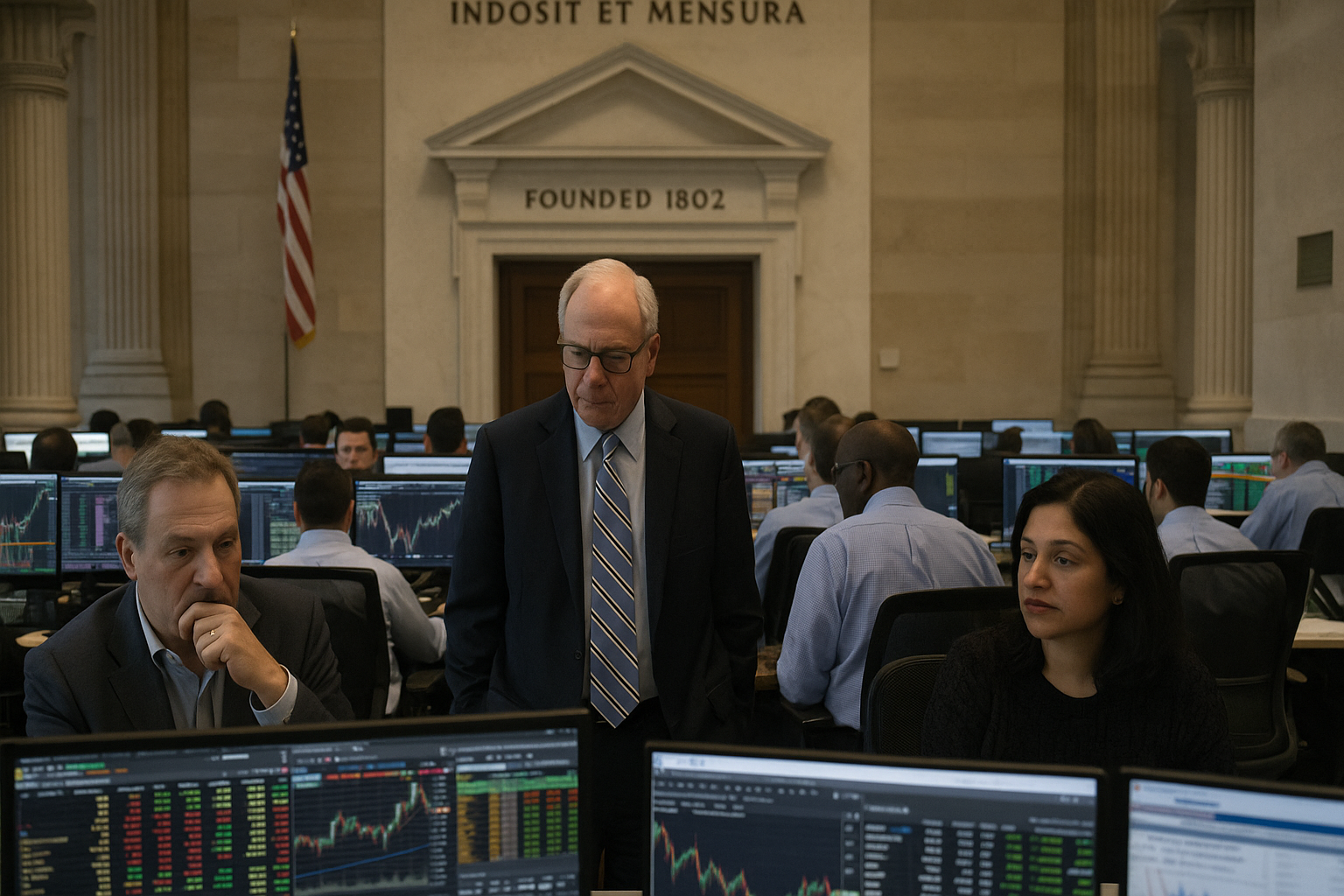
A 222-year-old money manager just sold for $13.5 billion. If your business needs its history to explain why customers should stay, you’re already in trouble.
On October 1, Nuveen completed its acquisition of Schroders, ending the independence of one of the City of London’s oldest financial institutions and creating a combined asset manager with $2.6 trillion under management. That number is enormous. But the more important number is one: one less independent firm with enough scale to compete globally.
This is not a story about two firms getting bigger because bigger is beautiful. It is a story about a brutal truth in financial services: being respected, established and bloody old does not protect you from a market that increasingly rewards distribution, product breadth and the ability to invest heavily in technology.
Nuveen Bought Schroders for £9.9 Billion, Not a Museum Piece
Nuveen agreed in February to buy Schroders for roughly £9.9 billion, or $13.5 billion at the time. The all-cash offer gave Schroders shareholders up to 612 pence a share, including permitted dividends. That represented a 34% premium to Schroders’ closing price on February 11, a 47% premium to its three-month volume-weighted average price and a 61% premium to its 12-month average.
That is not Nuveen nicking a distressed asset out the back door. It paid up for a serious business.
Schroders came with approximately $1.1 trillion in assets under management when the deal was announced. Nuveen brought roughly $1.4 trillion. Put them together and you get a firm operating in more than 40 markets, with scale across active equities, active fixed income, private markets, wealth and institutional money.
Nuveen says the completed business now has $2.6 trillion in assets under management and is the only manager with a top-ten global position across active equities, active fixed income and private markets. Fair enough. That is a powerful proposition when you are trying to win pension funds, insurers, family offices and wealthy clients who would rather deal with fewer suppliers.
Schroders will not simply vanish into a Chicago spreadsheet. The Schroders brand is being retained. Richard Oldfield stays on as Schroders’ group chief executive and reports to Nuveen CEO William Huffman. The two businesses are expected to operate separately for the next 12 to 18 months.
That is the sensible bit. You do not spend $13.5 billion buying trust, investment teams and client relationships, then barge in on Monday morning and replace every sign with a corporate logo no one asked for.
The Deal Is Really About Distribution and Staying Power
People love to describe asset management as an investment-performance business. It is, right up until it is not.
Good performance matters. Obviously. But the firms that win the biggest mandates also need a global sales force, institutional relationships, product range, compliance muscle, data systems, private-market capabilities and enough capital to keep investing through a bad year. Small and mid-sized managers can have brilliant investors and still lose because they cannot meet every demand on the client checklist.
That checklist has become absurdly long.
A major allocator may want public markets, private credit, infrastructure, real estate, retirement income, bespoke portfolios, tax-aware solutions and local coverage across multiple jurisdictions. They may want one reporting system and a single senior relationship. They want outcomes, not a cheerful fund brochure and a bloke explaining why this year was unusual.
Nuveen and Schroders now have a better answer to that client demand than either had alone.
That is why the $2.6 trillion figure matters, but not in the way headline writers think. Assets under management are not revenue. They are certainly not profit. A giant pile of assets can still be badly run. But scale gives the combined group more shots on goal: more products to distribute, more geographies to sell into and more ways to keep a client inside the tent when markets or strategies fall out of favour.
For an operator, that is the real lesson. The best acquisitions are not about adding turnover in an Excel sheet. They are about making your customer less likely to leave because you can solve more of their problems without forcing them to shop elsewhere.
Schroders’ Sale Is a Verdict on the Middle
Here is the uncomfortable bit: the middle is getting smashed in plenty of industries, not just funds management.
At one end sit enormous platforms with distribution, data, brand and balance sheets. At the other sit genuinely specialised operators with a sharp edge: a differentiated product, exceptional customer loyalty, hard-won expertise or a niche too fiddly for the giants to bother with.
In the middle sit businesses that are good, credible and increasingly easy to replace.
Schroders was not a weak firm. It remained a major global manager with active asset management, advisory, wealth and private-markets operations. In 2025, its Schroders Capital business raised £10.9 billion gross across its asset-class pillars, while its wealth business generated £3.4 billion of net new business. Those are not numbers from a business waiting for the lights to be turned off.
But being good is no longer the same as being strategically unbuyable.
Nuveen’s offer tells you that a 222-year heritage, a recognised brand and a large asset base do not exempt a company from the logic of consolidation. In fact, they can make it more attractive. A buyer does not have to invent client trust from scratch. It can buy it, provided it pays enough and does not wreck it in the integration.
The Schroder family selling out is the symbolic part. Families are usually the last people in the room to admit that an institution has reached the point where independence is more romantic than rational. When they accept a full-cash offer at a healthy premium, pay attention.
The Overlooked Angle: Bigger Is Not Automatically Better
Now for the bit the deal cheerleaders will skip.
A $2.6 trillion manager has more capability, but it also has more complexity. The industry is full of mergers that looked brilliant in a pitch book and then spent years wrestling with duplicate products, rival investment cultures, expensive technology migrations and senior staff quietly walking out the door with clients behind them.
Asset management has a special integration problem: its best assets go home at night.
You can merge back-office functions. You can consolidate offices. You can save money on systems, procurement and compliance. You cannot force a great portfolio manager, distribution chief or private-markets dealmaker to care after a merger if they think the new machine will make them slower, poorer or less trusted by clients.
That is why the 12-to-18-month separate-operation period matters. Nuveen is buying time as much as it is buying Schroders. Time to retain people. Time to reassure clients. Time to figure out which products genuinely complement each other and which are just duplicated inventory with different branding.
My contrarian view is this: the deal’s success will not be decided by the first cost-saving announcement. It will be decided by what Nuveen refuses to centralise.
The temptation in a giant merger is to standardise everything because it looks tidy. That is how you destroy the very thing you paid for. The smart move is to centralise the boring stuff clients do not value, while preserving the investment teams, local relationships and specialist brands clients actually came for.
That is harder than sacking people and calling it synergy. It is also how you avoid paying $13.5 billion for a melting ice cube.
Why Founders Should Care About a Fund-Manager Merger
You might run a software company, a services firm, a brewery or a small retail operation and think this has nothing to do with you. Wrong.
Nuveen buying Schroders is a clean lesson in strategic positioning.
First, know whether you are building a platform or a specialist. A platform wins through breadth, distribution and convenience. A specialist wins through superiority in something specific. Both can be excellent businesses. The dangerous position is pretending to be both while actually being neither.
Second, build assets that survive a change of ownership. Schroders was valuable because it brought client relationships, trusted brands, investment capabilities and international reach. In your business, that might be recurring revenue, proprietary data, a loyal customer community, a repeatable sales engine or a product customers would genuinely miss.
Third, do not confuse size with value. Nuveen did not pay £9.9 billion merely for assets under management. It paid for the chance to offer clients a broader set of solutions across more markets. Your next acquisition should pass the same test: does it make the combined customer proposition materially better, or does it just make the org chart uglier?
Finally, if you are an investor, stop treating every acquisition as either genius or disaster on announcement day. Watch client retention, staff departures, product rationalisation and whether the buyer can grow revenue without simply cutting costs. That is where the truth lives.
What This Means for You
Use this tomorrow.
If you are a founder, write down the three reasons a customer would stay with you if a larger competitor copied your pricing and doubled its ad budget. If your answer is “our people” or “our quality,” keep going. Those are slogans, not moats. Get specific.
If you are an operator, identify what should be centralised in your business and what must remain close to the customer. Finance, procurement and reporting usually benefit from scale. Customer trust, specialist expertise and local market knowledge often do not. Mixing those up is how businesses become efficient and forgettable.
If you are an investor or saver, remember that consolidation usually means the buyer sees an advantage in owning the distribution pipe. Ask who controls the client relationship, who owns the data and whether the combined firm can retain its talent. Those questions matter more than the press-release adjective of the day.
Nuveen did not buy Schroders because history is worthless. It bought it because history is valuable only when it can still be turned into future cash flow.
That is the whole game. Build something people trust. Then make sure that trust is attached to a business model strong enough to survive the next giant deciding it wants your customers.