NVIDIA’s $105B OpenAI Guarantee Makes It More Than a Chip Seller
NVIDIA hasn’t just sold OpenAI more chips. It has put up to $105 billion of its own balance sheet behind an Ohio data centre — because apparently selling the shovels wasn’t enough.
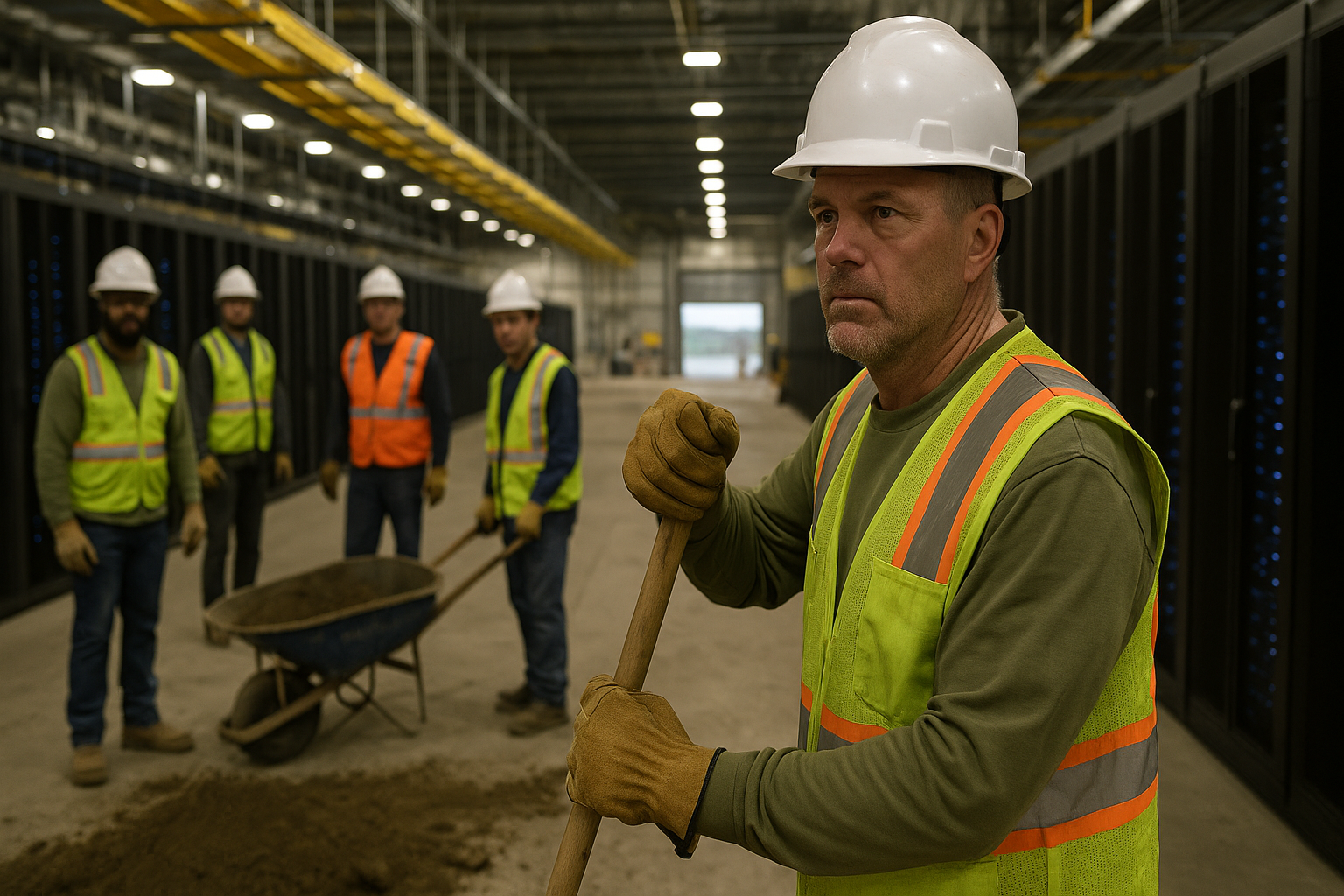
NVIDIA hasn’t just sold OpenAI more chips. It has put up to $105 billion of its balance sheet behind an Ohio data centre — because apparently selling the shovels wasn’t enough.
That is either a masterclass in locking up the next decade of AI demand, or the moment the world’s most valuable chip company started acting like a bank for its best customer. Probably a bit of both.
The deal: an 8-gigawatt bet with a 20-year tail
On August 17, NVIDIA, OpenAI and SoftBank-owned SB Energy announced the PORTS-Pike Technology Campus in Pike County, Ohio. OpenAI has agreed to secure about 8 gigawatts of IT capacity at the site under a 20-year lease. SB Energy will build, own and operate it. NVIDIA will be the exclusive provider of the AI computing infrastructure.
Let’s pause there. Eight gigawatts is not a normal data centre announcement dressed up in Silicon Valley glitter. This is heavy industry. It is land, transmission lines, gas generation, substations, cooling, construction crews, debt and decades-long contracts.
The initial deployment is designed for 4.25 gigawatts of AI capacity. NVIDIA has the option to support roughly another 3.75 to 3.8 gigawatts after that. The first 800 megawatts are expected to be available in 2028, with the broader buildout running through 2032.
NVIDIA is also investing $1.5 billion in SB Energy.
But the real headline is the credit support. NVIDIA’s August 17 SEC filing says its aggregate payment obligation for the initial agreements is capped at $105 billion. That obligation is conditional: the site must meet ready-for-service requirements, and it is tied to the initial 4.25-gigawatt commitment.
More importantly, NVIDIA is not simply wiring OpenAI a $105 billion cheque. These are residual-value guarantees on leases. If OpenAI becomes insolvent or fails to pay, NVIDIA may have to cover the shortfall between a guaranteed lease value and what SB Energy can recover by reletting or selling the facility. NVIDIA can also assume a lease, push for a replacement tenant, initiate a sale, terminate the lease, or defer remedies while paying specified project costs.
That distinction matters. But don’t let anyone use it to wave away the risk. A conditional guarantee is still a bloody serious commitment when the cap has eleven zeroes.
NVIDIA is moving from supplier to financier
For years, NVIDIA had the cleanest business model in tech: everyone wanted AI compute, so everyone bought NVIDIA chips. Sell picks and shovels. Collect cash. Let somebody else worry about whether the gold is actually there.
PORTS-Pike changes the flavour of that.
NVIDIA is now helping secure the land, power and shell — the physical preconditions for selling its systems — then becoming the exclusive infrastructure provider inside the campus. It is using its own credit quality to make a giant project financeable. And it is investing directly in the builder.
This is vertical integration by another name.
Jensen Huang’s argument is straightforward: AI has become infrastructure, and the scarce inputs are no longer only GPUs. They are electricity, land, permits, transformers, gas turbines, substations and construction capacity. If you wait around for those pieces to sort themselves out, somebody else owns the site and somebody else chooses the hardware.
From NVIDIA’s perspective, backing the project may be rational. A 20-year tenant relationship with OpenAI, using NVIDIA gear exclusively, is worth more than another standard chip order. It helps turn uncertain future demand into a physical, financed commitment.
That is the upside case.
The less comfortable version is this: NVIDIA has recognised that its customers cannot all independently fund the infrastructure required to buy the quantity of chips NVIDIA wants to sell them. So NVIDIA is helping solve the financing problem itself.
That is not automatically dodgy. It is also not a trivial footnote.
The bit everyone should watch: who owns the downside?
OpenAI is the tenant. SB Energy owns and operates the site. NVIDIA supplies the computing infrastructure and backs the initial lease structure. SoftBank is in the middle through SB Energy. The Department of Energy is involved because the campus spans private land and remediated land at the former Portsmouth Gaseous Diffusion Plant.
When a deal has this many moving parts, the upside gets shared widely. So does the risk.
OpenAI says it will pay only as completed capacity becomes available and plans to fund the commitments through revenue, operating cash flow and investor capital. Fine. That is how a tenant should think.
But a 20-year infrastructure obligation is not a ChatGPT subscription. It assumes AI demand stays enormous, OpenAI remains a viable payer, power construction arrives on schedule, permits hold, hardware keeps getting upgraded, and somebody still wants to lease the capacity if the original customer stumbles.
NVIDIA’s filing makes the key risk plain: if OpenAI defaults, NVIDIA could be on the hook for the shortfall after a replacement lease or sale. OpenAI has agreed to reimburse and indemnify NVIDIA for amounts it pays. Again: fine, provided OpenAI has the money at exactly the moment it needs to reimburse NVIDIA.
That is what guarantees are for. They matter when the original promise is no longer enough.
The word floating around this sort of arrangement is “circular” financing: the supplier supports the customer’s ability to buy from the supplier, which supports the supplier’s revenue, which supports the valuation that makes further support possible.
Huang rejects that label, saying OpenAI will pay the lease. He may well be right on the legal and economic mechanics. But operators and investors should not get trapped in word games. The real question is simpler:
Would this project get financed on the same terms if NVIDIA did not stand behind it?
If the answer is no, NVIDIA’s balance sheet is doing work that conventional lenders were unwilling to do alone.
That can be smart. It can also be how an industry discovers where genuine demand ends and subsidised demand begins.
The overlooked angle: power is now the product
Most AI commentary still treats the GPU as the whole show. It isn’t.
The winning asset increasingly looks like power that is permitted, contracted, connected and paid for. The PORTS-Pike plan includes at least 10 gigawatts of new energy generation, including at least 9.2 gigawatts of natural-gas generation, plus at least $4.2 billion in regional grid infrastructure with AEP Ohio.
That is the real moat in this deal.
A chip can be superseded. A data-centre design can be improved. A model can get leapfrogged. But getting vast new power generation and transmission built in a country where permits, grid queues and community opposition can delay projects for years? Good luck copying that quickly.
This is why NVIDIA’s move is more strategic than it first appears. It is not merely trying to guarantee a customer’s rent. It is trying to reserve a place in the queue for the hardest inputs in AI.
The contrarian view is that this could make NVIDIA stronger, not weaker. If compute remains scarce, companies that control deployable power and sites will dictate the pace of AI expansion. NVIDIA is trying to ensure its systems are the ones plugged into that scarce power.
But there is a catch. Once a chip company starts underwriting infrastructure, it inherits infrastructure problems: delays, interest rates, permitting fights, cost blowouts and customers who change their minds. You do not get the strategic prize without taking on some very un-sexy risk.
What this means for you
If you are a founder, stop treating AI as a software-only conversation.
Your advantage is not that you can bolt a chatbot onto a tired product. Every lazy competitor can do that by Friday. Your advantage is owning a useful workflow, proprietary customer access, clean data, or a distribution channel where AI genuinely improves the economics.
Ask one hard question before you spend another dollar on AI: Does this reduce labour, speed up a revenue-producing task, improve retention, or create something a customer will pay extra for? If the answer is vague, you are buying theatre.
If you are an operator, negotiate flexibility. The big lesson from Ohio is that demand forecasts are being converted into long-duration obligations. Do not sign multi-year software, cloud or infrastructure commitments based on a board slide claiming “AI transformation.” Lock in capacity only where you can see usage, unit economics and a credible payback period.
If you are an investor, remember that NVIDIA is no longer just a spectacular hardware company selling into a boom. It is increasingly exposed to whether its biggest customers can finance, power and monetise their ambitions. That may extend NVIDIA’s growth runway. It also means the financial plumbing deserves as much attention as the next chip benchmark.
And if you are simply trying to get sharper with money, learn this lesson: the most valuable businesses do not just sell into bottlenecks. When they are confident enough, they help finance the bottleneck — then make themselves impossible to remove from it.
That is what NVIDIA is doing in Ohio.
It is bold. It may be brilliant. But nobody should pretend it is just another chip sale.