Nvidia’s $12.93B Hugging Face Deal Buys the AI Starting Line
Nvidia didn’t pay $12.93 billion for an AI website. It paid to get between every ambitious developer and the hardware bill that follows.
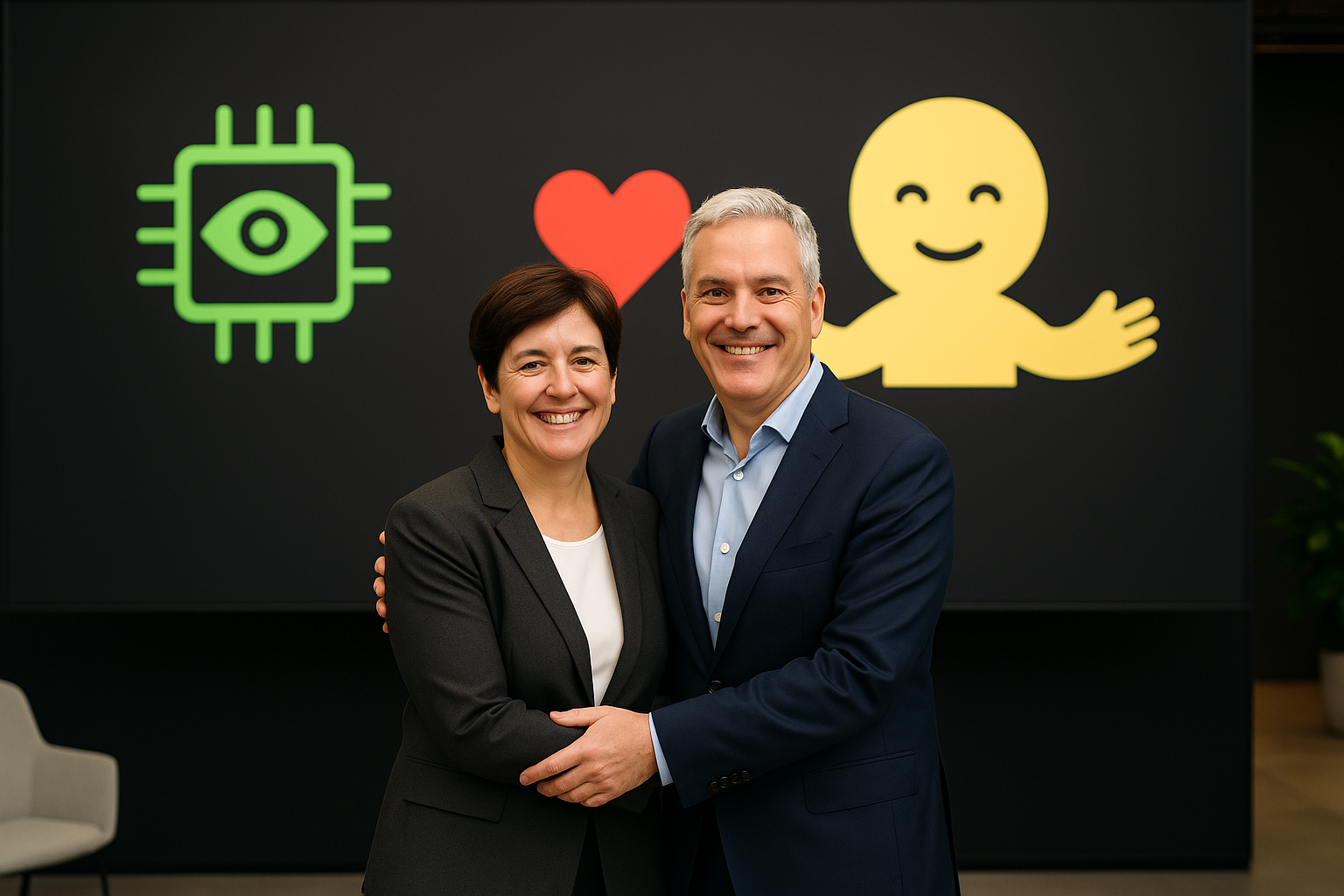
If you think Nvidia paid $12.93 billion for an AI website, you’ve missed the point by roughly $12.93 billion.
Jensen Huang has bought a front-row seat to where millions of developers decide what to build next. That is a far better business than merely waiting around to sell them chips once the decision has already been made.
Nvidia bought more than Hugging Face
On September 3, Nvidia agreed to acquire Hugging Face for $12.93 billion. The deal includes about $11.9 billion for Hugging Face shareholders and an equity-based employee retention program worth up to $1 billion.
That is a serious cheque for a company most normal people have never heard of. But normal people are not the customer here.
Hugging Face is where a ridiculous amount of the open AI world gets discovered, tested, shared and deployed. Nvidia says more than 18 million developers, researchers and creators use the platform. They have shared more than 3 million models, 500,000 datasets and 1 million applications. More than 200,000 companies use it too.
That is not a software asset in the usual sense. It is a decision-making layer.
Before a founder decides whether to use an open model or a closed one, which model is good enough, what cloud to run it on, which tools to use, and eventually how much computing power to buy, they often begin somewhere like Hugging Face.
Nvidia has been the toll collector on AI infrastructure. This deal puts it closer to the roundabout where traffic first chooses its route.
That matters because the company’s biggest customers are also its biggest long-term threat. Microsoft, Amazon, Google, Meta and OpenAI have the money, engineering firepower and motive to build more of their own chips. They do not need to replace Nvidia overnight to hurt Nvidia’s economics. They only need to divert a meaningful slice of future workloads onto hardware they control.
So Nvidia is doing what every great business does when the market starts changing: it is moving upstream before the margin gets squeezed.
The real asset is developer gravity
People will naturally ask whether Hugging Face generates enough revenue to justify nearly $13 billion. Fair question. It is also the wrong first question.
Nvidia did not buy Hugging Face because it wanted another line item in a software spreadsheet. It bought it because developer attention is scarce and expensive.
If you own the place where builders find models, compare tools, test ideas and put prototypes into production, you gain a useful view of where demand is heading. Not perfect information. Not some sinister crystal ball. But a much better read on emerging workloads than a chipmaker gets from sitting at the end of the supply chain.
That changes how you should view the price.
A conventional acquisition model asks: what are the revenues, what are the margins, what are the synergies, and how quickly does the deal pay back?
A strategic platform acquisition asks a tougher but more valuable question: can this asset make our core business harder to avoid for the next decade?
For Nvidia, that is the game.
Hugging Face can help create more AI builders outside the handful of hyperscalers. Thousands of smaller companies, universities, governments and operators experimenting with open models are unlikely to design their own silicon. If Nvidia helps that long tail grow, it broadens the pool of future compute customers.
That is not charity for open source. It is intelligent self-interest.
Open is useful to Nvidia — until it isn’t
Nvidia has promised Hugging Face will remain an open platform. Developers, it says, will still be able to choose their own models, frameworks, cloud providers, inference providers and computing platforms. Nvidia hardware will not be required.
Good. It has to be that way.
Hugging Face is valuable precisely because developers see it as neutral enough to use across clouds, models and hardware. Turn it into a giant Nvidia sales brochure and the clever people leave. Developers are not furniture. If you make their lives worse, they move.
This is the overlooked risk in the deal. Nvidia can legally own the platform and still economically destroy what it bought if it gets greedy.
The temptation will be obvious. Make Nvidia’s stack work a little more smoothly. Give Nvidia-optimised models a little more visibility. Put the best deployment tools behind the most convenient Nvidia integrations. None of that needs a dramatic announcement. It can happen one product decision at a time.
And every individual decision will sound rational in a meeting.
That is how strategic assets get ruined: not with one evil master plan, but with 40 sensible little optimisations that make customers realise the supposedly open marketplace is no longer open.
The smart move for Nvidia is restraint. Keep Hugging Face genuinely useful for people running AMD hardware, cloud alternatives and competing models. Let it remain a trusted town square. Then quietly become the company best placed to serve the compute demand that town square creates.
That may feel less satisfying than forcing immediate synergies. It is also how you protect a $12.93 billion asset.
The price tells founders something uncomfortable
Hugging Face was last valued at $4.5 billion in its 2023 funding round. Nvidia is paying $12.93 billion now.
That is a huge uplift, and founders should pay attention to why it happened.
The big exit was not created by adding more features than everyone else. It came from becoming infrastructure for a behaviour that was already compounding: developers sharing, evaluating and deploying AI models.
That is the bit too many founders miss. They build products. Great businesses build a place in the workflow that gets harder to remove as more people use it.
A feature can be copied. A distribution habit is much harder to copy.
Hugging Face became a default destination for open AI work. Once enough developers, models, datasets and companies gather in one place, the platform becomes more useful because everyone else is already there. That is what Nvidia bought: accumulated trust, utility and habit.
If you are building a company, stop obsessing over whether your product has one more clever feature than the bloke down the road. Ask a more useful question: what repeated decision could we become the default place for?
If your customers need to make that decision weekly, monthly or every time they start a project, you may be building something with real strategic value.
Nvidia is defending itself, not just expanding
There is a lazy version of this story: Nvidia is already dominant, flush with cash, and buying everything around AI.
That is partly true. It is also too shallow.
The best operators make defensive moves while they still look offensive. Nvidia’s chip business remains enormously powerful, but Huang plainly understands that no margin is sacred when your biggest buyers have trillion-dollar balance sheets and an incentive to bring more technology in-house.
The threat is not necessarily AMD beating Nvidia at its own game tomorrow. The threat is a gradual redistribution of AI spending. Google sends more workloads to TPUs. Amazon steers customers toward its own chips. Microsoft improves Maia. Meta develops more internal capacity. OpenAI diversifies where it can.
Each move can be rational for the buyer. Collectively, they reduce Nvidia’s share of the most lucrative demand.
Hugging Face is Nvidia’s answer to that slow-motion squeeze. It gives the company a stronger relationship with the next generation of builders, especially those who do not have the scale to build custom hardware or negotiate like a hyperscaler.
It is a hedge against customer concentration disguised as an open-source deal.
The contrarian take: this could make Nvidia less powerful in the short term
Here is the part investors may not like: the deal works best if Nvidia does not immediately extract every dollar from it.
That means supporting competing hardware. It means preserving multi-cloud choice. It means hosting models that do not naturally drive demand to Nvidia. It means treating developer trust as more important than a tidy quarterly synergy slide.
In other words, Nvidia may need to behave less like a monopoly and more like the caretaker of shared infrastructure.
That sounds soft. It isn’t.
The most powerful platforms often win because participants believe they can succeed without asking permission. If Nvidia preserves that belief, Hugging Face remains the place where the AI ecosystem gathers. If it breaks that belief, it has paid nearly $13 billion for an asset with an escape hatch.
What this means for you
For founders: own a decision point, not just a feature. Build where customers begin work, not merely where they finish it. The closer you are to the first important choice, the more strategic you become.
For investors: when a company makes a big acquisition, do not just ask whether the target has enough revenue. Ask what future behaviour the acquirer is trying to control or protect. Nvidia is buying developer gravity because its hardware margins depend on staying relevant before the compute purchase happens.
For operators: treat trust as an operating asset. Hugging Face is worth billions because developers believe it is useful across the ecosystem. The minute Nvidia puts short-term extraction ahead of that trust, it damages the very thing it bought.
And for anyone building in a crowded market: distribution is not marketing fluff. Distribution is a moat when people repeatedly start their work with you.
Nvidia did not spend $12.93 billion to own a logo, a code repository or a cheerful little emoji. It spent that money to make sure the next wave of AI builders still has a reason to end up in Nvidia’s orbit.
The takeaway is blunt: get in front of the decision, earn the trust, and become difficult to avoid before the money gets spent.
That is what serious strategic buying looks like: pay dearly for the place where tomorrow’s customers decide where to go.