Nvidia’s $12.9B Hugging Face Deal Buys AI Distribution
Nvidia didn’t pay $12.9 billion for an AI website. It paid to sit where more than 18 million people discover, test and deploy the models shaping AI demand.
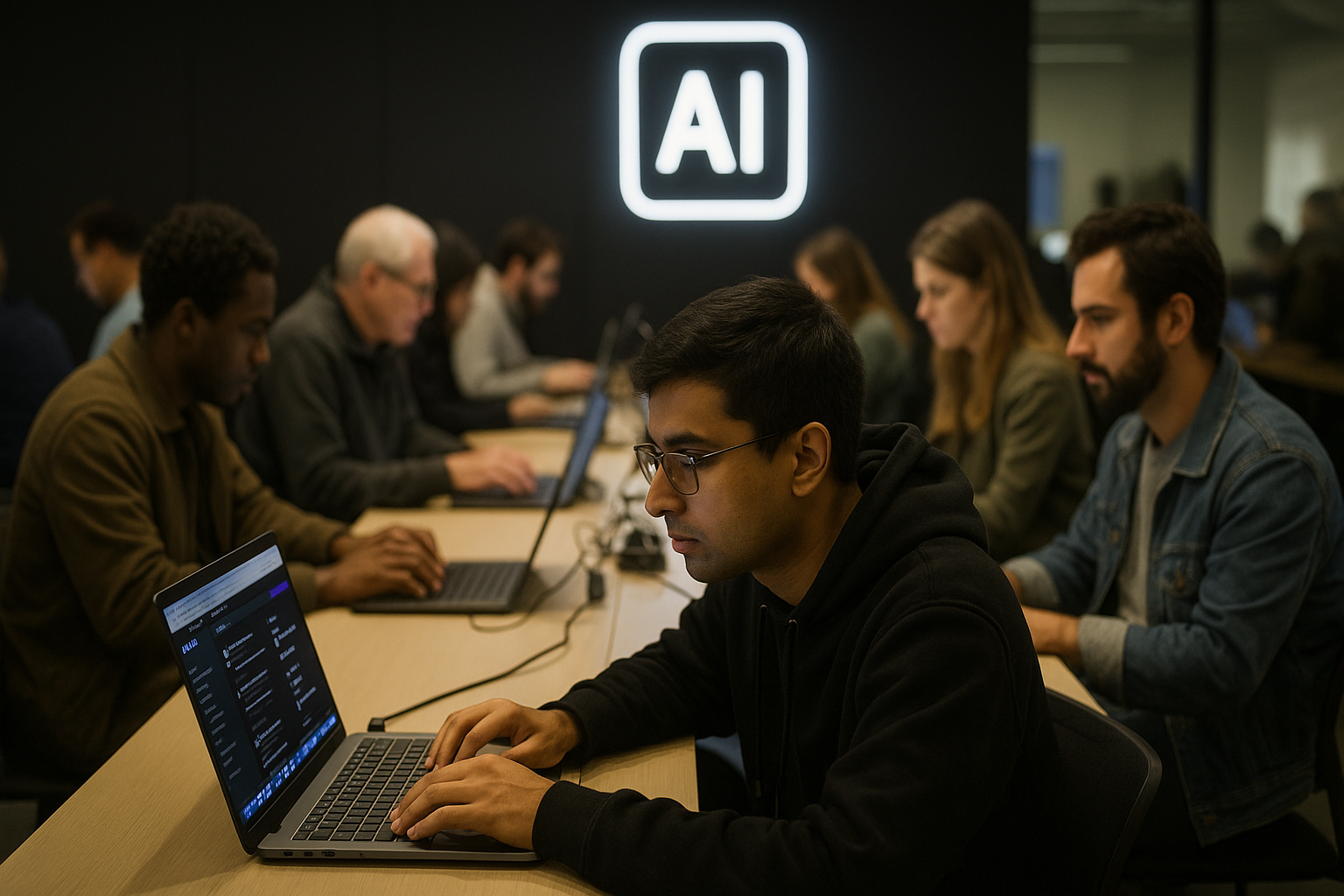
Nvidia didn’t pay $12.9 billion for an AI website. It paid to sit where more than 18 million people discover, test and deploy the models shaping AI demand.
That should make every founder calling their product a “platform” a bit uncomfortable. The real platforms are not the ones with the flashiest demo. They are the ones buried so deeply in the workflow that removing them would annoy millions of people before lunch.
Nvidia has bought more than a model hub
On September 2, Nvidia entered a definitive agreement to acquire Hugging Face. The disclosed structure matters: roughly $11.9 billion is payable to Hugging Face shareholders, with an equity-based employee-retention program worth up to roughly $1 billion. That supports the widely reported $12.9 billion headline value, not a fixed $12.93 billion cheque. Closing is expected in the first half of 2027, subject to customary conditions and regulatory approvals. ([sec.gov](https://www.sec.gov/Archives/edgar/data/1045810/000104581026000078/nvda-20260902.htm))
The reporting around the deal shows why precision matters. Bloomberg Law reported that Nvidia was nearing a deal valued at about $14 billion. Axios reported a price of nearly $13 billion. TechCrunch reported Nvidia’s confirmation of a $12.9 billion deal. The filing gives the useful bit: what is being paid to shareholders and what is tied to keeping key people around. ([news.bloomberglaw.com](https://news.bloomberglaw.com/antitrust/nvidia-is-said-to-near-14-billion-hugging-face-deal-this-week)) ([axios.com](https://www.axios.com/2026/09/03/nvidia-hugging-face-13b)) ([techcrunch.com](https://techcrunch.com/2026/09/03/nvidia-confirms-it-will-buy-hugging-face-for-12-9-billion/))
Plenty of people will look at that number and say: “Twelve billion bucks for a repository of AI models?” Fair question. It is also the wrong question.
Hugging Face is where a huge chunk of the AI world discovers, shares, tests and deploys models, datasets and applications. Nvidia says the platform has more than 18 million developers, researchers and creators sharing more than 3 million models, 500,000 datasets and 1 million applications. That is not merely a software asset. It is a distribution system, a developer habit and a giant pile of market intelligence. ([sec.gov](https://www.sec.gov/Archives/edgar/data/1045810/000104581026000078/nvda-20260902.htm))
The clever bit is that Nvidia has not said it is buying the platform to shut the gates. Its filing says it has committed to keeping Hugging Face open: model makers, developers and users should still be able to upload and download models and datasets of their choosing, while the platform continues supporting other silicon vendors. ([sec.gov](https://www.sec.gov/Archives/edgar/data/1045810/000104581026000078/nvda-20260902.htm))
That commitment matters. But it does not mean Nvidia has made a $12.9 billion charitable donation to the open-source community. It means Nvidia understands that much of Hugging Face’s value disappears if it turns into a corporate tollbooth.
The price tells you what Nvidia is really afraid of
Hugging Face was last valued at about $4.5 billion in 2023 and had raised roughly $400 million in venture funding. Nvidia is now paying nearly three times that valuation. ([axios.com](https://www.axios.com/2026/09/03/nvidia-hugging-face-13b))
That is a proper premium. And it tells us something important: Nvidia is not buying today’s revenue alone. It is paying for strategic position before someone else gets it.
The usual story about Nvidia is simple. It sells chips. Brilliant chips, absurdly profitable chips, but chips nonetheless.
That story is already too small.
The real strategic question is not whether Nvidia can keep selling hardware this year. It is whether developers, model builders and enterprises will care less and less about the hardware underneath their workloads.
If those users can move workloads easily across competing chips, clouds and inference providers, Nvidia’s pricing power gets less magical. Hugging Face gives Nvidia a closer view of what developers are adopting, what they are trying to run, where performance bottlenecks appear and which tools become standard.
That is worth far more than a logo, a model repository or a tidy revenue multiple. It puts Nvidia closer to the moment demand gets formed.
In business, owning demand is better than merely supplying it. Nvidia has spent years owning supply. This deal is about moving closer to demand.
Why “open” can be a far better moat than closed
Here is the bit many executives still miss: open does not mean weak.
Open ecosystems can be brutally powerful because they lower the cost of experimentation. People can find tools, fork projects, compare alternatives, share work and build a reputation in public. That creates a flywheel. More contributors create more useful assets. More useful assets attract more users. More users attract more contributors.
Try buying that with a marketing campaign. Good luck.
Hugging Face’s utility comes from being useful to everyone: researchers publishing a model, companies evaluating one, engineers deploying one and hardware vendors trying to prove their gear works. Nvidia’s regulatory filing explicitly says the platform will continue to support other silicon vendors. ([sec.gov](https://www.sec.gov/Archives/edgar/data/1045810/000104581026000078/nvda-20260902.htm))
That looks generous. It is also rational.
If Nvidia forces exclusivity, it hands competitors an easy rallying cry and creates a reason for developers to leave. If it stays open, it can remain the default place where the broader AI ecosystem gathers—even when some of that ecosystem runs on rival hardware.
That is a much stronger position than locking the door. It is owning the best pub in town while letting everyone bring their own drink.
The overlooked angle: this is a talent deal wearing a platform suit
The retention program worth up to $1 billion deserves more attention than it will get.
Software businesses are not factories. You cannot buy the logo, sack the brains and expect the machine to keep humming. The people who understand the community, maintain the trust, develop the product and make the key technical calls are a large part of what Nvidia is buying.
A retention pool of up to $1 billion is Nvidia admitting that plainly. It also explains why treating the deal as one neat $12.93 billion purchase price gets the story wrong. The shareholder consideration and the employee-retention program do different jobs. One buys the company. The other tries to stop the people who made it valuable from walking out the door.
It is also a warning to founders selling businesses: the acquisition price is not the whole deal. Who stays? For how long? On what incentives? Who controls product decisions after day one? Will the buyer actually preserve the thing customers loved, or will it “integrate” it into a slow-moving internal committee until everyone quietly defects?
Those questions matter more than the champagne photo.
Nvidia has an incentive to be careful here. Hugging Face’s community is its asset. Developers are not captive customers. They can leave, mirror repositories, build alternatives and take the cultural energy with them. The physical servers and the brand name would remain. The magic would not.
The contrarian view: Nvidia may have bought a headache as well
I like the logic of this acquisition. That does not mean it is risk-free.
Nvidia is already the central name in AI compute. Acquiring a major platform for open models and developer distribution will naturally attract regulatory interest, which is one reason the deal is not expected to close until the first half of 2027. ([sec.gov](https://www.sec.gov/Archives/edgar/data/1045810/000104581026000078/nvda-20260902.htm))
More importantly, Nvidia now has to prove its promise of openness when the commercial temptation points the other way.
Every large company says, “We will preserve what makes this business special.” Then the finance team asks for tighter integration, the sales team wants bundles, the product team wants preferred defaults and, before long, customers notice the deck has changed.
If Hugging Face starts favouring Nvidia too aggressively, the platform’s credibility gets dented. If Nvidia leaves it entirely untouched, people will ask where the return is. Managing that tension is the actual job.
But that is precisely why the deal is fascinating. Nvidia is betting that it can make Hugging Face more capable without making it less trusted. That is hard. It is also the only way the reported $12.9 billion headline makes sense.
What this means for you
For founders, the lesson is brutally practical: do not confuse having a product with owning a position.
A product can be copied. Distribution habits, trusted workflow and a genuine community are much harder to copy. Build something people return to because leaving creates hassle, lost context or lost access to a useful network—not because your homepage has better gradients.
For operators, map where your company sits in the customer’s actual workflow. Not where your pitch deck claims you sit. Ask three questions tomorrow morning:
1. What happens if the customer removes us for a week? If the answer is “not much,” you have a feature or a nice-to-have. 2. What data, habits or relationships improve because customers use us? That is where the real moat starts. 3. Would competitors still want access to our platform? If yes, you may be building infrastructure rather than just selling software.
For investors, stop valuing every acquisition as a multiple of current revenue. Sometimes the buyer is purchasing a gatekeeper, a community or a strategic choke point. The price will look silly if you use last year’s financials alone. It may look cheap if the asset determines where next decade’s customers begin.
Nvidia’s reported $12.9 billion Hugging Face deal is not really about hugging the open-source crowd. It is about owning a seat at the point where AI demand gets formed.
That is where the money will be made. And, more importantly, where the power will sit.