Nvidia’s $20B Groq Deal Has the DOJ Asking Questions
Nvidia says it didn’t buy Groq. It just paid a reported $20 billion for its technology and top people — and now the DOJ is asking whether the structure changed the competitive game.
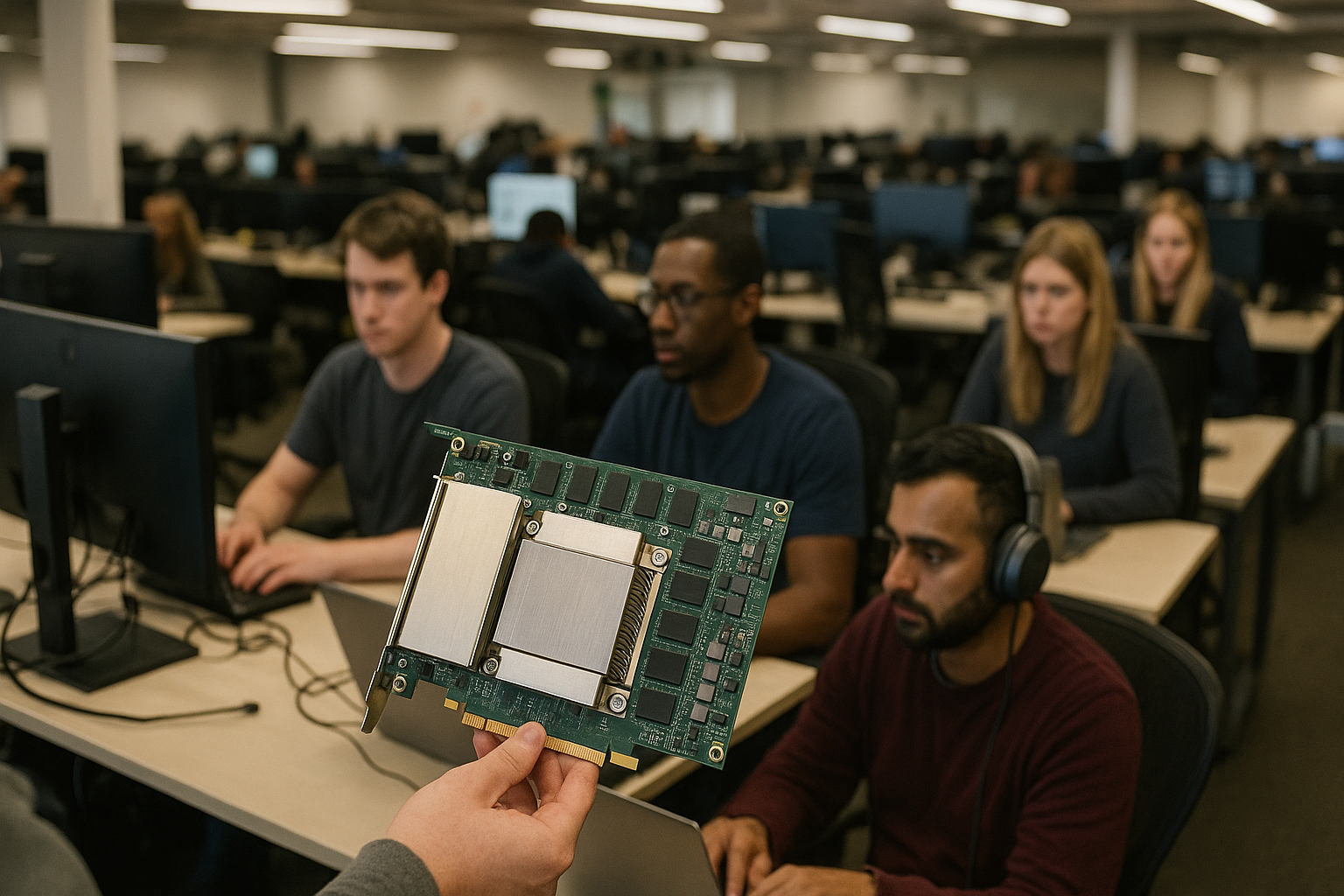
Nvidia says it didn’t buy Groq. It just paid a reported $20 billion for Groq’s technology, hired its founder and senior staff, and left the shell standing.
If you reckon that sounds less like a licensing agreement and more like an acquisition wearing a fake moustache, congratulations: you may be ahead of half of Silicon Valley and now the U.S. Department of Justice.
The DOJ is investigating whether Nvidia’s December 2025 deal with AI-chip startup Groq was structured in a way that avoided the antitrust scrutiny a straightforward takeover would normally face. That matters because this isn’t some legal-geek sideshow. It could determine whether the biggest companies in AI can keep buying the guts of competitors without buying the company itself. ([axios.com](https://www.axios.com/2026/09/10/doj-nvidia-groq-antitrust))
The deal that was apparently not a deal
Groq built specialised chips and systems for AI inference — the part where a trained model actually answers the customer’s prompt. Nvidia entered a non-exclusive licensing agreement for Groq’s language-processing-unit technology and hired Groq founder and chief executive Jonathan Ross, president Sunny Madra and other senior talent. Groq retained its corporate existence, rather than disappearing into Nvidia in a conventional merger. ([nytimes.com](https://www.nytimes.com/2026/09/09/business/nvidia-groq-antitrust.html))
That distinction is the whole ball game.
A normal acquisition gives regulators a clean target: buyer, seller, price, assets, market overlap. The parties file their paperwork, regulators look at the competitive consequences, and everyone gets to spend a fortune on lawyers pretending spreadsheets are exciting.
A licensing deal plus executive hires is messier. Nvidia gets technology and brains. Groq investors get paid. The remaining company gets a second life. And, crucially, the transaction may sit outside the usual merger-review lane.
Axios reported the package at $20 billion. Nvidia’s own annual report presents a more accounting-style picture: $13 billion paid at closing and $4 billion, including imputed interest, payable within one year. Nvidia recorded $14.4 billion of goodwill and a $2.5 billion developed-technology intangible asset. That is not a trivial discrepancy, so don’t lazily repeat one number as if it is gospel. But whether the economic value was $17 billion on Nvidia’s books or $20 billion as reported, the strategic point is identical: this was a gigantic transfer of value for a licence and a team. ([s201.q4cdn.com](https://s201.q4cdn.com/141608511/files/doc_financials/2026/ar/2026-annual-report-web-Hyperlinks.pdf))
Nvidia didn’t need the whole company. That is the uncomfortable bit.
Founders are taught that an exit means selling the business. Investors are taught that a successful acquisition means handing over the shares. Employees are taught that an acquirer buys the company and decides who stays.
That old script is looking very dated.
Nvidia appears to have bought the parts that mattered most: inference technology, key technical leadership and future development capability. It did not acquire Groq’s equity, its customer contracts or its existing products, according to Nvidia’s annual report. Groq was then free to continue — albeit as a very different beast — pursuing an AI-infrastructure or “neocloud” strategy. ([s201.q4cdn.com](https://s201.q4cdn.com/141608511/files/doc_financials/2026/ar/2026-annual-report-web-Hyperlinks.pdf))
That is a cracking result if you were a Groq shareholder. You got liquidity without waiting for an IPO or a traditional sale. It may also be a decent result for the employees who remained, because they still have a company with capital, a product direction and another swing at the fence.
But let’s not get misty-eyed. When the founder and much of the senior leadership head out the door with the buyer, it is hard to argue the competitive threat remains unchanged. The legal entity survives. The competitive force may not.
That is why the DOJ’s interest is sensible. Competition law should care about what a transaction does, not merely what the press release calls it.
Groq’s new valuation tells the real story
The strongest evidence that this was not business as usual came later.
In August, Groq raised $350 million at a $3.5 billion valuation as it pivoted toward selling AI infrastructure services. That was down from a $6.9 billion valuation in the previous September, before Nvidia recruited Ross and other top talent through the licensing arrangement. Groq said it did not view the new financing as a down round because it reflected the value of the post-Nvidia version of the company. Fair enough. It is also an accidental confession: the post-Nvidia company is a materially different asset. ([techcrunch.com](https://techcrunch.com/2026/08/17/groq-raises-350m-to-fuel-its-pivot-from-ai-chips-to-neocloud/))
This is the overlooked angle. A clever deal structure can distribute value brilliantly while still changing the competitive map dramatically.
You can leave the building, the logo and a few hundred staff behind. But if the acquirer takes the founder, the core engineers and the technology that made the company strategically dangerous, it has effectively removed a rival’s sharpest teeth.
That may be completely lawful. It may even be economically rational. But it deserves scrutiny proportional to its real effect, not its corporate-paperwork label.
The contrarian view: don’t punish every acqui-hire
I’m not arguing that every talent deal should be treated as a cartel in disguise. That would be idiotic.
Startups fail. Founders should be allowed to sell technology. Employees should be allowed to take better jobs. Investors should be allowed to get paid. And big companies should be able to licence useful intellectual property without needing Canberra, Washington and Brussels to hold hands and sing Kumbaya over every contract.
The problem begins when a transaction is so large, so comprehensive and so strategically targeted that calling it a licence becomes an exercise in linguistic gymnastics.
The test should be brutally practical:
- Did the buyer get critical technology it could not readily build itself? - Did the buyer hire the people most capable of advancing that technology? - Did the payment create acquisition-like returns for shareholders? - Did the remaining company lose the ability to compete in the market that made it valuable? - Would the answer look different if the same economics were put into a plain-vanilla merger agreement?
If most answers are yes, regulators have every right to look under the bonnet.
For Nvidia, the risk is bigger than one inquiry. The company has become the centre of gravity in AI infrastructure, and it is expanding beyond GPUs into software, systems, networking, inference and developer ecosystems. That makes every deal strategically louder. The DOJ’s Groq probe could establish whether the licensing-plus-hiring playbook remains a legitimate commercial tool or becomes a regulatory tripwire. ([axios.com](https://www.axios.com/2026/09/10/doj-nvidia-groq-antitrust))
What this means for you
Here is the useful lesson: stop thinking of M&A as one transaction type.
If you are building a company, map the assets separately. Your equity, intellectual property, customer contracts, leadership team, data, distribution and brand do not have to travel together. A buyer may value one of those far more than the rest.
That can create options. It can also create danger.
For founders: know exactly what business remains after a buyer licenses your crown jewels and hires your best people. “We’ll pivot” is not a strategy. Write down the customers, product, leadership bench and market position that exist on Day One after the transaction. If the answer is vague, you are not negotiating an exit. You are negotiating a controlled demolition.
For investors: ask whether your payout comes from durable value creation or from selling the part of the company that made the remainder investable. Those are very different outcomes, even if the cheque clears on Friday.
For operators: build companies with more than one source of strategic value. The business that is only its founder and one clever piece of IP is easier to buy around than you think.
And for anyone watching AI: ignore the labels. Follow the money, the people and the capability. That is where the real competitive shift is hiding.