Nvidia’s $250B OpenAI Backstop Could Make Your AI Gains Far Riskier
Nvidia isn’t just selling shovels in the AI gold rush. It may be guaranteeing $250 billion of the mine’s debt—and that changes what NVDA investors actually own.
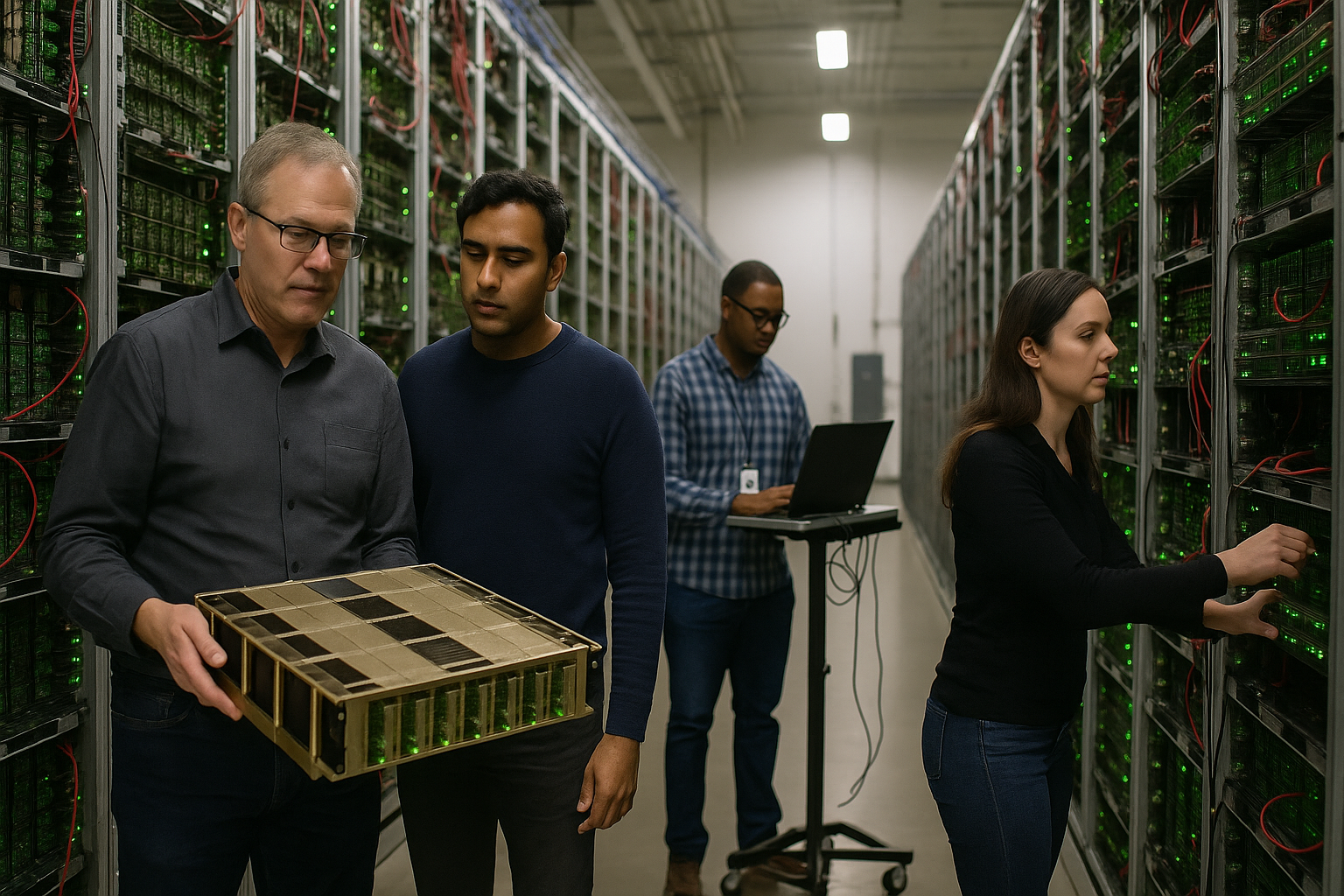
Nvidia may be about to turn the AI boom into something far more dangerous than a share-market bubble: a credit bubble with graphics chips bolted to it.
Reports on July 27 said Nvidia is in talks to provide roughly $250 billion in financing guarantees to support OpenAI’s lease of a giant data-centre project in southern Ohio. Separate discussions could involve financing as much as $350 billion of OpenAI chip purchases. This is not a signed transaction, and it is not Nvidia writing OpenAI a $250 billion cheque. But if the broad shape of it happens, it is a very different beast from Nvidia simply selling chips to a willing buyer.
It means the bloke selling the picks and shovels may also be helping guarantee the gold miner’s loans.
That is where ordinary investors need to stop cheering and start reading the plumbing.
The $250 billion question isn’t whether AI is real
AI is real. It is already changing how businesses build software, handle support, market products, analyse data and allocate labour. Anyone still dismissing it as a toy has probably never run a business with a customer-service queue or a payroll.
But a useful technology can still produce a rotten investment when too much money chases it at too high a price. Railways were useful. The internet was useful. Plenty of investors still got their heads kicked in because they confused a genuine transformation with a guarantee that every dollar of capital spending would earn a decent return.
The reported Ohio arrangement shows why this matters. OpenAI would lease a 10-gigawatt data-centre project being developed by SB Energy, a SoftBank subsidiary. The overall project was reported to cost more than $500 billion, including the chips inside it. The first phase was expected to deliver about 800 megawatts of capacity in 2028.
That is not a data centre. That is industrial policy wearing a hoodie.
OpenAI is enormously valuable on paper, but it remains an unprofitable private company without an investment-grade credit rating. That is why a guarantee from Nvidia would matter: it could make lenders more comfortable funding infrastructure based on Nvidia’s balance sheet rather than OpenAI’s creditworthiness.
Read that again. The financing gets easier because the chip supplier is helping carry the risk of the customer buying its chips.
I’m not saying that makes Nvidia a fraud. It does not. I am saying it blurs a line investors should want kept very bloody clear: the line between customer demand and supplier-funded demand.
Nvidia is moving from supplier to financier
A normal, healthy customer relationship is simple. Customer has a need. Customer has money—or can borrow based on its own capacity to repay. Customer buys product. Supplier recognises revenue. Everyone goes home happy.
The more the supplier helps manufacture the financing, the less clean that demand signal becomes.
Again, a guarantee is not necessarily a cash loss. It is contingent exposure: Nvidia would pay only if the underlying party failed to meet its obligations under the arrangement. There may be security, contractual protections, step-in rights or valuable infrastructure behind the exposure. Those details matter enormously, and none of us should pretend to know the final structure before there is a final structure.
But a contingent liability of this scale is not a footnote. It is a strategic decision about where Nvidia sits in the AI value chain.
The bull case is obvious. Nvidia locks in long-term demand, helps build capacity that competitors cannot easily replicate, and supports an ecosystem that consumes its technology for years. In a land grab, you do not wait politely for customers to turn up with a chequebook. You make sure the road gets built.
The bear case is just as obvious. Nvidia becomes increasingly exposed to the financial health of the very AI builders it is relying on for revenue growth. If AI usage, pricing or OpenAI’s economics disappoint, Nvidia could face weaker chip demand at precisely the moment it has assumed more financial risk to preserve that demand.
That is called reflexivity. Good news feeds the machine; bad news does too.
The AI capex number everyone should respect
The reported Nvidia talks land amid spending that has stopped being merely large and started becoming absurd.
Axios reported this week that Alphabet, Amazon, Meta, Microsoft and Oracle—the hyperscalers—are expected to spend roughly $800 billion in 2026 and more than $1 trillion in 2027. Reuters reported in July that estimates for 2026 AI data-centre capital expenditure had risen from about $575 billion late last year to roughly $850 billion.
That spending is producing winners beyond Nvidia: chip designers, memory makers, networking firms, power suppliers, construction companies, utilities, cooling businesses and lenders. This is why the lazy call that “AI is a bubble” is not useful. A lot of revenue is real. A lot of physical infrastructure is being built. A lot of companies will make serious money.
But massive capital expenditure is not automatically shareholder value. I’ve built businesses. I know the intoxicating feeling of seeing a huge market and deciding the only sensible response is to spend faster than everyone else. Sometimes that is exactly right. Sometimes it is how you end up with a warehouse full of expensive certainty and a customer base that has not caught up.
The missing question is not whether companies can build the capacity. They clearly can.
The question is whether customers will pay enough, for long enough, to earn an acceptable return on hundreds of billions of dollars of compute, power and property.
That is a business-model question, not a technology question. And business-model questions are where markets get nasty.
The overlooked risk is concentration, not just Nvidia
Most retail investors looking at this story will ask, “Should I sell Nvidia?” That is too narrow.
The bigger issue is how much of your wealth is quietly tethered to the same AI capital-spending loop.
You may own Nvidia directly. You may own it through an S&P 500 index fund. You may own Microsoft, Amazon, Alphabet, Meta, Broadcom, Oracle, data-centre REITs, utilities, private-credit funds or banks financing the build-out. You may even own it through your superannuation or 401(k) without realising how concentrated the underlying exposure has become.
That is how portfolios get smashed: not because an investor made one spectacularly silly bet, but because six supposedly different holdings were all feeding from the same trough.
A properly diversified portfolio should survive an AI capital-spending slowdown. It does not need to predict one. It simply refuses to make your retirement depend on one story continuing without a hiccup.
The contrarian opportunity, by the way, is not necessarily to short Nvidia or declare the boom dead. That is trader cosplay. The more interesting angle is to look for businesses with genuine exposure to AI’s second-order needs—reliable power, grid equipment, industrial materials, maintenance, payments and boring infrastructure—without paying a price that assumes they will become the next Nvidia.
Boring businesses can be beautiful when everyone else is busy bidding up the sexy ones.
What this means for you
Here is the practical bit. Do this tomorrow, not after the next 20% drawdown.
First, add up your direct and indirect AI exposure. Look at your top 10 shares, your ETFs, your retirement funds and any tech-heavy managed funds. Do not guess. Open the holdings list and do the work.
Second, decide the maximum percentage of your investable portfolio you are willing to lose faith in at once. If Nvidia, semiconductor stocks and mega-cap tech falling together would make you panic-sell, you already own too much. Your portfolio should fit your temperament, not your ego.
Third, separate your emergency cash from your investment views. If you need money in the next one to three years—for a house deposit, tax bill, business runway or family obligation—it should not be depending on whether OpenAI’s Ohio campus gets financed.
Fourth, stop treating a company’s revenue growth as proof its customers are financially healthy. When suppliers start helping finance customer demand, ask harder questions about the economics underneath. Revenue is lovely. Cash collection, margins and customer solvency are lovelier.
Finally, do not confuse caution with pessimism. I’m not telling you to flee AI. I’m telling you to own it like an adult. The technology may change the world. It may also be financed in ways that make the ride much rougher than the headlines suggest.
The rich do not get rich by avoiding every risky idea. They get rich by knowing exactly which risk they are being paid to take—and refusing the ones they are not.
Sources
- Nvidia's plan for Wall Street could add fresh fuel - and risk - to the AI boom
- Reuters: Nvidia in talks with OpenAI to guarantee $250 billion financing for data center
- Reuters: Wall Street banks see AI 'super cycle' set to boost deals, financing
- Magnificent 7 Lose $797 Billion as AI Skeptics Dump Tech Stocks