Nvidia’s $35B China Chip Orders Are Not a Win. They’re a Panic Buy
China’s biggest tech firms just tried to spend more than $35 billion on Nvidia chips they may barely receive. That is not confidence. It is what a supply-constrained arms race looks like.
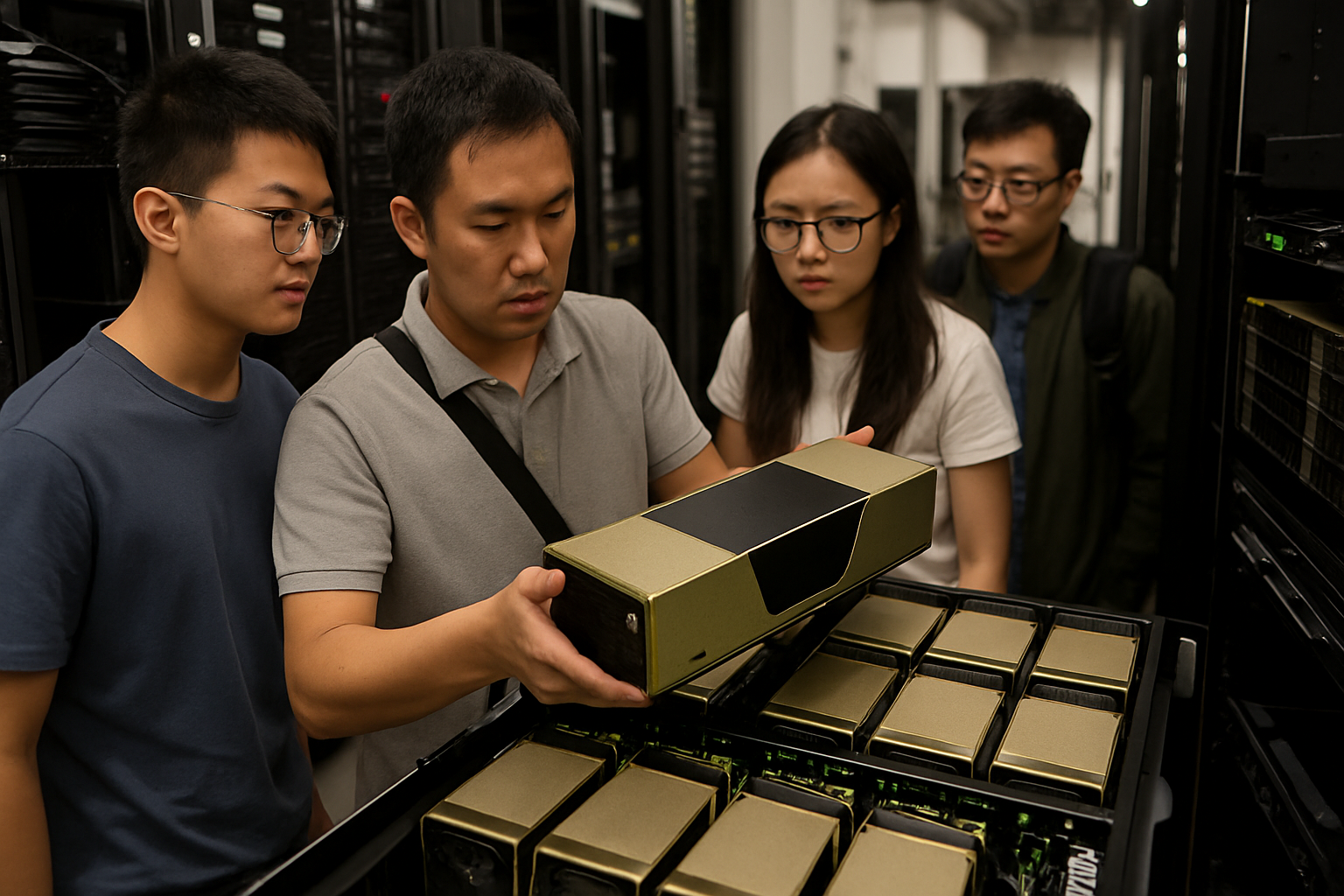
More than $35 billion of Nvidia chip orders from ByteDance, Alibaba and Tencent sounds like a victory lap.
It isn’t. It is three of China’s biggest technology companies trying to buy their way out of a strategic corner — and discovering that money cannot fix a supply bottleneck, an export regime or a product gap.
Reuters reported that the three companies have ordered more than 3 million Nvidia RTX PRO 5500 graphics cards, with a collective sticker price above US$35 billion. Nvidia has reportedly warned customers and partners it cannot guarantee delivery. Some may receive only 5% to 10% of what they asked for.
That is the bit investors should sit with before they start clapping.
An order is not revenue. A list price is not a realised sale. And buying a permitted workstation chip in bulk is not the same thing as getting your hands on the best data-centre AI hardware on the planet.
The $35 billion number is real — but it is not the whole story
The RTX PRO 5500 is a powerful professional graphics card. It is also, importantly, not Nvidia’s highest-end data-centre AI gear.
Reuters described it as a workstation chip rather than the kind of processor used in giant AI-training clusters. That distinction is the whole game. The United States has restricted sales of Nvidia’s most advanced chips to China. Nvidia’s Blackwell-based B300 cannot be sold there, while sales of Hopper-based H200 chips require case-by-case review and licensing conditions.
So ByteDance, Alibaba and Tencent are reaching for a product that sits below the restricted frontier but remains attractive enough to support serious AI work.
That is not irrational. If you run TikTok, China’s biggest cloud platform, or one of the world’s largest messaging and gaming ecosystems, you do not stop building because Washington has made your preferred equipment harder to buy. You buy what is available, build around it and hope you can secure enough capacity before your competitors do.
But call it what it is: a compromise purchase made under pressure.
The reported math is savage. The three companies’ orders alone exceed 3 million cards. Reuters reported that total demand from Chinese customers exceeds 6 million units, while Nvidia indicated it could produce no more than 3 million RTX PRO 5500 cards globally in 2027.
Even before you argue about final contracts, delivery schedules or discounts, the queue is clearly longer than the factory output.
That is why the reported 5% to 10% potential allocation matters more than the $35 billion headline. A company can put in a massive order because it needs to. That does not mean it gets the machines.
Nvidia has turned a restriction into a rationing business
There is an uncomfortable truth here for anyone who believes export controls neatly solve technological competition: restrictions do not erase demand. They redirect it.
China’s biggest internet companies still need compute for recommendation engines, advertising, cloud customers, video, gaming, enterprise AI products and large-model development. The hunger did not vanish because certain products became unavailable. It piled into the next-best compliant product.
That creates a bizarre market structure.
Nvidia is still the supplier everyone wants. But the product China can buy is constrained by policy, constrained by design and now constrained by physical production. The result is not a normal commercial market where the best bidder walks away with the goods. It is rationing.
For Nvidia, that is both brilliant and dangerous.
Brilliant, because demand remains ferocious even for a less capable, export-compliant product. Dangerous, because the company’s access to one of the world’s largest technology markets depends on rules it does not control and relationships that can change quickly.
Nvidia can make a compliant chip. It cannot make policymakers in Washington permanently comfortable with it. Nor can it force Beijing to keep welcoming imported hardware when China is investing heavily in domestic alternatives.
This is why I would be careful treating the reported orders as a clean read-through to Nvidia earnings. The demand is obvious. The conversion of that demand into shipped product, paid invoices and durable China revenue is much less obvious.
The overlooked angle: this is a warning for every operator, not just Nvidia shareholders
Most people will frame this as another instalment in the US-China chip war. Fair enough. But the commercial lesson is broader and more useful.
Every business that relies on a scarce external input is more fragile than it looks in a spreadsheet.
For an AI company, the scarce input is compute. For a builder, it might be labour or permits. For a drinks business, it may be agave, glass, distribution rights or shelf space. For a software company, it could be a platform’s API access. The specifics change. The trap does not.
If the thing that makes your product work is controlled by somebody else, your business model needs a Plan B before you need it.
The Chinese tech giants are not amateurs. ByteDance, Alibaba and Tencent have money, talent, scale and political importance. Yet even they cannot simply ring Nvidia, wave US$35 billion around and get exactly what they want.
That should sober up every founder who thinks access to a critical vendor is a moat.
It is not a moat if everyone else can buy it. And it is not dependable infrastructure if the vendor, regulators or supply chain can cut the flow tomorrow.
The contrarian view: the weaker chip could still be enough
Here is the part the doom merchants will miss: “not the best chip” does not mean “useless chip.”
A lot of AI work does not require the absolute top-tier hardware. Inference, fine-tuning, internal productivity tools, visual workloads, developer environments and many enterprise applications can be valuable on less extreme hardware — especially when deployed at enormous scale.
That matters because the AI race is not only about training the biggest foundation model. It is about getting useful AI into millions of products and workflows before your competitors do.
Alibaba can use compute to make its cloud stickier. Tencent can use it across WeChat, games and enterprise products. ByteDance can use it to improve its content and advertising machinery. They do not need the world’s most powerful single chip to create a lot of economic value.
But they do need volume. And volume is exactly what appears uncertain.
That makes operational efficiency the next battleground. If you cannot buy all the compute you want, you optimise models harder. You improve utilisation. You prioritise the products with the best payback. You stop treating AI infrastructure as a vanity project and start treating it like capital equipment.
Frankly, that discipline would do plenty of Western AI businesses some good as well.
The real loser is anyone building an AI plan on one assumption
The most dangerous sentence in business is: “We’ll be able to get more later.”
Maybe you will. Maybe Nvidia ramps production. Maybe licensing changes. Maybe another supplier closes the performance gap. Maybe domestic Chinese chipmakers accelerate faster than outsiders expect.
But maybe none of that happens on your preferred timetable.
ByteDance, Alibaba and Tencent are behaving as though access to compute is a strategic priority worth ordering years ahead. They are probably right. What they cannot control is whether an order turns into an installed card, a running server and a commercially useful product.
That gap between intention and execution is where fortunes get made and lost.
The Nvidia story is not that China suddenly discovered AI. It is that AI capacity has become scarce enough for the world’s biggest companies to place extraordinary orders for second-best available hardware — without confidence they will get it.
That should tell you where the leverage is.
What this means for you
If you are a founder or operator, do three things tomorrow.
First, list the three inputs your business cannot function without. Not the things you buy often — the things that would genuinely stop growth if supply tightened. Then ask who controls them, how quickly they can disappear and what your alternative is.
Second, stop confusing a signed order, a supplier conversation or an API promise with secured capacity. Until the asset is delivered, integrated and working in your business, it is a hope dressed up in a spreadsheet.
Third, build for efficiency before scarcity forces it on you. If you use AI, measure the return from each workload. Which customer outcome, internal process or product feature actually earns more than it costs to run? Keep funding those. Cut the AI theatre.
The companies that win the next phase will not necessarily be the ones that shout loudest about artificial intelligence. They will be the ones that secure supply, use it ruthlessly well and can still operate when the market gets messy.
Nvidia’s reported US$35 billion China order book is a reminder that money is useful. Control of scarce capacity is better.