Nvidia’s $3.5B MediaTek Bond Is a Warning to AI Investors
Nvidia just put $3.5 billion into a partner’s bond with no regular interest payments. Every AI investor should ask where demand ends and ecosystem financing begins.
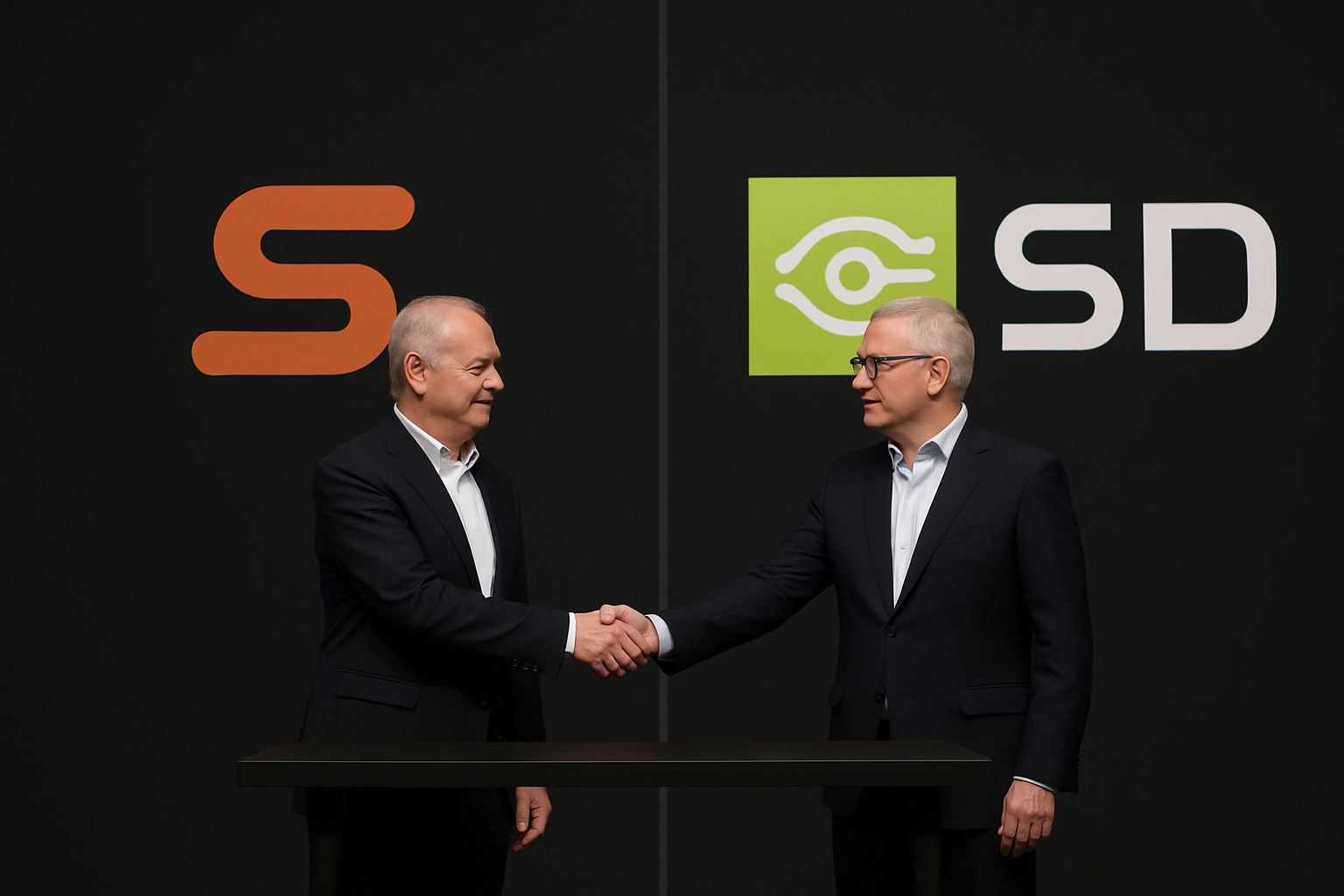
Nvidia just put $3.5 billion into a partner’s convertible bond that reportedly pays no regular interest. That is the sort of number that should make every investor stop and ask where demand ends and ecosystem financing begins.
I’m not saying Nvidia is a fraud. Far from it. It is one of the most extraordinary businesses ever built. But great businesses can still become dangerous stocks when investors stop asking where the money comes from, where it goes, and who is ultimately carrying the bag.
On August 31, Nvidia announced a deeper partnership with Taiwan’s MediaTek. Nvidia invested $3.5 billion in MediaTek convertible bonds while MediaTek agreed to adopt Nvidia’s NVLink Fusion platform for custom AI chips that can connect into Nvidia-style rack-scale data centres. The collaboration also covers AI PCs and automotive platforms.
That is not a footnote. It is Nvidia making a very clear strategic move: if Amazon, Google, Microsoft, OpenAI, Anthropic and every other giant customer wants to build its own chips to reduce dependence on Nvidia, Nvidia would rather own the plumbing than lose the whole bloody house.
Nvidia is not selling chips anymore — it is selling the rules of the game
Most retail investors still describe Nvidia as a GPU company. That was true. It is now incomplete.
Nvidia’s real ambition is to become the operating system, networking layer and commercial toll booth for AI infrastructure. A customer can build a custom accelerator — the industry calls these ASICs or XPUs — but Nvidia wants that chip to work inside an Nvidia-connected AI factory.
MediaTek matters because it is not some tiny startup in a hoodie with a pitch deck. It is a major chip designer with deep expertise in system-on-chip design, connectivity, power efficiency and consumer electronics. It has been building its custom data-centre-chip business and has said it expects that unit to generate $2 billion in revenue in 2026.
The deal gives MediaTek a route to help cloud providers and AI builders create custom chips that plug into Nvidia’s broader architecture. Nvidia gets a financial interest in the partner, more potential demand for its technology stack, and another way to remain central even when customers do not buy a pure Nvidia GPU.
That is strategically brilliant.
It is also exactly why investors need to keep their eyes open.
A $3.9 billion bond with a $3.5 billion Nvidia anchor is not normal finance
Axios reported that Nvidia’s $3.5 billion investment sits inside a $3.9 billion zero-coupon convertible bond issuance by MediaTek. A convertible bond starts as debt but can convert into equity under agreed terms. A zero-coupon structure means the issuer is not handing over regular cash interest payments in the way a conventional bond borrower would.
In plain English: MediaTek gets a huge slab of capital without the usual ongoing coupon burden, while Nvidia gets potential equity upside and a stronger commercial relationship.
The obvious question is why investors are so willing to fund AI infrastructure and AI-adjacent businesses on unusually generous terms.
The optimistic answer is that the market sees a real technology shift. Nvidia has real customers, enormous revenue, serious cash generation and products companies are plainly desperate to buy. MediaTek is a profitable, established company — not a pre-revenue science project.
The less comfortable answer is that the AI industry is increasingly building a financial ecosystem around itself. Nvidia invests in companies and partners that help expand the AI buildout. Those companies, in turn, create demand for Nvidia’s hardware, networking and software ecosystem.
That doesn’t automatically make it improper. It does mean that a headline revenue number may tell you less than you think about the underlying independence of demand.
I have seen versions of this movie in business. You back distributors, customers, suppliers or partners because it helps your own machine grow. Sometimes that is intelligent vertical strategy. Sometimes it is a business finding increasingly creative ways to keep its own sales line moving. The difference only becomes obvious after the music stops.
The overlooked angle: custom chips are not Nvidia’s enemy anymore
The lazy take is that custom AI chips are bad news for Nvidia because they allow big customers to avoid paying Nvidia prices.
That is too simple.
A custom chip is not a full AI factory. It still needs high-speed connections, memory, servers, software tools, networking and a system that works at absurd scale without falling over at 2 a.m. Nvidia’s pitch is that it can provide that surrounding infrastructure even when another company designs the compute chip itself.
That is what NVLink Fusion is about. Nvidia is effectively saying: “Build your own engine if you like. Just make sure it fits our road, uses our traffic lights and pays at our toll gate.”
For Nvidia shareholders, that could be a stronger moat than merely selling the fastest accelerator. Hardware leadership changes. Ecosystem control lasts longer.
For MediaTek, the deal is an invitation into a much richer part of the chip market. Its experience in phones, edge devices, connectivity and efficient system design is valuable. Plugged into Nvidia’s data-centre ecosystem, it can pitch itself as a credible custom-silicon partner to customers that want more control over their AI costs.
For rivals such as Broadcom, Marvell and Qualcomm, it is a reminder that the AI-chip market is not simply a race to make a faster piece of silicon. It is a fight to own the architecture around it.
The contrarian view: Nvidia may be strengthening its moat — and weakening the market’s discipline
Here is the bit Nvidia bulls will not love: a strategic deal can be good for Nvidia’s business and still be bad for Nvidia’s stock at the wrong price.
The market has a nasty habit of treating every AI announcement as proof that the boom is both permanent and infinitely profitable. It isn’t.
When an ecosystem leader starts investing heavily in the ecosystem, the quality of those investments matters more, not less. Investors should ask whether capital is being deployed into partners with stand-alone economics, genuine customers and useful technology — or whether it is helping manufacture more demand for the leader’s own products.
MediaTek passes more of that test than a speculative AI startup would. It is a real chip company with an existing business and technical capability. That makes this deal more credible than a cheque written to a company whose only asset is a PowerPoint deck and an expensive founder photo.
But credibility is not immunity.
The broader risk is concentration. If you own an S&P 500 index fund, you already own Nvidia. If you own a tech ETF, you likely own more. If you own a growth fund, a super fund with a growth option, or a handful of popular AI names, you may have made the same bet four or five times without realising it.
That bet is not merely “AI will grow.” It is “capital spending on AI will remain enormous, financing will stay available, customers will earn enough from AI to justify the spend, and Nvidia will retain its central role.” That is a lot of assumptions stacked on top of one another.
Don’t confuse a clever deal with an investing instruction
Nvidia’s MediaTek move is a lesson in business strategy, not a flashing sign telling you to throw more money at whichever AI stock has gone up most this month.
The wealthy get richer partly because they learn to separate admiration from allocation. You can admire Nvidia’s execution without making it 30% of your portfolio. You can believe AI changes the economy without buying every company that puts “AI” in an investor presentation.
The uncomfortable truth is that most people who pile into a hot theme do it after the easy money has been made. They buy stories at premium prices, then discover volatility when the business has to justify the valuation.
I like businesses with moats. I like founders and operators who turn complexity into a simple commercial advantage. Nvidia is doing exactly that here: allowing the market to pursue custom chips while making its own platform harder to avoid.
But I like cash flow, valuation discipline and diversification more than a good story. A good story is not a risk-management plan.
What this means for you
First, audit your AI exposure tomorrow morning. Open your brokerage, pension or retirement account and write down every holding with meaningful Nvidia, semiconductor, cloud-computing or AI exposure. Do not guess. Look through the ETFs and managed funds as well.
Second, set a maximum size for a single-theme bet before excitement sets the number for you. If AI shares collectively represent more than 5% to 10% of your investable portfolio, make sure that is a deliberate decision you can live with through a brutal drawdown — not an accidental pile-up created by overlapping funds.
Third, stop treating every corporate investment as revenue. When Nvidia funds a partner, ask three questions: Does the partner have a viable business without Nvidia? What does Nvidia receive beyond goodwill? And would the deal still make sense if AI capital spending slowed sharply?
Finally, own the broad market if your real goal is long-term wealth. Let brilliant companies earn their place in your portfolio through diversified index funds. Keep individual stock punts small enough that being wrong teaches you something rather than changes your life.
Nvidia’s $3.5 billion MediaTek deal is clever. It may prove to be very profitable. But the signal for everyday investors is not “buy more AI.”
It is this: when money, suppliers, customers and infrastructure all start feeding one another, you had better know whether you own a flywheel — or a carousel.