Nvidia’s $6B Poolside Licence Deal
Nvidia is reportedly paying $6 billion for a licence, not Poolside. That is a takeover-sized deal without a takeover.
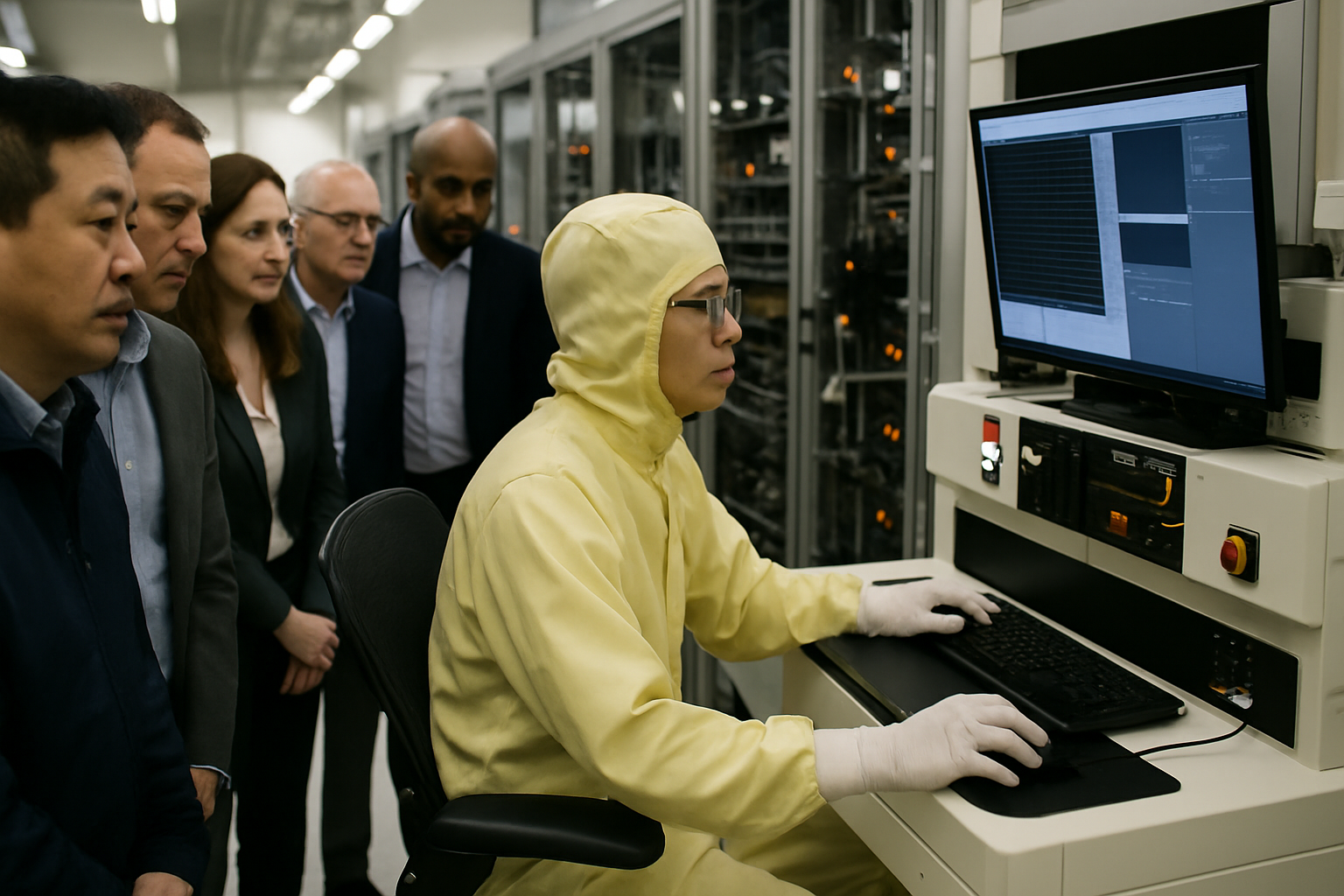
Nvidia is reportedly paying $6 billion for a licence, not Poolside. That is a takeover-sized deal without a takeover — and the label is doing enormous legal and financial work.
The reported Poolside transaction is what happens when the buyer wants the technology, wants much of the team, wants the upside — and would prefer not to inherit the usual acquisition baggage along with it.
The $7 billion deal that refuses to call itself a takeover
According to reporting from Newcomer, The Information and Bloomberg, Nvidia has agreed to pay AI startup Poolside $6 billion for a non-exclusive licence to its Model Factory software, while separately investing $1 billion at a $12 billion pre-money valuation. Nvidia is also expected to make job offers to 109 Poolside employees involved in building Laguna, Poolside’s open-weight AI model family. Poolside’s three co-founders are expected to remain with the company, which is meant to continue operating independently.
Nobody should get hung up on the label. Poolside says this is neither an acquisition nor an acquihire. Fine. It may not be one in the technical, legal sense.
But look at the commercial anatomy: Nvidia gets access to the system that builds the models, gets a direct equity stake in the company, and gets a crack at more than 100 of the people who built it. Existing Poolside investors reportedly receive a distribution from the licence proceeds by the end of 2027.
That is not a normal software contract. It is a strategic extraction of the parts Nvidia values most, structured to avoid buying the whole house.
And I reckon this is one of the most revealing deals in AI this year, precisely because it is not being presented as an acquisition.
Nvidia is buying the factory, not just the product
The most important word here is not “licence.” It is Factory.
Poolside’s Model Factory is the integrated system it uses to develop AI models: data, training, evaluation and inference components running as one operating machine. Poolside has described the point of this system as turning model development from a bespoke research exercise into an industrial process.
That is a much more valuable asset than one clever model release.
Models get leapfrogged. Benchmarks get gamed. This month’s best coding model can be next quarter’s expensive memory. But a repeatable process for assembling data, training models, testing them, operating them and doing it again at scale? That is closer to a manufacturing system.
Every serious businessperson should understand the difference. A restaurant with one brilliant chef is a talent bet. A restaurant group with systems that can reliably recruit, train, price, purchase, open sites and keep standards high is a business.
Nvidia appears to be buying access to the business system.
Poolside has been building Laguna as a family of open-weight models and has published technical material describing how its Model Factory supports that work. The reported deal is non-exclusive, meaning Poolside retains ownership and can, in principle, continue selling or using the same underlying capability elsewhere.
That sounds generous to Poolside. In practice, Nvidia may not need exclusivity to win.
If you are the company supplying the chips, the systems, the ecosystem and now potentially the model-building machinery, you do not need to own every asset outright. You need to make sure the most valuable assets work best with you.
Why a clean acquisition would have been worse for Nvidia
A conventional takeover is simple to explain and painful to execute.
Buy Poolside outright and Nvidia would inherit every awkward bit: the company’s full cost base, investor negotiations, employee retention packages, integration risk, governance obligations, and the inevitable question of whether a giant chip supplier is swallowing another AI developer to compete with its own customers.
The reported structure offers Nvidia a far sharper trade.
First, it gets immediate access to the technology through a licence.
Second, it takes an equity position, preserving exposure if the remaining Poolside business becomes more valuable.
Third, it can recruit a substantial chunk of the relevant technical team without formally taking responsibility for every employee, product line or promise ever made by the startup.
Fourth, Poolside remains alive. That matters because an independent company can still attract customers, talent and partnerships that might avoid a fully Nvidia-owned subsidiary.
This is not corporate waffle. It is risk allocation.
Nvidia is paying a massive price, yes. But it is apparently paying for a selective claim on the economic value it wants, rather than assuming ownership of everything it does not.
For Poolside, the appeal is equally obvious. A $6 billion licence payment is real money, not a paper valuation. The reported $1 billion investment funds the remaining company. Its founders stay in place. And the company retains the right to operate independently and, because the licence is non-exclusive, potentially monetise its technology again.
That is a wonderful outcome for investors if it holds together. It is also a reminder that founders should not automatically treat “sell the company” as the only path to liquidity.
The overlooked angle: this is Nvidia managing its customer problem
The lazy version of this story is that Nvidia has so much cash it is buying AI toys.
That is not what this is.
Nvidia sits in an unusual position. It sells the picks and shovels to AI companies, but it is increasingly involved in the software, models, infrastructure financing and deal structures that determine who can afford to keep buying those picks and shovels.
Earlier in August, Nvidia announced partnerships with Apollo, BlackRock, Blackstone, Brookfield, Goldman Sachs and KKR intended to mobilise more than $500 billion of third-party capital for AI-compute infrastructure over time. The company’s argument is that compute can be financed as productive infrastructure rather than funded project by project.
Whether that thesis proves durable is a separate question. But the direction is clear: Nvidia is trying to make the entire AI production chain more financeable, more scalable and more dependent on its ecosystem.
Poolside slots neatly into that ambition. A model factory is a demand generator for compute. If Nvidia can help turn model creation into an industrial, repeatable process, it increases the number of commercially credible reasons to consume Nvidia infrastructure.
The company is not merely selling hardware to an AI boom. It is trying to shape how the boom is built, funded and operated.
That is clever. It is also where investors need to keep their eyes open.
When the supplier funds the customer, helps finance the factory, licenses key software, hires the technical team and benefits when capacity expands, the line between demand and manufactured demand can get blurry very quickly.
I am not saying the demand is fake. I am saying smart operators distinguish between revenue, financed purchasing power and durable end-customer demand. Those are not the same thing, no matter how glossy the investor deck is.
Poolside’s real problem was not talent. It was access.
One detail in the reporting is more revealing than the $6 billion figure. Poolside reportedly told investors that continuing to compete in open-source model development would have required access to more Nvidia hardware than it could obtain on its own.
There is the whole game in one sentence.
In the old software world, a gifted team could often outbuild an incumbent from a garage, a cloud account and a disturbing amount of caffeine. In frontier AI, capability increasingly depends on capital-intensive compute, physical supply, power and industrial-scale operations.
Talent still matters enormously. But talent without access to compute can become a very expensive hobby.
That creates a brutal strategic fork for AI startups. You can raise ever-larger sums to stay independent, accept a deeper alliance with a platform giant, or sell a meaningful slice of your future through deals that look like partnerships but feel a lot like consolidation.
Poolside appears to have chosen the second route. It may be a masterstroke. It may also become the template that makes independent AI labs rarer, not more common.
What this means for you
If you are a founder, stop asking only, “What is my company worth?” Ask, “Which piece of my company is strategically irreplaceable?”
It might be your software, your distribution, your data, your regulatory approvals, your founder-led sales machine or the small team that knows how to make the whole thing work. That is the asset you should protect, price properly and avoid casually giving away in a standard commercial contract.
If you are raising money, study this structure. Liquidity does not have to mean a full exit. A licence, minority investment, commercial partnership and talent arrangement can sometimes create a better outcome than selling the lot — provided you keep genuine leverage and do not hand away the crown jewels for a flashy press release.
If you are an investor, do not blindly celebrate every “strategic partnership.” Work out who owns the IP, whether the arrangement is exclusive, who controls the key staff, whether cash is actually changing hands, and what happens if the relationship ends. Those details decide whether a company has built an asset or rented a temporary story.
And if you run an established business, this is the practical lesson: build systems, not heroics. The thing Nvidia reportedly paid $6 billion to access was not merely a model. It was a machine for producing models.
That is where value compounds. Build the machine that produces your good outcomes repeatedly, and someone will eventually want to buy access to it — even if they are too clever to call it an acquisition.