Nvidia’s Reported $12.9B Hugging Face Deal Is About Control
$12.9 billion is not a model-library price. Nvidia is reportedly paying for a choke point in AI—and every founder relying on a platform should pay attention.
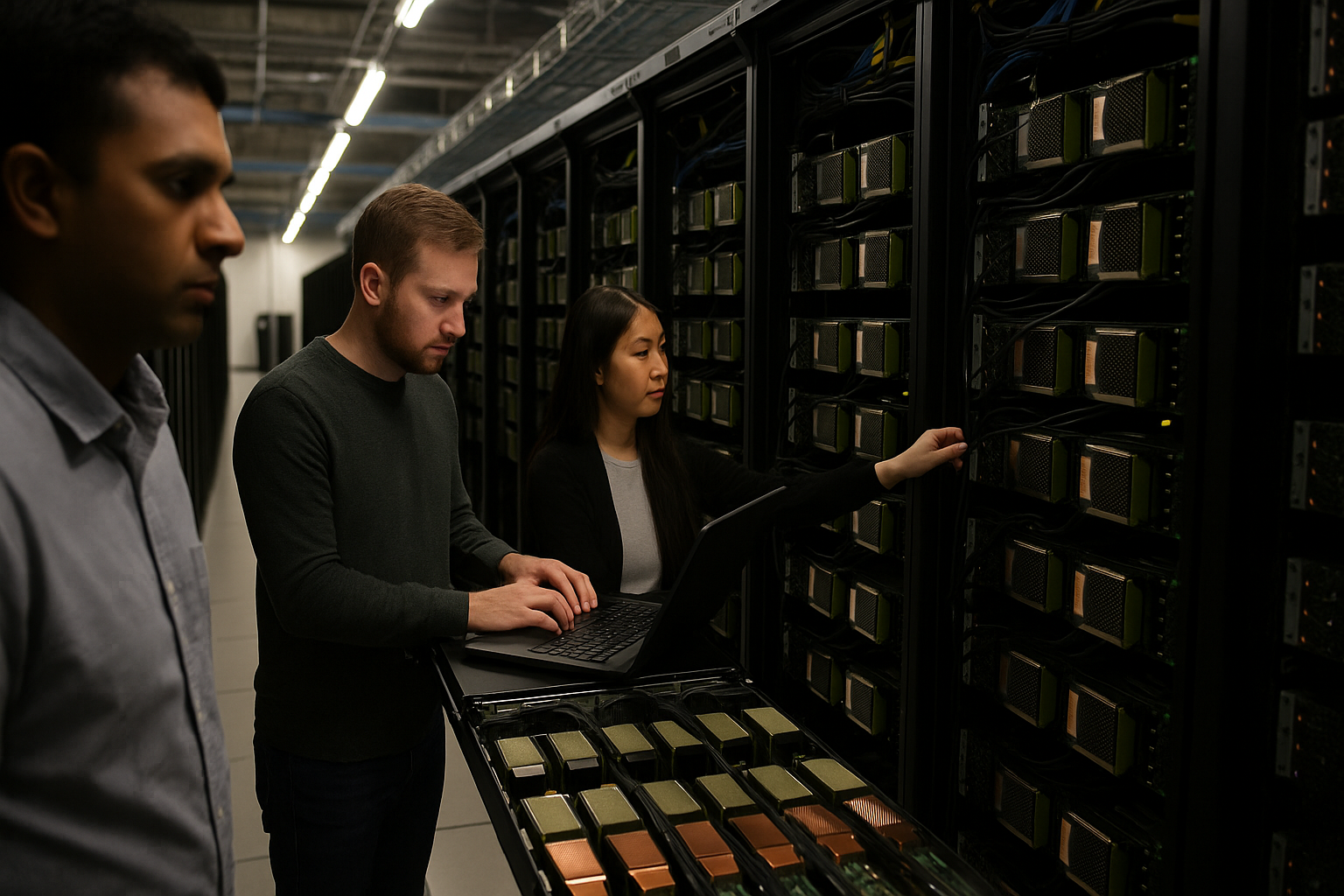
$12.9 billion is not a model-library price. Nvidia is reportedly paying for a choke point in AI.
Jensen Huang isn’t buying a model library—he’s buying a choke point.
That should make every founder, investor and operator in AI sit up a bit straighter. The money is enormous, sure. But the real story is more confronting: the company that already sells the picks and shovels may be moving to own the workshop as well.
The reported deal is about control, not code
Reports this week say Nvidia has agreed to acquire Hugging Face for $12.9 billion. As of August 28, 2026, this is still a reported transaction rather than a public, completed announcement from the companies. That distinction matters. Deals can wobble, boards can blink, regulators can get involved.
But the intent is clear enough to analyse.
Hugging Face is not simply another AI startup with a glossy pitch deck and a bloke in a black T-shirt promising to reinvent enterprise software. It is a central platform for open AI: a repository for models, datasets and benchmarks used by developers, researchers and companies building with machine learning.
That makes it strategically different from buying a narrow software tool or a talented team.
Nvidia already dominates the hardware layer of the AI economy. Its latest quarterly revenue came in at $96.2 billion, more than double the prior year’s figure, according to Axios. The company has turned compute capacity into one of the world’s most profitable toll roads.
Now, if this deal happens, Nvidia gets a much stronger position where developers discover, test, share and deploy models.
That is not a normal acquisition. It is vertical integration with teeth.
Jensen Huang is buying the part everyone else underestimated
For years, plenty of people treated open-source and open-weight AI as the cheaper, messier alternative to the closed systems from OpenAI and Anthropic. Useful, perhaps. Important for researchers, definitely. But not where the big commercial prize would sit.
That view is now looking pretty silly.
The AI market is splitting into two camps. One side sells highly controlled, proprietary models. The other is building an expanding ecosystem around models that can be inspected, adapted, hosted and deployed by more people. Hugging Face has become a major piece of infrastructure for the second camp.
A developer choosing a model is not just choosing intelligence. They are choosing a community, documentation, tooling, datasets, evaluation methods, deployment options and eventually a commercial stack. Whoever becomes indispensable in that decision chain has real power.
Nvidia understands this better than most boards do.
The reported price also tells you how quickly that strategic value has moved. Hugging Face raised $235 million in 2023 at a $4.5 billion valuation. TechCrunch reported that the company rejected a proposed $500 million Nvidia investment earlier this year that would have valued it at $7 billion, partly because it did not want one dominant investor influencing its decisions.
Now the reported acquisition price is $12.9 billion.
That is a fairly aggressive lesson in negotiating leverage. Refuse a minority investor at $7 billion, then potentially sell the whole shop at nearly double that valuation months later. Fair play.
But it is also a warning to founders: if your company becomes essential infrastructure, the strategic buyer is not valuing your current revenue like a tired private-equity analyst. They are valuing the future decisions they can influence because you exist.
This is a management decision disguised as M&A
Most people will assess this deal through the usual lazy lens: Is $12.9 billion too much?
Wrong first question.
The better question is whether Jensen Huang can own more of the AI ecosystem without wrecking the trust that made Hugging Face valuable in the first place.
Hugging Face’s appeal comes from being seen as a broadly useful platform rather than an extension of one hardware giant. Its community includes developers and organisations using Nvidia chips, yes, but also people working with rival hardware, different cloud providers and models from all over the world.
If Nvidia turns Hugging Face into a giant sales funnel for its own products, clever developers will notice. And clever developers are a fickle bunch. They will not hold a candlelight vigil. They will fork code, shift workloads, build alternatives and complain loudly on the internet while doing it.
That is the leadership test here.
The best outcome for Nvidia is not to “integrate synergies” until the place resembles a corporate airport lounge. That sort of management language is how you kill the very thing you paid dearly to acquire.
The best outcome is to set a few non-negotiables early:
- Hugging Face remains credibly useful across hardware and cloud providers. - Model discovery and benchmarks remain trusted rather than becoming pay-to-play. - The platform gets more capital, compute and security without being smothered by Nvidia’s commercial agenda. - Clément Delangue and the existing leadership team retain enough operating authority to protect the community’s trust.
That sounds obvious. It is not. Big companies routinely buy high-trust businesses, impose central control, then act surprised when the founders, staff and customers lose the plot.
The overlooked angle: Nvidia may be defending itself, not attacking
Here is the contrarian view: this may not be mainly a power grab. It may be a defensive move by a company that knows its extraordinary chip dominance will not last forever.
OpenAI, Google, Amazon and Anthropic have all been working to reduce dependence on Nvidia hardware through custom chips and other infrastructure investments. Nvidia is still spectacularly strong, but strong companies do not wait until the walls are on fire before they diversify their moat.
A deeper foothold in open AI gives Nvidia something more durable than a chip cycle. It puts the company closer to the people deciding what gets built next.
That matters because AI value will not accrue only to whoever makes the fastest silicon. It will accrue to whoever makes adoption easiest.
If a small business can find a model, test it, fine-tune it, deploy it and run it efficiently through a workflow tied to Nvidia infrastructure, Nvidia becomes more than a hardware supplier. It becomes part of the operating system for AI development.
That is worth a premium.
It is also why regulators may take a hard look if the transaction progresses. Nvidia already has enormous influence over AI compute. Adding a key platform in the open-model ecosystem creates obvious questions about whether developers will retain genuine choice.
Nvidia’s smartest move would be to address that concern with behaviour, not PR. Keep Hugging Face open in practice. Publish clear interoperability commitments. Make it easier, not harder, for developers to use alternatives.
Trust is not built with a press release. It is built when customers can see you leaving money on the table to preserve fairness.
The price is big, but the cost of missing it could be bigger
A $12.9 billion cheque is not pocket change, even for Nvidia. But Huang has built his company by making major bets before the rest of the market fully understood where demand was heading.
Nvidia did not become the centre of the AI boom by treating strategy as a quarterly spreadsheet exercise.
The risk, naturally, is that Hugging Face proves harder to monetise than it is to admire. Communities are valuable, but they can be difficult to convert into predictable cash flows without upsetting the people who made the community valuable.
The other risk is cultural. Nvidia is a giant public company with immense commercial pressure. Hugging Face has grown by serving a developer ecosystem that values openness and independence. Those cultures can work together. They can also collide like two shopping trolleys in a Bunnings car park.
Still, I would not bet against Huang understanding the stakes. He is not buying Hugging Face because it makes next quarter’s numbers prettier. He is reportedly buying it because the next decade of AI will be shaped by where developers gather, what they trust and how easily they can build.
That is a serious strategic insight.
What this means for you
If you are a founder, stop obsessing only over your product feature set. Ask a harder question: what decision does my business sit in front of?
If you own the place where customers choose suppliers, tools, data, talent or workflows, you have leverage. Build that trust carefully. It may end up being worth more than the product itself.
If you are an operator, do not treat integration as a finance exercise. When you acquire a trusted business, write down the three things you will not break before you start chasing synergies. Then give the acquired leadership team the authority to defend them.
If you are an investor, look for companies that own distribution, developer loyalty or a critical workflow—not merely companies with flashy technology. Technology gets copied. Trusted positions in a market are much harder to copy.
And if you run a business that depends on any platform, learn this one early: never confuse convenience with independence. The best platform today can become the toll booth tomorrow.
Nvidia may be about to prove that point with a $12.9 billion cheque.