O’Neill’s $300,000 California Agave Bet Is a 2028 Gamble
California growers are planting agave because wine is broken. The awkward bit: they are betting five years of capital on a spirit they cannot call tequila.
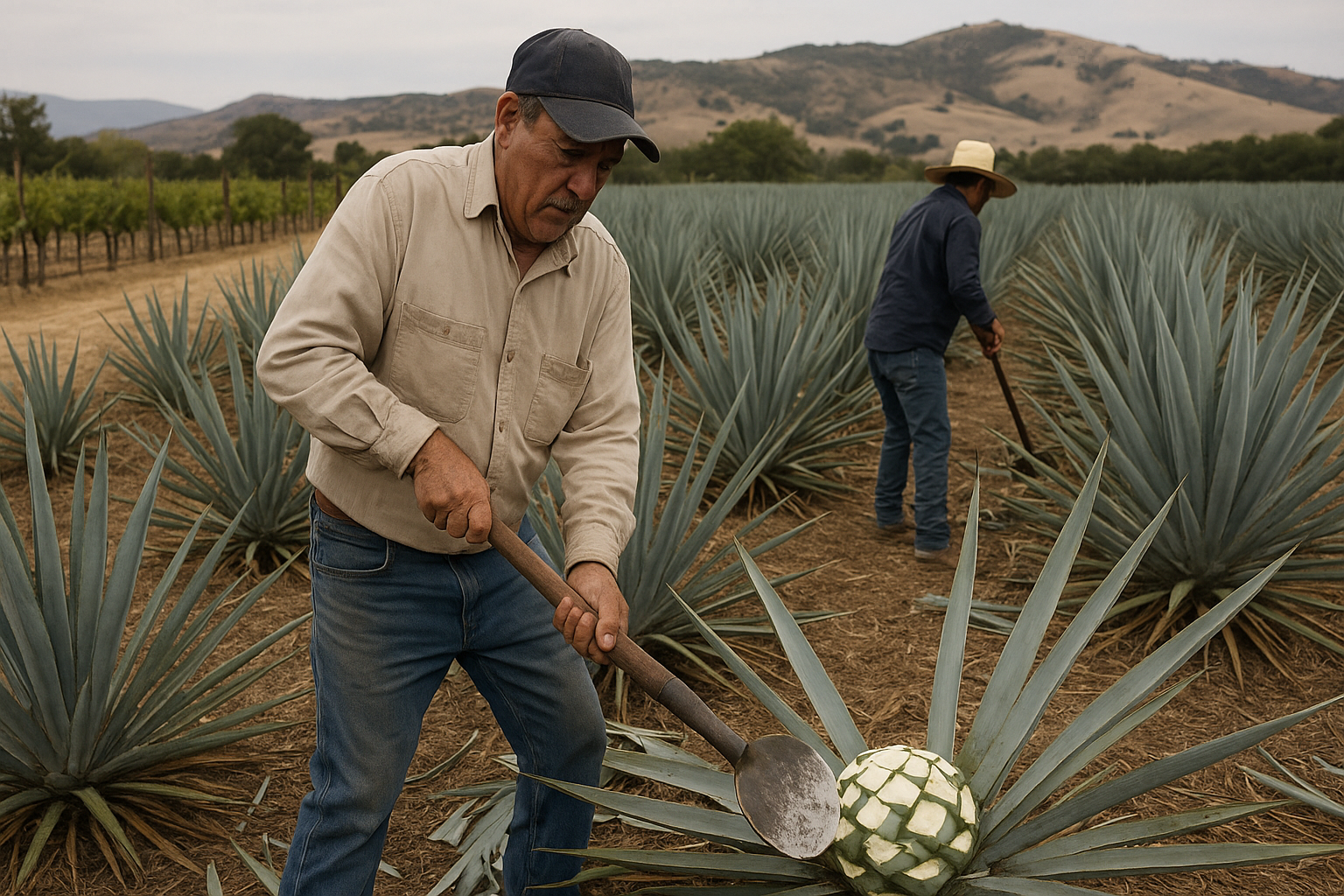
California wine growers are ripping out vines and replacing them with agave. That is either smart adaptation or the most expensive way imaginable to chase the last party’s trend.
I’m not taking cheap shots at farmers here. I’m pointing at the bit everyone loves to ignore: agave is not a quick crop, and California is building supply years before it has built a serious market, enough distilling capacity, or a name consumers understand.
The clearest signal came this week from California’s Central Valley. Stuart Woolf has planted roughly 550 acres of agave over four years on his Huron operation and plans another 150 acres. O’Neill Vintners & Distillers, the producer behind brands including Line 39 and FitVine, has put about $300,000 into Mexican-made equipment to cook, process and distil agave, with plans to double or triple that outlay. Its first commercial product is not expected until 2028.
That is not a launch. It is a long-dated capital bet.
Wine’s pain is making agave look clever
The logic starts with a brutal fact: wine has become a worse business for a lot of California growers.
Wine sales contracted 5% last year, according to Circana data compiled by Bloomberg Intelligence, and the category has not grown since at least 2022. Excess grapes, operating costs and water restrictions have turned plenty of previously sensible vineyards into a headache with irrigation lines.
Agave looks like relief. It is cheaper to establish and maintain than grapes, requires less water after establishment, and can survive largely on natural rainfall. Steve Vierra, a California soil scientist and consultant, puts establishment cost at about $10,000 an acre. Reverting the land back to grapes can cost as much as $70,000 an acre depending on the location.
You do not need to be a genius to see why that arithmetic has caught growers’ attention.
For a farmer managing land under water constraints, agave is not merely a spirits trend. It is an option on keeping land productive, protecting jobs and avoiding a forced retreat. Woolf’s broader operation covers about 30,000 acres, much of it subject to strict water limits. In that context, planting a drought-tolerant crop is rational.
But rational at the farm level does not automatically mean investable at the industry level. Those are two very different questions, and people get burned when they confuse them.
The $300,000 equipment spend is the easy part
O’Neill produces about 8 million cases of wine annually. So a $300,000 equipment spend is not some heroic, company-betting moonshot. It is a relatively modest experiment by a serious operator with existing facilities, distribution relationships and a reason to find the next revenue pool.
The real investment is not the equipment. It is the calendar.
Agave generally takes five years or more to reach harvest. Once harvested, the plant is gone. There is no annual harvest to smooth cash flow, no quick pivot if drinkers move on, and no guarantee that the prices look attractive when the crop finally comes due.
That is the thing I would underline three times in red for any founder or investor reading this: a cheap input is not a cheap business when the input takes half a decade to arrive.
California growers are making today’s decision on what consumers may want in the early 2030s. Good luck forecasting that with a straight face.
Mexico has already delivered the warning. Agave experienced a price crash after a planting boom, exactly the sort of cycle you would expect when a slow-growing crop meets fast-moving enthusiasm. Growers plant because prices are high; everyone’s plants mature together; supply arrives after demand has changed; prices collapse. Grapes have their version of this problem. Agave does too. Nature is not impressed by your market deck.
California cannot sell “tequila” — and that matters more than marketing people admit
California-made agave spirit cannot legally be called tequila or mezcal. Those names are protected Mexican designations of origin.
Some entrepreneurs will hear that and say, “No worries, we’ll build a new category.” Fair enough. That is the right instinct. Trying to cosplay as Mexican tequila would be both lazy and stupid.
But do not pretend the naming problem is trivial.
Tequila is not just a liquid. It is a mental shortcut. A customer sees the word, knows roughly what it is, knows how to drink it, knows what shelf to find it on and has a price reference in their head. That has been built over decades, bottle by bottle, bar by bar, export market by export market.
“California agave spirit” has none of that yet.
It is technically descriptive, but it is commercially cold. It sounds like something a regulator wrote after a long lunch. The first operators to win will need to make the category emotionally clear in seconds: what it tastes like, why it costs what it costs, where it belongs in a cocktail, and why someone should choose it instead of a tequila they already trust.
That is not just branding. That is consumer education, which is expensive and slow.
While building Agave Finder, I keep seeing the same gap: enthusiasts will happily go deep on production method, agave variety, distillery and provenance. Normal drinkers will not. They want confidence, a simple recommendation and a reason to care. California brands that communicate like a chemistry textbook will lose. The ones that make discovery simple without pretending to be tequila have a shot.
The bottleneck is not acreage. It is conversion.
Planting is visible, photogenic and easy to announce. Turning mature agave into consistent, legal, good spirit at scale is the harder job.
Agave processing is labour-intensive. The leaves must be removed; the core is cooked; it is crushed to extract fermentable juice; then it is fermented and distilled. California has limited commercial-scale capacity for this work. Connor Vaccaro of Calavé Spirits is among the few operators with equipment capable of handling larger volumes, and even he has described the priority as catching distilling capacity up with incoming demand.
This is the overlooked angle: California could end up with fields full of an apparently ideal crop and too few practical paths to turn it into finished, distributed product.
That can be a problem. It can also be the opportunity.
The best businesses in new categories are often not the loudest consumer brands. They are the picks-and-shovels operators: processing, logistics, equipment, fermentation expertise, contract distilling, compliance, packaging and route-to-market. If a wave of California agave arrives over the next two to three years, those are the choke points where value gets captured.
Everyone wants to own the sexy bottle. I would spend at least as much time studying whoever can process the piñas reliably, cheaply and at volume.
Tequila’s resilience is not permission to overbuild
The tempting bull case is obvious. Tequila has held up better than several other spirit categories. Over the 52 weeks ended September 9, tequila growth was flat while vodka, whiskey and other liquors each declined by at least 1.5%. Mexican tequila exports to the US rose about 30% by volume between 2020 and 2025, even after a roughly 1% decline last year.
Flat is better than falling. But flat is not a licence to build an entire new agricultural and industrial ecosystem on autopilot.
Premium tequila has trained consumers to pay attention to agave, production and provenance. That is helpful. It has also attracted a mountain of celebrity brands, premium positioning and copycat packaging. That is less helpful. A California producer entering in 2028 will not be entering the market that existed in 2021. It will enter a more crowded, more sceptical and likely more promotion-heavy spirits market.
The contrarian view is that the California opportunity is strongest precisely when it stops trying to win a tequila substitution contest.
If the product is simply “tequila, but grown in California,” it will struggle. Why buy the imitation when Mexico offers the original across every price point? But if producers build a distinct category around Californian agriculture, local flavour, water-conscious farming and genuinely good liquid, they may create something defensible.
That requires discipline. No fake heritage. No faux-Jalisco branding. No bottle covered in clichés because a focus group thinks a cactus equals authenticity.
What this means for you
If you are a founder, do not confuse a supply-side advantage with demand. Cheaper farming and less water are excellent reasons to investigate agave. They are not reasons customers will pay $50 for a bottle. Start with the customer, then build backward into supply.
If you are an operator, map the constraint before you chase the headline. In California agave, the obvious constraint is not land. It is processing capacity, experienced production talent, distribution and category education. Build where the bottleneck is.
If you are an investor, demand a calendar. Ask when plants were planted, when they can be harvested, who will process them, how much capacity is contracted, what the brand can legally call itself and what happens if the category is flat when the crop matures. If those answers are fuzzy, the pitch is not early. It is incomplete.
And if you are a grower, treat agave as a portfolio decision, not a salvation story. The crop may be a sensible hedge against water pressure and weak grapes. But it is still speculative acreage until someone signs up to buy the output.
California may build a real agave-spirit category. I hope it does. New categories create jobs, better products and serious fortunes for the people who do the boring work before the headlines arrive.
Just do not mistake planting 700 acres for having built a business. The plants do not care about your optimism, and neither will the market in 2028.