ONEOK’s $4.425B Brazos Deal: Apollo Just Rewrote M&A Financing
Most companies pay for a $4.425 billion acquisition by diluting shareholders or loading up on debt. ONEOK found a third option — and it may be the smartest part of the deal.
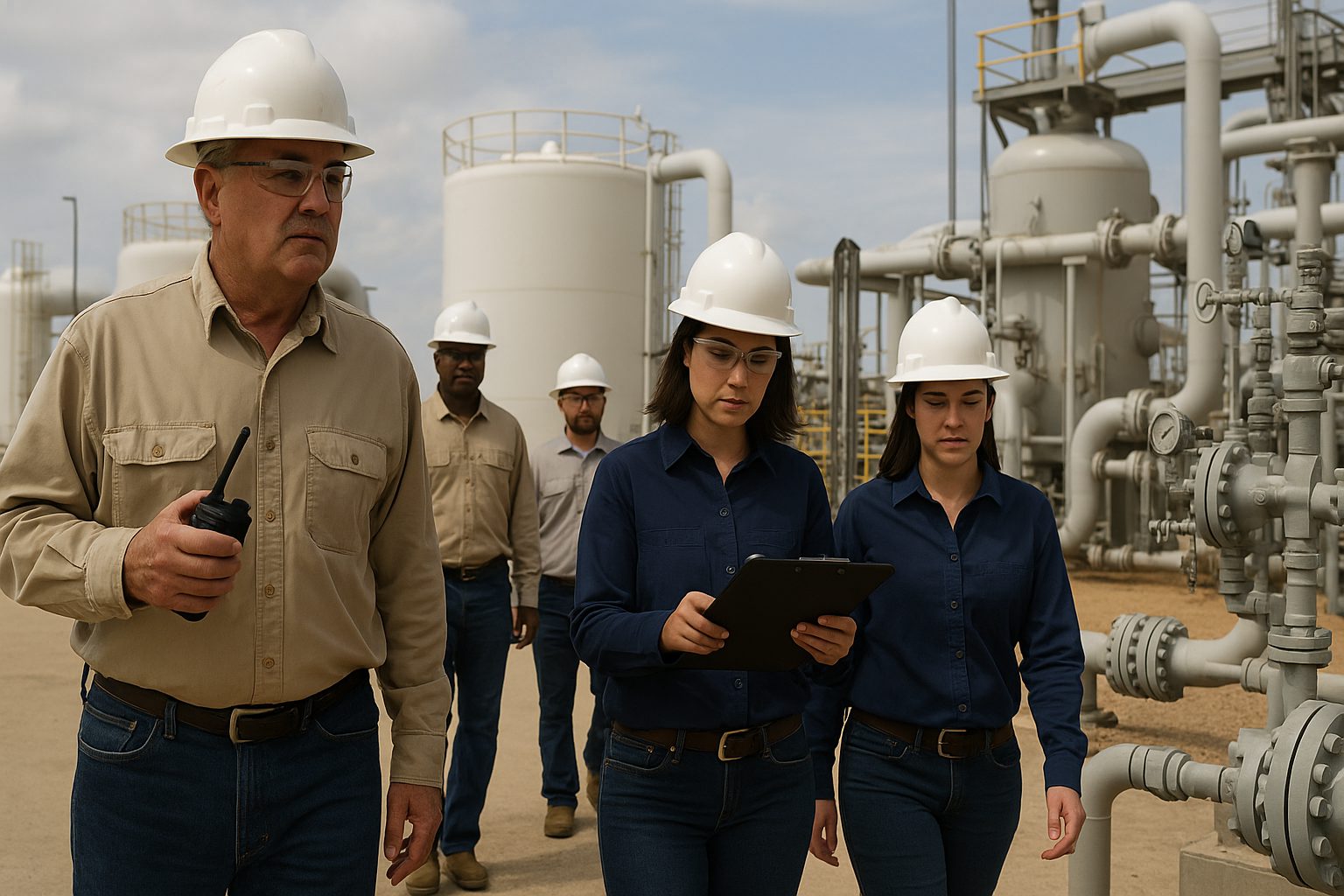
Most companies pay for a $4.425 billion acquisition by diluting shareholders or loading up on debt. ONEOK found a third option — and the financing may be more valuable than the asset it is buying.
On August 30, ONEOK announced it will buy Brazos Midstream’s Permian Midland Basin gas-gathering and processing assets for $4.425 billion in cash. The headline is big. The more interesting number is $9 billion: that is what Apollo-managed funds have agreed to invest as non-voting minority equity in ONEOK’s existing business. ([ir.oneok.com](https://ir.oneok.com/news-and-events/press-releases/2026/08-30-2026-214020927))
That is not normal vanilla equity. And it is certainly not a simple cheque written for a slice of the Brazos assets.
ONEOK is using part of Apollo’s capital to buy Brazos, then using another $5 billion to extinguish debt. It says the structure should take expected pro-forma 2027 leverage down to about 3.25 times debt-to-EBITDA, without issuing common shares. That is the real transaction: buy a strategic asset, clean up the balance sheet, and avoid asking public shareholders to wear the cost. ([ir.oneok.com](https://ir.oneok.com/news-and-events/press-releases/2026/08-30-2026-214020927))
This is a $4.425 billion asset deal wrapped inside a $9 billion capital deal
Brazos Midstream owns gas gathering and processing infrastructure in the Midland Basin, part of the Permian. In plain English: it owns the industrial plumbing that takes gas from producing wells, moves it, processes it and connects it into a broader network.
That might sound less exciting than buying an oil producer with flashy reserves. It is also usually a better business when the contracts are right. ONEOK says the acquired system is backed by roughly 600,000 dedicated acres under fixed-fee contracts with more than 12 years of weighted-average term remaining. It is currently supported by 14 active rigs operated by producers including ExxonMobil, Diamondback Energy and Double Eagle. ([ir.oneok.com](https://ir.oneok.com/news-and-events/press-releases/2026/08-30-2026-214020927))
I like boring assets when boring means someone has already signed a long contract to pay you. Founders get seduced by revenue projections. Investors get seduced by growth stories. Operators should be seduced by contracted cash flow.
After the Cassidy II plant is expected to finish in the third quarter of 2027, Brazos is projected to have about 700 miles of gathering infrastructure and 1.2 billion cubic feet a day of processing capacity. The acquisition more than doubles ONEOK’s Midland Basin processing capacity to roughly 2.3 billion cubic feet a day, including plants under construction. ([ir.oneok.com](https://ir.oneok.com/news-and-events/press-releases/2026/08-30-2026-214020927))
That matters because a network is worth more when it connects to other networks. ONEOK already has gathering, processing, natural-gas-liquids transportation and crude infrastructure in the region, plus downstream links such as its West Texas NGL Pipeline. The company is not buying Brazos merely to own more pipes. It is buying volume, optionality and a better chance to capture economics across more stages of the chain. ([ir.oneok.com](https://ir.oneok.com/news-and-events/press-releases/2026/08-30-2026-214020927))
The clever bit is Apollo’s capital, not the corporate jargon
Now for the structure, because this is where most people will glaze over — and where the lesson is.
Apollo will invest $9 billion for a Class B interest in a newly created ONEOK holding company. The interest is non-voting, has no board representation, no liquidation preference and sits structurally below ONEOK’s existing senior debt. Its return is capped at a 7.0% internal rate of return for the first nine years. ([ir.oneok.com](https://ir.oneok.com/news-and-events/press-releases/2026/08-30-2026-214020927))
Apollo is expected to receive 15% of quarterly cash flow from ONEOK’s operating company. But the important feature is the cap. Cash distributions above the return needed to deliver that capped IRR reduce Apollo’s capital account rather than handing Apollo unlimited upside. ONEOK says value created above the capped return accrues to its common shareholders. The target return steps up to 7.35% in year 10 and tops out at 7.85% in year 15. ([apollo.com](https://www.apollo.com/insights-news/pressreleases/2026/08/oneok-brazos-midstreams-permian-midland-basin-assets))
Read that again. Apollo is putting up serious money, but it is not receiving a blank cheque on the upside. ONEOK gets capital that rating agencies view as equity-enhancing, while existing common shareholders retain the payoff if management executes better than expected. ([apollo.com](https://www.apollo.com/insights-news/pressreleases/2026/08/oneok-brazos-midstreams-permian-midland-basin-assets))
This is what sophisticated capital allocation looks like. It is not about finding the cheapest money on a spreadsheet. It is about matching the capital to the asset, the cash flows and the risk you actually have.
Debt would have been cheaper in a narrow coupon sense, perhaps, but it would have pushed leverage the wrong way. Common equity would have been permanent and simple, but it would have diluted existing holders right when ONEOK believes it can compound the acquired assets. Apollo’s capital gives ONEOK room to buy, deleverage and preserve upside.
There is no free lunch, obviously. Apollo is not doing this out of charity. It gets a defined return, substantial distributions and a long-duration position in a large infrastructure business. But that is precisely why the deal works: each party is being paid for the risk it is best equipped to take.
ONEOK is buying more than a processing plant
ONEOK says the deal implies about 7.5 times estimated 2027 EBITDA, including roughly $80 million of full-year synergies, and about 6.0 times estimated 2028 EBITDA as the Brazos platform grows. Management also says the transaction should be immediately accretive to earnings and free cash flow per share. ([ir.oneok.com](https://ir.oneok.com/news-and-events/press-releases/2026/08-30-2026-214020927))
Those are management numbers, not tablets brought down from the mountain. They depend on volumes arriving, contracts performing, Cassidy II being completed as expected, synergies showing up and the broader Permian remaining productive.
But the logic is stronger than the usual acquisition PowerPoint nonsense. ONEOK has not bought a disconnected business and hoped that two logos on one slide will somehow create “synergy.” It has bought adjacent infrastructure that should feed assets it already owns.
Its 2025 annual report shows the company has spent years building a bigger connected platform through assets including EnLink, Medallion and a larger stake in BridgeTex. It also owns and operates infrastructure tied to the Permian and Gulf Coast. Brazos fits that strategy because it adds another important upstream entry point to an existing system. ([sec.gov](https://www.sec.gov/Archives/edgar/data/1039684/000103968426000012/ars2025.pdf))
That is the proper use of acquisitions. Not growth for the annual report. Not ego. Not a CEO wanting a bigger empire. Buy something that becomes more useful because you own it — and whose value rises because it plugs into what you already have.
The overlooked angle: ONEOK is making its public shareholders the residual owners again
Here is the contrarian point: people often hear “private capital” and assume public shareholders are being stitched up.
Sometimes they are. Private capital can demand toxic preferences, ratchets, vetoes, guaranteed returns and all manner of clever little clauses that leave ordinary shareholders holding the bag.
This structure appears deliberately designed to avoid the nastiest version of that trade-off. Apollo has limited consent rights, no board seat and no liquidation preference. ONEOK can acquire the remaining interest beginning eight years after closing, or earlier if Apollo’s capital account falls to $200 million. ([ir.oneok.com](https://ir.oneok.com/news-and-events/press-releases/2026/08-30-2026-214020927))
The point is not that this is risk-free. It is that ONEOK has separated capital from control and put a ceiling on the financier’s economics for a defined period.
That is a useful reminder for any entrepreneur negotiating funding: the percentage you sell is not the whole deal. The rights attached to it are the deal. A smaller headline ownership stake can be far more expensive than a larger one if it comes with preferred economics, control rights, blocking rights or an uncapped claim on future upside.
The question is never merely, “What valuation did I get?”
The grown-up question is, “Who gets paid first, who controls what, and what happens if the business goes far better than planned?”
What can go wrong
Let’s not pretend pipelines are magic money trees.
ONEOK still needs regulatory clearance under the Hart-Scott-Rodino process before the Brazos acquisition can close, which it expects in the fourth quarter of 2026. The Apollo investment is expected to close in the first half of September 2026, subject to customary conditions. ([ir.oneok.com](https://ir.oneok.com/news-and-events/press-releases/2026/08-30-2026-214020927))
The business also relies on producer activity. Dedicated acreage and long-term fixed-fee agreements are excellent protection compared with naked commodity exposure, but they do not remove operating risk. If producers drill less, if volumes disappoint, or if construction and integration become more difficult than planned, the projected economics get worse.
And those $80 million of full-year synergies? Every buyer loves to announce synergies. The only ones worth respecting are the ones management can identify, assign to an executive and report against every quarter. “Strategic fit” is not a synergy. A shut facility, shared compressor capacity, reduced duplicate spend or a downstream bottleneck removed — those are synergies.
ONEOK has given itself a better financial setup than most acquirers. It still has to execute.
What this means for you
You probably are not buying $4.425 billion of Permian gas infrastructure tomorrow. Good. The principle is still usable before lunch.
First, stop treating financing as the boring final step after you decide to buy or build something. Financing changes the quality of the opportunity. The wrong capital can turn a good acquisition into a mediocre one. The right capital can let you buy the asset and strengthen the parent company at the same time.
Second, buy adjacency, not novelty. If an acquisition does not make your existing customers, distribution, data, supply chain or operating base more valuable, you need an exceptionally good reason to do it. ONEOK’s case rests on fitting Brazos into a bigger Permian-to-Gulf-Coast network. That is a real strategic rationale.
Third, when you negotiate with investors, obsess over the downside documents. Ask: who has voting rights? Who has liquidation preference? Is their return capped? Can they block decisions? What happens if the business outperforms? The term sheet is not paperwork. It is your future wealth distribution plan.
Finally, do not confuse debt reduction with cowardice. ONEOK is spending $5 billion of incoming capital to reduce debt while it expands. That is not timid. It is how you stay alive long enough to benefit from the opportunity you just bought.
The best deals do two things at once: they improve the business and improve the position you are in to survive the next bad year. ONEOK’s Brazos deal is trying to do exactly that. Now comes the hard bit — proving the spreadsheet was not full of it.