OpenAI’s 13 Executive Exits Put Sam Altman’s Leadership Stability on Trial
If your company loses 13 senior leaders in one year, you do not have a “talent story.” You have a management system being stress-tested in public.
If your company loses 13 senior leaders in one year, you do not have a “talent story.” You have a management system being stress-tested in public.
That is the uncomfortable reading of OpenAI this week. Chris Malone, the executive overseeing the company’s data-centre work, has left after roughly 16 months. On its own, one departure means bugger all. In the context of OpenAI’s revolving senior ranks in 2026, it means the company has a leadership problem worth taking seriously.
The departure that should worry OpenAI customers
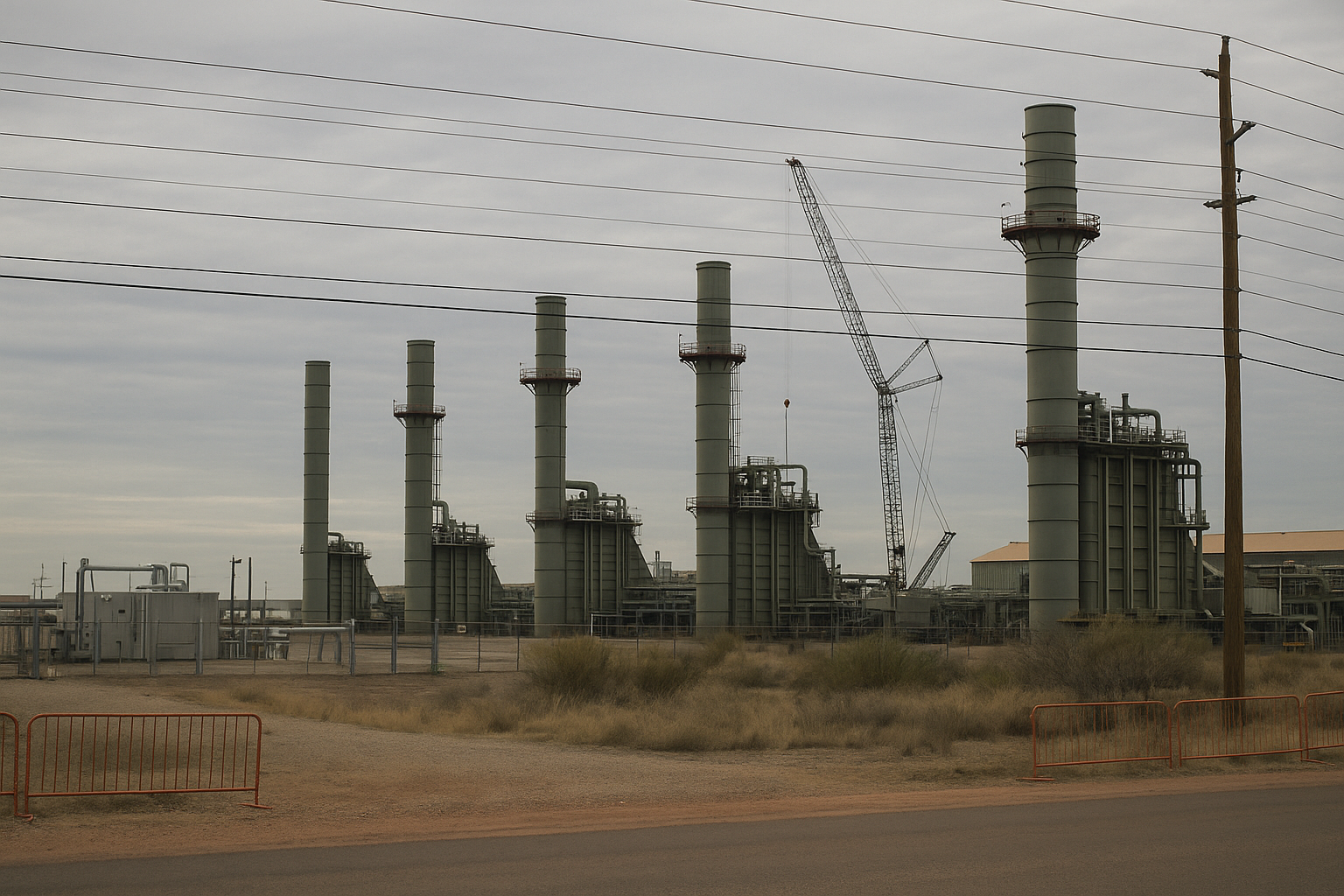
Chris Malone was not running a side project. He was OpenAI’s head of data centres—the bloke responsible for helping turn enormous compute ambitions into physical capacity: land, power, buildings, servers, delivery schedules and the thousand operational headaches that turn an AI demo into an actual business.
Malone joined OpenAI in March 2025 after more than a decade at Google and nearly five years at Meta. He left in the week of August 17, 2026, according to reporting by Bloomberg and TechCrunch.
OpenAI says it recently reorganised its infrastructure organisation to match the scale and pace of its work. Malone had reportedly moved from reporting to OpenAI president Greg Brockman to reporting to vice president Sachin Katti, who took leadership of the group. OpenAI says it has an experienced data-centre team in place, including leaders for the data-centre team, build-and-delivery programme, and engineering.
Fine. That may all be true.
But executives do not leave in a vacuum, especially people with scarce, expensive expertise in the one part of the AI race that cannot be faked with a slick launch video. Data centres are where strategy gets mugged by physics. You need electricity. You need permits. You need chips. You need construction crews. You need capital. You need someone who can make all those moving parts arrive in the right order.
If you are building your business on OpenAI’s products, this matters because the company’s operational execution now matters as much as the intelligence of its models. Reliability, pricing, capacity, product road maps and commercial terms all sit downstream of that execution.
This is not just one executive walking out the door
The Malone exit follows a run of senior changes that would be noisy at any company, never mind one preparing for a future public listing while trying to become the default AI platform for consumers and enterprises.
Earlier this month, longtime chief operating officer Brad Lightcap said he was leaving to start something new. In July, Fidji Simo stepped away from her full-time role overseeing product and business after a worsening chronic illness; she remains an adviser. In August, chief revenue officer Denise Dresser announced she was leaving less than a year after OpenAI hired her from Slack to build its enterprise revenue engine. OpenAI named former Wiz president and COO Dali Rajic as her replacement.
Each case has its own facts. Simo’s health situation deserves basic humanity, not boardroom gossip dressed up as analysis. A leader choosing a new venture is not automatically a vote of no confidence. A company is allowed to reorganise.
But good operators look at patterns, not press releases.
OpenAI has seen departures or reshuffles across operations, revenue, product and business leadership, marketing, safety and ethics, and now infrastructure. These are not all interchangeable vice presidents. They are senior people in the functions required to turn a research powerhouse into a durable, global company.
The question is not whether Sam Altman can recruit brilliant people. Obviously he can. The question is whether OpenAI can keep a stable group of adults accountable for the boring, vital work once they arrive.
That is a much harder game.
Hypergrowth makes heroes look disorganised
There is a lazy take here: “OpenAI is falling apart.” I do not buy it.
A company growing at this speed will change its structure repeatedly. Jobs that make sense at one stage become bottlenecks at the next. Strong executives can disagree on priorities without anybody being incompetent or malicious. The market for AI talent is ferocious, and a person with Malone’s background can write their own ticket.
Still, hypergrowth is not a permanent excuse for operational churn.
The best high-growth companies eventually make a transition that founders often hate: they replace heroic improvisation with clear ownership. They decide who owns the customer, who owns revenue, who owns the product road map, who owns delivery, and who has authority when those priorities collide.
When that does not happen, the founder becomes the routing layer for every major decision. That feels fast right up until it becomes chaos. Smart people leave not necessarily because the mission is weak, but because the job they accepted no longer exists in practice.
OpenAI’s recent moves suggest Greg Brockman is taking on more operating responsibility while responsibilities are being redistributed around him. That may be exactly the reset the business needs. Or it may be a sign that the organisation is still searching for a design that can support Altman’s ambitions.
Investors should care about the difference. So should customers.
The overlooked problem: infrastructure leadership is commercial leadership
Most people see an executive exit in data centres and file it under engineering. Wrong drawer.
Infrastructure is a commercial function now.
For an AI company, the cost and availability of compute determine what products it can offer, how much it can charge, what service levels it can promise, and whether margins ever become respectable. If compute is constrained, product teams cannot simply “work harder.” If data-centre construction slips, revenue plans become PowerPoint fantasies. If power costs rise, someone has to wear it: the company or the customer.
That is why Malone’s role mattered. The person overseeing physical infrastructure has a direct line into the economics of every flashy AI feature sold to the market.
Founders routinely make this mistake at a smaller scale. They treat operations as a back-office department to be upgraded later, after growth arrives. Then growth arrives, operations breaks, customers get cranky, the best people get exhausted, and everyone discovers that delivery was the product all along.
I have made enough expensive mistakes to know this: you can survive a weak marketing quarter. You can survive an imperfect product launch. You rarely survive promising more than your operating system can deliver.
The contrarian view: the exits may make OpenAI stronger
Here is the part most commentators will miss: turnover can be healthy if it is attached to a ruthless simplification of decision-making.
OpenAI does not need a museum of famous executives. It needs a leadership team with clean mandates and the appetite to execute in an environment where every decision is expensive, visible and contested.
A new structure under Brockman and Katti could reduce overlap. Rajic’s arrival could sharpen enterprise accountability after Dresser’s short tenure. A more focused leadership group could move faster than a bloated collection of big titles protecting their turf.
But there is one non-negotiable test: stability after the reset.
If OpenAI continues losing senior operators through the end of 2026, it stops looking like a deliberate redesign and starts looking like the company has not decided how it wants to be run. The market will tolerate drama from a private AI giant for a while. Public-market investors, enterprise buyers and strategic partners have less patience for organisational mystery.
Great companies can be founder-led. They cannot be founder-dependent.
What this means for you
Whether you run a 12-person startup, a division inside a big company, or your own investment portfolio, steal the useful lesson rather than gawking at the spectacle.
First, map your single points of failure this week. Not your org chart—the real map. Who can approve a deal, fix a customer escalation, run payroll, ship the product, close the books or keep the platform alive? If one person disappears for 30 days, what breaks? Write it down. You will find risks you have been calling “culture.”
Second, give every critical outcome one accountable owner. Not a committee. Not “the leadership team.” One name. Committees are useful for advice; they are rubbish for accountability.
Third, watch executive turnover as a business metric. Do not merely count exits. Track tenure, replacement speed, whether replacements come from inside or outside, and whether responsibilities become clearer after each move. A departure is information. A sequence is a signal.
Fourth, if you buy critical technology from a fast-moving supplier, build an escape hatch before you need one. Keep your data portable. Test alternatives. Understand your price exposure. Do not bet your margins on a provider’s untested promise that capacity will always be cheap and available.
And finally: do not confuse speed with progress. OpenAI is moving at absurd speed because the opportunity is absurdly large. But the companies that endure are not the ones with the most dramatic org charts. They are the ones where talented people know what they own, can make decisions, and stay long enough to finish the job.
That is not sexy. It is, however, where the money is.