Oracle’s $18B Project Jupiter Warning: AI’s Real Bottleneck Is Power
Oracle’s $18 billion Project Jupiter loans are trading at roughly 89 to 91 cents on the dollar before the AI data centre is even running. A GPU cannot negotiate a power permit.
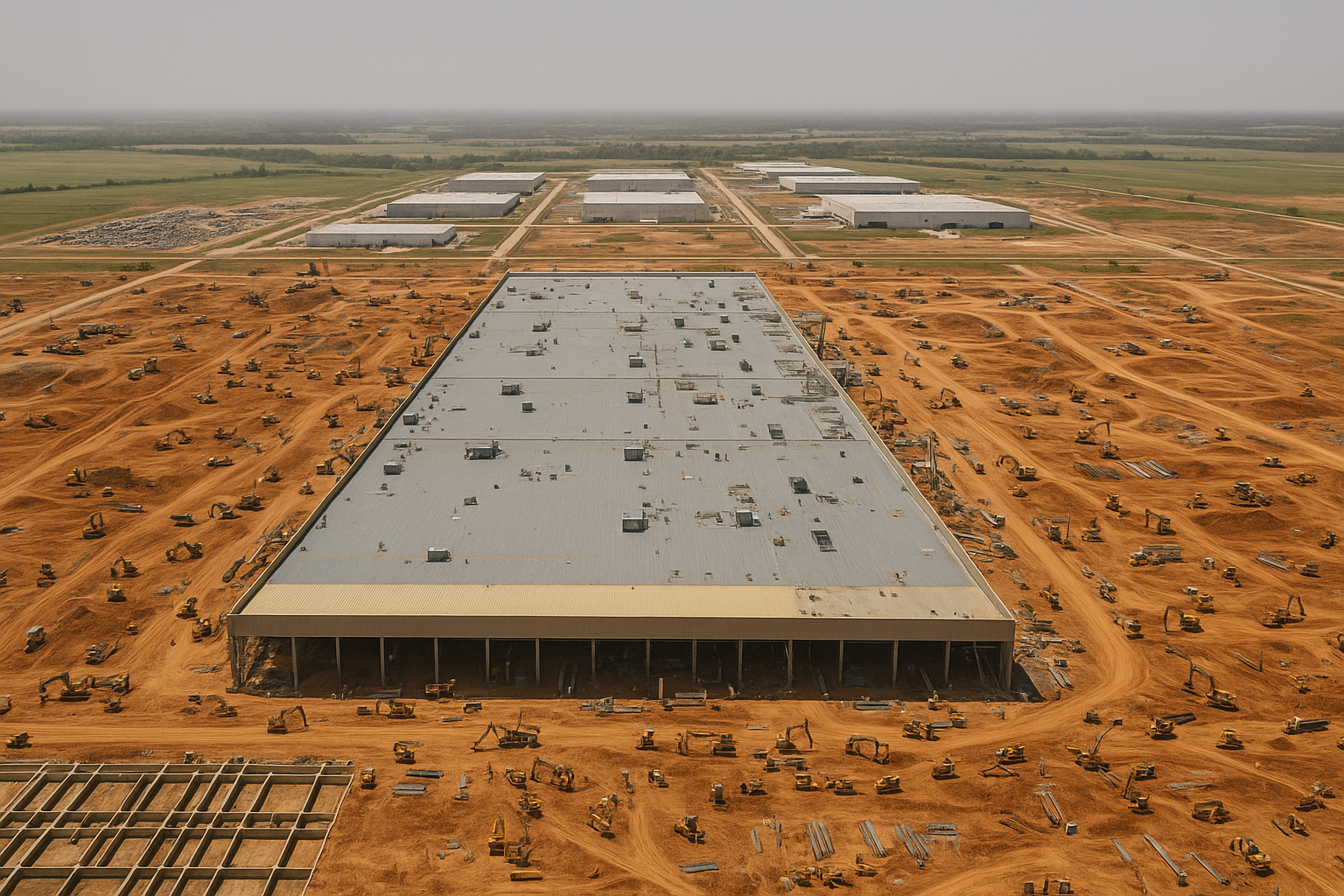
Oracle’s Project Jupiter loans are trading at roughly 89 to 91 cents on the dollar before the AI data centre is even running. That is what happens when $18 billion of financing meets a power problem — and Oracle’s force majeure notice has put the risk in writing.
Project Jupiter in New Mexico has roughly $18 billion of project loans behind it. Those loans were recently quoted around 89 to 91 cents on the dollar. Then Oracle sent a force majeure notice to the Blue Owl Capital unit developing the site, seeking protection if delays stop the campus opening on schedule in 2028.
That is not a small contractual squabble. It is the first proper reminder that AI’s biggest risk is no longer whether the models can write code, make videos or replace a junior analyst. It is whether the physical world will let the industry build the machines required to run them.
And the physical world is slow, political, expensive and unimpressed by a bloke in a fleece vest promising the future.
Oracle has not walked away — but it has told everyone where the pain sits
Let’s be precise, because this stuff gets muddied quickly by headline-chasing.
Oracle has not said it is abandoning Project Jupiter. The company said the project remains on schedule and that it is committed to New Mexico. Blue Owl said the notice does not change the financial commitments to the multiyear project.
But Oracle has reportedly sent a force majeure notice to the developer, Stack Infrastructure, which is backed by Blue Owl. In plain English: Oracle is trying to preserve its contractual position if events outside its control — chiefly around getting power to the site — push the project off course.
That is sensible corporate self-preservation. It is also a flashing amber light.
The campus in Doña Ana County is planned as a huge AI data-centre site. Oracle says Project Jupiter will use up to 2.45 gigawatts of Bloom Energy fuel-cell capacity. For context, that is not a normal commercial property problem. That is a city-scale power problem dressed up as a cloud-computing project.
The site’s energy plan has already changed. The original approach involving gas turbines and diesel generators was replaced with a fuel-cell microgrid design. A pipeline intended to supply gas has faced permitting setbacks, and reporting says its expected completion moved to February 1, 2027.
None of this means the project fails. Big infrastructure gets delayed all the time.
But it does mean the market is finally doing the maths it should have done on day one: an AI data centre is not merely a lease, a few racks and some Nvidia chips. It is a stack of permits, pipelines, transformers, substations, gas supply, local politics, construction crews, lenders and contracts. One weak link can turn a billion-dollar certainty into a very expensive maybe.
The $18 billion number matters more than the AI buzzwords
For the past couple of years, AI infrastructure has been sold as the cleanest trade in capitalism: demand is exploding, the biggest technology companies need capacity, and lenders get long contracts with famous tenants.
That story has real merit. Compute demand is real. The leading AI companies are spending like their survival depends on having more capacity than their competitors. In many cases, it probably does.
But demand does not automatically make a project financeable at any price.
The Project Jupiter loans reportedly trading below par matter because debt markets are paid to be cynical. Equity investors can tell themselves a delay is temporary and an eventual winner will be enormous. Debt investors care about timing, covenants, cash flow and whether the person meant to pay rent can delay that payment when the project misses a deadline.
That distinction is boring. It is also where fortunes are made or lost.
A data centre can have an investment-grade-looking tenant, enormous future demand and a glossy announcement featuring all the right names. If it cannot secure power and permissions, none of that produces cash flow on time.
I have seen this in business more times than I can count. People get hypnotised by the exciting bit — the product, the logo, the customer, the big valuation — and ignore the dull bit that actually determines whether the money lands in the bank.
In AI infrastructure, the dull bit is now the whole game.
The overlooked problem: power is becoming a customer-acquisition cost
Most people still think electricity is an operating cost. For AI data centres, it is increasingly a prerequisite for revenue.
If you are Oracle, Microsoft, Amazon or Google, available power is not something you optimise after signing customers. It decides whether you can serve them at all.
That changes the commercial equation. The winners will not simply be the firms with the best chips or the largest cloud sales teams. They will be the firms that can lock in energy, navigate permitting and build physical capacity before their customers need it.
That is why Project Jupiter is more important than one site in New Mexico.
The AI industry is trying to turn software-style growth into infrastructure-style delivery. Software people are used to pushing an update overnight. Infrastructure people have to convince regulators, communities, grid operators, contractors and lenders to cooperate for years.
Those are very different muscles.
Oracle has made a serious push into AI cloud capacity. That is strategically rational: cloud infrastructure is where the money goes when customers want to train and operate models at scale. But it also means Oracle is taking on risks that look less like enterprise software and more like power development, real estate finance and heavy construction.
That is a different business, whether Wall Street likes the narrative or not.
The contrarian view: this could make the strongest operators stronger
Here is the bit the doom merchants will miss.
A tougher financing and permitting environment is not automatically bad for the serious players. It may be excellent for them.
When capital is cheap and every lender believes the hype, any developer can slap “AI campus” on a slide deck and find someone willing to finance it. When projects start running into power constraints, local resistance and delayed pipelines, capital gets selective fast.
That is when operators with real balance sheets, credible customers, secured energy arrangements and genuine delivery capability pull away.
The weak projects get delayed, repriced or cancelled. The strong projects get scarcer and more valuable.
There is another uncomfortable truth here: communities are not irrational for asking questions. Project Jupiter is being built in an area where water, air quality and local infrastructure are not abstract matters. Oracle has committed funding for water systems, schools, infrastructure, workforce development and public environmental reporting. Those commitments are material because the company needs a social licence to operate, not just a construction permit.
Too many technology founders still treat community engagement as PR clean-up after the deal is signed. That is amateur hour.
If your business needs land, water, electricity, roads or regulation, local stakeholders are part of the operating model. Ignore them and you have not eliminated risk. You have merely delayed meeting it.
AI’s next winners will be builders, not just model makers
The market loves a clean story: OpenAI builds models, Nvidia sells chips, Oracle provides cloud capacity. Nice and tidy.
Reality is messier. The real AI value chain includes utilities, energy suppliers, grid-equipment makers, electrical contractors, cooling specialists, fibre operators, construction firms, credit funds, local governments and project developers.
The sexy bit is the model. The durable bit may be the ability to deliver megawatts.
That should change how investors think. A headline announcing tens of billions in AI spending is not evidence of a completed asset. It is the beginning of a risk register.
Ask four questions:
1. Is the power actually contracted and deliverable? Not “planned.” Not “under discussion.” Deliverable. 2. Which permits remain outstanding? A permit risk is a financing risk wearing a different hat. 3. Who carries delay risk? The tenant, developer, lender, utility or taxpayer? Read the contract structure. 4. What happens if the project opens a year late? If nobody can answer that clearly, you do not understand the investment.
What this means for you
If you are a founder, stop treating AI compute as a fixed line item. Build a proper capacity plan: what workloads you need, what model tier you can afford, what happens if prices rise, and whether a smaller model or narrower workflow gets you 80% of the value for 20% of the cost.
If you are an operator, steal the lesson from Project Jupiter: map your business’s physical dependencies before they become emergencies. Your equivalent might be a supplier, a licence, a warehouse, a key API, a bank facility or one overstretched employee. The constraint you dismiss as operational trivia will eventually become strategic.
If you are an investor, do not confuse announced AI capex with earnings. Follow power, permits, financing terms and completion dates. The companies that can convert megawatts into reliable revenue will matter more than the companies with the loudest AI press release.
Oracle’s force majeure notice is not proof that AI is a bubble. That is too lazy.
It is proof that the AI boom has graduated from demos to delivery. And delivery is where the bullshit gets expensive.