Oura’s $3B IPO Test: Can a Ring Become a $16B Health Business?
Oura wants a valuation above $16 billion while roughly 80% of revenue still comes from hardware. Its $3B IPO will test whether the subscription business is real—or just a tidy story around a battery.
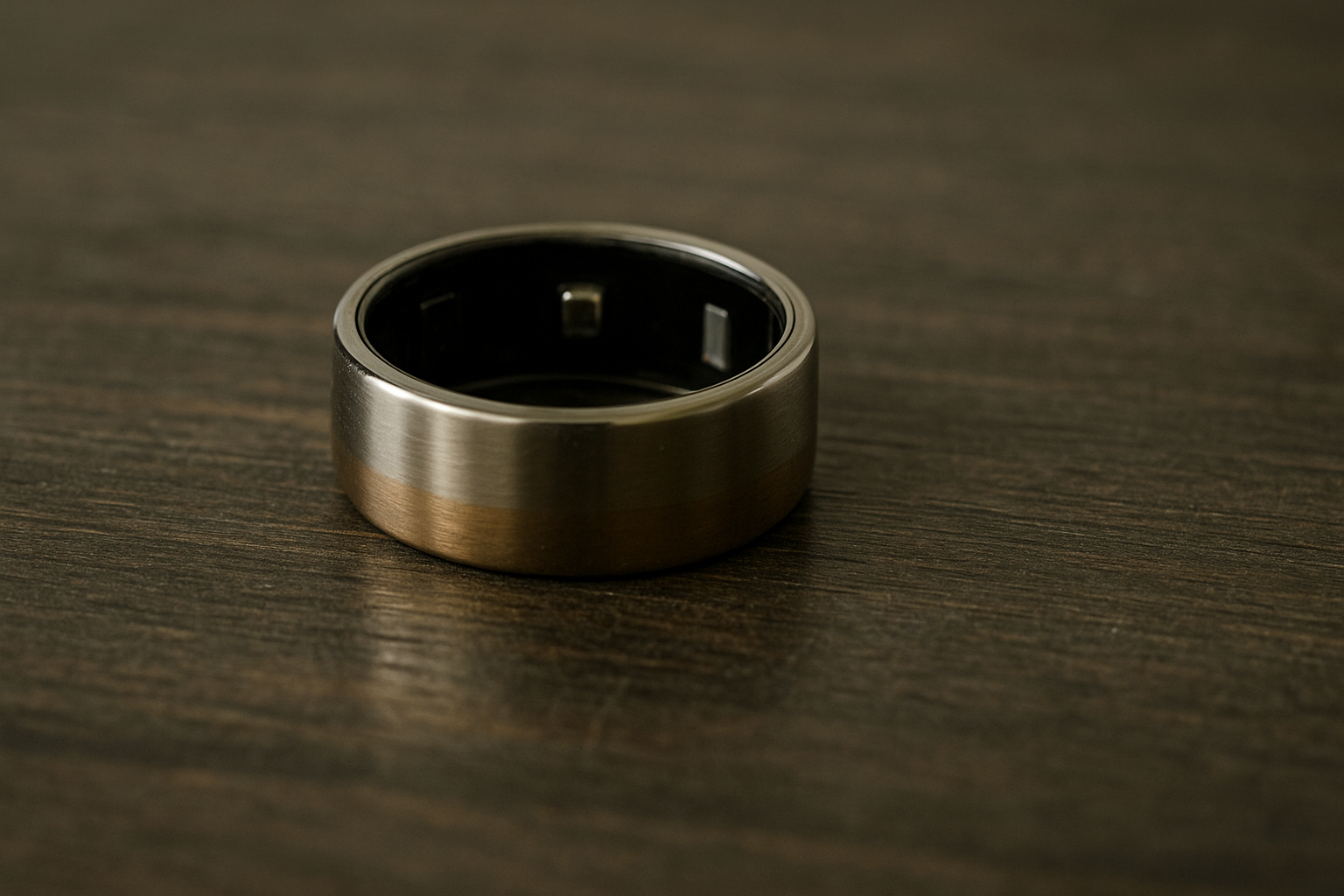
Oura wants public-market investors to value it above $16 billion while roughly 80% of its revenue still comes from hardware. That is the IPO test: can a tiny ring earn a software-style valuation before it becomes a software-style business?
Oura has filed. Now the easy money ends.
On September 3, Oura publicly filed for a US IPO, aiming to list on Nasdaq under the ticker OURA. Bloomberg reported in late August that the smart-ring maker and existing shareholders could seek to raise as much as $3 billion, at a valuation above $16 billion.
That is a serious number for a company selling a product you can lose down the back of a lounge chair.
But Oura is not walking into the market with a PowerPoint deck, a founder in a black turtleneck and some nonsense about changing the world. It has the sort of numbers that make investors sit up: revenue of roughly $1.2 billion for the nine months ended June 30, 2026, up from about $697 million in the same period a year earlier. It also reported about 5 million paid members, with weighted-average 12-month member retention of around 85%.
That retention figure matters more than the shiny ring.
A consumer hardware company can have a big launch, a hot Christmas and then spend the following year desperately bribing people to upgrade. A subscription business with millions of members who keep paying is a different animal. It has a base. It has forecasting power. It can fund product development without going back to investors every time it wants to do something clever.
Oura’s prospectus shows the split clearly enough: hardware represented about 80% of revenue in the first nine months of 2026, while membership subscriptions made up the other 20%. So let’s not get carried away and call it a SaaS company. It isn’t. Not yet.
But the direction is what matters. Oura has built something many hardware founders spend a decade pretending they will build: a recurring-revenue layer that customers appear willing to keep paying for.
The $16 billion question is whether the ring is the product—or merely the funnel
Oura began in Finland in 2013. Its ring tracks sleep, readiness, activity, stress, heart health and women’s health, then turns those readings into insights through an app and paid membership.
The company is now operating across 56 markets and selling through roughly 8,400 retail doors, alongside direct online sales and partnerships with employers, governments and healthcare organisations. That is a proper distribution machine, not a niche wellness brand flogging gadgets through Instagram ads.
It also has scale. As of June 30, Oura had 5 million paid members, double the number a year earlier. Paid members reportedly open the app more than 3.5 times per day on average. That is not passive ownership. That is a habit.
And habits are where businesses get valuable.
The ring itself is not magic. Sensors get cheaper. Competitors copy features. Samsung already plays in this category, and every big consumer-tech company has enough engineers to make a smaller, shinier bit of wearable tech if it thinks there is money in it.
The durable asset is the relationship Oura has built with users: daily biometric data, longitudinal history, interpreted insights and a product that becomes more useful the longer someone wears it. You do not casually switch once years of sleep, recovery and health patterns are sitting inside one ecosystem.
That is the bull case. The ring acquires the customer; the membership keeps them; the data and behaviour make the service better; and eventually Oura becomes less like a gadget company and more like a personal-health platform.
It is a bloody good pitch.
Oura has earned the right to tell a big story—but not to avoid hard questions
The company’s growth is impressive, and the financial improvement is not imaginary. Oura reported net income of about $60.8 million in the first nine months of 2026, compared with about $1.6 million in the prior-year period.
That matters because public investors have grown tired of businesses that treat losses as a personality trait.
Still, founders and investors should be careful not to turn one strong filing into a fairy tale. Oura is profitable in the reported period, but it is also carrying the ugly realities of physical product businesses. Battery issues in some Oura Ring 4 units drove warranty expense of roughly $84.4 million over the same nine-month period.
There it is: the bit nobody puts on the billboard.
Software bugs are annoying. Hardware bugs arrive in boxes, generate support tickets, chew cash, damage trust and can become very expensive very quickly. When your product sits on someone’s body collecting health data, the standard is even higher. You are not selling a novelty coffee mug. People are making decisions about sleep, training, stress and wellbeing based on what you tell them.
That creates another pressure point for Oura. The more it leans into health intelligence, healthcare partners and AI-generated guidance, the more important accuracy, privacy and consumer trust become. Public markets will not give it a free pass because it has a nice design language and a celebrity customer base.
The overlooked angle: Oura’s real competition is not Samsung. It is complacency.
Most people will frame this IPO as a smart-ring story: Oura versus Samsung, perhaps Apple later, with Ultrahuman hanging around the edges.
That is too shallow.
Oura’s real challenge is whether it can keep earning a subscription after the novelty fades. An 85% weighted-average 12-month retention rate is strong, but it also means roughly 15 out of every 100 members are not there a year later. At 5 million paid members, small shifts in retention become very big numbers, very fast.
The market will want to know whether members stay because Oura keeps delivering genuinely useful insight—or because cancelling is mildly annoying and everyone likes imagining they will finally fix their sleep next Monday.
There is a difference.
That is why the membership revenue is more valuable than the hardware revenue, even though it is smaller today. Hardware gives Oura sales. Membership gives it compounding economics. If the company can keep adding members, preserve retention and expand what those members buy, Wall Street may reasonably value it as a platform with a device attached.
If membership stalls, it becomes a premium electronics maker that must constantly spend to acquire the next customer and persuade existing ones to buy another ring. That is a much tougher, lower-multiple business.
This is also why the reported IPO size matters. A raise of up to $3 billion is not merely a liquidity event for early backers. It puts Oura under a much brighter light. Once public, every quarter becomes a referendum on member growth, churn, warranty costs, gross margin and whether health-data ambitions create revenue or just regulatory headaches.
Private-company optimism is cheap. Quarterly reporting is where the bill arrives.
What this means for founders: stop calling your add-on a subscription business
I see plenty of founders bolt a monthly fee onto a product and congratulate themselves for discovering recurring revenue. That is not a business model. That is a pricing page.
Oura’s lesson is more demanding.
First, the subscription has to improve with continued use. A member who gets more value after six months than they got in week one has a reason to stay. Oura’s long-term health trends and personalised interpretation are far more defensible than a one-off score on launch day.
Second, you need a real habit loop. Oura’s users are opening the app multiple times a day. That is not an accident. It means the product has earned a place in a routine.
Third, build the operational muscle before the market forces it on you. A hardware warranty expense of $84.4 million is a brutal reminder that scale magnifies every weakness. Quality control, supplier accountability, customer support and cash planning are not boring back-office chores. They are valuation protection.
Finally, do not confuse data collection with customer value. Collecting more data is easy. Turning it into a recommendation a normal person trusts and acts on is the actual job.
What this means for you
If you are a founder, audit your own business tomorrow morning with three questions.
1. If customers stopped buying new products, would revenue still grow? If the answer is no, you have a transactional business. Nothing wrong with that—but stop pricing yourself like a compounding platform.
2. What gets better for a customer after 90 days? Be specific. More history, better recommendations, lower effort, more integrations, a stronger workflow—something tangible. If the answer is “they like us more”, you have not done the work.
3. What ugly cost is hidden underneath your growth chart? For Oura, warranty costs are a reminder that every fast-growing company has a pressure point. Yours might be refunds, churn, implementation labour, paid acquisition or a customer-support team quietly drowning. Find it before public markets—or your competitors—find it for you.
For investors, the simple takeaway is this: do not buy the word “subscription”. Look for retention, engagement, margin and proof that customers become harder to dislodge over time.
Oura’s IPO is not really a bet on rings. It is a bet that a company can use hardware to earn a place in someone’s daily life, then turn that permission into a durable health business.
That is a far more valuable trick. And a far harder one to pull off.