PayPal $53B Pursuit Ends, Stock Falls 12.7%
A $53 billion rescue story vanished in a day, and PayPal shareholders lost 12.7%. That is what happens when you mistake a takeover rumour for a turnaround.
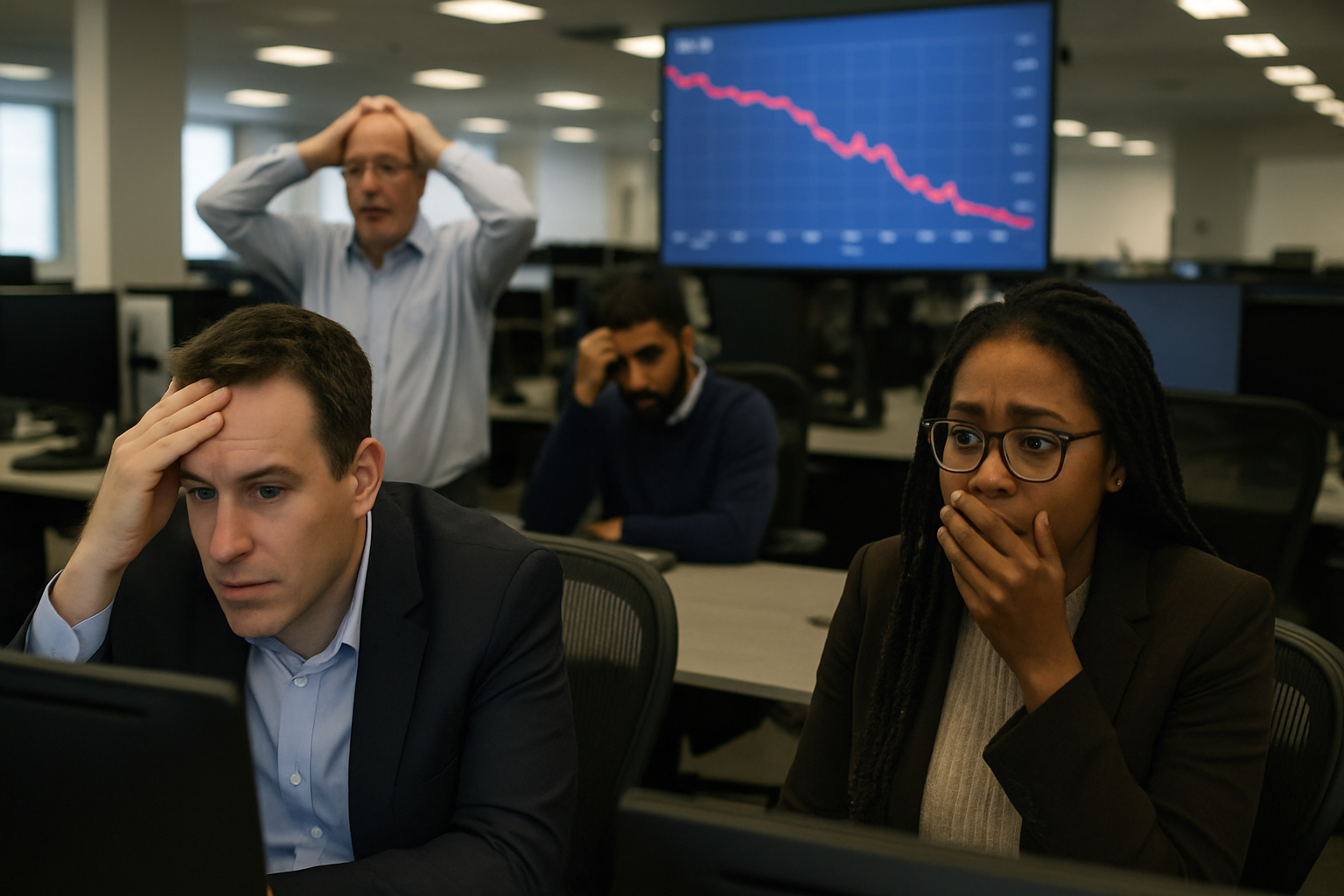
A $53 billion rescue story vanished in a day, and PayPal shareholders lost 12.7%. That is what happens when you mistake a takeover rumour for a turnaround.
On August 28, 2026, Stripe and private-equity firm Advent International reportedly walked away from their pursuit of PayPal. The reported offer was $60.50 a share, valuing the payments business at more than $53 billion. PayPal had closed the previous session at $61.47 — already above the reported offer — and the market promptly remembered that a buyer is not the same thing as a business model. ([axios.com](https://www.axios.com/2026/08/28/stripe-advent-end-paypal-pursuit?utm_source=openai))
The $53 billion deal that stopped being real
Let’s call this what it is: a brutal reminder that takeover speculation is rented confidence.
A consortium led by Stripe and Advent had been pursuing PayPal in a deal that would have been the largest fintech acquisition ever, according to Axios. Then the pursuit ended. Bloomberg reported that the group had previously offered more than $50 billion, while representatives for Stripe, Advent and PayPal declined to comment. That last bit matters. We do not know the precise reason the talks broke down, and anyone pretending otherwise is selling you fiction dressed as analysis. ([news.bloomberglaw.com](https://news.bloomberglaw.com/private-equity/advent-stripe-said-to-abandon-50-billion-pursuit-of-paypal-1?utm_source=openai))
But we do know the market’s verdict. PayPal stock fell 12.7% on August 28 after the takeover support disappeared. That is not a minor wobble. It is Wall Street putting a price on the gap between “someone might buy this” and “this company can compound value on its own.” ([axios.com](https://www.axios.com/newsletters/axios-closer-0fbe2612-8d24-47f8-94fc-a6f9d61a63e2?utm_source=openai))
For years, PayPal was the crown jewel of internet payments. It was early, trusted and everywhere. It had the consumer brand, the merchant relationships, Venmo, Braintree and a giant installed base. In 2021, at the peak of the pandemic-era tech frenzy, PayPal’s market value was roughly $356 billion. The reported $53 billion offer was therefore not a victory lap. It was a giant markdown with nice lighting. ([forbes.com](https://www.forbes.com/sites/fionariley/2026/08/28/paypal-plunges-15-after-reports-that-advent-stripe-abandon-53-billion-bid/?utm_source=openai))
That doesn’t mean $53 billion was necessarily cheap. It means the business has spent years proving that being first is not the same thing as staying indispensable.
PayPal is still huge. Huge is not the same as healthy.
The lazy take is that PayPal is finished because Stripe and Advent walked away. That is rubbish.
PayPal is not a busted lemonade stand. In the June quarter, it processed $486.4 billion in total payment volume, up 10% year on year. Revenue rose 5% to $8.7 billion. The company had 439 million active accounts, generated $2.0 billion of operating cash flow and produced $1.8 billion in free cash flow. That is a serious machine. ([sec.gov](https://www.sec.gov/Archives/edgar/data/1633917/000163391726000080/pypl2q-26earningsrelease.htm?utm_source=openai))
But this is where founders and investors get themselves into trouble: they see scale and assume quality.
PayPal’s second-quarter GAAP operating income fell 5% to $1.4 billion. Its operating margin shrank 171 basis points to 16.4%. Non-GAAP operating income fell 8%, and transaction-margin dollars rose only 1% despite that 10% increase in payment volume. Put simply: more money moved through the pipes, but the economics of running those pipes did not improve at the same pace. ([sec.gov](https://www.sec.gov/Archives/edgar/data/1633917/000163391726000080/pypl2q-26earningsrelease.htm?utm_source=openai))
That is the whole game in payments. Volume is vanity if each additional dollar comes with thinner margins, fiercer competition or an ever-larger sales bill.
PayPal says its branded checkout business has stabilised, while Venmo and Braintree are showing momentum. Fine. Stabilisation is better than decline. But no sensible buyer pays a premium merely because the bleeding has slowed. A buyer pays up when it believes it can create more value than the current owner can — through better growth, better margins, better distribution or a structural advantage competitors cannot copy.
Stripe would have brought payment infrastructure prowess. Advent would have brought the usual private-equity appetite for cost discipline, capital restructuring and operational surgery. The logic was obvious enough. The execution, pricing or risk appetite was plainly not.
The market made an embarrassing mistake before breakfast
The most overlooked detail is also the most useful one.
PayPal closed at $61.47 before the news that the reported $60.50-a-share bid was dead. In other words, the market had priced the company above an offer it knew was not enough for PayPal’s board — and that depended on a complicated buyer group actually getting a deal done. ([forbes.com](https://www.forbes.com/sites/fionariley/2026/08/28/paypal-plunges-15-after-reports-that-advent-stripe-abandon-53-billion-bid/?utm_source=openai))
That is not investing. That is punting on the next headline.
I have lost money learning versions of this lesson. You find a company with a battered share price, a recognisable brand and takeover chatter. You convince yourself there is downside protection because “surely someone will buy it.” Then the buyer disappears, the share price drops through your clever entry point, and you realise your thesis was not about the company at all. It was about the gossip.
The same trap catches operators.
An operator gets approached by a strategic buyer. Suddenly every hard decision is postponed: the product fix, the cost reset, the difficult hire, the customer churn problem. The business begins acting as if the deal is inevitable. That is how you turn an expression of interest into an excuse not to run the company properly.
A deal is not value until cash changes hands. Before that, it is merely an option held by somebody else.
Stripe and Advent may have dodged a much harder job than buying shares
Here is the contrarian view: walking away may be the disciplined move, not a failure of nerve.
PayPal’s problem is not that it lacks customers or payment volume. It is that its competitive environment is relentless. Apple and Alphabet have continued taking payment share through their ecosystems, while merchants have plenty of alternatives for processing and checkout. Bloomberg noted that PayPal has struggled to modernise its payment technology as rivals gained ground. ([archive.ph](https://archive.ph/qdE54?utm_source=openai))
Buying PayPal would not make that competition vanish. It would just make Stripe and Advent responsible for fixing it with a mountain of capital committed.
And this was not some neat tuck-in acquisition. A more-than-$50-billion transaction would have ranked among the biggest leveraged buyouts ever. In a deal of that size, the price is only the opening argument. Financing costs, debt capacity, regulatory scrutiny, technology integration, employee retention and the possibility of revenue leakage all matter. One bad assumption can turn an apparently clever deal into a very expensive monument to optimism. ([news.bloomberglaw.com](https://news.bloomberglaw.com/private-equity/advent-stripe-said-to-abandon-50-billion-pursuit-of-paypal-1?utm_source=openai))
There is also a less glamorous possibility: PayPal’s board may have been right not to take the reported offer. If management genuinely believes the company can restore branded-checkout growth, strengthen transaction margins and turn its enormous customer base into more profitable engagement, then selling at $60.50 a share might have been a lousy outcome.
But boards do not get points for rejecting an offer. They get judged on what happens next.
The reported buyer group could still return in the future, according to Bloomberg. Maybe it does. Maybe another buyer appears. But shareholders should treat that as upside optionality, not the investment case. ([archive.ph](https://archive.ph/qdE54?utm_source=openai))
The real test starts now, not at the next rumour
PayPal has cash, scale and a real operating business. At June 30, it held $15.3 billion in cash, cash equivalents and investments, against $13.4 billion of debt. It also repurchased roughly 33 million shares for $1.5 billion in the second quarter, with $6.0 billion returned to shareholders over the preceding 12 months. ([sec.gov](https://www.sec.gov/Archives/edgar/data/1633917/000163391726000080/pypl2q-26earningsrelease.htm?utm_source=openai))
That gives management room to manoeuvre. It does not give them permission to coast.
The next few quarters need to show three things.
First, branded checkout needs to become more than a reassuring line in an earnings release. PayPal must show merchants and consumers are choosing it because the product is better, not simply because it is already installed.
Second, margin needs to stop sliding. Revenue growth without improving unit economics is a treadmill. You can run hard and still go nowhere.
Third, capital returns need to support a stronger business, not camouflage a weaker one. Buybacks are sensible when a company is genuinely undervalued and producing durable cash. They are not a substitute for product relevance.
The company raised its full-year 2026 non-GAAP earnings guidance to about $5.38 a share after its June-quarter results. Good. Now it needs to make that guidance the floor for a credible recovery, not a one-quarter talking point. ([sec.gov](https://www.sec.gov/Archives/edgar/data/1633917/000163391726000080/pypl2q-26earningsrelease.htm?utm_source=openai))
What this means for you
If you are an investor, separate the business thesis from the catalyst. Write down, in plain English, why you would own PayPal if no bidder ever emerged. If your answer is “because Stripe might come back,” you do not own an investment. You own a coin toss.
If you are a founder, do not let acquisition interest make you soft. Keep fixing churn. Keep improving gross margin. Keep shipping product. The best way to get a great exit is to build a business you would be perfectly happy never to sell.
If you are an operator, track the boring number that tells the truth. For PayPal, that is not merely payment volume. It is the relationship between growth and transaction margin. In your business it might be repeat purchase, customer acquisition payback, cash conversion or retention. Find the metric that exposes whether scale is making you stronger or merely bigger.
And if you are tempted to buy a stock because a deal has been whispered about, remember August 28, 2026. PayPal lost 12.7% when a $53 billion story disappeared. Headlines are not assets. Cash flow, customer loyalty and improving economics are.