Pernod Ricard’s €9.4B Reality Check: US Spirits Won’t Recover Before 2029
The spirits boom is over, and pretending it is merely “inventory adjustment” is how operators go broke. Pernod Ricard just told the market its biggest customer won’t properly return before 2029.
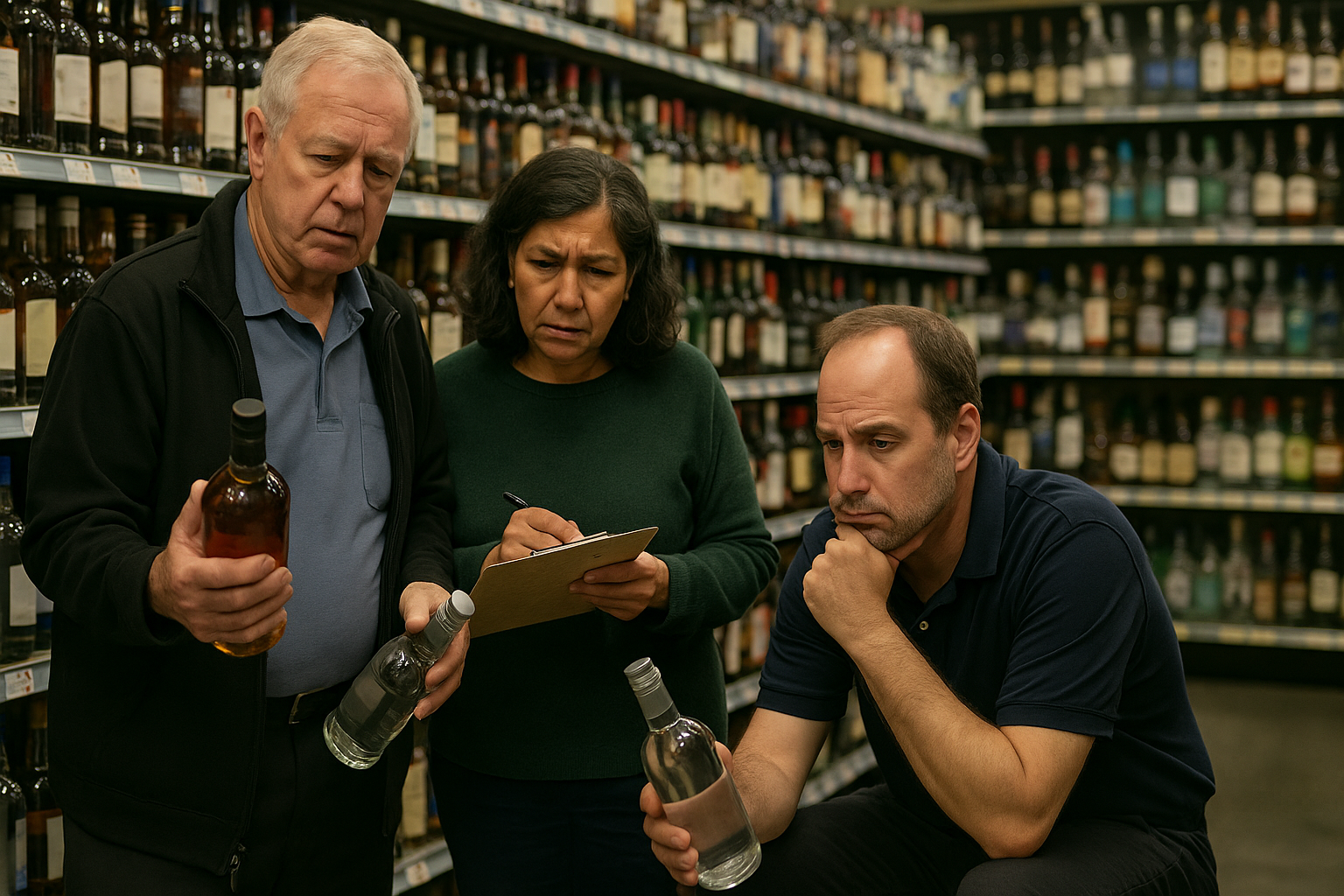
The spirits boom is over, and pretending it is merely “inventory adjustment” is how operators go broke. Pernod Ricard has just admitted that the US market — the industry’s great profit engine — is not expected to return to growth until after 2029.
That is not a bad quarter. That is a planning horizon.
The €9.4 billion result nobody can spin into a victory
On August 27, Pernod Ricard reported FY26 net sales of €9.404 billion, down 3.9% organically and down 14.2% on a reported basis for the year ended June 30, 2026. Its profit from recurring operations fell 5.2% organically to €2.423 billion. The sales decline was slightly worse than analysts expected, even if the profit result beat expectations. ([pernod-ricard.com](https://www.pernod-ricard.com/en/media/fy26-full-year-sales-and-results?utm_source=openai))
Here is the number that matters most: US sales fell 14% organically. Across the Americas, sales fell 10%.
Pernod can point — fairly — to foreign exchange, disposals and the usual mess of distributor inventory. But a 14% organic fall in America is not an accounting issue. It is customers drinking less, retailers ordering less, distributors carrying too much stock, and brands discovering that years of price rises do not make consumers infinitely tolerant.
Alexandre Ricard’s message was unusually blunt by big-company standards: Pernod expects US growth only after 2029. For FY27, which began July 1, the company expects organic sales to be broadly stable, with the US and China still dealing with inventory adjustments in the first quarter. It has also shifted its FY27–FY29 growth ambition toward the lower end of its previous 3% to 6% range. ([live.euronext.com](https://live.euronext.com/en/financial-news/pernod-warns-weak-us-china-will-weigh-years-come?utm_source=openai))
Translation: the recovery is not around the corner. The corner has moved.
This is a spirits problem, not a Pernod problem
It would be comforting to call this a Pernod-specific stumble. Maybe management mucked up execution. Maybe a few brands got tired. Maybe the French need a better PowerPoint.
Nope.
The company’s own results show the pressure sitting right where the global spirits industry least wants it: the United States and China. Pernod said sales outside those two markets grew 0.5% organically in FY26. That is hardly champagne-popping growth, but it proves the rest of the portfolio is not collapsing in unison. The holes are concentrated in the two markets that once justified the industry’s premiumisation fairy tale. ([pernod-ricard.com](https://www.pernod-ricard.com/en/media/fy26-full-year-sales-and-results?utm_source=openai))
For years, the playbook was beautifully simple. Launch a premium expression. Put a celebrity, a heritage story or a fancy bottle around it. Lift the price. Tell everyone consumers were “trading up.” Then repeat until the spreadsheet looked clever enough to deserve a bonus.
That strategy worked because households had cash, confidence and an appetite for occasional luxury. Now plenty of households have less of all three.
Pernod reported that weak consumer confidence and economic moderation hit the US spirits market. It also called out a soft pricing environment, adverse market mix, tariffs and cost inflation. This is what happens when the buyer who happily paid up for a second or third bottle starts asking a very unfashionable question: “Do I actually need it?” ([pernod-ricard.com](https://www.pernod-ricard.com/en/media/fy26-full-year-sales-and-results?utm_source=openai))
In agave, that question hurts because too many brands were built on the assumption that tequila would remain exempt from ordinary business gravity. It is not. A category can be culturally hot and financially overcrowded at the same time. In fact, that is usually when the trouble starts.
Inventory is real — but it is not an excuse
Let’s be precise: inventory adjustments are real. When distributors and retailers hold too much product, they stop replenishing at the rate brands expect. Reported sales then look uglier than consumer sell-out.
Pernod says it is narrowing its sell-out gap to the market in the US. It also said the second half improved, with organic sales moving from a 5.9% decline in the first half to a 1.3% decline in the second. Those are genuine signs that the bleeding has slowed. ([pernod-ricard.com](https://www.pernod-ricard.com/en/media/fy26-full-year-sales-and-results?utm_source=openai))
But slowing the bleeding is not the same thing as running again.
Every founder should tattoo this distinction somewhere visible: channel inventory can delay bad news; it cannot erase weak demand.
If a brand has spent years stuffing the channel, it can look healthy right until the distributor says, “We have enough.” Then management calls it destocking. The distributor calls it having too much of your product. The consumer, who was never as loyal as the dashboard implied, calls it having other options.
This is especially relevant in spirits because the middle layer matters enormously. You can have a brilliant liquid, a gorgeous bottle and a million Instagram views. If your distributor is overloaded, your retail velocity is soft, or your on-premise placements are not turning, none of that romance pays the invoices.
Pernod’s response is sensible — and a warning
Pernod is not responding by simply spraying more money at the problem. It is defending its margin, cutting structure costs and accelerating a €1 billion operational-efficiencies program. The company says it delivered half that savings target in FY26 and now expects full delivery by FY28. Structure costs fell 8%, free cash flow rose 6%, and cash conversion improved 17 percentage points to 91%. ([pernod-ricard.com](https://www.pernod-ricard.com/en/media/fy26-full-year-sales-and-results?utm_source=openai))
That is competent operating work. I respect it.
The company kept its operating margin at 25.8%, down only 35 basis points organically, despite the lousy sales backdrop. It also proposed a stable €4.70 dividend per share. ([pernod-ricard.com](https://www.pernod-ricard.com/en/media/fy26-full-year-sales-and-results?utm_source=openai))
But this is where founders and investors need to stop applauding too early. Cost discipline protects the business while demand is weak; it does not create demand. A company can become leaner, more efficient and more cash generative while still owning brands in a category that has lost some of its pricing power.
That may be exactly what Pernod needs to do. It is just not the same thing as a growth story.
The overlooked angle: premium is not dead, lazy premium is
The lazy conclusion from all this is that premium spirits are finished. I do not buy that.
People will still pay for a drink that is genuinely better, genuinely scarce, genuinely useful socially, or tied to an experience they value. Pernod’s Specialty Brands division is evidence of the uneven reality: it fell 8% overall, but Bumbu grew strongly and Código grew well, particularly in Asia and France. Meanwhile, Pernod’s ready-to-drink sales rose 12%, led by Canada, Australia and Western Europe. ([pernod-ricard.com](https://www.pernod-ricard.com/en/media/fy26-full-year-sales-and-results?utm_source=openai))
That matters because it shows consumers have not stopped spending. They have become choosier about where they spend.
The old premium model was mostly about margin architecture: take an ordinary occasion, add a premium label and ask for more money. The next model has to earn the premium every time. Better product. Clear provenance. A reason to choose it over the twenty other bottles staring back from the shelf. A format that fits how people actually drink now.
While building Agave Finder, I see the gap constantly: consumers want help making a confident choice, while too many brands still believe louder packaging is a strategy. It is not. Discovery, education and trust are commercial infrastructure now. If you make a brilliant mezcal, tequila or rum but nobody can quickly understand why it deserves their money, you have built a secret — not a brand.
The contrarian bet: this downturn may improve spirits
A hard market is brutal for weak operators, but it is often good for the category long term.
Cheap money created a ridiculous number of brands with thin differentiation and heroic assumptions. They mistook a hot category for a durable advantage. The shakeout will be painful: fewer purchase orders, more discounting, less investor patience, and plenty of founders discovering that “premium” was not a moat.
Good.
A category becomes healthier when the average operator cannot survive on vibes. Distilleries and brand owners that know their unit economics, understand their customer, maintain sane inventory and can build repeat purchase will have less noise around them. Retailers will have fewer zombie SKUs gathering dust. Consumers may even get better bottles instead of another celebrity’s beige tequila.
The opportunity is not to wait for 2029 with your fingers crossed. It is to use this period to become the business customers still choose when they have cut back to fewer occasions and fewer bottles.
What this means for you
If you run a spirits brand, stop forecasting from shipments alone. Track real sell-through by account, reorder intervals, depletion by SKU and the age of every case sitting in the channel. If you do not know where your inventory is and how quickly it moves, you are not managing growth. You are waiting for a nasty surprise.
If you are launching a premium product, make the premium obvious in ten seconds. Not through a long founder monologue. Through the liquid, the proof, the provenance, the occasion and the price-to-experience equation. Your customer should know exactly why this bottle wins.
If you are an investor, be suspicious of growth that comes with swelling distributor inventory, huge marketing spend and no evidence of repeat purchase. Revenue is an opinion until the bottle leaves the shelf again.
And if you are a saver or an operator outside booze, take the broader lesson. The market eventually charges every business for borrowed optimism. Pernod Ricard’s €9.4 billion year is not a catastrophe. It is more useful than that: a public reminder that demand matters, channels matter, cash matters, and a famous logo does not get a free pass.
Build for the customer you have now — not the one your last investor deck promised would arrive.