Pizza Hut’s $2.7B Sale: No Announced CEO
Pizza Hut changed hands for $2.7 billion. On closing day, Aaron Powell resigned from every Yum role—and no new CEO was announced.
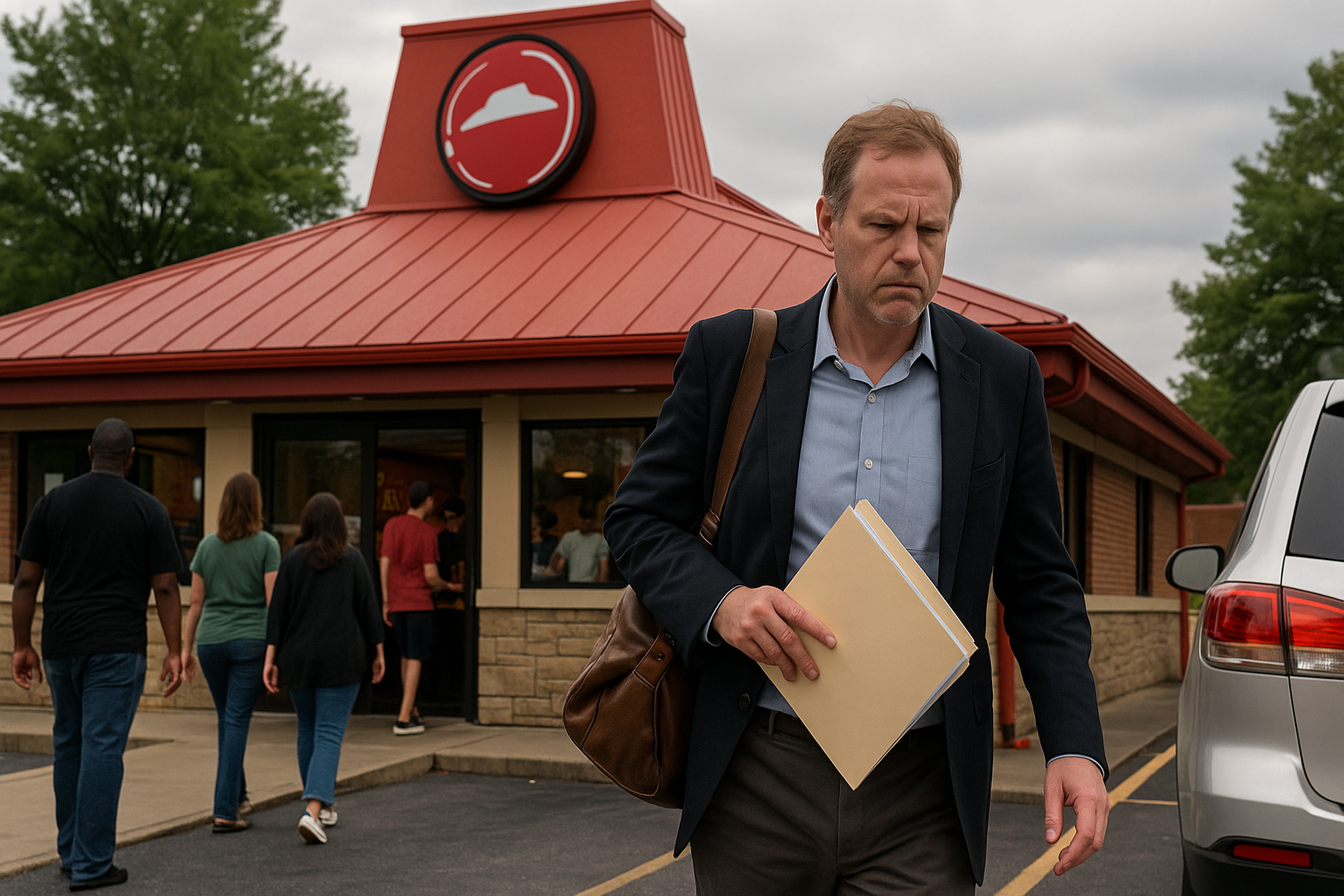
Pizza Hut changed hands for $2.7 billion. On closing day, Aaron Powell resigned from every role at Yum—and no new CEO was announced.
That is not a footnote. It is the bit founders, operators and investors should study before they get distracted by the size of the cheque.
Yum! Brands sold the 68-year-old chain in two transactions worth $2.7 billion, then Pizza Hut CEO Aaron Powell resigned from every role at Yum on the day the non-China deal closed. Nice clean press release. Big cheque. Plenty of corporate words about focus and future growth.
But if you run a company, invest in one, or hope to sell one someday, don’t study the headline. Study the handover.
Yum! Brands got focus. Pizza Hut got a new owner and no announced CEO.
On September 1, Yum completed the sale of Pizza Hut outside Mainland China to private-equity firm LongRange Capital for approximately $1.5 billion. The legal filing puts the cash consideration at $1.488 billion, subject to adjustments. Yum also retained the chance to earn another $75 million by 2030 if agreed performance targets are met.
The China piece had already closed on August 7, with Yum China paying approximately $1.2 billion for Pizza Hut in Mainland China. Put them together and Yum called it a $2.7 billion sale. After tax, fees and deal adjustments, Yum expected roughly $2.3 billion in net proceeds, excluding the potential earn-out. It also expected to spend about $85 million finishing the separation during 2026.
That is not a fire sale. But it is certainly not a victory lap for Pizza Hut’s recent performance either.
Yum began reviewing strategic options for Pizza Hut in November 2025. It announced the sale on June 16, 2026. Chris Turner, Yum’s CEO, said the deal would make Yum a more focused company, able to lean harder into scale, technology and talent across its remaining brands.
Fair enough. A chief executive’s job is not to preserve every old asset because it looks good in the family photo.
But on the closing date, Aaron Powell resigned as Pizza Hut CEO and from all other roles at Yum. The filing is plain: his exit was connected to completion of the transaction. LongRange said it would work with Pizza Hut’s executive team and franchisees, but it has not publicly laid out a turnaround plan or named the person who will own the top job.
That is the detail founders should not skate past. A sale does not remove the need for leadership. It makes leadership more important, because suddenly the business is being asked to change while its people wonder who is actually in charge.
Pizza Hut was not sold because the brand lacked recognition
Pizza Hut is one of those brands people mistake for a business model. The red roof is famous. The name is famous. The customer memory is famous.
None of that guarantees the machine underneath is working.
At the end of 2025, Pizza Hut had 19,974 restaurants globally. It remains a giant. Yet Yum’s global sales rose 5% in 2025 while Pizza Hut sales fell 2%. In the United States, Pizza Hut sales fell 8.2% in 2025, according to Technomic data reported by the Associated Press. The broader US pizza market was hardly booming—it grew by less than 1% in 2024 and declined by less than 1% in 2025—but Pizza Hut still performed worse than the category.
Yum had also announced plans in February to close 250 US Pizza Hut restaurants in the first half of 2026.
That is the whole story in four numbers: nearly 20,000 restaurants, sales down 2% globally, down 8.2% in the US, and 250 stores targeted for closure.
Scale is not strength when it comes with stale economics. It can be a very expensive way to carry yesterday around.
Pizza Hut was designed for a different era: dine-in occasions, family tables, a physical experience that made the restaurant itself part of the product. Then delivery platforms trained customers to choose from every cuisine on a screen. Domino’s built its reputation around delivery long before that. DoorDash and Uber Eats then made pizza compete with virtually everything else within a few kilometres.
The problem was not that Pizza Hut forgot how to make pizza. The problem was that the market changed the definition of convenience, and Pizza Hut’s footprint was built for the old definition.
The real management job starts after the deal closes
Here is where operators get it wrong: they treat a transaction as an outcome. It is not. It is a change of ownership, incentives, reporting lines, decision rights and internal status.
That is why Powell’s departure matters more than the corporate spin around “future growth.” A CEO transition during an ownership transition is not automatically bad. Sometimes it is exactly what the business needs. But it creates two jobs that must be handled separately.
First: decide the strategy. Second: give one capable person the authority to execute it.
Private equity loves the first job because it can be turned into a board deck: rationalise the estate, improve unit economics, sharpen the menu, reset franchisee standards, fix digital ordering, reduce costs, grow profitable stores.
The second job is where the money is won or lost. Somebody has to tell franchisees which shops close, convince staff that another restructuring is not just management playing PowerPoint dress-ups, make calls on marketing, and choose where to invest when the budget is tighter than the ambition.
That person cannot be a committee.
LongRange Capital’s founder, Bob Berlin, previously helped engineer a turnaround at Arby’s while leading private-equity investments at Baupost. That gives LongRange more restaurant credibility than the usual financial tourist buying a brand because the spreadsheet has enough cheese on it.
Still, credentials are not a turnaround plan. Pizza Hut’s next leader will need to make hard decisions quickly and, just as importantly, explain them without insulting the people asked to deliver them.
The overlooked angle: Yum did not fully let go
The lazy reading is that Yum dumped Pizza Hut and walked away richer. Not quite.
Yum will continue providing its Byte by Yum! technology platform to Pizza Hut outside China. It will also provide certain corporate services through a transition-services agreement. Yum said it expected fees from those services in 2026 to offset corporate overhead previously allocated to Pizza Hut.
This is sensible, but it creates a trap.
When a business is separated yet still plugged into the old parent’s technology and services, there is a natural temptation to preserve old habits. The new owner gets operational continuity. Good. But if continuity turns into dependency, the turnaround becomes cosmetic.
A genuinely independent Pizza Hut needs the freedom to decide which systems, suppliers, operating routines and customer experiences are worth keeping. It should not rip out working infrastructure just to look independent. That would be idiotic. But it also cannot rebuild a future using decisions designed for Yum’s portfolio, not Pizza Hut’s specific problem.
That is the contrarian lesson here: separation is not about changing logos on the org chart. It is about changing the speed and quality of decisions.
Private equity is neither the villain nor the rescue plan
People see a private-equity buyer and immediately reach for one of two lazy scripts: either “the suits will gut it” or “fresh owners will fix it.” Both are rubbish.
Private equity has had mixed results with pizza. Axios pointed to bankruptcies and restructurings around several pizza chains and franchise groups. But it also noted the obvious counterexample: Bain Capital bought Domino’s for around $1 billion in 1998, installed Dave Brandon as CEO, pushed menu, marketing and international changes, and Domino’s later returned to public markets.
The useful lesson is not that private equity is good or bad. It is that a turnaround only works when owners pair financial urgency with an operator who has genuine permission to change the business.
The first thing LongRange should avoid is confusing cost cutting with strategy. Closing weak restaurants can improve a portfolio. It does not tell customers why they should choose Pizza Hut next Friday night.
The second thing it should avoid is pretending the old dine-in identity is either sacred or worthless. There may be markets where Pizza Hut’s heritage, group occasions and format still matter. There may be others where the answer is a far leaner delivery-and-carryout model. A global brand does not require a global operating template.
What this means for you
If you are building or running a business, steal three lessons from Pizza Hut’s $2.7 billion handover.
1. Do not wait for a sale to discover whether your leadership bench is real. If your business only works because one executive holds the relationships, decisions and operating memory in their head, you have not built a company. You have built a hostage situation with payroll.
2. Separate continuity from dependency. Keep the systems that work during a transition. But list the decisions you are outsourcing to legacy processes, old advisers or a former parent. Set dates to take them back. Otherwise you will call it stability while quietly losing control.
3. Measure the customer problem, not the brand nostalgia. Pizza Hut did not need another reminder that people recognise its logo. It needed an answer to why its sales trailed the market. Every operator should ask the same question: where are customers voting against us with their wallets, and what inconvenient truth does that expose?
Big deals make people feel clever. Clean succession, clear authority and brutal honesty about the product are what actually make companies better.
Pizza Hut has a famous name, almost 20,000 restaurants and a new owner with plenty to prove. That is not a turnaround. It is the starting gun.