Pony.ai’s $45.4M Loss Is the Real Story Behind Its 691% Robotaxi Jump
A 691% robotaxi revenue jump sounds like the future arriving. A $45.4 million quarterly loss says the future is still charging investors for the ride.
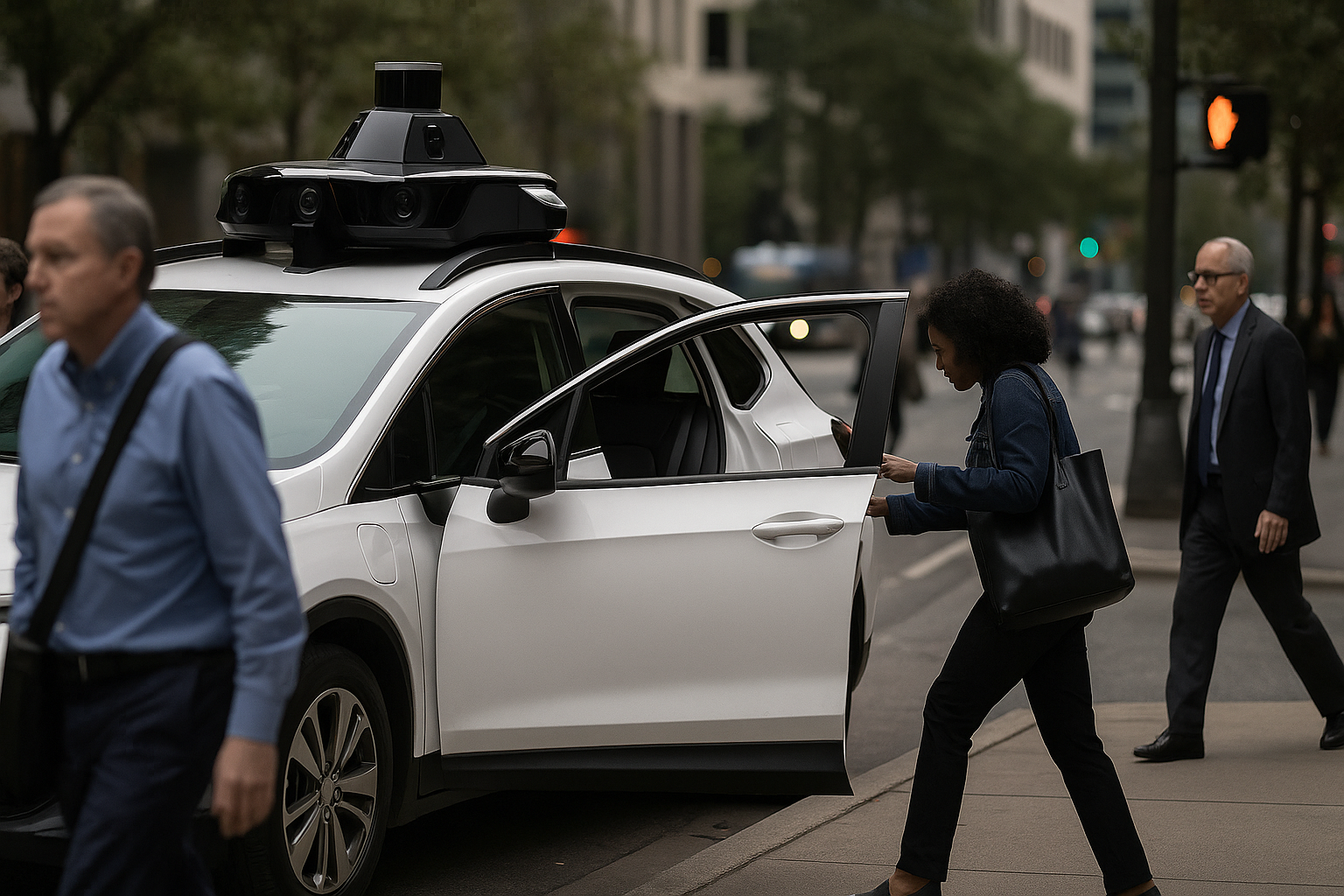
A 691% robotaxi revenue jump sounds like the future arriving. A $45.4 million quarterly loss says the future is still charging investors for the ride.
Pony.ai just delivered the sort of growth number that gets AI tourists frothing: robotaxi-services revenue rose 691.2% year on year to US$12.1 million in the June quarter. Total revenue rose 68.8% to US$36.2 million. Then the company lost US$45.4 million.
That is not a hit piece. It is the actual scoreboard. And it tells us something far more useful than another breathless robotaxi demo: autonomy is becoming a real business, but it is not yet a cheap one.
Pony.ai has moved from science project to commercial operation
The good news is real. Pony.ai’s robotaxi fleet reached 1,975 vehicles by June 30, 2026, and the company says it is working towards more than 3,500 by year-end. Its PonyPilot service passed 1.5 million registered users in China. Fare-charging revenue rose 849.3% year on year. Those are not laboratory metrics. They are signs of customers taking paid trips in growing numbers. ([ir.pony.ai](https://ir.pony.ai/news-releases/news-release-details/pony-ai-inc-reports-second-quarter-2026-financial-results-total?utm_source=openai))
More importantly, Pony.ai is no longer behaving as if it must own every piece of the machine itself. Its partnership with Uber targets deployment of more than 2,000 robotaxis across Europe, building from Zagreb into four additional European cities, with Middle East expansion also planned. The parties describe a division of labour that makes commercial sense: Pony.ai provides Level 4 driving technology, Uber supplies the demand platform, and fleet operators handle the daily muck of keeping cars cleaned, charged, serviced and on the road. ([investor.uber.com](https://investor.uber.com/news-events/news/press-release-details/2026/Pony-ai-and-Uber-Expand-Partnership-to-Deploy-Over-2000-Robotaxis-in-Europe/default.aspx?utm_source=openai))
That is the bit people should watch.
The robotaxi race will not be won by whichever founder has the slickest video of a steering wheel turning itself. It will be won by whoever works out how to put expensive autonomous vehicles in front of paying customers, often enough, at a cost that does not make the finance director reach for the antacids.
Pony.ai is making genuine progress on the first half of that equation. The second half remains brutally unresolved.
The revenue is impressive. The economics are still ugly.
Let’s not kid ourselves with percentages. Percentages are where small bases go to look handsome.
US$12.1 million in quarterly robotaxi-services revenue is meaningful because it proves the category is producing actual fare revenue. But Pony.ai’s total cost of revenue was US$29.9 million, leaving gross profit of US$6.4 million and a gross margin of 17.5%. It also spent US$72.1 million in operating expenses, including US$56.2 million on research and development. The resulting operating loss was US$65.7 million; the net loss was US$45.4 million. ([ir.pony.ai](https://ir.pony.ai/news-releases/news-release-details/pony-ai-inc-reports-second-quarter-2026-financial-results-total?utm_source=openai))
Put plainly: the business is scaling, but it is not remotely self-funding at the company level.
That does not mean Pony.ai is failing. It means it is doing what every capital-intensive network business does in its ugly adolescence: spending ahead of the revenue. Cars must be built or acquired. Sensors, compute, mapping, maintenance, insurance, remote support, charging and local operations do not politely wait until a startup has turned a profit.
The mistake investors make is treating rapid growth as proof that all of those costs will vanish with scale. Some will. Not all of them.
Pony.ai’s capital expenditure jumped to US$32.2 million in the quarter from US$9.6 million a year earlier, largely tied to mass production and deployment of its Gen-7 fleet, plus data centres and servers. It held US$1.39 billion in cash, short-term investments, restricted cash and long-term wealth-management debt instruments at June 30. That gives it room. It does not give it immunity from the basic laws of economics. ([ir.pony.ai](https://ir.pony.ai/news-releases/news-release-details/pony-ai-inc-reports-second-quarter-2026-financial-results-total?utm_source=openai))
Why Uber matters more than another thousand vehicles
Here is my contrarian take: Pony.ai’s most important number is not 691%. It is 2,000.
More than 2,000 proposed robotaxis through Uber is not merely fleet growth. It is a wager that autonomous driving will be sold through existing consumer distribution rather than through a shiny new app no one wants to download.
Uber has riders, payments, routing, pricing systems, customer support and a globally recognised front door. Pony.ai has autonomous-driving technology. Neither asset is enough on its own.
A brilliant driving stack with no demand is a very expensive car park. A giant ride-hailing marketplace without safe, reliable autonomous supply is still paying humans to drive. The partnership joins two missing halves.
That model also offers a better answer to the capital problem. Pony.ai calls it a joint-deployment model, and it reported that revenue contribution from the model increased quarter on quarter. In English: the company is trying to avoid being the sole owner, operator and funder of every robotaxi in every city. ([ir.pony.ai](https://ir.pony.ai/news-releases/news-release-details/pony-ai-inc-reports-second-quarter-2026-financial-results-total?utm_source=openai))
Good. That is how adults build infrastructure businesses.
Founders love vertical integration because it feels like control. Investors eventually hate it because it feels like a capital call. The smart version is to own the bit where you have an unfair advantage and partner for the bits that turn your balance sheet into a crime scene.
For Pony.ai, the unfair advantage may be its driving system and ability to deploy it across vehicle platforms and markets. Uber’s is demand. Fleet partners’ is operations. If that split works, Pony.ai can grow without personally buying every future taxi it wants to power.
Europe is the test, not the trophy
The European expansion is exciting, but do not confuse an announced deployment target with an established business.
The partnership begins from a commercial service in Zagreb and points to four further European cities, but individual cities have their own regulatory conditions, transport politics, insurance questions, labour concerns and operating realities. A robotaxi does not cross a border as easily as a software subscription.
That friction is actually the opportunity for operators who think clearly. Autonomy will not land as one global product launch. It will land city by city, route by route, regulator by regulator and fleet by fleet.
Pony.ai says its overseas pipeline of planned and potential deployments has grown beyond 4,000 vehicles. Reuters reported that it remains on track for full-year robotaxi revenue above 3.5 times its 2025 level. That is momentum, not certainty. Pipelines are not revenue, and targets are not results. ([investing.com](https://www.investing.com/news/stock-market-news/chinas-ponyais-overseas-robotaxi-pipeline-expands-to-over-4000-vehicles-4864532?utm_source=openai))
Still, the company has put a more credible commercial shape around the technology than the old robotaxi playbook: raise mountains of money, own a fleet, run a few geofenced cars, talk vaguely about infinity.
The new playbook is less glamorous and much better: build technology, use a demand platform, share fleet economics and prove unit economics in dense markets before pretending you have conquered the planet.
The overlooked lesson: this is a utilisation business
Everyone talks about whether a car can drive itself. That is yesterday’s question.
The commercial question is whether the vehicle is busy enough to earn back its cost.
A robotaxi sitting idle is not artificial intelligence. It is a depreciating hunk of metal with a very expensive computer strapped to it. The highest-value capability in this market may not be autonomy alone. It may be the ability to keep vehicles moving through the right places at the right times, with limited downtime, predictable maintenance and enough rider demand.
That is why Uber matters. It is why dense cities matter. It is why fleet operations matter. And it is why the market should care more about paid trips, revenue per vehicle, margins and downtime than grand claims about fleet size.
Pony.ai has demonstrated that fare revenue can grow rapidly. Its 17.5% gross margin, US$65.7 million operating loss and US$45.4 million net loss demonstrate that growing fare revenue is not the same thing as having cracked the business. Both facts can be true at once. ([ir.pony.ai](https://ir.pony.ai/news-releases/news-release-details/pony-ai-inc-reports-second-quarter-2026-financial-results-total?utm_source=openai))
What this means for you
If you are a founder, stop worshipping growth that requires you to own every expensive asset in the stack. Ask a nastier question: which part of this business must we own to retain the margin, and which part is just capital wearing a clever hat?
If you are building an AI company, do not assume the model is the product. Distribution, workflow integration, servicing and trust are usually where the real business gets made. Pony.ai’s Uber partnership is a timely reminder that superior technology without a customer pipe is just an impressive expense.
If you are an investor, do not dismiss robotaxis because the losses are huge, and do not buy the story because revenue growth is huge. Track four things instead: paid revenue per vehicle, gross margin, utilisation and who funds the fleet. Those numbers tell you whether an autonomy company is becoming a network business or merely getting better at burning cash.
And if you run any capital-heavy operation, copy the sensible bit now: partner around the assets, obsess over utilisation, and refuse to call a bigger loss “scale” unless the unit economics are visibly getting better.
Pony.ai has earned the right to be taken seriously. It has not earned the right to declare victory. There is a massive difference — and plenty of investors are about to relearn it the hard way.