QVC’s $5B Debt Cut Brings Back Mike George—Can It Win Customers?
QVC cut more than $5 billion of debt and replaced its CEO. The balance sheet is cleaner; the customer problem is not.
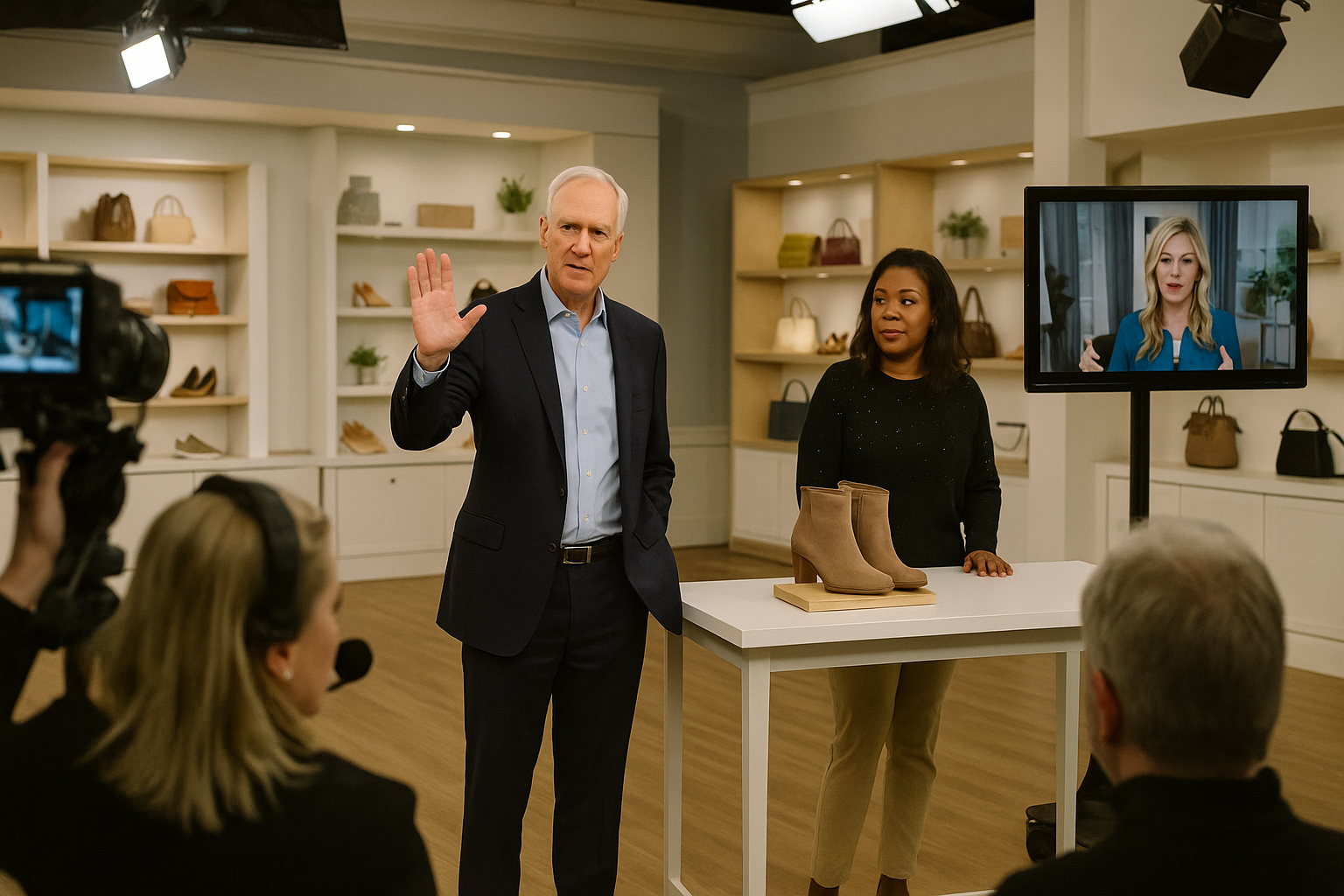
QVC has cut more than $5 billion of debt, raised access to a $600 million lending facility, exited Chapter 11—and immediately replaced its CEO.
That is not a turnaround. That is the right to attempt one.
On August 6, QVC Group emerged from its prepackaged bankruptcy restructuring and David Rawlinson stepped down as president and chief executive. The board installed Mike George, the man who ran the business from 2006 to 2021, as interim CEO and chair.
Let’s call it what it is: the board has brought the old skipper back onto a ship that has been refloated but is still taking on water.
QVC fixed the balance sheet, not the reason customers left
The obvious good news is the debt reduction. More than $5 billion gone is not cosmetic. It matters. Debt can turn every management decision into a hostage negotiation with lenders. It forces operators to protect interest payments rather than invest in product, talent, technology and customer acquisition.
The new $600 million asset-based lending facility matters too. A retailer without liquidity is not a retailer; it is a clearance sale with office furniture. QVC now has breathing room.
But breathing room is not demand.
QVC built a formidable business selling through television: compelling hosts, demonstrations, limited-time urgency and a surprisingly intimate customer relationship. For a long time, it was social commerce before anyone had invented the phrase.
Then the world stopped gathering around a television at a scheduled hour.
The customer did not vanish. The customer moved. She moved to TikTok Shop, Amazon, Instagram, live streams, creator channels, marketplaces and brand websites. She got used to infinite choice, immediate search, algorithmic recommendations, reviews from strangers and delivery that does not require waiting for a presenter to finish talking about a handbag.
Rawlinson understood this. His strategy was to push QVC from television toward live social shopping, streaming and digital distribution. The company says it gained momentum on new platforms and was named TikTok Shop Seller of the Year for 2025.
Fine. That is encouraging. But it also proves the problem: if the business had truly cracked modern retail, it would not have required a Chapter 11 reset to get there.
A company can have a clever strategy deck and still lose. Plenty do.
David Rawlinson left just as the hard part began
Rawlinson took the chief executive job in October 2021 after senior roles at NielsenIQ and W.W. Grainger. He inherited a business dealing with post-pandemic demand changes, cord-cutting and an ageing television-commerce model. He also had a contract extended through December 2027.
Yet after the restructuring, he was out.
The polite version is that this was a leadership transition. The more useful version is that the capital structure changed, the board changed, and the owners of the next chapter wanted a different person in the big chair.
This is normal in restructurings, even if corporate press releases pretend otherwise.
When a business goes through Chapter 11, the question is no longer merely whether management had a reasonable plan. The question becomes whether the people now carrying the economic risk believe the incumbent can deliver a return from here.
Rawlinson’s job was partly to modernise QVC. Mike George’s job is more brutal: make it economically viable enough that the modernisation has time to work.
Those are not the same job.
George is 64 and knows the business cold. He served as QVC’s CEO from 2006 through March 2018, then led the broader Qurate Retail organisation until 2021. He is not being asked to learn the company. He is being asked to decide, quickly, which parts deserve saving, which parts need fixing and which bits of corporate nostalgia need to be shot behind the shed.
That familiarity is valuable. It is also dangerous.
The overlooked risk: QVC may confuse experience with a strategy
Boards love bringing back a familiar operator in a crisis. It reduces uncertainty. Lenders like it. Employees understand it. Suppliers can make sense of it. The returning executive knows where the bodies are buried, including the ones hidden under three layers of PowerPoint.
But there is a nasty trap here.
The leader who understands the old machine best is not automatically the leader best equipped to build the new one.
QVC is not competing only with television retail anymore. It is competing with platforms built around discovery, creators, short-form video, mobile checkout, data-driven merchandising and relentless price comparison. Those businesses do not wait for a quarterly planning meeting. They learn every hour.
A veteran CEO can be exactly what a company needs when the problem is operational discipline. A veteran CEO can be the wrong answer when the problem is that the entire category has changed.
George has to prove he is not just the caretaker of a cleaner balance sheet.
The board should not measure him on whether he can make the old TV engine a bit more efficient. That would be a lovely way to manage decline. It should measure him on whether QVC can convert its genuine strengths—trusted talent, product demonstrations, supplier relationships and live-selling capability—into a customer proposition that works wherever people actually shop now.
That is a different standard.
Debt relief can make management lazy if the board lets it
This is the bit most operators miss: a refinancing or restructuring can either sharpen a company or sedate it.
Before a bankruptcy process, everyone knows the cash clock is ticking. Meetings get shorter. Pet projects get questioned. Managers suddenly discover they can make decisions without another committee. Waste becomes visible because it has to.
After the debt is cut, there is a temptation to relax. The company feels saved. People celebrate the new facility. Management resumes talking about “unlocking synergies” and “reigniting growth”. Everyone gets their lanyard back.
That is how businesses wander straight into a second crisis.
QVC’s leadership should behave as if the debt still exists. Not literally—the lower debt burden is the point—but operationally. Every dollar should still have to justify its existence. Every channel should have to prove it can acquire customers profitably. Every show, app feature, marketing campaign and executive role should face the same question: does this create a customer who buys again?
If the answer is vague, kill it.
A turnaround is not a story about debt. It is a story about repeatable customer economics.
QVC’s real asset is not television—it is trust
Here is the contrarian point: I would not write QVC off just because linear television is dying.
The company’s real asset was never the television signal. It was the ability to create trust at scale. A good QVC host can explain a product, demonstrate it, answer objections, inject urgency and make a customer comfortable buying something she cannot touch. That is hard to do well.
Most ecommerce businesses are terrible at it. They have search boxes, product grids, star ratings and a warehouse. Useful, yes. Memorable, rarely.
The internet is flooded with products and starving for credible curation. If QVC can put its selling craft into the right digital formats—without treating TikTok, streaming and creators as merely promotional extensions of cable television—it has a fighting chance.
But it needs to be honest about what that requires.
It means letting digital teams move faster than legacy television processes.
It means paying talent based on measurable commercial performance, not internal hierarchy.
It means building content around customers and products, not around the company’s old programming schedule.
And it means accepting that some of the best commerce talent may not look like traditional retail executives at all.
That can make old-school leaders uncomfortable. Bad luck. The market does not care about their comfort.
What this means for you
If you run a business, QVC’s mess is a useful warning: a balance-sheet fix is not a customer fix.
Use this tomorrow.
First, separate your survival plan from your growth plan. Cutting costs, refinancing debt or raising capital buys time. It does not tell you why a customer should choose you. Write those plans separately. If your growth plan is just “spend more on marketing once we have cash”, you have not got one.
Second, do not mistake a familiar leader for a future-proof leader. In a crisis, experience matters enormously. But ask whether that experience was earned in the market you are entering, not merely the market you are leaving.
Third, make customer behaviour the scoreboard. Not media mentions. Not strategy workshops. Not app downloads. Not how many people watched the launch video. Ask: are we acquiring customers profitably, are they returning, and are they buying more over time?
Finally, treat every turnaround as temporary permission, not victory. QVC has been given permission to try again. Mike George has been given the wheel. The company now has to prove that its old gift for selling can work in the places customers have already gone.
That is a much harder job than knocking $5 billion off a debt pile.
And it is the only job that matters.